
Book Two: Earth
Now that Aang has mastered waterbending, he must learn Earthbending. The plan is for the trio to go to Bumi in Omashu. Upon arrival back in the Earth Kingdom a general proposes the idea to simply master the Avatar State, bypassing mastering each element. That plan results in leveling his base and the teens continue on their journey, but the seed for exploring the Avatar State has been planted. New characters come into play. We’re introduced fully to Azula, the Fire Lord’s daughter, who has retained her father’s favor. Her father tasks her with bringing Iroh and Zuko home, for punishment we presume. She weaves a tale of regret to convince Zuko, but Iroh knows his brother well enough to not believe her, but follows in order to protect Zuko. The first episode of the season ends with the pair removing their ponytail and top knot, distinctions of their rank, I believe, known now as traitors to the Fire Nation.
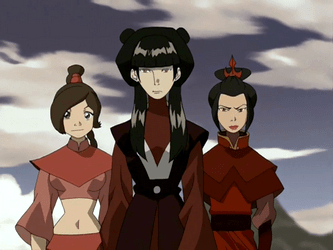
Azula is joined by her friends, Mai and Ty Lee so they create an elite team to track Iroh and Zuko. Mai is skilled with throwing knives and Ty Lee is an acrobat who can block a person’s chi and bending abilities. Azula is already a gifted firebender, surpassing her brother on many respects and is extremely agile. My question is, what do they teach girls in the Fire Nation? On the one hand, cool, women should definitely be trained as warriors, if they want. On the other, they’re kids! Let’s make a whole bunch of mini assassins!
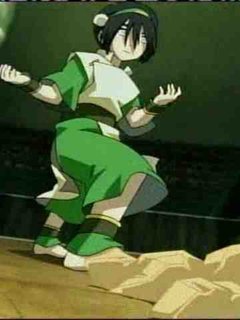
The heroic trio is eventually joined by Toph, an awesome twelve-year-old girl who happens to be blind (I say “happen” because by the way she acts, you rarely notice, and yes, it defines her, but she is far more capable than most people give her credit) who learned Earthbending on her own and holds out against men who are far older and stronger than her. Her parents clearly do not understand her, only see her as “blind, tiny, and helpless” and feel that what’s best for her is being guarded twenty-four-seven.
Toph fits in with the gang pretty well, being of equal age to Aang and both are skilled benders of their own element. There do not seem to be many problems between Sokka and Toph, but she butts heads with Katara. They’re both young women used to fending for themselves. Toph has spent her childhood secretly bucking her parents’ rule and is not in a hurry to listen to someone else tell her what to do. It is an interesting counterpoint to Katara, who is accustomed to the rest of the group obeying her for the most part (well, Sokka is her older brother, so we can expect slight contention from time to time).
At the end of Avatar Day Zuko told Iroh that he needed to find his own path, bringing us Zuko Alone, highlighting Zuko’s softer side. The royal family dynamics are…complicated. Zuko shows sympathy for his uncle at the death of his son and even before his banishment, he was trying to prove himself to his father and grandfather (I’m not sure that man even liked Zuko, calling him “pup” and a waste of time). Azula learned her ruthlessness from Ozai, who asked for Iroh’s birthright to be revoked since he abandoned his post at the death of his son. Azluon was also the one to tell Ozai (overheard by Azula) to sacrifice his own son in retaliation. His mother, Ursa’s seemingly last act was to visit Zuko in the middle of the night to say goodbye; “Everything I’ve done has been to protect you.”
This is all told in flashbacks that Zuko has while helping a family against army thugs. He bonds with the son, Li, showing him how to properly use dao blades and even gifting him his own dagger (a previous gift from Iroh), engraved with “never give up without a fight.” When Li is taken by the thugs, Zuko goes to rescue him and fights the crew. He easily dispatches the first three with minimal moves. However, when he’s knocked down by the leader, he comes back firebending. When finished, he reveals to the village “My name is Zuko, son of Ursa and Fire Lord Ozai. Prince of the Fire Nation and heir to the throne.” He has always seen himself as this. He has told Iroh several times that he wants this throne back, his birthright, his kingdom. Even in exile, even branded as a traitor (as an old man points out) he is not ashamed of who he is. I was crushed when the villagers and the family turned on Zuko.
Bitter Work from the Avatar crew is hilarious. (Foofoocuddlypoops? Really, Sokka?) From Zuko’s camp, still heart wrenching. Even Iroh, recovering from a shot of lightning from Azula, agrees that the young woman is crazy and needs to go down; he tries to train Zuko to face her. More hidden depths for our favorite uncle: he recognizes that the world needs balance and the elements balance each other out, and within a person; if Zuko learns this and draws wisdom from others, he will be more powerful. Zuko can’t find the clarity of mind to create lightning, and can’t get Iroh or the weather to cooperate to test deflecting it. Yeah, he’s not talking about the storm at the end when he cries out “You’ve always thrown everything at me. I’ve taken it. Now I can give it back.” I just want to give him a hug (except he might shoot fire at me, so, I shall refrain).
Side note: I wonder what Sokka realized during his time trapped in Bitter Work? They broke to comedy before we could find out. We want more layers to this young man. The Library is actually Sokka’s idea. He wants a map and intelligence about the Fire Nation in order to formulate a plan, compared to the rest in the group who want mini vacations. The Library is overseen by an owl who does not want to give the heroes access, claiming that humans desire knowledge merely in an effort to destroy. They persuade, or trick him, only to discover that the Fire Nation records were burned (most likely Zhao; it’s insinuated that he learned of the Moon and Water Spirits in the library, so yes, the owl spirit had a point…he’s still creepy). Unfortunately, while Sokka is calculating a future solar eclipse, sandbenders steal Appa. Toph, who had no desire to go into a library, keeps the escape route open for the others to flee from the spirit’s wrath, but had to choose between her friends and Appa.
The loss of Appa, Aang’s longest companion, is too much for the kid. He wants to blame Toph, but it had been a difficult, but necessary decision. He goes off on his own in order to find Appa and Katara is left to handle Sokka, who has drunk hallucinogenic cactus juice (a hilarious bright spot in the episode) and Toph. Once again, she has to calm Aang down from the Avatar State. Character growth all around. We see Sokka’s analytical mind, Katara leading, Aang’s grief and pain, and Toph is feeling helpless and a little guilty for not being able to save Appa; she can’t see in her traditional manner on the sand.
Meanwhile, Zuko and Iroh, still fleeing Azula, are attempting to make their way to Ba Sing Se. We’re introduced to the Order of the White Lotus (see Zuko, all those games your uncle played were important after all). In the next episode, the pair board a ferry, shared by Jet. Jet and Zuko almost bond, but Zuko won’t join Jet’s Freedom Fighters and Iroh subtlety bends fire in front of Jet, arousing his suspicions. That all comes to a head in City of Walls and Secrets when Jet attacks Zuko at the tea shop where he and Iroh, under the names Li and Mushi, work. An exciting battle of dual swords ensues and Jet is taken away by the authorities.
Katara, Sokka, Aang, and Toph take a harder path, leading a pregnant woman and her companions through the Serpent’s Pass, accompanied by Suki. Sokka is pleased to be reunited with the warrior, but after losing Yue, he’s scared to lose Suki as well. Just when you think it will all work out for the burgeoning couple, Suki’s duty keeps her with the other Kyoshi Warriors.
The message of hope is beaten into us in this episode. A sign posted at the entrance to the Pass warns travelers to “abandon hope.” Aang, in an effort to not let his emotions overtake him like they did in the desert, tells how the monks taught that hope was a distraction; Aang theorizes that they cannot afford to be distracted on the Pass and so maybe they should abandon hope. Seeing the baby knocks some sense back into Aang; he sees that life continues. He tells the parents that the experience has given him hope again, prompting the name of the baby.
I’m not saying that The Serpent’s Pass is a bad episode, just not one of the best. There are funny moments; Sokka offering Momo as a sacrifice, Toph thinking Sokka saved her when it was Suki. And I am not opposed to the idea of hope or naming a child such (see my submission to the Tolkien Symposium); I just think that this episode was heavy-handed in the telling. What I love about the show is how is subtly passes information on to the audience. Looking to my favorite character as an example: Zuko is originally supposed to be the obvious villain, Katara even pointing is out in the catacombs later: by chasing the Avatar. But the show has done a marvelous job of showing hidden sides. Aang has an angry side we’re seeing; attacking the Sand People for kidnapping Appa; he’s not just a joking child. And hope is shown throughout the series in more subtle ways. Every time Aang’s in a different village, helping out, he is hope that the war will end, that the Fire Nation won’t win. So it wasn’t necessary to beat the audience over the head with “don’t abandon hope.”
The heroes come across a stumbling block on their way into the city; a Fire Nation drill is almost upon the outer wall. And who else would be behind it but Azula. Sokka’s idea of hitting the pressure points and teamwork brings down the drill. We see the combination of bending coming into play, Earth, Water, and Air. I am impressed by the bending battles throughout the series. These teens are masters of their crafts and bending brings a whole new element (ah, I see what I did there) to battles. Air can destroy Earth. Fire and Water can take on each other, and they can all work together.
Inside the city, we discover a new culture. The sections (read classes) are separated by walls, the city is run on strict rules. The common person does not know about the war (consider that a remarkable feat since it’s been going on for a hundred years). The Dai Li, cultural ministers, run the city; the king is merely a figurehead. Long Feng is unnerving and brainwashes anyone who doesn’t stay in line (this is what happens to Jet).
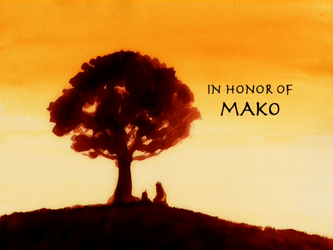
Tales of Ba Sing Se and Appa’s Lost Days are a slight departure from the typical storytelling. Tales of Ba Sing Se is a collection of short clips of each character in the city; they experience life as a normal person might, without the pressure of the world at war weighing on them. Toph and Katara go to a spa for a girls’ day and Katara stands up for Toph, telling her she is beautiful, even if she can’t see it and she admires the younger girl for her strength (an excellent message for young girls, or any woman; you don’t need someone else’s approval). Sokka joins in a poetry session, once again showing he is not a simple dunderhead, though he’s more creative than his competitor (he loses on a technicality). Aang creates an open air zoo; Zuko goes on an awkward date; Iroh helps a variety of people while he remembers his son’s birthday (tearjerker at the end with “In Honor of Mako,” the original voice actor for Iroh, who passed away before the season was finished). Momo even gets some action and finds Appa’s paw print, proving that the sky bison was in the city.
Appa’s Lost Days fills the audience in on what’s happened to Appa, flashing back to four weeks previous with his capture. He was traded once, then sold to a circus run by a cruel firebender giving Appa a fear of fire. He escapes and crosses paths with other characters (Iroh sees him on the ferry and Hakoda sees him from his ship as well). Suki and the Kyoshi Warriors discover him in the woods, wounded and scared, and heal him. Azula attacks and Suki forces Appa to fly away. He finds the Eastern Air Temple where a man is waiting. The man is Guru Patik and he is waiting to help the Avatar. He sends a message with Appa and guides the two back to each other. Except Long Feng is waiting and captures Appa first. He’s discovered and ultimately freed by Zuko from beneath Lake Laogai.
That act brings about a change in our antagonist. Iroh advises Zuko that it is time for him to think about what he wants in life, and why; his destiny is up to him. Iroh even follows Zuko, disguised as the Blue Spirit, to Lake Laogai and begs him to think his plans through. This is the most worked up we’ve seen Iroh, usually calm and placid. He doesn’t want to lose Zuko like he lost Lu Ten. Perhaps he’s feeling guilty for not protecting Zuko better from the war meeting and subsequent Agni Kai. It is painfully clear that Iroh loves his nephew. Iroh has demonstrated throughout the two seasons that he is not traditional Fire Nation; he follows other nations’ teachings and is knowledgeable about the Spirit Realm.
This change in character brings about a fever. Iroh explains that his soul is warring between itself, personified in Zuko’s dreams as a red dragon (Iroh) and a blue dragon (Azula). The blue dragon silkily counsels that Zuko, an unscarred Fire Lord, give in, go to sleep. The red dragon urges Zuko to flee. His dream melts, but he’s haunted by his mother pleading for help. He has a vision of himself as the Avatar, complete with Airbending tattoos, echoing some connections we’ve seen between the two and foreshadowing others.
In a plan that seems logical to teenagers, but one that only they could pull off, Aang, Sokka, Katara, and Toph fight through ranks of guards to finally talk to the Earth King. Proving that he has a mind of his own, the Earth King listens and observes the teens’ evidence. He dismisses Long Feng and uncovers messages for all of the kids. The Guru’s note leads Appa and Aang back to the Eastern Air Temple for further Avatar training. Toph’s mother has apparently written and wishes to see her daughter and the Earth Kingdom Army has intelligence on Katara and Sokka’s father’s whereabouts. So they all split up, Katara letting Sokka see Hakoda while she stays to finalize plans.
And just when things look like they’ll work out for the heroes…the letter to Toph was a trap, yet she manages to develop metal-bending and escapes (which is just badass; a little blind girl is the greatest Earthbender in the world). The Kyoshi Warriors that Sokka thought would be Suki and her girls are actually Azula, Mai, and Ty Lee in disguise. When Katara runs to the Earth King to inform him of seeing Iroh and Zuko at a tea shop, she actually tells Azula and is captured. This image makes its way to Aang during his training and he leaves before he has completed his training.
[A brief side note: one could do an entire analysis on the training that Aang went through and the chakras and what they mean…that person is not me. Was it interesting? Yes. Am I now thinking of how it pertain to the mindset of the Jedi? Yes. Am I going to carry on with the pervious train of thought? Yes. So, onward and upward!]
I loved the moments Sokka had with his father. He’s not a bender, he can’t always keep up with the other teens, but he’s trying to grow as a warrior and be the leader since he’s the oldest. And for a brief time, he’s with his Tribesmen, men who are like him; he’s with his father, who has the same sense of humor and who is proud of him. Hakoda tells his son that he always knew that Sokka was a great warrior, that’s why he left him in charge of the South Pole. And he’s going to join their battle…and Appa and Aang land. Sokka leaves with them and watches his father sail away, again.
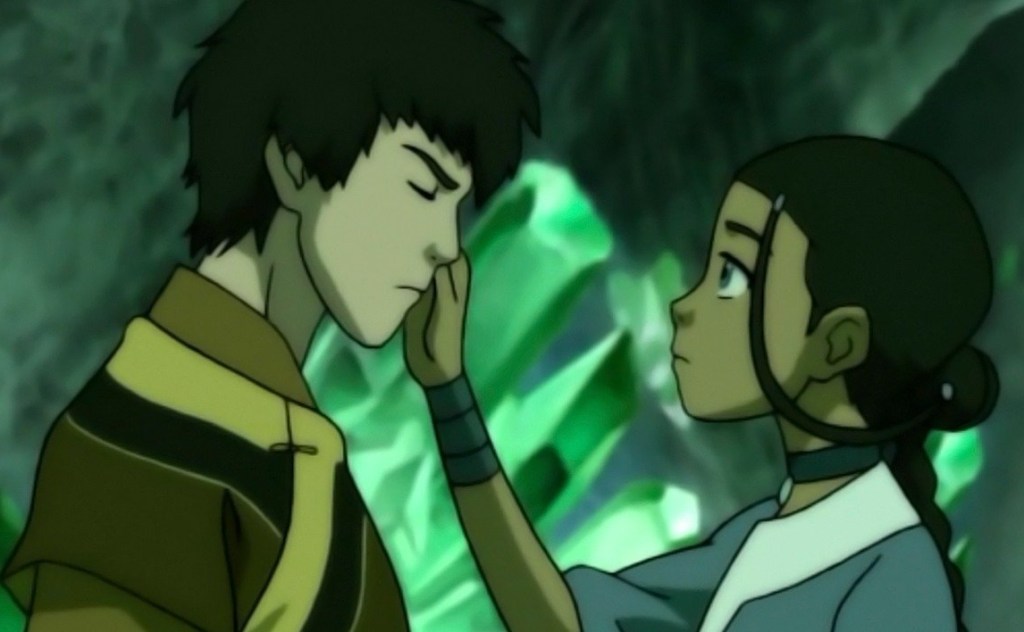
“For so long now, whenever I would imagine the face of the enemy, it was your face.”
“I used to think that this scar marked me; the mark of the banished prince, cursed to chase the Avatar forever. But lately, I’ve realized that I’m free to determine my own destiny, even if I’ll never be free of my mark.”
Of course, Zuko’s identity crisis is not finished yet. Just when he’s become happy, Azula has to attack and twist his mind. On the one hand, Iroh is telling him that he is “stronger, wiser, and freer” than he’s ever been. And on the other hand, Azula dangles redemption, honor, their father’s love in front of Zuko. She tells him he’s free to choose. And that choice is made clear when he joins in her attack against Aang and Katara. (And more awesome bending!) Upon reflection, Zuko’s choice can be understood; his metamorphosis so recent, it hasn’t had enough time to stick. He doesn’t know if he can trust the Avatar and his group; they’ve been on opposite sides for so long. Thus, he goes back to what he knows.
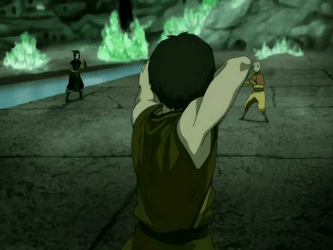
The season ends with Azula shooting lightning at Aang’s unprotected back. Iroh jumps in to cover their retreat and lets himself be captured. While it’s never specifically stated, it is heavily insinuated that Aang died. But the water from the Spirit Oasis of the North Pole that Katara has been carrying is able to magnify her healing abilities (she had offered to attempt to heal Zuko’s scar while they were getting along) and bring him back.
We pick right back up with the themes of family and honor. Zuko’s family is far more complicated and he’s still struggling to understand his honor. His own father wanted him dead years before his banishment, seeing him as a minor inconvenience in his blind ambition for the throne. Ozai pushed Iroh aside and willingly let Ursa go (there are strong hints that Ursa had a hand in the death of Azulon). With no counterbalance, all those two children got were their father’s example. Azula was the firebending prodigy her father craved. In return she was taught to be cunning; she stages a coup right under the Fire King’s nose and takes control of the Dai Li from Lang Fe. She is ruthless and relentless, pursuing the Avatar and his companions throughout the night and does not hesitate to attack her brother and uncle. She demands perfection from herself and from her friends; not a hair out of place, no sign of disloyalty. Ty Lee was scared into accepting her offer. Mai is fully aware of the consequences she may face for not following Katara into the slurry, yet still refuses.
Final takeaway: The stakes are raised and no one’s destiny is certain.
Comments? Questions? Let me know
Next Time: Book Three: Fire

 Dreamer in the Mirror