
Moana
The movie exposes us to the ancient Polynesian culture (Polynesia incorporates Hawaii, Samoa, New Zealand, Tahiti and other Pacific Islands), exploring the “Long Pause” in Polynesian voyaging. Newcomer Auli’i Cravalho voices titular Moana (meaning “ocean”), Dwayne “the Rock” Johnson voices Maui, and Alan Tudyk (who was just Weasel) is Heihei the chicken. I heard the soundtrack (Lin-Manuel Miranda, famous for the Broadway hit Hamilton, co-wrote the songs) for months before I ever saw the movie thanks to the kids’ zone across from the store I work at. And I’m going to go ahead and apologize if I misspell anything.
The prologue introduces the legend of Te Fiti, the mother island emerging from the ocean. Her heart could create life and she shared it with the world. Years pass and the demi-god of the wind and sea, Maui; a trickster, a warrior, and shape-shifter, stole Te Fiti’s heart. “Without her heart, Te Fiti began to crumble, giving birth to a terrible darkness.” Te Kā, a demon of earth and fire, blocks Maui’s escape. He’s knocked from the sky, never to be seen; his magical fish hook, which gives him the power to shape-shift, was lost to the sea. The heart, a green stone, is also lost. Little Moana is intrigued by the story, while the other children are frightened. Her grandmother explains that the darkness has been spreading for a thousand years, draining the life from island after island. “But, one day, the heart will be found by someone who will journey far beyond our reef. Find Maui. Deliver him across the great ocean to restore Te Fiti’s heart and save us all.”
Moana’s father (the chief) enters and warns the children that no one goes beyond the reef. They are safe on their island. There are no monsters and no darkness, he soothes. His mother insists the legends are true. While they debate, little Moana wanders down to the shore. She finds a baby turtle stuck on shore and carries a leaf, so the baby will have shade and shoos away birds that would eat the morsel. In thanks, the ocean parts and plays with the small child. It gives Moana a green stone, but she drops is when her father plucks her from the water. “It’s time you knew the village of Motunui is all you need,” he tells his daughter, who will one day be chief. But she’s still called to the water and her father has to keep retrieving her, insisting she stays on the ground, “happiness is Where You Are.” He schools her on the traditions of their village; all they need is provided on the island. Yet his mother still dances next to the water and teaches her granddaughter that while she is her father’s daughter, stubborn and proud, a voice inside may give her a new direction. Moana must discover who she is.
Her father takes Moana to the top of a sacred mountain, showing her a stack of stones, one set down by every chief. When her time comes, she will place her own stone on top. She needs to be who the people need. Moana accepts her duty and starts advising people. Except their harvest is poor. Coconuts turn black. There are no fish; they’ve tried every spot. Moana suggests beyond the reef and the chief still refuses; no one goes beyond the reef. Her mother counsels Moana; her father is hard on her because he was her years ago. He ventured beyond the reef with his best friend, but they encountered a storm and the friend drowned. Her father can save Moana by keeping her on the island. “Sometimes who we wish we were, what we wish we could do, is just not meant to be.”
But, as hard as Moana tries, she’s always led back to the water, always longs to be there. “It calls me/ and no one knows/ how far it goes.” She can try to live in her role, but he ocean still calls. So she takes a canoe out, determined to see How Far I’ll Go; “there’s more beyond the reef.” However, her canoe capsizes in the rough water at the reef; Moana almost drowns. When she collapses back on shore, her grandmother is waiting. Moana claims that her father was right. Instead, her grandmother leads her to a covered cave to learn another legend of their people. Bang the drum, her grandmother instructs, and find out who you were meant to be. Inside, there are larger boats. Once the drum sounds, the sails tell the story of how Motunui was founded; We Know the Way, they said. “We were voyagers!” Moana exclaims. Her grandmother explains further; they stopped when boats stopped coming back, because of Maui and the spreading darkness. She shows Moana that the darkness has come to their island. Then reminds her of the legend that foretold someone would venture beyond the reef, find Maui, and restore the heart of Te Fiti. Grandma gives Moana the green stone, reminding her that the ocean chose her.
Moana rushes to the council meeting, insisting they can stop the darkness by finding Maui. They were once voyagers, they can be so again. The chief has had enough. He marches off to burn the boats. They’re called back to the village; his mother is dying. Grandma whispers to Moana “Go.” She rushes out, her mother helps her pack, and she loads one of the boats she discovered. The spirit of a sting ray (her grandmother had said she would come back as one and bore a tattoo of one) leads her over the reef and “soon I’ll know, How Far I’ll Go.”
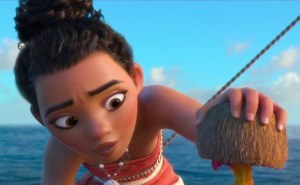 The next morning Moana discovers a stowaway, Heihei the chicken (and the funny scene of the screaming and coconut). The journey is not easy. Her boat turns over again in a storm and she asks the ocean for help. She wakes on a shore – the island where Maui has been marooned. Moana meets the demi-god who insists that he stole the heart to help mortals, he’s their hero. He brought them fire and the breeze and the sun. You’re Welcome. Then he traps Moana in a cave and tries to steal her boat. Moana escapes and the ocean puts her on the boat, even after Maui tries to throw her off a few times. The stone is a magnet for danger, he claims. And they’re soon set upon by the Kakamora (which look like evil coconut people). Moana further demonstrates her cleverness and her determination to see the mission through.
She persuades Maui to do his duty and return the heart; he’d be a hero again. Fine, they find his hook first, then they’ll return the heart. In the meantime, Moana asks Maui to teach her to sail. “It’s called way finding, princess,” Maui corrects. Moana states she’s the daughter of a chief, not a princess. “If you wear a dress and have an animal sidekick, you are a princess.” (Leaning on the fourth wall, ey, Disney? While Moana is not in the “official” princess line-up, she is seen alongside the other princesses in clips from Wreck-It Ralph 2, and fits the same criteria as Pocahontas {daughter of the chief, with an animal sidekick, saves her people}, who is part of the “official” line-up. I just thought it was funny that they bring it up in the movie and call attention what everyone notices about Disney’s princesses.)
The pair must sail to Lalotai, the Realm of Monsters in order to retrieve Maui’s hook from Tamatoa, the collector crab. He enjoys talking about himself and how Shiny he is [I dislike this song, it doesn’t fit with the rest of the soundtrack; I understand why, but still, it’s weird.] Moana distracts the crab with a fake stone so she and Maui can escape. His shape shifting powers are on the fritz, though we do briefly see him transform into Sven. Maui tries to leave the mission again. He explains how he came to be a demi-god; he was born mortal, but his parents threw him into the sea. The gods found him and saved him, gifting the magical fish hook. He uses his powers to help mankind, hoping they’ll love him. But it was never enough. Now he’s not sure he’s worthy to be saved. Moana encourages him; the powers and the hook don’t make Maui, he does. Further encouraged by his mini-me tattoo, he gets his mojo back.
They finally reach Te Fiti and Maui goes to return the heart, but the demon, Te Kā throws fireballs and clashes with Maui’s hook. The boat is pushed back and Maui’s hook is cracked. “Without my hook, I am nothing!” Maui shouts, and leaves. Moana now believes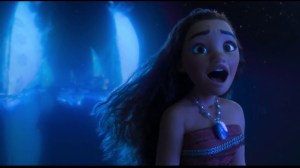 that the mission is truly hopeless and begs the ocean to choose someone else. The spirit of her grandmother comforts her; she should have never put all the pressure on Moana. If she wants to return home, her grandmother will help. “The people you love will change you, the things you have learned will guide you,” does Moana know who she is? “I am a girl who loves my island, I am the girl who loves the sea, it calls me.” Spirits of the old voyagers appear around her. “And the call isn’t out there at all, it’s inside me…come what may, I know the way. I Am Moana!” [that song gives me goosebumps] She swims down to the stone and when she pops back up, the spirits have vanished. But she knows what to do. She repairs her boat and sets off for Te Fiti again.
She dodges Te Kā’s attacks, seems to go for one opening, then doubles back through the other. But a wave capsizes her again, yet Maui flies to the rescue. He’ll distract Te Kā, so Moana can get to Te Fiti. But when she stands on top of the one island, there’s only the outline of a woman below. Then she notices the swirl on her stone matches one on Te Kā’s chest. She shows the stone and asks the ocean to “let her come to me.” The ocean splits and Te Kā rushes to the small young woman. “I know your name/ they have stolen the heart from inside you/ but this does not define you/ this is not who you are/ you Know Who You Are.” Te Kā pauses in front of Moana. The woman places the heart in the center of the spiral. Greenery overtakes the lava stone and Te Fiti emerges. She smiles down at the little heroine. Moana and Maui are brought before her; Maui apologizes and he receives a new hook (the old one was destroyed while he fought Te Kā). Te Fiti gifts a new boat to Moana. The goddess then lays down and reverts back to a beautiful island.

Moana offers that Maui could return with her to Motunui. He won’t, but she’ll see him around. He gains a new tattoo of her (he had earlier explained that he receives a new tattoo when he’s earned them). Moana returns home to her island and her pleased parents. Her father remarks that going past the reefs suits Moana and they pull out the old boats. Moana teaches what she’s learned of way finding and they set sail again (a shell sits on top the rock pile on the mountain).
I enjoyed this movie a lot; the story was different, it showcased another culture that I have developed an interest in (due to Hobbit and Lord of the Rings being filmed in New Zealand and the country and people showcased in the behind the scenes features, and starting to watch the rebooted Hawaii Five-0 series). Moana is an amazing character, well rounded and developed. While she loves the water and it calls to her, she is willing to do her duty and doesn’t complain. There is value in serving others and putting them ahead of yourself (or as Spock would say, “The good of the many outweigh the good of the few or the one.” Though there are times when that can be broken, as all rules are subject to). She goes on a physical journey as well as a personal journey. She stands up to demi-god Maui (not my favorite character, until we got deeper; he was very brash to start with, almost Gaston-like). The grandmother was sassy; I like sassy characters. Her death was sad, but did not leave me a sobbing mess.
I didn’t see the ending as a twist so much; Te Kā appeared more as a guardian to Te Fiti. But the scene was beautiful and how the goddess appeared as balancing elements. I enjoyed the bulk of the soundtrack, typically the songs that featured Moana. Not a huge fan of You’re Welcome, again because of the bragging, and Shiny was just weird.
So, that’s it! I’ll be moving on from animated Disney movies, after a wrap up blog next time. A few live action Disney films, mainly Pirates of the Caribbean, then onto some other action-adventure categories. But first, weigh in on what is your favorite Disney animated film (or live-action adaptation). And your favorite Disney hero/princess and villain (i.e., who do you love to hate, or who do you root for, or who do you think is the most well-developed). Heck, what’s your favorite Disney soundtrack?
Coming Soon: Enchanted (could count as a Disney princess movie; we’ll get into that during the post)
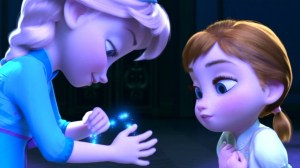 the palace and meet little princesses Elsa and Anna. Anna begs her older sister to “do the magic!” so they can play in snow. They sneak to a ballroom and Elsa freezes the floor. We briefly glimpse Olaf, who likes warm hugs. But Anna goes too fast jumping from snow mound to snow mound that Elsa creates. When Elsa trips, her shot goes too high and hits Anna. Their parents rush in from the commotion, their father demanding “Elsa, what have you done?” and they immediately head out of the capital, Elsa still trailing ice.
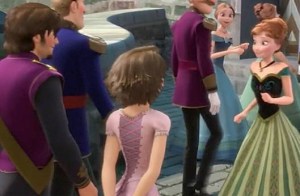 generally postulated that the queen of Arendelle and queen of Corona are sisters. And the king and queen of Arendelle were heading to Rapunzel and Eugene’s wedding when their ship went down. This is supported by Rapunzel and Eugene showing up at Elsa’s coronation (if you’re watching closely, it is distinctly them) and further supported by Frozen releasing three years after Tangled, and Elsa comes of age three years after her parents’ death. It is further theorized that the Arendelle ship is the shipwreck Ariel is exploring at the beginning of The Little Mermaid. This stems from the fact that both original fairytales were written by Hans Christen Anderson and there is a statue of a mermaid in Denmark, which lies along the route Anna and Elsa’s parents would have taken from Norway to Germany (Rapunzel being a German tale). Another option is that the Arendelle ship was blown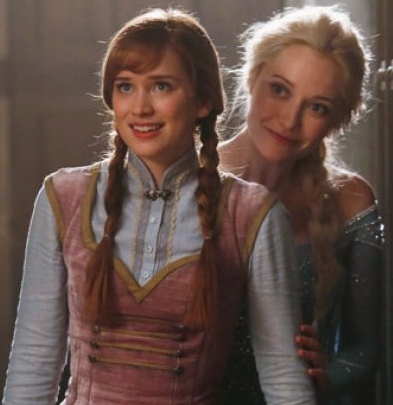
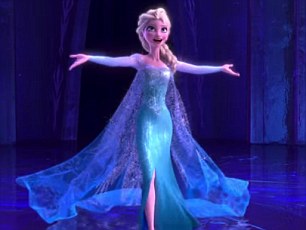 don’t feel/ don’t let them know. Well now they know!” She Let[s] it Go. She’s able to use her power freely; and it’s beautiful. She creates a magnificent ice castle and to match her new mood, she creates a new (iconic) dress. The cold never bothered her, so she’s comfortable where she is. She’s never going back and tosses away her crown. According to Disney trivia, this song was the turning point the in the development of the film. At this point, the Snow Queen was not longer the villain. The song has also topped the Billboard list and that was the only song we heard on repeat for about a year, I think (Piano Guys did a beautiful crossover between this song and Vivaldi’s Winter; as I have often found, I prefer Piano Guys’ covers to the original). It was during this song that I figured out Idnia Menzel voiced Elsa, because the singing tone matches Defying Gravity from Wicked. I personally believe that the lyrics to this song are an aid to those who bottle up their emotions and worry about being themselves.
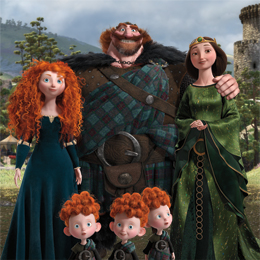
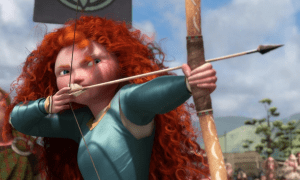 only to find her not there. Merida steps out, hair freed from its wimple, annoucning “I’ll be shootin for my own hand!” She has to tear the dress at the seams in order to allow arm movement, then proceeds to shoot three bull’s-eye in a row, splitting Dingwall’s arrow. Elinor is furious and throws Merida into a room in the castle. They shout at each other and Merida calls her mother a beast; she will never be like her, and slashes a tapestry. In retaliation, Elinor throws Merida’s bow into the fire. Merida rushes off in tears and Elinor realizes what she did. She pulls the bow out, but it’s too late; it’s cracked.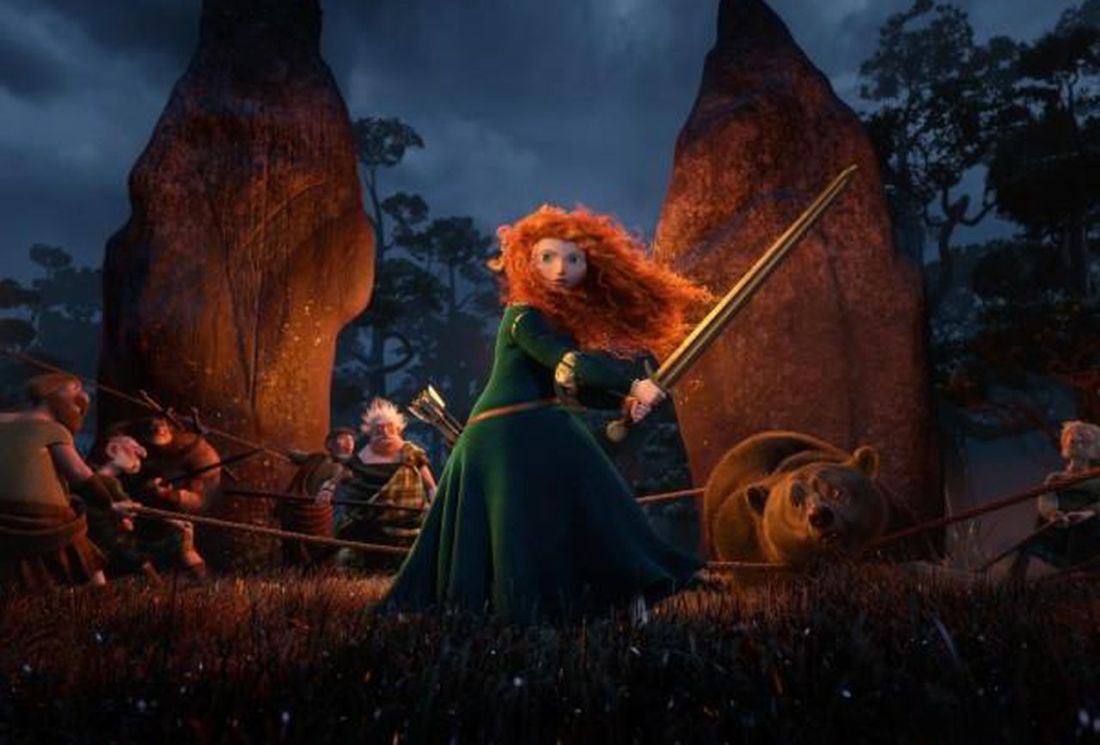
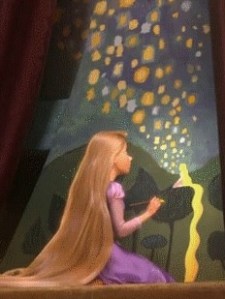 (sings) her daily schedule, which includes a lot of painting and brushing her hair, and wonders When Will My Life Begin? Mother Gothel returns home and calls for “Rapunzel, let down your hair!”, the classic line. And I further dislike the hag for her use of mean teasing; it’s a pet peeve of mine. One has to wonder how Rapunzel turned out sweet and kind with that kind of influence.
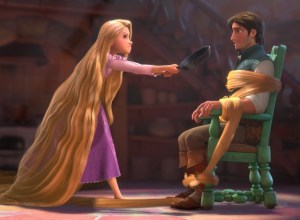 Once Gothel is gone, Rapunzel puts her plan into action. Flynn wakes thanks to Pascal’s tongue in his ear, to find himself strapped to a chair, by hair. Rapunzel reveals herself, asking “Who are you and how did you find me?”, believing that he is there for her hair. Flynn starts very charming, then falls into more modern flirting, which is a bit humorous (I do like that he is not like any other prince or leading man and he’s very sarcastic). But he’s concerned for his satchel. He guesses Rapunzel’s hiding spot, so she knocks him out again (that never gets old) and he’s woken by Pascal’s tongue again. Rapunzel feels that fate or destiny brought them together, Flynn cracks “a horse,” and points out that it’s terrible idea to simply trust him (works out this time, but not a theory to be tested often). She strikes a deal with Flynn once she finds out he’s not after her hair; he takes her to see the lanterns, she’ll return his satchel; without her help, he will never find it. Flynn attempts his “smolder” [I side with Rapunzel; not terribly impressed]. He agrees, Rapunzel drops him on his face: “You broke my smolder!” [ha ha! That is always funny].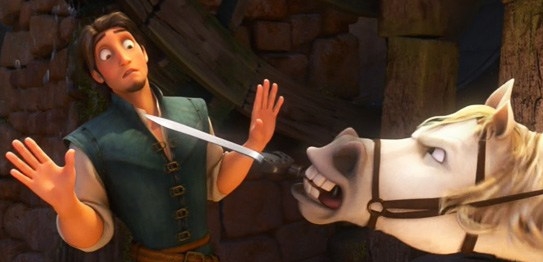
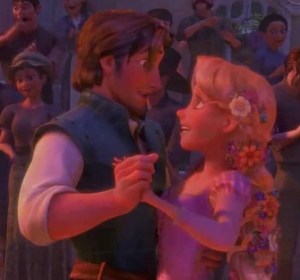 into the kingdom. It’s quickly discovered that incredibly long loose hair is not good in a town center; Eugene enlists the help of a few young girls to braid Rapunzel’s locks. They have wonderful little adventures throughout the day; Rapunzel showing off her art skills, reading books in the sunshine, learning about the lost princess in front of mosaic of the royal family, culminating in a dance [my favorite part of the soundtrack]. Eugene and Rapunzel finally end together at the end of the dance, but before they have a chance to act, the call goes out to head to boats for the lanterns.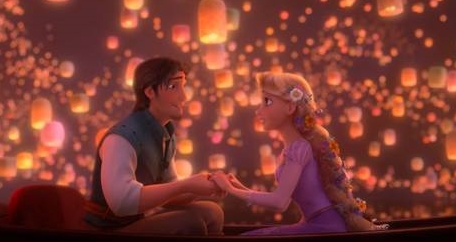
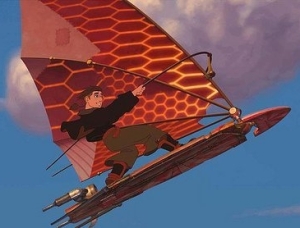 passed and witness Jim take off on a hoverboard of some sort, weaving about bits of machinery. He’s clearly ecstatic, until robotic cops catch up. He’s taken home to his mother’s inn, filled with a variety of odd creatures. Sarah Hawkins is overworked and we can tell times have been difficult and she’s not terribly pleased to have her teenage son brought home by cops, again. She had just been telling a family friend, Dr. Delbert Doppler, that Jim was turning around. The cops inform her, and Jim, that one more stunt will land him in juvenile detention. Then the stupid bots call him a loser. Sarah just doesn’t want to see Jim throw away his entire future; Jim’s retort is “what future?” We find out, from a conversation between Dr. Doppler and Sarah, that Jim is very bright, but he took his father leaving them as a boy very hard (as has been pointed out, that is rare for a Disney movie, for a parent to have left, instead of died).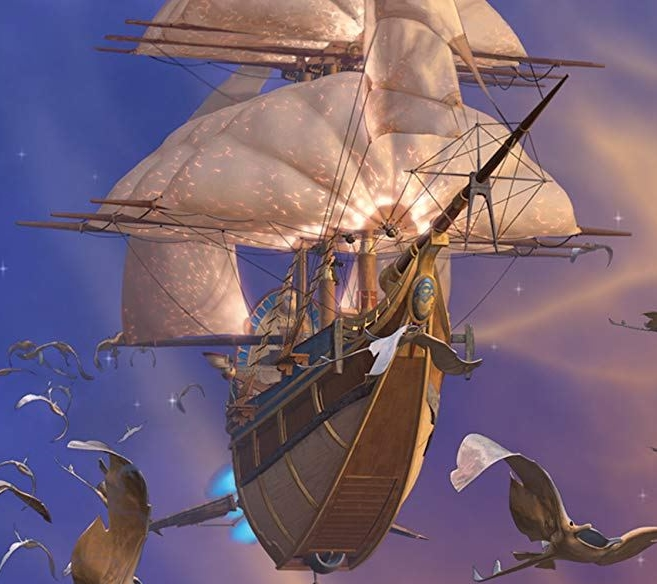
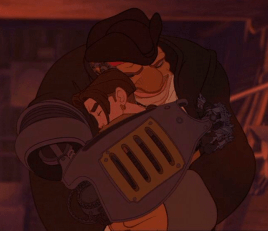 they won’t tell his mother about the life-threatening bits of their adventure. Jim discovers Silver a few minutes later, attempting to steal the last skiff. He aids Silver, but turns down the man’s offer to go with him; following Silver’s earlier advice to chart his own course. Silver is proud of the lad, telling the lad he’s glowing; “you’ll rattle the stars,” he tearfully encourages. They share a last embrace and Silver tells Morph to keep an eye on Jim. One last token, Silver tosses Jim a handful of treasure, for his mother to rebuild her inn. The movie ends with the inn being rebuilt; Amelia and Delbert are married, with four children; the cops show up with Jim, showing off his new uniform. Bonus features reveal that Jim went on to become a captain. Where You Are closes out the film.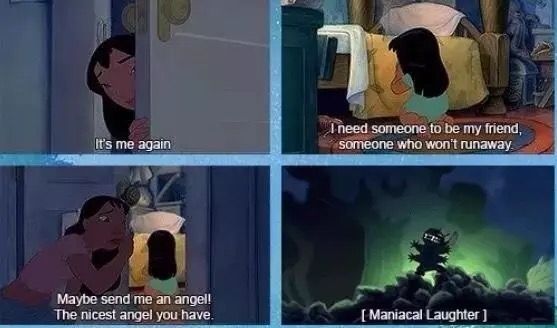
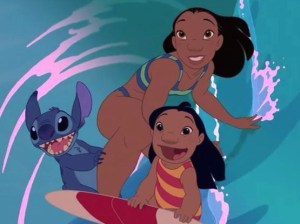 surfing. Stitch dislikes water but when he notices Lilo’s happiness with David and Nani, he eventually asks to be taken out. Unfortunately, Jumba decides to strike and pulls Lilo down along with Stitch. The adults act quickly and rescue Lilo and David goes back for Stitch. They’re all safe, but Mr. Bubbles saw the whole incident. He quietly tells Nani he will be back in the morning for Lilo. [I don’t remember crying the first time I watched this movie!] David seems to blame Stitch for everything getting messed up; I personally feel that’s unfair. There was no way to tell that the incident in the midst of surfing was Stitch’s fault and while he was not a well behaved “dog,” he made Lilo happy and was a sign that Nani was trying to settle Lilo.
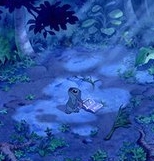 That evening, Lilo offers to Stitch that they could be his family; he could be their baby and they could raise him to be good. But if he wants to leave, he can. He does, taking the fairy tale book, stating he’s lost when he finds a clearing in the trees. Jumba, who has just been fired, comes upon Stitch and insists that his experiment will never belong, he has no family. Stitch runs, just missing Nani and David running by on their way to a job offer. He runs back to Lilo’s house, but Jumba follows. I find their fight hilarious: like Lilo calling Cobra Bubbles, and we can tell that Stitch is trying to protect Lilo (the line: “oh good, my dog found the chainsaw” hilarious; I almost made it the title of this blog, but that it could be misconstrued). But as an adult, I can also emphasize Nani’s horror at finding the house blown up and despair when Bubbles puts Lilo in the car.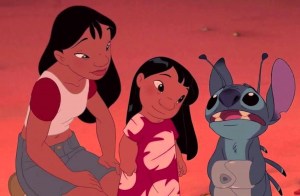
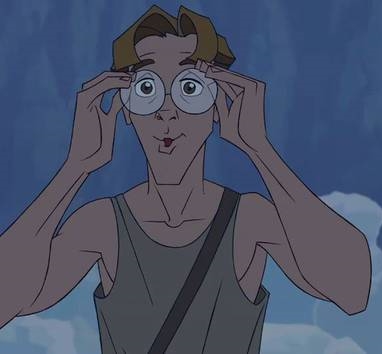


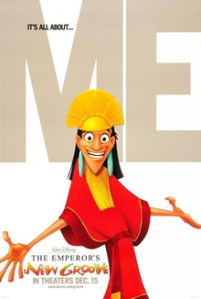 A play on the title Emperor’s New Clothes, it incorporates Incan elements and teaches a pretty straight-forward lesson about being a kind person. The opening scene (“long ago, somewhere deep in the jungle”) actually starts in the middle of the movie and the commentary states that this is a story about the lonely llama, who is the main character. Rewinding a little, the llama is actually Emperor Kuzco (who we later learn was almost eighteen and was referred to as a “prince”). Kuzco’s life is “all about me,” his servants are there to do his bidding (there’s odd step dancing for some reason); he has his own theme song guy. He throws an old man out the window for throwing off his groove. He’s supposed to choose a bride but nonchalantly dismisses all the assembled ladies.
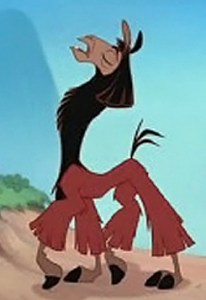 will lead him back to the palace. When Pancha falls through a bridge, Kuzco attempts to leave him, revealing he lied. Kuzco ends up stuck, they scuffle for a bit, then the bridge collapses, they get stuck right above crocodile infested water and have to work together to get out of the situation. The alternative way to get to the palace will take four days. When a cliff face gives way under Pancha, Kuzco saves him and we start seeing a friendship develop.
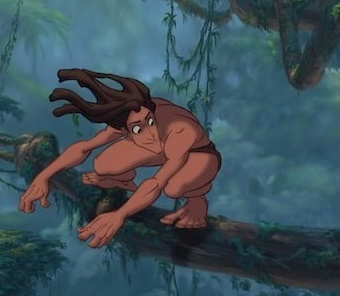 witness Tarzan transform into an adult man. He figures out a spear – Kerchak doesn’t quite approve. His typical vine swinging comes about since he can’t keep up with gorillas on the ground; and new for this interpretation, Tarzan uses the moss-covered trees to glide on [I remember watching some clip on Disney channel of one of the artists being inspired by his own son’s skateboarding and that was how that bit was created].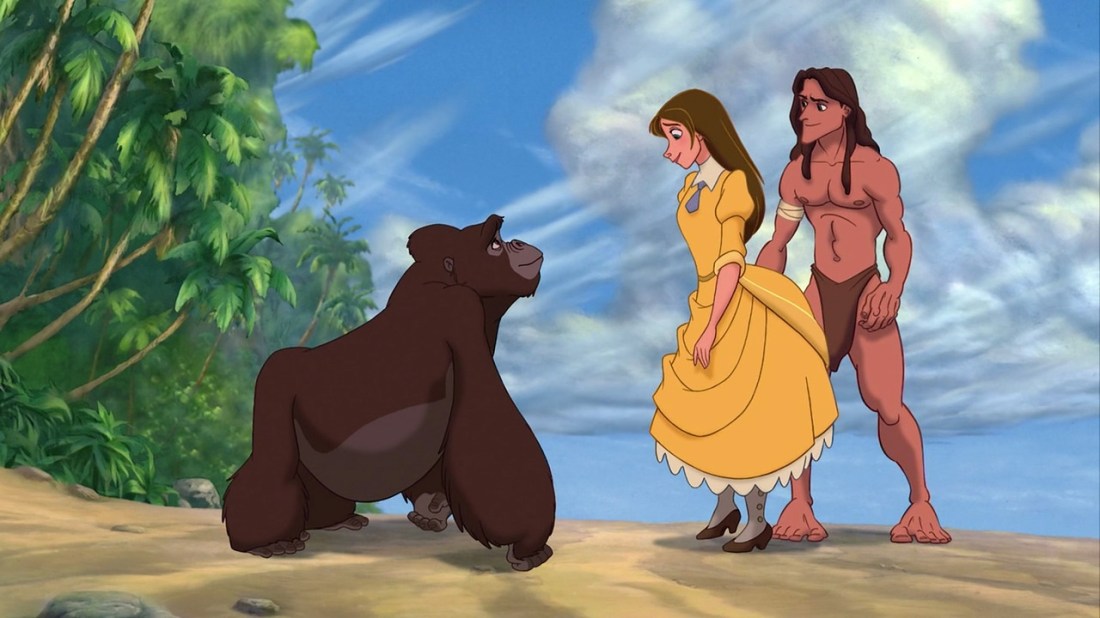
 like she is not the “perfect daughter.” “Can it be/I’m not meant to play this part? Now I see/that if I were truly/to be myself/I would break my family’s heart.” “Somehow I cannot hide/who I am/though I’ve tried/when will my reflection show/who I am inside?” Every girl has felt like this; I have felt like this off and on my entire life. Not fitting in, not being like people around you. Luckily, Mulan teaches us different. The imagery of Mulan wiping away her make-up, pausing when she splits her face between the painted bride and her natural look, highlighting how her Reflection doesn’t truly show her. Her father attempts to cheer her up, by offering that the last blossoms to bloom are the most beautiful.
 weights, but it was funny to see how bad they all were at the beginning. Shang tells Mulan “you’re unsuited for the rage of war/so pack up, go home, you’re through.” Mulan wants to prove herself and gets an idea. She wraps the weights around each other and uses them to pull herself up. After that, she excels at training, demonstrating that brains is better than brawn; one needs to outwit their opponent.
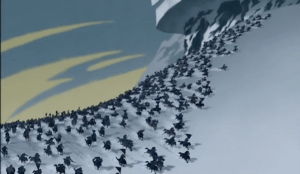 Shang has raced forward to help “Ping” but she dashes back and pulls him away from the onrushing snow. Kahn gets free to rescue them. Shang is pulled away and once Mulan has fought back to the surface, she grabs his unconscious body. Being resourceful, she manages to get both of them to safety. Once Shang has caught his breath, his thanks “Ping” for his bravery; calling him “the craziest man I’ve ever met,” and “from now on, you have my trust.” Mulan realizes she’s injured and the troops get her aid. She’s revealed as a woman. Chi Fu is a jerk and refers to her as a “treacherous snake.” Her friends, Yao, Ling, and Chin Po try to save her; Shang spares her life; “a life for a life, my debt is repaid.” They leave her supplies, but move on to the city.
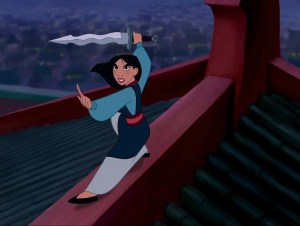 idea to use the lanterns as a zip line, but cuts off her own escape to stay with Shang when Shan Yu violently headbutts the captain. She reveals herself as “the solider from the mountains” who stole away Shan Yu’s victory. Shan Yu chases her, ending up on the roof. All Mulan has left on her is her fan and (totally awesome!) spins it around Shan Yu’s sword, then pins him to the roof as Mushu lights a giant firework. As Shan Yu is carried away, Mulan mutters “get off the roof, get off the roof!” tackling Shang as she escapes the explosion.
 Dreamer in the Mirror