
The Duchess
“When she arrives, all eyes are upon her. When absent, she is the subject of universal conversation. And what we see her wearing tonight, I look forward to seeing on the rest of you tomorrow! The Empress of fashion – the Duchess of Devonshire!”
Keira Knightley continues to play period roles (Pirates of the Caribbean, the 2005 film Pride and Prejudice, 2012 Anna Karenia [that’s three hours of my life I’ll never get back and I still don’t understand what the story was]) stars as Georgiana, the Duchess of Devonshire, Ralph Fiennes (Voldemort from Harry Potter and the new M in James Bond, amongst other roles) is the Duke of Devonshire, Hayley Atwell (she would go on to be Peggy Carter in the MCU, the mother, Evelyn Robin in 2018’s Christopher Robin, a brief role in Testament of Youth and Disney’s live action Cinderella) is Lady Bess [Elizabeth] Foster, and Dominic Cooper (younger Howard Stark in the MCU and Sky in the Mamma Mia movies) is the politician, Charles Grey. I watched the film because of the lead actors; it’s not a time period that I study closely.
The film starts in April of 1774, Georgiana and her friends are outside, watching young men, including Charles Grey race each other, while her mother settles her engagement to the Duke of Devonshire. Georgiana is seventeen and believes that the Duke truly loves her. On their wedding night, the Duke remarks “I never understand why women’s clothes must be do damn complicated.” Georgiana replies that they are one of the few ways women have to express themselves. She’s very nervous for their wedding night, but the Duke gets right to business. Her mother points out that a wife’s duty is to provide her husband with a male heir; she shouldn’t be concerned with talking with her husband.
The Duke is the primary sponsor of the Whig party and thus hosts dinners where the party members give speeches. He’s quickly bored of the speeches and leaves, but Georgiana stays and becomes involved in politics and gains favor of the primary members. But in private, the Duke has many affairs, which shocks Georgiana at first. Then one of his illegitimate daughters is brought to the house when her mother dies and the Duke expects Georgiana to raise young Charlotte without a fuss. “Consider it practice for our son,” he tells his pregnant wife. Later, at a party, Georgiana goes into labor (and modern audiences wince at her drinking wine while pregnant). The Duke expects it to be a boy. It’s a girl. When Georgiana’s mother visits, he barely speaks to her, frustrated that it is not the promised son (sound like some other historical guy we all know?) They jump to six years later, Georgiana content with her three girls, Charlotte, HarryO, and Little G.
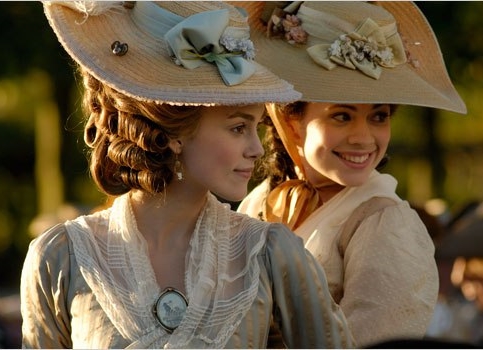
While visiting Bath and taking the waters “for her health,” Georgiana and the Duke both meet Bess Foster. Georgiana quickly befriends the woman. Bess’s husband is enjoying his mistress at home and Bess wished for diversion. Her husband also is keeping her three sons away from her (now we know why the Duke is interested in her) and has a habit of beating her, which is not illegal. Georgiana manages to convince the Duke to invite Bess to stay with them. They attend a play that is a satire of the Devonshire’s marriage. In attendance of the play is Charles Grey. Bess speaks to him and remarks that it is well known the Duke is the only man in England not in love with his wife. Bess later remarks to Georgiana that Charles is clearly in love with G. She demonstrates that intercourse can be pleasurable and instructs Georgiana to close her eyes and imagine it’s Charles Grey.
Georgiana continues to help draw attention for the Whig party and gets to visit Charles Grey who seeks to work his way up the political ladder. She’s delightfully happy, until she returns home to hear moans coming from Bess’s rooms and the servants refuse to answer if it’s the Duke in there. Georgiana confronts the Duke. She has never objected to the Duke’s many affairs, she has accepted whatever arrangements have been made. But Bess is her one single thing of her own; she is her sole comfort in their marriage. Her husband has “robbed me of my only friend!” The Duke comes back with he has upheld his end of the marriage, but his wife has not (by not giving him a son). Georgiana wants Bess out. The Duke refuses. Georgiana runs to her mother’s home. Her mother advises she give up her gambling and politics and set to the duty of providing her husband with a male heir (I’m guessing people of this time have still not figured out that it’s the man who determines the sex of the baby, like the woman has any control).
Bess explains to Georgiana that the Duke of Devonshire is the most powerful peer of the realm; he is her only hope of getting to see her sons again. Georgiana orders her out of her room. She understandably feels betrayed by her dear friend. The three boys arrive at their home and Georgiana witnesses the attention that the Duke readily bestows upon the boys (which he has never shown for his daughters). Georgiana visits Charles and gives in to their feelings. Charles points out that Georgiana likes to “please other all the time.” “It’s what I’ve been brought up to do. It’s a difficult lesson to unlearn.” At home, Georgiana tries to make a deal with the Duke. She will give him and Bess her blessing if he will accept her feelings for Charles Grey. Bess tries to rescue her friend and points out that G is only asking for what the Duke and Bess have. The Duke silences her. He will not make a deal; he is not the one to ever make deals, he has everything. He can’t make any of Bess’s sons his heirs. Georgiana leaves the table. The Duke thunders after her and forces himself on her in her rooms. Screams echo through the large house and Bess takes Charlotte away from the door. “Give me a son,” the Duke orders Georgiana, “until then, stay here. And do as I say.” [I hate this man for that.]
During another party, Georgiana is quite drunk. Her Whig friends try to help her, but her wig ends up catching fire. The doctor determines that she is pregnant. Next scene: bells are ringing. The baby is a boy. The Duke pays Georgiana as part of their arrangement. While the Duke is away celebrating his heir, Charles calls upon the house. It was Bess’s idea. After another party, they sneak away. Georgiana decides to go to Bath on her own and gets to spend more time with Charles. Until her husband and mother show up. Here again we see the double standard imposed upon women: it’s fine for the Duke to have his mistress live in the same house as his wife, but it’s not fine for Georgiana to spend time with a man who actually loves her. They leave letters from the children for Georgiana; the Duke has set an ultimatum: give up Charles, or he will destroy the man’s career and never let Georgiana see her children again. Georgiana gives in and reads the letters, then rushes home.
At dinner, Charles shows up shouting for Georgiana. She tries to calm him; she still loves him, but she cannot give up her children. Charles insists he wants to marry her and he doesn’t care if their children are boys or girls. Georgiana goes back to dinner. And tells the Duke that she is carrying Charles’s child. The Duke has Bess tell Georgiana that she is to go to the country to give birth and the child will be given to the Grey family. Bess also stands up to the Duke and informs him that she will accompany her friend. She comforts Georgiana when she breaks down after giving up her daughter, Eliza to the Grey family.
When Georgina returns, the Duke attempts to comfort her; he wishes for their lives to find a calm normalcy. He asks her to show unity by showing up at a party together. The trio arrives and Georgiana reenters society. She has a brief conversation with Charles Grey, who tells her that he is engaged and that he has a new niece, Eliza, that Georgiana should meet someday. The film shows a few statements over the ending scenes of Georgiana playing with all the children: “Georgiana continued to be one of the most celebrated and influential women of her day. Charles Grey became Prime Minister. Georgiana, Bess, and the Duke lived together [for twenty-five years] until Georgiana’s death. With Georgiana’s blessing, Bess went on to marry the Duke and become the next Duchess of Devonshire. Georgiana frequently visited Eliza in secret. Eliza named her daughter Georgiana.”
While not a favorite movie of mine, I find it interesting. The scene of the Duke raping Georgiana is one that has stuck with me since first seeing the movie. I don’t quite drool over these gowns, but I do recognize that they are stunning. The movie also demonstrates that arranged matches rarely go well.
Up Next: We actually go back in time a little to Amazing Grace
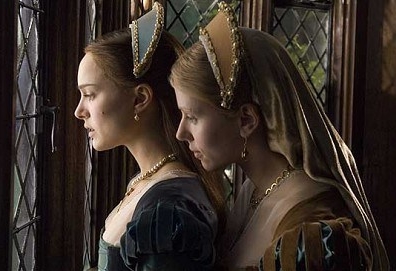 in his path. Anne accepts the challenge. Preparations are made for a royal visit. But when Anne is too daring on a hunt, the king is injured, so the Duke sends Mary to tend to the king. Once Henry returns to court, he calls for Mary, her husband, and family. Mary and Anne become ladies in waiting to Queen Catherine, and William Carey is made a member of Henry’s privy council (a high honor). Catherine suspects why the Boleyn sisters are now in her household and Anne becomes jealous of Mary’s attention from Henry. She tells her sister “I will make my own way.”

 Godfrey that the man is his father (meaning Balian grew up as a bastard; his life really isn’t going well, is it?) Godfrey gladly takes his son in and begins to teach him the art of being a knight. Even defends him against guards who came to arrest him. Godfrey takes an arrow, which then festers. The Hospitaler tends to Godfrey as best he can, but they make for Messina, the port to the Holy Land. Godfrey instructs his son to serve the king of Jerusalem. On his death bed, he knights his son and calls him to defend the people.
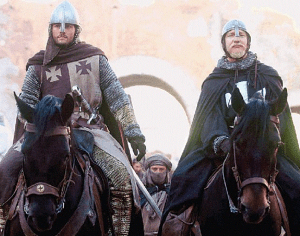 warns him that their army cannot go far from water. Balian stays behind and looks to the defense of the city. And yes, Saladin wins the battle, since the Christian army drops from exhaustion (he points out to his generals where the Christians went wrong; yes God may decide who wins a battle, but tactics and planning also play a part. Simply saying “God will protect us,” does not prevent a sword from cutting a body in two). Saladin cuts Reynald’s throat, but won’t kill another king, so Guy lives.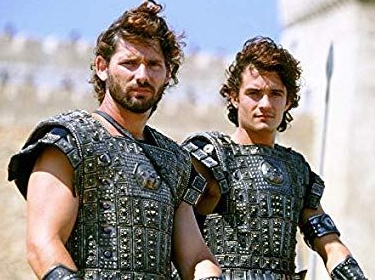
 The Trojans attack at night with giant fire balls, which leads into the Trojan army advancing. Achilles joins the fight and faces Hector. Hector cuts his throat and reveals that it is Achilles’ beloved younger cousin. Hector declares enough for one day. Achilles’ second in command delivers the news. The next day, Achilles rides alone to the gates of Troy and demands Hector to face him. Hector, an honorable man, faces Achilles. And behind the scenes trivia reveals that Eric Bana and Brad Pitt did not use stunt doubles for the duel. (They also has a gentleman’s agreement to pay for every accidental hit; $50 for each light blow, $100 for each hard blow. Brad Pitt ended up paying Eric Bana $750; Bana didn’t own anything to Pitt.) It’s a good duel, but really didn’t enrapture me. Achilles defeats Hector, then ties his body to his chariot to drag back to the Greeks. That evening, king Priam comes to Achilles to beg for his son’s body, so he can have an honorable funeral. “Even enemies can show respect.” Achilles relents and allows Troy to have their twelve days of mourning, and lets Briseis return to Troy. Agamemnon is furious.
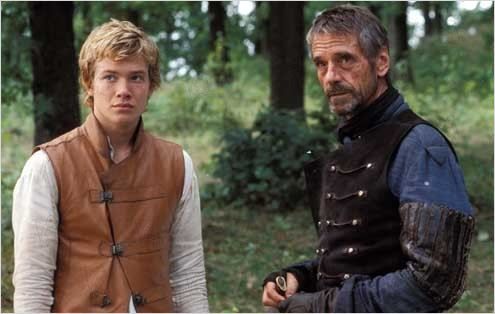 Brom is a wise mentor. He demonstrates that Eragon is not as skilled as he thinks he is and his sole purpose at the moment is ensuring that Eragon and Saphira make it to the Varden alive, in order for there to be any hope for the land. Eragon starts discovering his powers and also discovers that Brom was once a dragon rider. But his dragon was killed years ago. A rider can live past their dragon; but if the rider is killed, the dragon dies. So Eragon shouldn’t do stupid things. Well, he’s a teenage boy; he does stupid things.


 Dreamer in the Mirror