
Gods and Generals
One time period of American history that I know well is the Civil War, certainly influenced by the number of books my mother has on the subject and her own well developed interest in the topic. When I took a history course solely on the Civil War in college, and needed books for a project, I simply called her up and said I needed books on Robert E. Lee. That weekend, I was delivered about a dozen of the books she could readily find (we have more, somewhere). I also realize this topic has gotten more heated in recent years due to…we’ll say politics and recent events and I have no desire to tackle that. Thus, this run down may end a bit shorter than I originally envisioned.
Gods and Generals is the first book in a trilogy of historical novels about the Civil War. The first written was the middle book, Killer Angels, written by Michael Shaara; it focuses on the four days of the Battle of Gettysburg, eventually turned into the movie, Gettysburg. Gods and Generals was written about a decade later by his son, Jeff, as a prequel, dealing with the major battles of the beginning of the war and again, about a decade after the first film was made, the prequel was filmed. There is a third book, The Last Full Measure, which was originally supposed to have a film made of it as well, but the poor box office performance of Gods and Generals scrapped that idea. Jeff Shaara has also written numerous other novels dealing with other time periods of American history (and we have some of them scattered in the house). These are not movies to take viewing lightly; they’re four hours a piece (Endgame was only three).
During my sophomore year of high school, our curriculum focused a great deal on the American Civil War. We read Killer Angels in English class (and I got laughed at for reading in an Irish accent for an Irish character). We watched Gettysburg in history class and took a trip to the battlefield. I was already familiar with the place; my parents took my brother and I there a couple times for summer vacations. Pictures exist of the two of us climbing all over Devil’s Den. Our final project was a joint paper for English and History on the subject of the Civil War. (I chose Southern women on the home front). And me, being the little nerd that I am, after reading Killer Angels, I proceeded to read Gods and Generals and The Last Full Measure…well, I can’t recall if I actually finished Last Full Measure, or if I gave up. The first two books are excellent, the third one was weird.
A bit like another trilogy of novels written on the Civil War that was turned into a mini-series, North and South. (Written by John Jakes, who has written other novels on American history, and not to be confused with the British show of a series of books written by Elizabeth Gaskell, which Richard Armitage stars in…if you’re still confused, let me know, and I will endeavor to clear up the confusion). After finishing the Shaara books, I read North and South, Love and War, and Heaven and Hell. The third book in that series was really weird. The premise of this series features two young men, Orry Main of South Carolina, and George Hazard [no, not the Dukes…and yes, I’m a fan {the original, not the stupid remake with Jessica Simpson, I refuse to watch that}] of Pennsylvania. They become friends at West Point and then all hell breaks loose in the country. The mini-series stars Patrick Swayze (of Dirty Dancing and Ghost fame) as Orry Main and James Read (the father from Charmed) as George Hazard. Kristie Alley also shows up.


Back to this movie: Stephen Lang stars as General “Stonewall” Jackson (he was Major General George Pickett in Gettysburg, was a bit weird watching them in reverse order and sitting there, thinking, “Pickett looks familiar….oh.”) Robert Duvall is General Robert E. Lee, Jeff Daniels is Lieutenant Colonel Joshua Lawrence Chamberlain [I do not remember how military ranks fall, though if you have a question, I will find out], and Kevin Conway is Sergeant “Buster” Kilrain. The film opens in April of 1861; Robert Lee is offered the command of the continental army, to quell the rebellion of the southern states, by force, for challenge the central government. Lee refuses; his home is in Virginia, his loyalty is to Virginia, he has no greater duty than that to his home, Virginia. He views, as a lot of people at that time, Lincoln as invading the country of Virginia and the South. We’ll get this argument out of the way early: the Civil War was fought for states’ rights; the South’s argument was they were sovereign states that should be ruled by their state governments, not a federal government. They did not want influenced by politicians in the North. This argument actually goes back to the creation of the United States (we’ll cover it in the musical 1776). Yes, many of the leading politicians of the South wanted the ability to keep slavery; which is horrible and morally and ethically wrong and should have never been started to begin with. However, most southerners did not own slaves. And honestly, the North didn’t have a lot of room to talk; their ports participated in the slave trade (pops up in 1776) and many factory workers were treated worse than slaves. Factory workers were expendable; there’s always more in line waiting for a job. Smart plantation owners treated their workers decently in order to retain good workers. Again, not arguing that slavery is right; it’s not. But, the view that the South was doomed from the start, the “Lost Cause,” is northern propaganda due to winning the war. Winners write the history.
Carrying on: the film turns next to the Virginia Military Institute (VMI), where Jackson is teaching. Historically, not the best teacher. He even remarks that his method is to lecture. If the concept is not grasped, he repeats the lecture word-for-word the next day. As a college-educated individual, not the best method. Outside, the youngsters are rebelling against the northern call to arms and take down the American flag. Next, the delegates of Virginia have decided to officially secede from the United States (again, feeling that Lincoln and the North are invaders and wish to impose their will through coercion) and have appointed Robert E. Lee as general of the Army of Virginia, following in the steps of his grandfather, Lighthorse Henry Lee (a general for George Washington in the American Revolution) [also related to signer of the Declaration, Richard Henry Lee; we’ll see him in 1776]. We stop briefly in Fredericksburg to see a family sending its men off to war. We also see several instances where “Stonewall” Jackson is a devout Christian, believing that anything that happens is God’s plan, and openly praying for help in the coming war.
They cover the march to Manassas, in July of 1861, one of the first battles of the Civil War. It appears here that Jackson earns his nickname “Stonewall:” “there is Jackson standing like a stone wall,” amidst canon fire. This is still the European style of fighting, where each side lines up and fires at each other. They do advance towards one another at times and the goal always is to gain the high ground (better firing position). Some of Jackson’s VMI cadets are over eager and charge the Union lines before ordered, their commander is forced to follow, breaking Jackson’s plans. He insists to his First Brigade that discipline will win the day; indeed it does. He unfortunately finds those cadets after the battle, dead, but does not cry. Again, God’s plan will out.
We pop up to Maine, where Lawrence Chamberlain is teaching at Bowdoin College. He decides to join the war effort and meets up with his younger brother, Thomas at training with the 20th Maine volunteers. He also gains his right hand man, Kilrain at training. Kilrain (not a true historical character) points out there are friends from Ireland on the southern side; he feels they are trading one tyranny for another.
December of 1862 rolls around and the Confederate and Union forces are circling Fredericksburg. The family we met earlier is trying to get out. The slave maid finally persuades her owner to flee with her children; she’ll stay behind and keep looters out of the house (she dresses her and her own children up in fancy clothes and claim the house as hers). The Union finally takes over the town and they indeed come to the house. She lets them use it as a hospital and tells them she hopes the Union wins; but her family are good folks. And they do seem to treat her well; but slavery is still morally wrong. You want a maid, fine, you pay them and don’t consider them property.
Hancock wants to cross the river sooner rather than later, but Burnside is in command and decides to hold for the pontoons to arrive. Hancock mentions the “wily Grey Fox [meaning General Lee] has outmaneuvered us again.” Hancock’s plan would have put the Union in a much better position. This is why the Union went through so many generals; they had Washington breathing down their necks and every time they made a mistake, they were simply replaced. Many of the better trained generals fought for the Confederacy, due to where their homes lay. The Union meets the Confederates on the field of battle head on, under heavy artillery fire. There is a stirring scene where the Northern Irish Brigade (a real thing; I’ve got a book about them) faces off against the Southern Irish Regiment. The South is well protected for the most part behind a stone wall and the North keeps taking hits. We hear uilleann pipes over top the scene and when the South has beaten the North back and a few of the men are crying for having to shoot kinsmen, they shout “Haroo!” (this is where the saying comes from). Even the Fredericksburg family mentions the Irish Brigade; they had sent help during the famine and some of the ones they helped save may have just died on the field. But Hancock sends another brigade to try to take the ground.
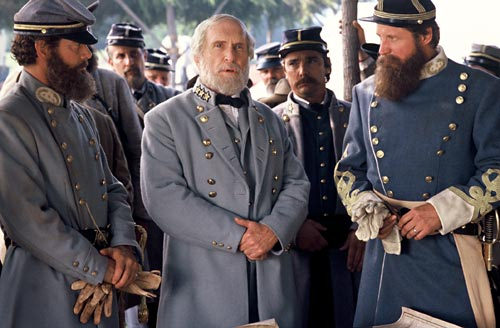
Three days later, the Union finally retreats. Lee mentions “it is well that war is so terrible, for should we grow too fond of it.” At one point, the 20th Maine was forced to use dead soldiers as shields when they got stuck on the battlefield overnight. Lincoln sends word to the Union soldiers that though Fredericksburg was not a victory, neither was it an accident. And the casualties were not bad compared to what they could have been. Kilrain mutters, “compared to what? The Scots at Culloden? The English as Bunker Hill? The French at Waterloo?” Later, he listens as Chamberlain discusses he views on the war. Chamberlain cannot understand how a group of people can claim they are fighting for their freedom, when they hold another race in bondage.
Christmas of 1862 finds the Southern commanders at an estate not too far from Fredericksburg, hosted by the wealthy family. Jackson strikes up a darling relationship with the young daughter, practicing for when he finally sees his own daughter, born after the war started and whom he has not met yet. Billy Yank and Johnny Reb (slang nicknames for Union and Confederate soldiers, respectively; there is also a song entitled Johnny Reb by Johnny Horton, about the Confederate soldiers. Horton has done other historical songs, most notably The Battle of New Orleans.) meet in the middle of the river to trade coffee for a smoke; a modicum of peace. The Confederates are also entertained with a show from Texas.
A few months have passed and the southern army has not moved far. Jackson sadly gets word that the little girl he befriended has died of scarlet fever. At this time, he allows himself to mourn for all of those he has lost. But his wife and baby girl meet him shortly afterwards and his spirit is lifted. We have come to the Battle of the Wilderness in the beginning of May of 1863. Calvary leader, J.E.B. Stuart (whom my brother did his report on and dressed as a Confederate officer) informs Jackson and Lee that they have found the Union flank. Jackson wants a surprise attack and to keep pushing them. That night, he rides out beyond the Confederate line. When he tries to return, he is fired upon by his own men, who do not stop firing. He’s hit several times and ultimately loses his left arm. While he recovers, he develops pneumonia. The Union army has moved on and secured Chancellorsville. Lee feels while Jackson has lost his left arm, “I have lost my right.” Lee pleads to God to not take Jackson, for he still needs him. But Jackson does not recover. His funeral is held at VMI; he is buried in Lexington.
The film ends stating that Lee decides to take the fight to the North after the loss of Jackson. This directly leads to the Battle of Gettysburg. It is also noted that the movie was filmed on location in Maryland, Virginia, and West Virginia. I also discovered some, not-so-cheerful trivia: it is well known that a lot of the extras for both Gods and Generals and Gettysburg were re-enactors. Well, due to when this movie was filmed, they lost some of the extras when they got recalled to the military after Spetember 11th. And Martin Sheen originally wanted to reprise his role as Robert E. Lee, but he was currently filming The West Wing; if his contract had been approved, he would have been on a flight to LA on September 11th.
I’ve never been a battle historian. I have taken a military history course, as an overview course; but I do not understand tactics. Upon re-watching this film, I find that I enjoyed the book much more; I was able to connect with the characters better (even with a four hour runtime, things always get cut when transforming a book to film). For me, this movie drags. It’s good that they decided to frame it mainly around “Stonewall” Jackson, and focus on only a few other main characters; though they still forgot a lot. But, if you like the Civil War, this is definitely a film to watch. I’d love to go visit Virginia and tour some of the battlefields and study more of that specific history.
Next Time: Gettysburg
 He continues to speak of the early years. He gave a tour of the docks to shock the aristocrats with the horrors of slavery. Equiano published his account. They had a petition signed by 390,000 of the common people, and Lord Charles Fox of Parliament. This is after Lord Tarleton states there is “no evidence the Africans themselves have any objections to the trade.” (Yeah, I doubt that evidence). Wilber shouts back “no matter how loud you shout, you will not drown out the voice of the people!” Tarleton scoffs at the notion of the people. The bill failed the first year. Five years in, there is talk of revolution in Europe, spurred by the American colonies. And opposition, in the form of abolition teeters dangerously close to sedition in those times. Barbara argues that now is the time to regroup, the war with France is being won and when people stop being afraid, they remember their compassion.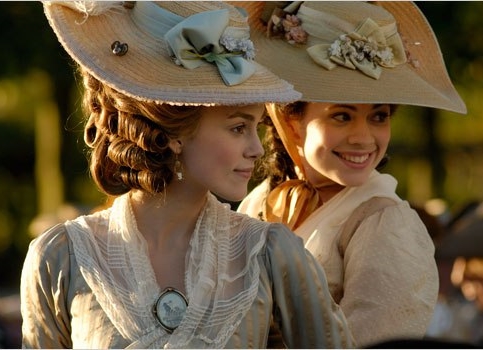
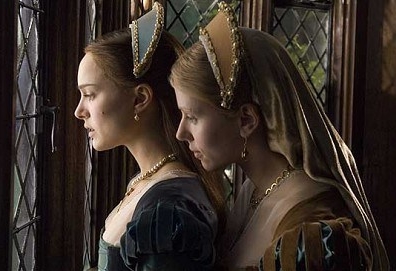 in his path. Anne accepts the challenge. Preparations are made for a royal visit. But when Anne is too daring on a hunt, the king is injured, so the Duke sends Mary to tend to the king. Once Henry returns to court, he calls for Mary, her husband, and family. Mary and Anne become ladies in waiting to Queen Catherine, and William Carey is made a member of Henry’s privy council (a high honor). Catherine suspects why the Boleyn sisters are now in her household and Anne becomes jealous of Mary’s attention from Henry. She tells her sister “I will make my own way.”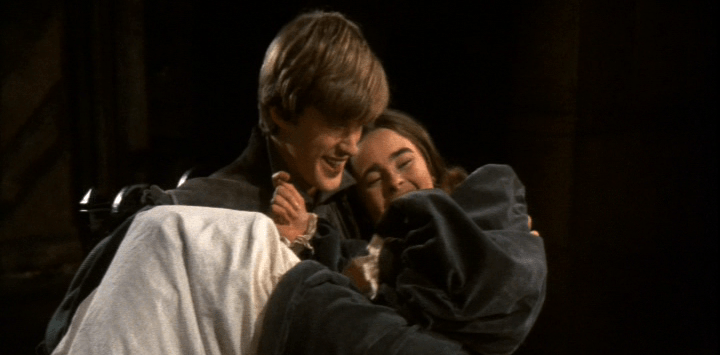
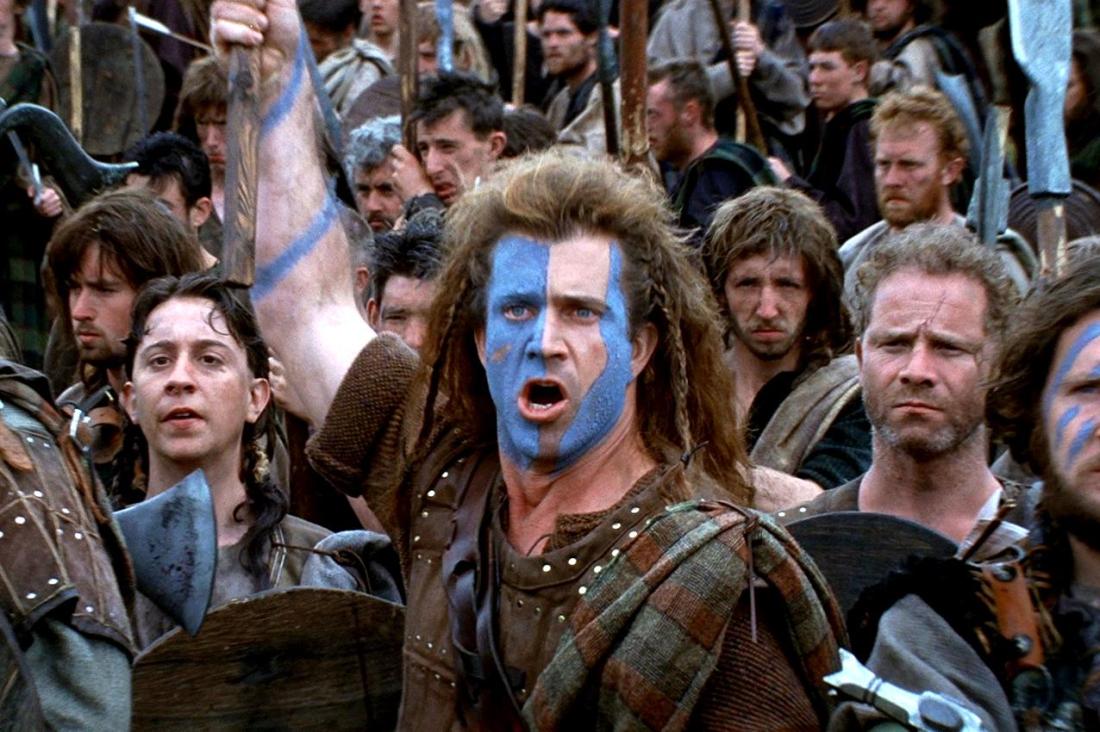
 Godfrey that the man is his father (meaning Balian grew up as a bastard; his life really isn’t going well, is it?) Godfrey gladly takes his son in and begins to teach him the art of being a knight. Even defends him against guards who came to arrest him. Godfrey takes an arrow, which then festers. The Hospitaler tends to Godfrey as best he can, but they make for Messina, the port to the Holy Land. Godfrey instructs his son to serve the king of Jerusalem. On his death bed, he knights his son and calls him to defend the people.
 warns him that their army cannot go far from water. Balian stays behind and looks to the defense of the city. And yes, Saladin wins the battle, since the Christian army drops from exhaustion (he points out to his generals where the Christians went wrong; yes God may decide who wins a battle, but tactics and planning also play a part. Simply saying “God will protect us,” does not prevent a sword from cutting a body in two). Saladin cuts Reynald’s throat, but won’t kill another king, so Guy lives.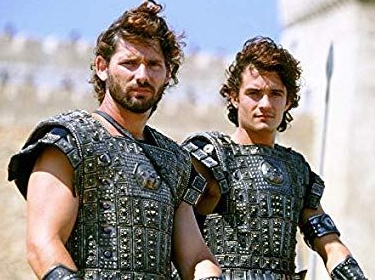
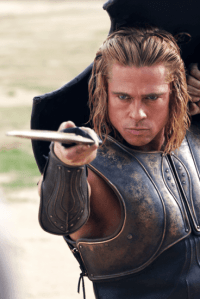 The Trojans attack at night with giant fire balls, which leads into the Trojan army advancing. Achilles joins the fight and faces Hector. Hector cuts his throat and reveals that it is Achilles’ beloved younger cousin. Hector declares enough for one day. Achilles’ second in command delivers the news. The next day, Achilles rides alone to the gates of Troy and demands Hector to face him. Hector, an honorable man, faces Achilles. And behind the scenes trivia reveals that Eric Bana and Brad Pitt did not use stunt doubles for the duel. (They also has a gentleman’s agreement to pay for every accidental hit; $50 for each light blow, $100 for each hard blow. Brad Pitt ended up paying Eric Bana $750; Bana didn’t own anything to Pitt.) It’s a good duel, but really didn’t enrapture me. Achilles defeats Hector, then ties his body to his chariot to drag back to the Greeks. That evening, king Priam comes to Achilles to beg for his son’s body, so he can have an honorable funeral. “Even enemies can show respect.” Achilles relents and allows Troy to have their twelve days of mourning, and lets Briseis return to Troy. Agamemnon is furious.
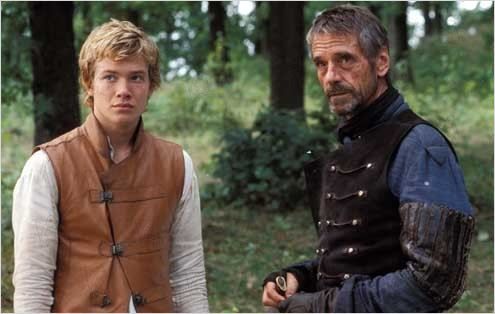 Brom is a wise mentor. He demonstrates that Eragon is not as skilled as he thinks he is and his sole purpose at the moment is ensuring that Eragon and Saphira make it to the Varden alive, in order for there to be any hope for the land. Eragon starts discovering his powers and also discovers that Brom was once a dragon rider. But his dragon was killed years ago. A rider can live past their dragon; but if the rider is killed, the dragon dies. So Eragon shouldn’t do stupid things. Well, he’s a teenage boy; he does stupid things.
 Dreamer in the Mirror