History Really Comes to Life

I’m back! I apologize for the hiatus, but between the holidays and working more and trying to read the very long list of books I have, it’s taken a bit to get back to blogging. But, we have lots of fun movies ahead, continuing with the action-adventure category. Onward!

Night at the Museum

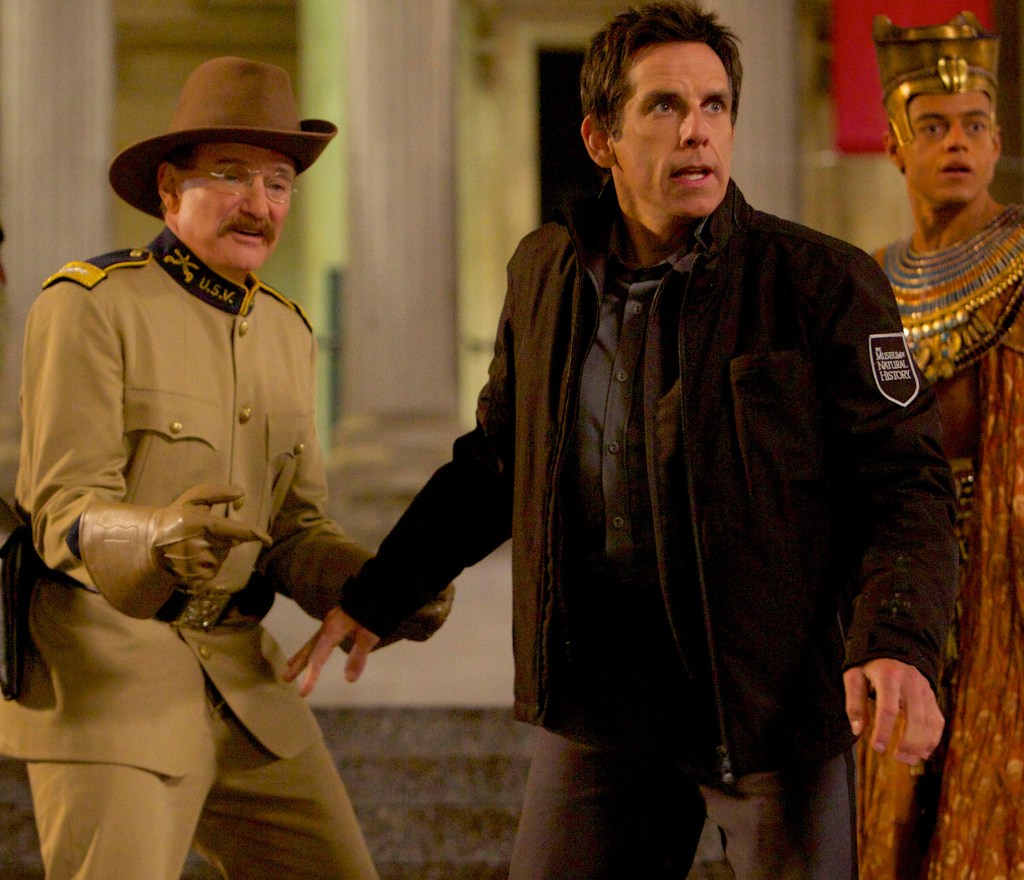
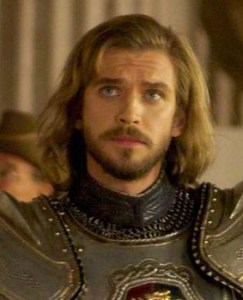
A trilogy of films, more comedy than action/adventure per say, but considering they deal with history and a museum, they get placed here.  Headlining is Ben Stiller as Larry Daley.  Dick Van Dyke (Chitty Chitty Bang Bang, Mary Poppins) appears as Cecil, Mickey Rooney (whose career stretches back to the 1920s) is Gus, Rickey Gervais (funny man most famous for The Office [no, I haven’t watched]) is the no-nonsense museum director Dr. McPhee.  Robin Williams (y’all should know who he is; Mork from Ork, Genie in Aladdin, Mrs. Doubtfire, etc) plays Teddy Roosevelt.  Rami Malek (recently played Freddie Mercury in Bohemian Rhapsody) appears as Ahkmenrah and Owen Wilson is Western miniature Jedediah.  In Battle of the Smithsonian, Amy Adams joins as Amelia Earhart and the Jonas Brothers are the three singing cherubs.  Dan Stevens (Matthew Crawley in Downton Abbey, the Beast in the live-action Beauty and the Beast) joins as Lancelot in Secret of the Tomb, as does Rebel Wilson (Pitch Perfect; and honestly, not one of my famous actresses; not my kind of humor) as a security guard.  Ben Kingsley is Merenhahre, Ahkmenrah’s father, and Brennan Elliott (very popular in Hallmark movies) is Cecil’s father.

In the first movie, Larry ends up taking a job as a night guard at New York City’s Museum of Natural History so he can have a steady income to support his son.  The former trio of guards act a little odd and hand him an instruction book, and warn him to not let anything in or out of the museum.  Then he’s very surprised when he turns around the first evening and the giant Tyrannosaurus Rex skeleton is missing.  He finds it and it proceeds to chase him, until he reads he is supposed to throw the bone.  The skeleton really is just a huge puppy and wants to play fetch.  The Easter Island head calls him a dum dum and wants gum gum.  Animals are alive, as are all the displays.  Luckily, Teddy Roosevelt helps Larry out.  He explains that the tablet of Akmenrah brings everything in the museum to life at night.

Come morning, Larry initially wants to quit, but when his son tells him how proud he is, he keeps the job.  Cecil the guard suggested he read up on history, so Larry hits the books and even asks questions of the pretty museum docent, Rebecca.  Things go better the following night; he sets up his son’s remote-controlled car to drag “Rexie’s” bone around, lets Dexter the monkey steal fake keys, and tries to make peace between the Roman and Western diorama figures.  Sadly, it all goes nuts and Dexter lets some of the displays out.  The monkey gets in a slapping match with Larry, until Roosevelt puts a stop to it; “who is evolved?” 

Larry is almost in danger of losing his job, but begs one more chance.  He takes his son to work that evening and puzzlingly, nothing comes to life.  The tablet is gone.  They discover the three old security guards have stolen it, along with other artifacts.  Turns out, the tablet brings back their youth every night and they intend to keep that.  They planted evidence, hoping to get Larry fired.  It becomes a fight for the tablet and Larry gets the museum displays to work together so they can keep the magic alive.  They also release Akmenrah, who is very polite and knowledgeable.

Larry wins out, but is again in danger of being fired.  There are news reports of the exhibits outside the museum.  Except it has drawn in record crowds, so Larry gets to keep his job, and throws a party at night.

The second film takes place two years later and the displays are getting packed up, ready to be shipped off to the Federal Archives for permanent storage.  Larry is now the CEO of Daley Devices, thanks to inventions he’s come up with inspired by his time as a night guard.  He visits the museum and speaks to Teddy and finds out what is going on.  The museum board wants to see progress, so they are installing lots of new holographic displays.  Teddy will remain in New York, as well as Akmenrah and the tablet.  Meaning, it is the last night many of the characters will be brought to life.  Some blame Larry for not being around for the past year or so to speak for the museum; he’s too busy on his phone.

The next night, Larry gets a call from Jed; they’re in trouble, the monkey has stolen the tablet and its now on its way to D.C. and Akmenrah’s brother, Kamunrah is a bad guy.  So Larry is off to D.C., aided a bit by his son.  It is his son who points out that there are nineteen museums that make up the Smithsonian Institute and the archives run underneath all of them.  Larry finds his friends and the tablet, then Kamunrah, who wants to rule the world and bring back his undead army.  Larry escapes, meeting Amelia Earhart and Custer along the way.  [I love how Sacajawea finds Custer to be an utter idiot.]  Kamunrah gathers Ivan the Terrible, Napoleon, and Al Capone to help him.  They capture Jed and that forces Larry to agree to find “the secret at the heart of Pharaoh’s tomb” in order to save him.  The bust of Teddy Roosevelt helps a bit, but Larry has to find the Einstein bobble-heads at the Air and Space museum.

That is indeed me, as a child, in Captain Kirk’s chair

Side note: I’m a huge fan of the Smithsonian; history major and all that.  At one point, I thought of finding a job there (hard to come by).  I’ve visited them several times, including as a child.  A few memorable experiences: there is a picture of me in Captain Kirk’s chair from the original Star Trek series, and I can distinctly remember looking up at a camouflaged Italian WWII plane and telling my mother it was a “pizza plane.”  Mom looks up and yeah, looks like pizza to a three-year-old, with spots that resembled pepperoni.  My dad loves planes and flying so we make sure to visit the Air and Space museum and it was nice to revisit a few places when I was on a trip in college.

Back to the film: Darth Vader and Oscar the Grouch try to join Kamunrah, but they’re not evil enough.  The Tuskegee airmen thank Amelia for “clearing the runway” for them and all the planes and shuttle almost take off in the museum, but Larry says no-go.  Einstein reveals the answer is pi.  Kamunrah’s men catch up, so Amelia and Larry have to use the Wright flyer to escape.  Then crash through the beautiful stained-glass window at the Smithsonian castle.  Kamunrah claims the tablet and the combination and opens the door to the Underworld.  Half-bird, half-men emerge.  Then Abraham Lincoln stomps in and scares the birdmen back to the Underworld.  Back-up arrives and Larry gets the bad guys to fight amongst themselves.  He pushes Kamunrah through the gate and all is right with their world.  Amelia agrees to fly the New Yorkers back before the sun rises.

Larry gets his old night guard job back and implements night hours at the museum, using the living displays instead of holograms.  The museum director reveals that a mysterious benefactor donated a large endowment, on the proviso that everything remains the same.  Larry happens to spot a woman who looks suspiciously like Amelia Earhart.

In the third movie, the crew heads to London because the magic of the table it fading.  This accidentally ruins a huge night at the museum and is close to costing the director his job.  Larry finally explains what has been going on and convinces him to send Larry, Akmenrah, and the tablet to the London museum.  Teddy, Sacajawea, Atilla, Jed, and Octavius manage to sneak along.  They meet Sir Lancelot and journey to find Akmenrah’s parents.  The full back story comes out, between Cecil being the boy on the original expedition to find the tablet and the history of the tablet.  It must be recharged by the moon every night to keep its power.  But it’s been locked floors underground for fifty years.  Now it’s a race to get it recharged before all the characters die.

Sadly, Lancelot is a little delusional and takes the tablet, thinking it to be the fabled Holy Grail and he’s determined to find King Arthur (not realizing he is a mythical character).  Who he does find is Hugh Jackman playing King Arthur in a production of Camelot.  (Yep, that is really Hugh Jackman.  He even does a Wolverine bit [hilarious!].)  Larry talks Lancelot around and the tablet it recharged just when you think all hope is lost.

The displays come to an agreement; Akmenrah should stay in London with his parents, and the tablet.  Teddy and the others will go back to New York, knowing they won’t waken again.  Lancelot has come around and will keep the triceratops skeleton in line.  Larry’s not ready to lose his friends, but says goodbye nevertheless.  Teddy’s final words are “it’s time for your next adventure.  Smile, my boy, it’s sunrise.”  Larry takes the heat for the disaster at the planetarium opening, losing his job but allowing the director to keep his.  Larry goes back to school to get his degree to become a teacher.  He watches outside the museum three years later when a display visits from London, including the tablet.  The director gets to finally see everything come to life and party.

The film ends “In Loving Memory of Mickey Rooney.  And For Robin Williams.  Magic Never Ends.”  This was their last film…so it makes the ending really sad.  Overall, I find these movies hilarious. For me, I already knew a lot of this history, but I hope it inspired others to read more about some of the figures brought to life.  Owen Wilson as Jedediah and his conflict with Octavius is probably my favorite part; these little guys taking on a huge world.  Robin Williams is superb and it was very surprising the first time to discover that Dick Van Dyke was a bad guy!  He’s lovable Bert!  And can still dance.  Great to see Hugh Jackman’s cameo and Dan Stevens was great as Lancelot.

Next Time: Sahara

“Cry God, for Harry, England, and St. George!”

Partaking in something that satisfies both the historian in me and the English major: Shakespeare.  Now, I believe I have mentioned before that I am not a dutiful English major; I don’t like Shakespeare, well, I don’t like reading Shakespeare.  It’s boring and most teachers pound it into our skulls by analyzing it to death.  I hate that.  But, BBC put together a phenomenal cast and put Shakespeare’s histories on screen (which I am aware has been done before, heck, I tried to watch a version of Macbeth starring Patrick Stewart and couldn’t make it through it.  Now, there was a slightly modern version of Hamlet done with David Tennant that was fantastic).  They timed the first arc to coincide with the 2012 London Olympics; this arc included Richard II, Henry IV parts I and II, and Henry V.  Their second arc included Henry VI and Richard III in 2016.

Gut reactions?  Richard II was a bit odd.  Henry IV was wonderful to see and Henry V is utterly magnificent.  Henry VI is simply everyone changing sides and the start of the War of the Roses and is interesting to see from this perspective.  As for Richard III; I remember doing a segment on the historical accuracy of the play in a British history course in college and I can certainly see the Tudor propaganda in the play (oh, they all cut out and condense history, but then, these are plays, not true histories…actually, I’d like to see historical documentaries on these people), yet I now see what all the hype is about.

Above all, these are a veritable who’s who in British acting.

Richard II stars Ben Whishaw (Q in Craig’s James Bond and Michael Banks in Mary Poppins Returns) as the king.  Opposite him is Rory Kinnear (also appears with Whishaw in Skyfall, and Spectre as Bill Tanner, which he briefly played in Quantum of Solace as well) as Bolingbroke, who goes on to be crowned Henry IV.  The great Patrick Stewart appears as John of Gaunt.  If Thomas Mowbray, who argues with Bolingbroke, looks familiar, that’s because he’s played by James Purefoy, who portrays Colville aka Edward, the Black Prince of Wales in A Knight’s Tale [making this a bit funny to a historian, because Edward, the Black Prince of Wales was Richard II’s father: his father was King Edward III, but he died before his father did and so thus, his son inherited the throne].  David Morrissey appears as the Earl of Northumberland.  He’s also been the Duke of Norfolk in The Other Boleyn Girl [uncle to Anne], and has appeared in a 2008 episode of Doctor Who, “The Next Doctor”.  We briefly see David Bradley (Filch in Harry Potter and Walter Frey in Game of Thrones) as the gardener and Lindsay Duncan (also appeared in a 2009 episode of Doctor Who, “Water of Mars,” she was the mother in Tim Burton’s Alice in Wonderland, a queen in two episodes of Merlin, and Lady Smallwood in several episodes of Sherlock) as the Duchess of York.

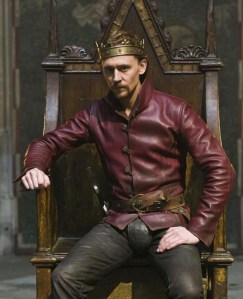
The very gifted Jeremy Irons (Scar in The Lion King [the animated classic], Tiberius in Kingdom of Heaven, Brom in Eragon, Aramis in The Man in the Iron Mask, and Alfred in several of DC’s newer Batman movies) takes over as the older Henry IV.  Tom Hiddleston (we love him as Loki in the MCU) shines as Prince Hal.  Julie Walters (Mrs. Wealsey in Harry Potter and Rosie in both Mamma Mia movies) is Mistress Quickly, Robert Pugh (he’s Craster in Game of Thrones, amongst other roles in Kingdom of Heaven, The White Queen [which also depicts the War of the Roses], and Master and Commander) is Owain Glyndŵr [that is the proper spelling, IMDB lists him as Owen Glendower; a real Welsh rebel that I’ve got a book on].  Oh hey, there’s Michelle Dockery (Mary in Downton Abbey) as Kate Percy, and Harry Lloyd (Baines in 2007’s Doctor Who “Human Nature” and “The Family of Blood,” Will Scarlett in BBC’s Robin Hood, and insane Viserys Targaryen in Game of Thrones) is Mortimer, and Joe Armstrong (Allan a Dale in Robin Hood) is Hotspur.  His father, Alum Armstrong (he’s had roles in Van Helsing, Braveheart, and Patriot Games amongst others) plays Hotspur’s father Northumberland, and Iain Glen (Jorah Mormont in Game of Thrones, Sir Richard Carlisle in Downton Abbey, and 2010’s Doctor Who “The Time of Angels” and “Flash and Stone”) pops up as Warwick.

Of course, Prince Hal graduates to King Henry V in the next installment.  This was the bit that makes me almost like Shakespeare.  Tom Hiddleston delivers some of the best known speeches with such quiet passion.  “Once more unto the breach,” stirs my blood, and he got the role of Henry V with “St. Crispin’s day,” which includes that famous line: “we few/ we happy few/ we band of brothers.”  One almost cries.  And his wooing of Katherine…if a dashing man ever said those words to me, I’d be weak-kneed.  I remember rehearsals for faire, male cast members are encouraged to woo female patrons (worked on me when I was a patron), and so they practiced on female cast members; I was just happy some guy was saying nice words to me, I didn’t really care what he was saying.

If Corporal Nym [grrr, I hate his name’s “Nym,” because I want to use it for a headstrong female character in my saga] looks familiar, he’s Tom Brooke and he’s appeared briefly in a few Sherlock episodes.  And look, there’s Richard Griffiths (Vernon Dursely in Harry Potter, King George in On Stranger Tides) as the Duke of Burgundy [this was one of his last roles].  The ever talented John Hurt (the dragon Kilgarah in Merlin, the War Doctor of Doctor Who, Ollivander in Harry Potter, Professor Oxley in Kingdom of the Crystal Skull, Montrose in Rob Roy, and other roles going back to the 60’s)  acts as the chorus [and he just passed away in 2017].  Some other familiar faces join us in Henry V; Anton Lesser (Qyburn in Game of Thrones, an episode of The Musketeers, Harold Warne in Miss Potter, and other roles) as Exeter [he’ll stay on through Henry VI and Richard III] and Owen Teale (part of some older Doctor Who episodes, The Last Legion, and the Headmaster in Tolkien, but I’m sure we recognize him as Thorne in Game of Thrones ) as Captain Fluellen.

Tom Sturridge takes up the mantle of Henry VI.  Sophie Okonedo (Liz Ten in “The Beast Below” and “The Pandorica Opens” in 2010’s Doctor Who) joins him as Margaret of Anjou, and Hugh Bonneville (Robert Crawley in Downton Abbey, Monuments Men, several episodes of Doctor Who as a pirate captain, he was even in Tomorrow Never Dies) is so encouraging as Gloucester.  Michael Gambon (Dumbledore in Harry Potter, Lord Charles Fox in Amazing Grace, and he’s even appeared in Doctor Who 2010’s “A Christmas Carol”) briefly appears as Mortimer.

In the second part, Benedict Cumberbatch (Doctor Strange, Sherlock, Khan in Star Trek: Into Darkness, amongst other roles) pops up as the Duke of York [called Plantagenet in Shakespeare as a claimant to the old royal dynasty]’s son Richard.  Phoebe Fox (the Duchess of Savoy in The Musketeers) is Anne Neville.  James Fleet as Hastings has been in several period pieces.  And say hello to the appearance of Andrew Scott (C in Spectre and Moriarty in Sherlock) as King Louis of France.  Somerset is played by Ben Miles (Peter Townsend in The Crown), and George, the Duke of Clarence is played by Sam Troughton (Much in BBC’s Robin Hood).

Benedict takes center stage in Richard III.  He is brilliant in the role.  I dislike the character of Richard, but Benedict delivers exquisitely.  Let me go on a little historical accuracy rant: historical evidence proves that Richard was not a hunchback; he may have had a slight difference in shoulder height, but is regarded to have been a tall, broad-shouldered man.  Nor was he the “Machiavellian villain” Shakespeare depicts him as, at least, no more than any other man of that time.  Shakespeare wrote him as a villain to please the Elizabethan court in order to paint her grandfather as a benevolent conqueror.  As another historian pointed out to me, if Richard had the princes of the tower in his custody, he could have produced them in order to throw suspicion off himself.  We also get the addition of Judi Dench as Richard’s mother, Cecily.

Historical note: there are several “Duke of Gloucester” throughout the plays and throughout history, because it is a title, typically a relative of the monarch.  Same as the Duke of York, and Mortimer is a title (which I got confused a bit, seeing a Mortimer in Henry IV and one in Henry VI.)  I swear, one needs a family tree to reference when watching these histories.  I’ll try to explain the central plot of the War of the Roses as best I can.  Edward III had several sons, the eldest of which was Edward, the Black Prince of Wales.  His third son (his second died young-ish) was John of Gaunt, Duke of Lancaster, his fourth son was Edmund, holding the title Duke of York, and his fifth son was Thomas, the Duke of Gloucester.  The Black Prince’s son was Richard II.  The way that Bolingbroke claimed the throne was that he had a right to it as the son of Edward’s third son (hence, Richard and Bolingbroke were cousins and until Bolingbroke’s exile, they were close).  Bolingbroke became Henry IV [Lancaster], who has at least four sons, the eldest of whom became Henry V.  Henry V died tragically young and his son, Henry VI, assumed the throne incredibly young, only nine months old.  England was ruled by the Lord Protector, his uncle, Humphrey, Duke of Gloucester (one of Henry V’s brothers).

Then along comes Richard, Duke of York (the great-great-grandson of the Edward III’s second son by way of Lionel, Duke of Clarence’s daughter, then grandson, then great-granddaughter).  Just like Bolingbroke challenged Richard II for the throne due to ineptitude, the Duke of York [white rose] challenged Henry VI [followers wore a red rose].  The Duke of York’s son, Edward took the throne, becoming King Edward IV.  He had three children with Elizabeth Woodville; Elizabeth of York, Edward (briefly Edward V), and Richard (also holding the title Duke of York).   Edward IV has several younger brothers, including George, the Duke of Clarence, and Richard, the Duke of Gloucester.  Once Edward IV and George were dead, Richard declared Edward IV’s marriage to Elizabeth Woodville unlawful, making his offspring with her illegitimate.  He took the throne as Richard III.  There’s the York contingent.

But back with John of Gaunt, Duke of Lancaster, his second marriage produced several generations, to John Beaufort, the Earl of Somerset, then his son John, then his daughter Margaret Beaufort, who married Edmund Tudor, the Earl of Richmond, and then had Henry, who in Shakespeare was called Richmond, thus making him the Lancastrian claimant.  [Edmund Tudor was the son of Owen Tudor (a Welshman), who married the widowed Katherine (wife of Henry V)…as for Henry V’s claim of “I am Welsh, as you know,”…well, he was Prince of Wales and born there, but not actually Welsh by blood; I would guess it was a line Shakespeare inserted to play to Queen Elizabeth’s Welsh ancestry].  Henry Tudor became Henry VII and he married Elizabeth of York (remember, Edward IV’s eldest daughter) and uniting the Lancastrians and Yorkists and ending the War of the Roses  From here, we should know how things go from there for a bit.

This is the sort of stuff that fascinates me as a historian; how the different lines come together and play out.  And I understand Shakespeare’s language a bit better watching it performed, more of a dialogue rather than verse.

On a different note: I highly recommend Netflix’s Enola Holmes film.  Millie Bobby Brown is precisely the female heroine we need; smart and not afraid of action.  Henry Cavill is a calmer Sherlock Holmes, but I greatly desire to see more of these characters.  I may just check out the novels the film was based on.

“Waiting for the chirp, chirp, chirp/ on this humid Monday morning/ in this Congressional incubator”

1776

An entire musical about creating the Declaration of Independence and most famously stars William Daniels (K.I.T.T. from the original Knightrider, and Mr. Feeney in Boy Meets World) as John Adams (yes, that is why the school is named John Adams and the schools in Girl Meets World are Quincy Adams and Abigail Adams).  He created the role on Broadway.  This musical did feature into a section of curriculum in my sophomore English class; but I was well familiar with the show before then; I was watching this in kindergarten.  I even found and read a published copy of the screenplay.  And Lin-Manuel Miranda does credit 1776 as a bit of inspiration for his smash hit of Hamilton.  I like to watch this film around the Fourth of July, for obvious reasons and I tend to listen to The Lees of Old Virginia when I visit Virginia.  And I am descended from some Lees; not related to Robert E. or Richard Henry; mine were miners from Wales in the early twentieth century (though my mother did find it funny when they attended a performance of the show and the actor pointed to them, not knowing they were Lees).

The film begins with John Adams musing near the Liberty Bell, then fetched to help vote on the very important issue of whether all the Rhode Island militia must wear matching uniforms.  Good God, indeed.  Adams thunders down several flights of stairs to enter the hall, rebuking “I have come to the conclusion that one useless man is called a disgrace.  That two, are a law firm.  And that three or more become a Congress!  And by God I have had this Congress!”  For ten years, King George has imposed more and more taxes on the colonies and when they begin to stand up for themselves, the British have blockaded their ports and started a fight.  But Congress still refuses to hear any of Adams proposals on independence; even so much as the courtesy of open debate.  “Good God, what in hell are you waiting for!”  Sit Down, John the members of Congress cry.  Adams implores them to “vote yes!”  “Good God, consider yourselves fortunate that you have John Adams to abuse, for no sane man would tolerate it!” he cries, then storms out to discuss the matter with God.  For one year, the Congress has been sitting there, Piddle, Twiddle, and Resolve, and done nothing.  Adams would rather have a catastrophe than Congress; “good God, sir, was that fair?”  Then his wife, Abigail [one of two female roles in the entire show] chimes in.  Adams asks about the salt peter he asked the women to make; they have not done as he asks, because he neglected to tell them how to make it.  Besides, they require pins.  But they finish affectionately “till then/ till then/ I am/ as I ever was/ and ever shall be/ yours.”  (A lot of this is taken from letters they wrote to each other as well as diaries and documents the men kept during the time) [Fun Fact: the historical cobblestone street exterior shots are from Colonial Williamsburg]
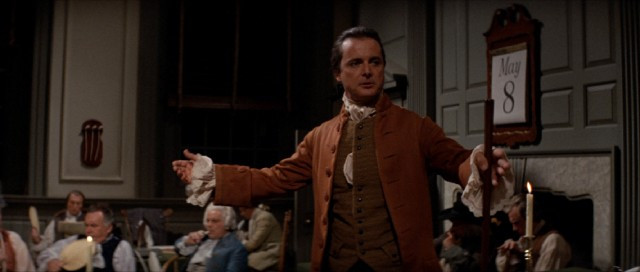
william-daniels-as-john-adams-in-1776

Adams seeks out Benjamin Franklin the next day to discuss their next step.  Both are dispirited by their fellow Congressmen’s actions: “with one hand they can raise an army, dispatch of their own to lead it, and cheer the news from Bunker’s Hill.  And with the other, they wave the olive branch, begging the king for a happy and permanent reconciliation.  Fat King George has declared us in rebellion, why in bloody hell can’t they?” Adams moans.  “Reconciliation, my ass.  The people want independence.”  Franklin points out that what America is doing has never been done before; no colony has broken from the parent nation.  Then thinks of a humorous saying that treason is an excuse for the winners to hang the losers.  Besides, “the people have read Mr. Paine’s Common Sense, I doubt very much that Congress has.”

Congress doesn’t like to listen to Adams, Franklin continues, because the man is obnoxious and disliked.  Thus, if Adams wants the topic of independence to be discussed, it would be best if someone else proposes it.  “Never!” Adams declares.  Well, did Franklin have anyone in mind?  Perhaps…and in rides flamboyant Richard Henry Lee, of Virginia.  Adams is not keen on the notion, but Richard is happy to help.  Virginia is a known supporter of independence, but its government in Williamsburg has not formally committed to the cause.  Richard eagerly muses that once Virginia is official, the middle colonies and then the south will follow.  “Gentlemen, to Virginia, the mother of American Independence!”  “Incredible, we’re free and he hasn’t even left yet,” Adams grouses.  Richard knows he will succeed because “my name is Richard Henry Lee/ Virginia is my home…for I am FFV/ the first family/ in the sovereign colony of Virginia/ yes, the FFV/ the oldest family/ in the oldest colony in America!”  “You see it’s here a Lee/ there a Lee/ everywhere a Lee, a Lee!”  Franklin joins in on The Lees of Old Virginia starting words that end with “l-y,” so Richard can announce “Lee!”  Adams mutters “spoken modest-Lee/ God help us.”  Richard is so confident, he feels that “God leans a little on the side/ of the Lees, the Lees of Old Virginia!”  He names several Lees, including his nephew, General “Light-horse” Harry Lee [father of Robert E. Lee from the Civil War].

Quick historical note: there were families known as the FFV, the First Families of Virginia and the Lees were one of them.  They were not necessarily the first settlers of the colony, but were the most socially prominent and wealthiest.  Most had strong ties back in England and friends with King Charles II.  Hence why Virginia was sometimes referred to as “Old Dominion” and “Cavalier Country.”  The first Lee in Virginia was Richard Henry’s grandfather, who emigrated to Jamestown in 1642.  At one point, I wanted to move to Virginia to utilize my history degree, since colonial history has many ties to British history and the Stuarts (Charles II was a Stuart; George III was a Hanoverian, the subsequent dynasty in England) were a topic of interest.

Carrying on, Dr. Lyman Hall of Georgia arrives to Congress and both sides are eager for him to join, though Rutledge of South Carolina mandates that the deep South speak with one voice; it’s traditional.  We witness the dynamics of Congress; Pennsylvania is divided between Franklin and Dickinson, Judge Wilson bows to Dickinson’s requests.  Delaware is also divided.  New Jersey hasn’t shown, New York continually abstains, courteously (because they have no instructions; everyone in New York government speaks very loud and very fast; no one hears anyone else and thus, nothing gets done).  North Carolina respectively yields to South Carolina.  And just when Dickinson, leader of the opposition to independence, starts to believe that the upstart idea has blown itself out, Lee returns with the proposition from Williamsburg: “Resolved, that these united colonies are and have a right to be, free and independent states.  That they are absolved of allegiance to the British Crown and that all political alliance between them and the stage of great Britain is and ought to be totally dissolved!” [Historically known as the Lee Resolution]

Now comes the debate.  Dickinson asks Adams ‘why.’  Why do the New England colonies want to break with the greatest empire the world has ever known?  Why forsake Hastings and Magna Carta , Tudor and Plantagenet?  Is not England the noblest and most civilized nation known to man?  Adams is simply an agitator.  If he has disagreements, he must provide a gentler mean of breaking with England, short of revolution.  Well, Adams first point is that the colonists are no longer Englishmen, they are Americans.  Franklin wakes from his nap when Dickinson starts banging his stick, “Englishmen!”  After a joke about bulls, the elder statesmen points out that Americans are being denied the rights of Englishmen.  The colonists are a rougher breed; they are a new nationality and require a new nation.  Rutledge of South Carolina chimes in, wanting to know who will govern South Carolina in the new nation.  The people of South Carolina, or the people of Massachusetts?  Adams insists it will be one nation.  Well, South Carolina desires independency, for South Carolina.  They envision sovereign states united for mutual protection; meaning that South Carolina does not have to do what Massachusetts or Pennsylvania does.  Another Congressman argues that they should wait until they somehow win the war (for the are fighting against the largest army of that time period); once they win, they can declare anything they please.  Adams urges that the men fighting need a purpose or goal that they are fighting for.  They more than make up for Britain’s army with spirit.  Adams and Dickinson start name calling, ending with “landlord!” and “lawyer!” beating each other’s sticks.

The fight breaks up with Cesar Rodney of Delaware collapses.  But New Jersey has arrived, finally, led by Reverend John Witherspoon [an actual ancestor of mine on my father’s side].  And they have been instructed to vote for independence.  But Dickinson moves that any vote for independence must be unanimous.  And Hancock agrees; so no brother is fighting his brother [oh boy, bit of foreshadowing].  Adams must stall for time and moves for a postponement, so they can craft a document listing their reasons for separating from England, keeping with European tradition.  In essence, declaring their illegal rebellion in fact legal.  Thus, a committee is created, including Adams, Franklin, Sherman (CT), and Livingston (NY).  They ask Lee, but he has been invited to join the Virginian government, so they derail Jefferson’s plans to leave for home and have him join; they need a Virginian.

Franklin figures he can get Adams to write the declaration, “to your legal mind/ and brilliance, we defer.”   But Adams reminds Franklin “well, if I’m the one to do it/ they’ll run their quill pens through it/ I’m obnoxious and disliked/ you know that, sir;” it would be better if Franklin wrote it.  But, Mr. Adams, Franklin “won’t put politics on paper/ it’s a mania/ so I refuse/ to use the pen/ in Pennsylvania.”  Sherman is not controversial, but he doesn’t “know a participle from a predicate.”  Livingston is a diplomat, but has a new son at home, so he’s “going home to celebrate/ and pop a cork.”  That leaves Jefferson.  Adams flatters him, saying “you write ten times better than any man in Congress, including me.  For a man of only thirty-three years, you have a happy talent of composition and a remarkable felicity of expression.”  Jefferson insists on going home.  Adams refuses to let him; he will make Jefferson write it, by physical force if necessary (note: there’s about a foot difference in height between the two men).  Adams knows how Jefferson feels, startling everyone; he continues to yearn for his own wife.  But it’s Jefferson’s duty, damn it.  Adams shoves the quill pen into Jefferson’s hands and declares, “do as you like with it!”  Jefferson struggles to start and it’s not until Adams sends for his wife that he shows any inspiration.  Well, after he attends to his wife first.

Adams reminisces on his wife; they both live solitary, celibate lives at the moment and hate it.  But Abigail ensures her husband “what was there, John/ still is there, John.”  Yours, Yours, Yours.  When Franklin returns in the morning, Adams remarks that he won’t be remembered in the history books, only Franklin.  “Franklin did this, and Franklin did that, and Franklin did some other damn thing.  Franklin smote the ground and out sprang George Washington, fully grown and on his horse.  Franklin then electrified him with his miraculous lightning rod, and the three of them, Franklin, Washington, and the horse, conducted the entire Revolution all by themselves.”  (Adams has a point; we hear far more about Franklin, especially as young students, and when we do hear about Adams, he’s usually regulated to a background character.  Washington and Jefferson are both better known.)

1776 (1972) Directed by Peter H. Hunt Shown from left: Howard DaMartha finally emerges to see Franklin and Adams and they ask how Jefferson wooed such a lovely young woman, for he is not a verbose man.  Instead, He Plays the Violin; “he tucks it/ right under his chin/ and he bows/ oh he bows/ for he knows/ yes, he knows/ That it’s high, high, high/ diddle diddle/ twixt my heart/ Tom, and his fiddle/ my strings are unstrung/ high, high, high, high/ I am undone.”  (As a young child and even into my teenage years, the innuendo of this went over my head; I learned it innocently and that is how I viewed it, despite my friends attempts to change my mind.)  When Tom is not playing the violin, they dance.  So Martha dances with both Franklin and even Adams (such a pretty gown, with a poufy skirt).

While Jefferson writes, Franklin and Adams must see to persuading the other colonies.  When news of whoring and drinking amongst the army in New Brunswick is reported to Congress (most of Washington’s dispatches were filled with doom and despair), Adams and Franklin take Samuel Chase to win Maryland’s vote.  Dickinson cheers that Adams is gone.  So it is time for the Cool, Cool, Considerate Men to reign (supposedly President Nixon ordered this song removed and it was from the video release, but the film was not destroyed and thus restored when released on DVD).  These conservative men [meaning they are not the fiery men like John and Samuel Adams; it has nothing to do with present political standings and viewpoints] “have land/ cash in hand/ self command/ future planned/ fortune thrives/ society survives/ in neatly ordered lives.”  “What we do/ we do rationally/ we never ever/ go off/ half-cocked, not we/  why begin/ till we know we can win/ and if we cannot win/ why bother to begin?”  Why risk losing?  (Hmm, Adams was right a bit, calling Dickinson a coward.)  Dickinson asks Hancock to join them as a man of property, but Hancock would rather join Adams.  Dickinson warns that Adams and his friends will be branded traitors.  “Traitors to what, Mr. Dickinson?  The British Crown, or the British half-crown (piece of money)?  Fortunately, there are not enough men of property in America to dictate policy.”  Dickinson argues that “most men with nothing would rather protect the possibility of becoming rich than face the reality of being poor.  And that is why, they will follow us.”

The film takes a sad tone after this, when the Congressional custodians ask the dispatch rider about himself.  He begins to eagerly recount he’s seen fighting and two of his best friends got shot in the same day, not far from their homes.  Then their mothers look for them on the battlefields, Momma Look Sharp.

Everyone reconvenes for the reading of the Declaration of Independence.  Franklin, Adams, and Jefferson wait outside the room.  Adams vows it’s a masterpiece.  What’s left to decide is the symbol of America.  Should it be a dove, an eagle, or a turkey?  Franklin pushes the turkey, but Adams swoops in and declares it will be an eagle.  “Though the shell/ may belong to Great Britain/ the eagle inside/ belongs to us!”  Then comes nearly a week of revisions.  Adams tries to shut down some of the extensive ones; “it’s a revolution, dammit; we’re going to have to offend somebody!”  Jefferson insists that the king remains a tyrant; up till now, he’s been going along with Congress, but he insists that passage be scratched back in.  Franklin counsels Dickinson that “those that give up some of their liberties in order to obtain a little temporary safety, deserve neither liberty, nor safety.”

But a larger battle comes to head; the issue of slavery.  South Carolina wants the passage removed from the Declaration, for they wish to retain their peculiar institution.  Rutledge points out that Jefferson himself owns slave, for all that he comments the Good Book abhors it.  Adams insist they are Americans; they are people and they are here.  But Rutledge brings up that New England profits from the slave trade as well, despite their propriety; they provide the ships and trade on the African coast.  Molasses to Rum to slaves is the trade triangle, and Rutledge illustrates an auction until he is warned.  “Hail Boston/ Hail Charleston/ who stinkest/ the most?” he finishes.  Then the whole South walks out.  Franklin and Adams argue.  Adams storms up to the bell tower and ponders the position he is in with Abigail.  She urges him to remember commitment.  And there is a surprise waiting for him.  She sent the salt peter.  Adams orders one of the aids to go out and buy every damn pin in Philadelphia for the ladies.

Reinvigorated, Adams urges Franklin and Jefferson to continue working; the vote is in the morning.  Hancock offers to do what Adams wants; he’s still a Massachusetts man, but Adams implores him to remain a fair man.  Then Adams has the hall to himself in the dark for a moment, looking over Washington’s last dispatch, quoting Is Anybody There?  Does anybody care?  Passionately shouting “Does anybody see/ what I see…I see fireworks/ I see the pageant/ and pomp and parade/ I hear the bells ringing out/ I hear the canons roar/ I see Americans/ all Americans free/ forevermore.”  Dr. Hall startles him by entering and moves his vote to ‘yay,’ openly recalling something he read from Edmund Burke, a member of Britain’s Parliament, that a representative owes his people his judgment and he fails if he does not do so.

The vote is called in the morning.  Delaware brings Cesar Rodney back to have a majority vote.  Pennsylvania passes so they can continue to debate amongst themselves.  When they come to South Caroline, Rutledge faces down Adams and Jefferson and Jefferson himself scratches the passage out.  Adams and Franklin argue amongst themselves that they will be guilty of the same thing they are rebelling against; how will posterity forever them?  Franklin states that the issue right now is independence.  Yes, posterity will frown on them, but they will be dead.  And they’re men, not demi-gods.  With the South on their side, the vote for independence comes down to Pennsylvania.  Franklin votes yes.  Dickinson votes no.  Now, it all rests on Judge Wilson.  There is no precedence here to go by.  And he’s not like Dickinson, he doesn’t want to be remembered.  If he sides with the majority, he’s one of many.  If he sides with Dickinson, he’ll be the man who prevented American independence.  He votes ‘yay.’  Dickinson will not sign the Declaration and thus cannot remain in Congress, but he is still loyal to America and will join the fight in her defense, even if he hopes to one day reconcile with England.  Adams leads the cheer for Dickinson as he leaves.  The official copy is brought out for signing, John Hancock’s signature being the first and largest, so King George can read it without his glasses.  The bell chimes as each man signs, the date reading July 4th, and the camera pulls back to show a mirror image of John Trumbull’s famous painting.
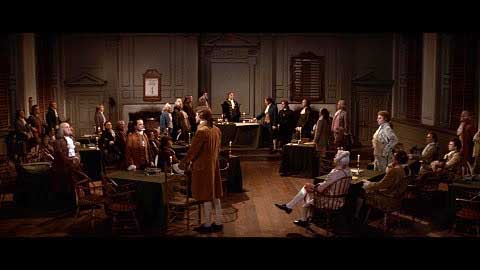
1776 end scene

Yes, there are a few historical inaccuracies in the show.  The Declaration of Independence was ratified on July fourth, but it wasn’t signed until August second.  Some of the debates  were re-worked for a bit for dramatic effect.  Still, it is a lot more accurate than many other shows and movies (cough-Braveheart-cough).  There have since been further retellings of these men, such as an HBO miniseries in 2008 on John Adams based on David McCullough’s Pulitzer Prize-winning biography, starring Paul Giamatti (I believe my mother has read the book and I’m not sure if she has watched the series).  There is of course, the recent smash Broadway hit of Hamilton (which premieres on Disney+ on July 3rd).  But this show owns a piece of my heart.  It was probably one of my first history lessons.  When we covered it in sophomore English, my classmates would come to me for answers because I sat there, reciting the whole film.  A friend and I wanted to do a gender-swapped production; she’d be Franklin and I’d be Adams.  Though I love The Lees of Old Virginia, it would be fun to sing Cool, Cool, Considerate Men.  While Molasses to Rum is not a pleasant song, John Cullum performs it well.  William Daniels is wonderful as John Adams, though he is of equal status as Mr. Feenie.


If you have any questions, feel free to message me.

Up Next: Delving more into my childhood, Bedknobs and Broomsticks

“Pulitzer may own the world/ but he don’t own us/ Pulitzer may crack the whip/ but he won’t whip us.”

Newsies

This was the movie that spawned the idea of doing a blog. Though released in 1992, I didn’t see Newsies until I was in junior high, about ten years later. My music teacher, Mrs. Ellenberger put it on in class for a few days. I remember my friends liking it; I believe the rest of the student populace didn’t really care. We thought the actors were cute; I know Spot Conlon was a favorite, the newsie from Brooklyn. We learned a choral arrangement of one of the main songs Seize the Day as part of junior high choir. Later, in college as part of my Historical Development of the English Language course, I did a paper on the accents in Newsies (because yes, I am that big of a dork and always tried to incorporate films and stories I loved into class projects. I referenced Star Wars and Pirates of the Caribbean in separate papers in my Intro to Writing course).

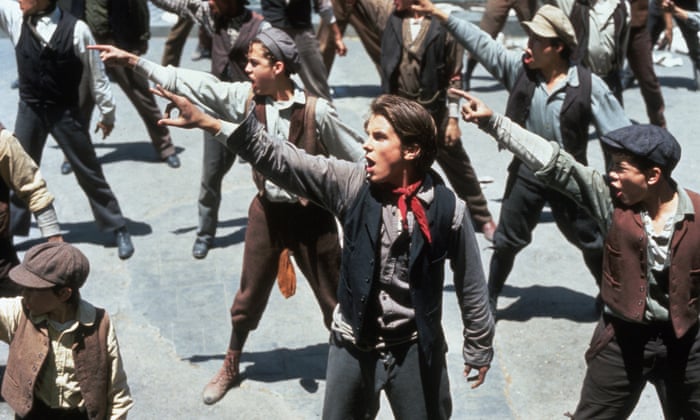
I didn’t realize at the time that it had several well-known stars among its cast, not the least of which is Christian Bale (Batman in Christopher Nolan’s ‘verse; as well as voicing Thomas in Pocahontas and a list of other movies) in the starring role of Jack Kelly. Kenny Ortega directed and was one of the choreographers of the movie. Yes, the same man who directed High School Musical, which took over my same group of friends when we were in high school. The music is composed by the great Alan Menken. Ann Margaret (Carol’s mother in Santa Clause 3) appears as vaudeville star Medda Larkson; Bill Pullman (Lonestar in Spaceballs, famous for the Independence Day movies, he’s also the commander in Disney’s Tiger Cruise original movie) is Bryan Denton, a reporter; and Robert Duvall (General Robert E. Lee in Gods and Generals and over a hundred other films) is the evil Mr. Joseph Pulitzer. One of the other newsboys, Mush, is played by Aaron Lohr who was Portman in The Mighty Ducks franchise, part of the “Bash Brothers,” and also in RENT as Steve and voiced Max in A Goofy Movie (I recognize him more from Mighty Ducks, a favorite movie of mine when growing up)

The premise of the story is based on the 1899 newsboy strike in New York City, claiming to be “based on actual events.” “Based,” yes. Historically accurate? Not so much. Carrying the Banner explains the life of the newsboys. They’re out in the elements every day, hawking newspapers for bigwigs like William Randolph Hearst and Joseph Pulitzer for a few pennies. “We need a good assassination/we need an earthquake or a war. How ’bout a crooked politician? Hey stupid that ain’t news no more!” Jack Kelly is the leader of this group of newsies; he protects the smaller and weaker newsies and is well respected by the rest. At the distribution center for the World newspaper, owned by Pulitzer, brothers David and Les Jacobs join the newsies for the first time. Les is in awe of Jack, nicknamed Cowboy. David (who looks like the kid from Growing Pains, but is not) agrees to a partnership with Jack to learn to sell “papes,” though he is disgusted by the spit handshake. Jack’s first piece of advice is “headlines don’t sell papes, newsies sell papes.”

On their whirlwind first day, David and Les follow Jack running from the warden of the local refuge, Snyder. Jack escaped from the refuge previously and Snyder is out to put him behind bars again. They also learn that Jack wants to get out of New York and once he’s saved enough, he’ll take a train out west to Santa Fe “to be a real cowboy,” as Les eagerly puts it. We meet Medda, the vaudeville star and friend of Jack, and the boys eagerly listen to her serenade the crowd with Lovey Dovey Baby. David invites Jack over for dinner where the rough and tumble newsie puts on his best manners for David’s parents and sister. Turns out, David and Les are only working as newsboys while their father is off work due to injury; once he gets his job back, the boys will be back in school. (Cue the looks exchanged between Jack and Sarah.) Jack declines staying overnight and croons Santa Fe, wistfully thinking about the freedom out West; “I want space/ not just air/ let ’em laugh in my face/ I don’t care.”

When the newsies return to work the next day, they’ve found out that overnight, Joseph Pulitzer and William Randolph Hearst, owners of the newspapers have decided to up the price the newsies pay for papers by ten cents a hundred, so they, the owners will make more money. When one of Pulitzer’s advisors argues that it would be rough on the boys, Pultizer fires back that “they will view it as a challenge,” and be grateful for it. No, as Racetrack comments, Pulitzer is just a tightwad and the man even admits he wants to know how to get more of the money off the streets.

The boys argue amongst themselves that it’s unfair and they have no rights. Then they get the idea to strike from a local trolley strike that had been dragging on for weeks. As Jack pumps up his friends; are they going to take what they’re given, or are they going to strike? First, they have to organize. If only a handful decide they aren’t selling, other newsies could simply come in and take their work. “Even though we ain’t got hats or badges/we’re a union just by sayin’ so,” Jack (taking the more educated David’s words) tells the boys. There’s a lovely play on words during The World Will Know; world in the traditional sense versus the New York World newspaper owned by Pulitzer; they occasionally throw in references to the New York Journal owned by Hearst. “We’ve been hawkin’ headlines/ but we’re making ’em today…now they’re gonna see/what ‘stop the presses’ really means.” “And the world will know/ and the world will learn/ and the world will wonder/ how we made the tables turn/ and the world will see/ that we had to choose/ that the things we do today/ will be tomorrow’s news.”  The dancing has an element of fight to it, which is fun and interesting to watch. So, hurrah, the Manhattan newsies are going on strike; they still have to spread their plan to the rest of the newsboys in New York.

Enter Spot Conlon, leader of the Brooklyn newsies, and makes other newsies “nervous.” Jack, David, and another newsie, Boots, trek out to Brooklyn where there’s Irish music in the background and boys diving off the piers…just because (or maybe it’s to show off their toned physiques…teenage girls did appreciate it). Spot’s voice holds power amongst the newsies of New York and he wants proof before he throws his lot in with Manhattan. And the rest of the boroughs are waiting for Brooklyn’s backing before they join.

newsies

They get their opportunity to prove themselves the next morning, David urges them to Seize the Day (probably the most famous song from the film) before facing off at the distribution center again. “Wrongs will be righted/ if we’re united/ let us seize the day…proud and defiant/ we’ll slay the giant.” The police arrive and most escape, except for Crutchy. One adult has been paying attention to the newsies efforts; Bryan Denton, reporter and previous chief war correspondent [the Spanish-American War that ended the previous year, since they never tell us specifically] for the New York Sun. We’re shown the refuge that evening when Jack attempts to break Crutchy out. The boy was beat pretty badly and refuses to be carried. Jack explains to David that the more orphans Warden Snyder has in his refuge, the more money the city sends him, the more he puts in his pocket (hmm, we know corruption when we hear it).

Another day, another fight at distribution led by a reprise of Seize the Day. This time, the World is aided with thugs. Racetrack calls out to Jack, “it’s the Crib!” The gates have been locked and the police are keeping people away. The “bad guys” are almost winning, until back up arrives. Pretty much everyone’s favorite line in the movie: “Never fear, Brooklyn is here!” The newsies beat back the thugs and topple the newspapers. Denton writes a front page article for the Sun which features a photograph of Jack, David, Les, Spot, and several other leaders. Denton treats the boys to a celebratory lunch and the boys eagerly share what being on the front page means. It means they’re famous. Racetrack spouts that being famous means you get whatever you want, “that’s what’s so great about New York!” These boys are King of New York, “fortune found me/fate just crowned me” and they give credit to Denton and feature a bit of tap dancing.

But bad news; Snyder sees the article and picture of Jack (slightly aided by Cructhy giving him Jack’s name) and goes in search of the boy. The other newsies and the owner of the lodge house help keep Jack out of sight, but he chooses to safely sleep on the roof of David’s apartment. Sarah wakes up early and gives him breakfast and we get the only bit of romantic development in the whole movie. Jack isn’t used to having people care whether he stays or goes.

While the newsies plan a big rally to keep their strike going, Pulitzer wants an example made of the boys, especially Jack. Hearing that Jack is a wanted criminal, he pressures the Mayor to send police to break up the rally and further sweetens the deal with the promise of a poker game with the other newspaper owners. The newsies hold their rally at Medda’s hall and David urges the boys to stop hitting the other boys who continue to sell the newspapers; it’s playing into the adults’ hands. Jack simplifies by saying “we’ve got no brains,” and no respect. Spot agrees and Medda cheers everyone up with High Times, Hard Times. Snyder and the police arrive and it’s chaos. Everyone is trying to protect Jack, they’re leader; David even urging him to go once they’ve gotten Sarah and Les to safety. Denton even tries to help, but a well-placed punch sends Jack into the arms of officers and he’s carried out.

The boys appear in court in the morning, Spot jokingly objects “on the grounds of Brooklyn,” and they’re saved from a fine or jail time by Denton. But Jack is tried separately and Snyder convinces the judge (again, more corruption) to incarcerate Jack until he’s twenty-one (he’s now seventeen). Furthermore, Jack Kelly is an alias. His real name is Frances Sullivan; his mother is dead and his father is imprisoned in a state penitentiary. The judge rules in favor of Snyder. Denton meets with the rest of the newsies and informs them that he has been reassigned; his old war correspondent job. The Sun didn’t print the story on the riot, meaning in essence, the riot didn’t happen (what really happened what Pulitzer pressured the owner of the Sun during their poker game). David is mad. New plan; they break Jack out tonight and no longer trust anyone.

But Jack has been taken to Pulitzer, who offers him a deal. Jack works for him until the strike dies, which is will, particularly without him. And then Jack can leave, with money in his pocket; more than he’ll ever make as a newsie. And a lesson on power of the press; Pulitzer holds the power and newspapers being the main way anyone found out about anything in that day, he tells them what to think. Jack realizes Pulitzer is scared; Jack threatens Pulitzer’s power. And he won’t take the deal. Until Pulitzer threatens David’s family. The man sends the teenager to think about it and Jack runs off with David for a minute, but sends his friend away. He won’t say why, only refrains Santa Fe to himself as his mulls over his choices.

Come morning, we all discover he has taken Pulitzer’s deal. The newsies are furious, especially David. He calls his friend out and declares he has found the guts to attach his name to his words (instead of using Jack as a mouthpiece). Sarah finds Denton’s article and tries to give David hope, but her brother storms away. Les thinks Jack is spying and the older boys don’t have the heart to tell him the truth. Then the Delancy brothers, who have always picked a fight with Jack, go after Sarah and Les on the street. David jumps in, as does Jack when he hears Sarah’s yells. The brothers are about to completely knock David out when Jack breaks it up. He can’t be something he ain’t; smart. The teenagers go to Denton. His article tells how the city thrives on child labor; lots of people make money that way. And they’re worried that the newsboy strike will spread. Well now they have a plan. They use Pulitzer’s old press, which Jack knows about, and print their own newspaper, Once and for All. They get the newsies to deliver it to all the kids in the city; “can you read? Read this.”

“Joe, if you’re still countin’ sheep/ wake up and read ’em and weep/ you’ve got your thugs/ with their sticks and their slugs/ but we’ve got a promise to keep…This is for kids shining shoes on the street/ with no shoes on their feet everyday/ This is for guys sweatin’ blood in the shops/ while bosses and cops look away/ This is to even the score/ this ain’t just newsies no more/ This ain’t just kids with some pie in the sky/ this is do it or die/ this is war!”

Denton recruits the governor. The boys wait. So far no one has shown up and without everyone, they’ll lose. All the boys have forgone their put-together looks, all down to their undershirts even David. They reprise The World Will Know, and they are joined by a million voices. All the child laborers are marching. Spot leads Brooklyn. Jack is shown to Pulizter, with David. David points out to the man that he’s losing money every day with the strike; it’s costing him more than the tenth of a cent he’s trying to squeeze out of the newsies. Jack opens the window so Pulitzer can hear all the kids. The man shouts for them to “go home!” A lot of them don’t have homes. And they’re not going away. This is real power of the press. Jack cheekily answers Pulitzer when asked that they used his machines to print their paper. The previous leaders of the distribution center are led out in shame and Jack yells, with Les on his shoulders, “we beat ’em!”

The warden is driven into the crowd and Jack starts to make a run for it, but Denton cautions him he never has to run from the likes of Snyder again. The boys from the Refuge are released and Snyder is locked into the police wagon. Crutchy reunites with Jack and cheerfully tells him that the Governor came storming into the Refuge [previously, the Governor had toured the Refuge and the truth had been hidden; that is how Jack had escaped, underneath his carriage]. The Governor being none other than Theodore Roosevelt, whom Denton had befriended covering the war. And now Roosevelt is thankful to Jack and is offering to take him anywhere he’d like. Such as the train station. Jack rides off cheerfully and David and his family are sad to see him go. But David is now head of the newsies and takes his hundred papes as the reprise of Carrying the Banner starts. But a commotion: the carriage is back. As is Jack (and the score of Santa Fe). The boy thanks Roosevelt for his advice; he still has things to do and a family in New York. He greets David, who responds with a spit handshake and echoes “headlines don’t sell papes, newsies sell papes.” And Sarah gets a big kiss from Jack. Everyone is happy now and dances their way out (Spot hitches a ride back to Brooklyn with Roosevelt).

The film did not do well at the box office when it was released and Christian Bale has remarked he’s been embarrassed to admit he was in the movie musical. But it gained a cult following when it hit video (like my friends and I) and Disney decided in 2012 to transform it into a stage show. It did so well that way, they took it on Broadway and ran for two years and won two Tony awards. I did watch the performance when it was on Netflix. Several changes were made; such as switching Denton to a female reporter, Katherine Plumber [SPOILER: she’s Pulitzer’s daughter], cutting the role of Sarah and making Katherine Jack’s love interest. That story line is better developed than in the film, but I still don’t see the need for a romance. It’s also slightly awkward when there is a lot of “bromantic” undertones in the film and the stage show. Yeah, Jack reacts badly to Crutchy being in the Refuge in the show. And there are hints between Jack and David in the film (supposedly intentionally put there). I was not fond of the changes in lyrics in the stage show; I know the film soundtrack nearly word-for-word and I got attached. I will admit, it’s a good show and does follow the history of the actual strike better. But the film kicks up my nostalgia.

Overall, the film is fun, especially the music. I don’t know why Disney doesn’t show it more; it’s got Batman in it! Though they don’t show a lot of their older films, unless it’s part of the animated collection. It think it’s fun that it’s almost an entirely male cast, which brings a different element to the dances. As I pointed out, there’s a bit of a fight element; I don’t mind the rough and tumble bits. And yes, as a teenage girl, most of the boys were cute in this movie.

I have read a couple fanfictions on Newsies; there’s a trio of stories For Brooklyn by AmbrLupin that spotlights Spot Colin. Another is The Brooklyn Version, also about Spot by WinterhartZahneelCalina. His little “birdie” is actually a girl.

Next Time: Another New Yorker, The Greatest Showman

A Random Fandom Update

Thought I’d take a step away from my musical blogs (don’t worry, already got the next one planned) and mention the elephant in the room: staying at home because of coronavirus. I work retail, so I have not been to work in several weeks. For the most part, I’m handling it fine; I’ve managed to work on other writing projects, I’ve crocheted several afghans, I’ve gotten back to my books (huzzah!), and I’ve caught up on some movies and shows.

So let me go ahead and state: SPOILERS ALERT!

Finally watched Frozen II; I liked the story. I don’t think the music was quite as memorable as the first and I still can’t stand Olaf, but the sisterly bond was great and very interesting to delve into their family history. (Puts to rest the fan connection between Frozen and several other Disney movies, including Tangled).

Also finally watched Crimes of Grindlewald. Excellent. Though while watching, I had to remind myself that Leta Lestrange was not a direct relation of Bellatrix (same family, but distant cousins). And the Dumbledore angle was better than I feared it to be; I thought they would focus entirely on Dumbledore’s infatuation with Grindlewald, but SPOILER a blood pact is a more solid excuse. And I totally do not believe Grindlewald about Creedence’s real name; the only plausible way he is a Dumbledore is as a cousin.

Supernatural has put filming their final season on hold, but it’s ramping up to be a doozy. News was just released that the final seven episodes will air in the fall. Jack is back, yay I guess. I have loved seeing some old favorites again; Benny was seen briefly. Loved that Eileen was back (then dead, then back!) and I really wish that she could get together permanently with Sam. (Then we find Dean someone, unless they make Destiel canon, which would be cool). And it was hilarious to have both Daneel Ackles and Genevive Padalecki back and in the same episode! The alternative universe Sam and Dean were hilarious as well (though can’t beat their father coming back; love that episode and cried along [unless you watch the blooper where Jared hits Jeffrey somewhere with the pearl; everyone is on the floor in laughter]). I really want to punch Chuck in the face and I hope Amara may come back to help. The boys are shaping up to fight God; I believe they will win and save the world because that is what they and the show are all about; but it’ll cost them. I still figure there is a decent chance the show will end with both boys dead; unless they are serious about producing a film later. If not, the only way for the fans to accept that it is over, is for our beloved boys to die. Even then, we’ll still write fanfiction.

Speaking of fanfiction; I was reading something on Facebook the other night about how fanfiction started. I mean, I had an idea, but it was interesting and a little unnerving. I realized why disclaimers are always posted at the top because you don’t want some bigwig suing you, but to find out that fan writers were punished… Some of the more recent successes give me hope; but I still am not likely to post what I have written. I share with a few friends, but I use it for my own practice. And some of this may end up as an essay or article. In case you’re interested, Supernatural accepts its fan writers and the fandom that has sprung up around it, which makes me love the fandom and the stars even more.

MacGyver just finished its fourth season, which went in a different direction than I originally imagined, and has been renewed for a fifth season. Yay! Their season got cut short due to the virus, but they must have filmed enough ahead to finish things up. I personally miss Jack and wish they would at least mention him in the story. Mac’s spiraling a bit and the fans know that Jack would help him. Still not a hundred percent sure of Russ’s motivations, but he at least tries to keep Mac alive; and Matty is still there, yay! I adored the episode with the plane and Mac in Tesla’s house; the writing has been excellent this season. Personally, I have never been fond of pairing Mac with a woman because I feel it detracts from the story and female characters should exist in shows outside their connection to a man. I’ve warmed up to Desi, but still not wholly sure. I like Riley, and I’m liking the Riley – Mac dynamic, but this triangle is only going to end badly. I shed tears when SPOILER James died. And I’m even sad that Auntie Gwen died; because she had just decided to protect Mac and it would have been great for Mac to have a familial connection, particularly to his mother. Though, baby Angus MacGyver is the cutest baby in the world! (And I refuse to believe that he’s named Angus because of a sign for beef; that’s demeaning to the character). Fanfiction should keep me occupied until it’s back.

Also been re-watching Hallmark’s Good Witch, going through the most recent episodes and the movies and now starting at the beginning of the show. Some days I can handle Hallmark and some days I just get annoyed; real life does not give us the right guy and the right job to keep us happy. But I love the magical elements of Cassie and the story. She and Sam are adorable. I’d love to live in Middleton. And when things get rough, there is a comfort in knowing that things will turn out alright; it’s Hallmark.

My mother and I have also managed to catch up on Outlander; we got behind. I miss them in Scotland; that was a reason I loved the show. Not fond of the time they were in the Caribbean, but now that they’ve settled in the colonies, my interest is peaking again. I’m glad Brianna has joined her mother and is bonding with her father. And proud that Roger has followed (though at times he was a bit of an idiot). I’m glad Stephen Bonnet finally was stopped; though I wished it had happened sooner. Whenever I would see Billy Boyd, I kept commenting “bad Pippin!” though I had to explain to my mother what I meant. I like the family that is growing at Fraser’s Ridge, and Ian has returned. Brianna, Roger, and Jemmy have also ended up staying, yay. The final episode; they actually found Claire sooner in the episode I thought they might, but we did get to see Claire’s struggles with the aftermath. I’m sure the time-traveling Native American will return; we’ll have to see what sort of time jump there may be before the next season.

Also enjoying watching the original MacGyver series with my parents and catching episodes of Race to the Edge (still love the show!). We’ve put on a few other movies, like some older James Bond (which was a bit weird), and re-watching the Librarian films (I’ll be covering all of those and the show upcoming. And it also gave me a writing idea). We are also going back and re-watching the newest Star Wars movies in preparation for finally getting to Rise of Skywalker (never fear, they are on the list to cover…down the road; MCU stands between us and them).

As for books; since I am first and foremost a reader; I have made a tiny dent in my “to-read” pile (and bought a few to add). Finally finished Raging Heat, a Richard Castle book (based on the show Castle that I don’t think I’m going to be covering, due to length) and Ireland’s Pirate Queen about Grace O’Malley, which have been on the back burner for a while. Enjoyed Castle and Lost Symbol by Dan Brown. Read Jeffersonian Key by Steve Berry. Few other books in there that weren’t great, but a relatively quick read; got around to Sense and Sensibility and that was a bit boring; the movie helped make sense. Just finished a Philippa Gregory book, The Lady of the Rivers which is a prequel in a way to White Queen (my mother and I have watched the first episode of the series). Parts are interesting and it is relatively well-written, but parts are now appearing a bit implausible (which happens with her books). Now I can move on to other books on my list. My Richard Castle, Nikki Heat series is up to date, but I want to get to some others first. I’ve got half a shelf of romances that I need to catch up on, so I can go looking for those newest books. Picked up another Librarians novel (based on the show) and some Peter Jackson/ Lord of the Rings books (like I need more of those). Some history series and the first book to a couple fantasy series I’d like to try. Some fun books I am holding off on as a reward, like behind the scenes of MacGyver, the last How to Train Your Dragon art book (I am that much of a nerd).

What are you guys doing to keep your minds occupied? Any good movies or books? Creative projects?

“We know that when good fortune favors two such men, it stands to reason we deserve it too!”

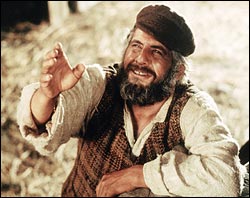
Fiddler on the Roof

One of those iconic musicals that most everyone has probably heard of. The soundtrack is fun (yes, that is the John Williams listed as the orchestrator; no, he did not compose the music). My high school did this musical the year before I entered. And the community theatre performed it fairly recently; my family went to see the performance because we knew the leading man. The story is set in the early twentieth century in Russia. We begin with a silhouetted fiddler playing on a roof. The story is narrated by Tevye, a Jewish peasant. He remarks that we are all like fiddlers on a roof, trying to scratch out a tune, without breaking our necks (when the high school did its production, they brought in a younger violinist; very good and easier to put on a set). The Jewish community in Anatevka is full of Traditions; each person in the family has a role to play; they know who they are and what God expects of them. The fathers are head of the house, mothers keep the house, sons learn a trade, and daughters learn from their mothers and will marry whomever their fathers decide. We also get a glimpse of their larger world; the Rabbi asks that God bless and keeps the Tsar far from them and the Jews don’t bother the Christians that live next to them and so far, the Christians don’t bother them.

tevyeAt Tevye’s home, Yente the matchmaker visits with a match for the eldest daughter, Tzeitel. Tzeitel’s next younger sisters Hodel and Chava are eager for Tzeitel to marry so they may marry next. But Tzeitel points out the consequences of Matchmaker. They are poor girls with no dowry, they’ll be lucky for any man, not necessarily the perfect match. Tevye arrives home, tired from working and ponders If I Were a Rich Man (and everyone knows the dance for that!)

Changes are coming to Anatevka; a student from Kiev has arrived, Perchik, on top of news of Jews being evicted from their village. Perchik arranges to teach Tevye’s children, in exchange for room and food and accompanies Tevye home for the Sabbath. The tailor, Motel, a childhood friend of Tzeitel’s, also joins in the Sabbath. As the family prepares, Tevye’s wife, Golde, urges her husband to speak to the butcher, Lazar Wolf, who is interested in marrying Tzeitel. Meanwhile, Tzeitel argues with Motel; he needs to ask her father for her hand now, before an arrangement is made with Lazar Wolf; the young couple are in love. Motel is frightened by Tevye and remains silent during the Sabbath prayer.

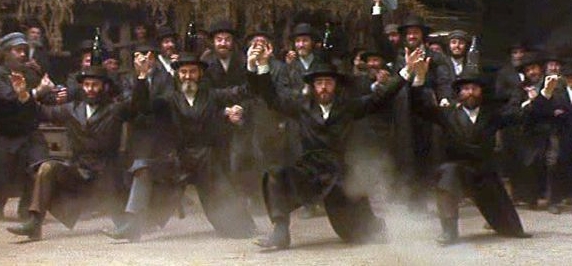
Tevye visits Lazar Wolf and there is brief confusion on the nature of their conversation; soon cleared up and Tevye eventually agrees to the match. The men celebrate, drinking To Life, “l’chaim!” (This is a fun song!) At the bar, the Jewish men encounter the Russians and there is a back-and-forth between them, melding the dances at the end. [I love this dancing. When I was young, I was part of a Ukrainian dance troupe, friends of my mother’s. At one point, my brother could do some of those moves. The leader from the dance troupe taught the dances to the high school performers and members of the troupe danced during the community’s production.]

On his way out, Tevye is stopped by his friend, the Russian Constable. He warns Tevye that there will be an “unofficial demonstration” made. Come morning, Tevye tells Tzeitel of the arrangement. She cries and begs her father; is his agreement more important than her? Tevye won’t make Tzeitel marry Lazar Wolf. Motel comes by and Tzeitel nudges him to talk to Tevye. The nervous man grows a backbone and stands up to Tevye; the young couple had made each other a pledge; they love each other. Tevye debates (“on the one hand…on the other hand”) and agrees. They are thrilled and rush off. Motel believes that this was a Miracle of Miracles, equal to Daniel walking through the lion’s den. Now, Tevye has to tell Golde. He concocts a dream (this is a weird scene) that Golde’s grandmother visits to congratulate the family on Tzeitel’s (her namesake) marriage to Motel. Golde insists it’s Lazar Wolf. But Lazar Wolf’s first wife appears and vows to kill Tzeitel shortly after the wedding if she marries Lazar Wolf. Golde accepts the dream as a sign.

Tzietel’s sisters are finding men as well. The radical student Perchik charms Hodel and opens her eyes to changes in the world. In cities, men and women dance together. A Russian Christian, Fyetka comes to the aid of Chava when other men bother her. He has noticed she likes to read and offers a book to her; they can discuss it later.

bottle dance

Motel and Tzeitel marry; her parents reminisce to Sunrise, Sunset (a musical theme that appears throughout the film). There is a dance (again, love the music) and the men even perform a bottle dance. An argument erupts from the gifts between Lazar Wolf and Tevye; Perchik breaks it up by dancing with Hodel. Tevye supports his actions and dances with Golde, as well as Motel with Tzeitel. The Rabbi even joins, though he puts a kerchief between his hand and the lady’s. The evening ends on a sour note when Russian soldiers appear and break things. The Constable puts a quick stop to things; sadly, they only turn their attention to the town and smash and burn.

The second act opens with a reprise of Tradition. Some time has passed; it is now autumn and Tevye remarks to God that Motel and Tzeitel have been married for a while. Perchik tells Hodel he must leave, to support the students in Kiev. He, in a roundabout way, asks Hodel to marry him. She agrees. They then ask Tevye for his blessing, not his permission, contrary to tradition. Tevye debates and ultimately blesses their engagement and gives his permission. Perchik gives Tevye the idea to tell Golde he is visiting a rich uncle. The couple have given Tevye a thought; they love each other, so he asks Golde, Do You Love Me? After twenty-five years, they have come to love each other.

In winter, Perchik is arrested at the rally in Kiev and writes to Hodel. She decides to join him in Siberia and bids farewell to her father; her family will always be with her, even if she is Far From the Home I Love. Some happy news comes; Motel and Tzeitel have a new arrival; a sewing machine. Oh yes, and a baby boy as well. Fyetka tries to speak to Tevye, but is dismissed. Tevye warns Chava not to speak to him anymore; some things do not change. She should be interested in marrying a young man of her faith. She resists and tells her father that she wants to marry Fyetka. Tevye refuses. We next see Golde enter the Christian church and ask for the priest. She finds Tevye afterwards and informs him Chava and Fyetka have been married. Tevye tells his wife to go home to their other children (two more daughters); Chava is dead to them. He reminisces on his Little Bird (superimposed with a ballet). Chava finds him and begs her father’s acceptance. “There is no other hand!” Tevye cannot turn his back on his people, on his faith. Chava cries “Papa!”

More bad news comes. The rumors are true; verified by the arrival of the Constable; Anatevka is to empty of Jews in three days. The same thing is happening all over Russia. Tevye argues; they have always lived in this corner of the world, why should they leave? The Constable shouts, there is trouble in the world. Orders are orders! Tevye orders him off his land. One of the villagers asks the Rabbi, would now be a good time for the Messiah? The Rabbi responds, they will have to wait for him somewhere else. The villagers sing of their Anatevka; it wasn’t great, but it was home. Tevye and his family will go to America to family in New York. They hope that Tzeitel, Motel, and their son will be able to join them. Hodel and Perchik are still in Siberia. Chava stops by with Fyetka; they will not remain while the Jews cannot. Tzeitel speaks to her sister and passes on Tevye’s wish, “God be with you.” Chava promises to write. The last scene we see is the fiddler following Tevye’s family.

The first half of the show is far happier than the second half.  When I watch the film, I focus on the first half; it holds more of the fun music.  As I already mentioned, I enjoy the dancing in the show, having a bit of experience in it.  And when you focus on the happy parts; Tevye being frustrated by his daughters choosing their own husbands, which to us is completely normal, it distracts from the historical significance of the story.  Because those bad things happened and they happened a lot (and yeah…in a few decades, get worse).  But hey, they have bottle dancing!  And Tevye makes funny sounds talking to his animals!  And three women daydream about their perfect husband!  (They kind of get what they want, learned and interesting men, but not in the way they imagined and they all have to give something up, like financial security and family).

[Historical note: the term “pogrom” appears early in the show and refers to the persecution or massacre of an ethnic or religious group, mainly Jewish. A bit of foreshadowing in the show. I learned the term during my Honors’ Holocaust class in college.]

Next Time: Another iconic musical; Annie

“I Used to Be a Rovin’ Lad”

Brigadoon

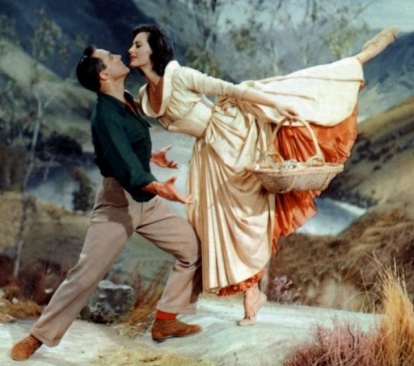
My senior musical, once again in the ensemble, though I had a four-word solo in a big chorus number. My mother made my costume, so I would actually look Scottish and not American colonial (seriously, the costumes came with mop caps). Overall, I was just happy we were doing a musical about Scotland, but part of me was also disappointed I didn’t actually have a part. I already knew this show going in. The film stars Gene Kelly (most famous for An American in Paris and Singin’ in the Rain, but a staple of musicals in the fifties and sixties) as Tommy Albright, a New Yorker, hunting in Scotland with his friend. They get lost and discover the mysterious village of Brigadoon. Gene Kelly was also the choreographer of the film and thus it features a lot of incredible dancing. The musical was written by Lerner and Loewe, just as prolific as Rodgers and Hammerstein.

As the mists clear around Brigadoon at the start of the show, a quiet chorus sings Brigadoon. The show really starts with MacConnachy Square as the town rises for the day, selling their wares. And today is a special day; the wedding of Charlie Dalrymple to Jeanie Campbell. At the Campbell home, the young women are preparing. They talk about Jeanie Packing Up (which was not included in the film) and Jeanie’s older sister, Fiona remarks that she is Waitin’ for My Dearie.

The hunters, Tommy and Jeff, enter the village square truly perplexed not only at people’s dress, but Fiona was the only friendly person. Charlie however is thrilled and invites the strangers to his wedding, for he will Go Home with Bonnie Jean (this is a fun song). Fiona stops by the square for items for the wedding and takes Tommy out to find Heather on the Hill. While she is gone, Charlie stops by the house to sign the family Bible and sings to his intended, Come to Me, Bend to Me (very romantic, and sadly not included in the film). Local flirt, Meg Brockie takes Jeff for a nap, then makes a fuss when he doesn’t want to sleep with her, for she was trying to find The Love of My Life (also cut from the film, apparently too risqué).

brigadoon dancing

Tommy is quite taken by Fiona and remarks to Jeff when they meet up, It’s Almost Like Being in Love. However, he begins to take note of people mentioning a miracle and a blessing and finds the dates in Fiona’s family Bible. She takes them to the schoolmaster, Mr. Lundie, who tells them about Mr. Forsythe, the minister, praying to God for a miracle to protect the village from witches in the eighteenth century. [Historical note: not sure the person who wrote this musical quite figured out their timelines; the Battle of Culloden (those who watch Outlander will understand the significance) happened in Scotland in April of 1746 and this miracle supposedly happened in May of 1746 and witches were not as prevalent…maybe the English trying to take over their land. Witches might be a more reasonable cause a hundred years prior]. Carrying on, God granted a miracle, that Brigadoon would disappear into the mists and appear once every hundred years; when the villagers go to bed, it’s one year, when they rise the next morning, it’s a hundred years later [don’t think about the math too much or you realize bad things]. If someone from the outside wants to stay, they must love someone enough to leave their old life. But a villager can’t leave, or the whole village will disappear forever.

And this is where Harry Beaton causes a problem. He’s in love with Jeanie Campbell, who is happily marrying Charlie Dalrymple. The clans gather for the wedding, all clad in tartan (though if you want to see true Highland garb, watch Outlander; yes, tartan breeches were a thing, a weird thing, but nonetheless, real. Oh yes, and further historical note: it was after the Battle of Culloden that wearing tartan was outlawed, thanks to the English). And it is true Scottish custom that there need not be a minister present at a wedding, as long as the two being married share mutual consent [this has popped up in Scottish romances; women cannot be married against their will]. There is a dance, including a lovely one by Jeanie. Then a sword dance (real thing, and also cut from the film, boo). Harry participates and runs off after seeing Jeanie happy, shouting he will leave Brigadoon and doom them all. Tommy joins the men in The Chase, hunting Harry Beaton down before he can ruin things. Jeff has wandered off to hunt and thinks he’s shooting at a bird. Harry is the one who falls down dead.

Meg Brockie entertains the wedding guests with the tale of My Mother’s Wedding Day, until the men return with Harry (this is all cut from the film; Fiona and Jeanie’s father tells everyone to keep quiet and not disturb the joyous occasion. Another cut song by Tommy is There But For You Go I). Tommy is ready to stay in Brigadoon, until Jeff tells him what happened. Tommy begins to doubt enough that he won’t stay. But once he returns to New York and his fiancée, he cannot concentrate. Little words will remind him of something and he ignores what is going on. Tommy breaks it off with his fiancée and drags Jeff back to Scotland. He gets a miracle of his own; the town was just starting to disappear and he can enter. As Mr. Lundie remarked, “if you love something enough, anything is possible.”

The music in this show is fun, especially the songs that were cut; upon re-watching of the film, I had never noticed that they weren’t in the film. It features, as many other musicals do, a couple falling in love at first sight; which I always argue is never a good way to start a lasting relationship, or least, not a believable one. Gene Kelly is of course, a remarkable dancer and his partner is skilled as well.

Up Next: Seven Brides for Seven Brothers

“Rub Him Outta the Role Call, and Drum Him Outta Your Dreams”

South Pacific

My high school performed this Rodgers and Hammerstein show my junior year. My friend from church, Chelsea was the lead. I was once again simply in the ensemble as a nurse. The show is set on a South Pacific island during World War II (there was a remake in 2001 starring Glenn Close and Harry Connick Jr, and a special concert at Carnegie Hall starring Reba McEntire in 2005 [which was, ironically, the year my high school performed]). Marine lieutenant Joe Cable comes to go on a secret mission to spy on the nearby Japanese and wants local French planter Emile de Becque to help. Emile has also fallen in love with a Navy nurse on the island, Nellie Forbush. Local woman, known as Bloody Mary likes how handsome Cable is and decides he is right to marry her daughter, Liat.

The naval personnel stationed on the island, the “Seabees” start off singing about Bloody Mary, then remark There is Nothin’ Like a Dame (gotta say, love the deep, full tone the men’s chorus achieves.  Ironically, we sang this at a county choir performance the same year). Nellie and the other nurses run by and we find out that sailor Luther Billis runs several side jobs to help people out. This is when Bloody Mary spots Lt. Cable and tells him about Bali Ha’i. From there, we check on Emile and Nellie at Emile’s plantation. Nellie turns out to be a Cock-Eyed Optimist. Both worry that they are not right for the other, but in just a few weeks they have fallen in love. Emile is certain and remarks in Some Enchanted Evening (the most well known song from the show) “once you have found her, never let her go.” Nellie returns to base and Emile’s children come out to see their papa and sing a little French song, Dites Moi.

Lt. Cable has spoken to command and they call in Nellie to ask her questions about Emile, determining whether he is reliable to take Joe to the other island. It is on record that Emile killed a man back in France. This concerns Nellie and she remarks to her friends, I’m Gonna Wash That Man Right Outta My Hair. Unbeknownst to her, Emile has come by; she’s startled out of her dance and rinses her hair to speak to him. He has come to invite her back to his plantation for a party and to tell her more about himself. The man he killed in France was a bully, during a bar fight. Then he asks Nellie to marry him. Relieved and ecstatic, Nellie has changed her tune, I’m in Love with a Wonderful Guy. But when Emile meets with command, he declines the mission, not wanting to risk his future with Nellie.

gonna wash that man right outta my hair

Frustrated, Cable lets Billis take him to Bali Ha’i. Billis observes the famous boar’s tooth ceremony and Bloody Mary introduces Joe to Liat and he instantly falls in love with the girl who is Younger Than Springtime. He sadly has to leave (after they spend some time together). And after Emile’s party, Nellie finds out about his children and runs off when she realizes he had Polynesian wife before her (I don’t quite get that thinking, but I also wasn’t around during the forties and fifties).

The second half of the show returns to Bali Ha’i and Bloody Mary explains Happy Talk and how fine of a husband Joe Cable will make for Liat. But he won’t abandon his fiancée in Philadelphia. Now Liat will have to marry an older French plantation owner. We’re cheered up a bit by the Thanksgiving show that Nellie puts on. Honey Bun is a fun number, with Luther Billis. Emile has come to see the show and sent Nellie flowers, but when he talks to her, she can’t explain why she is so upset about his previous wife and she runs off. Joe remarks to the Frenchman You’ve Got to be Carefully Taught, about racism, which he is struggling with in regards to Liat. But he’s come to the decision that he won’t leave Liat, except it’s time to go on the mission and Emile has agreed, now that Nellie has broken his heart; This Nearly Was Mine.

They land safely and get word back to base about the Japanese’s movements. Nellie finds out that Emile went and her heart decides that she does love him. Sadly, Joe dies on the island (enemy fire) and Emile gets the last news out; the Japanese are pulling out and will be the perfect target. So all the Marines and seamen and nurses gather up to leave. Nellie is with Emile’s children and listen to their reprise of Dites-Moi when Emile walks in. At least one story ended happy.

I have fairly fond memories of performing; one of my classmates asked my brother (on break from a military college) for help. I was still put in horrible costumes, but I enjoyed the group performances. Watching the movie again, the filters are horrible. Some of the music is still good, but I’m not fond of the storyline between Joe and Liat; it’s too sudden. And they know nothing about each other. So, not a favorite.

Next Time: Brigadoon (which is a favorite)

“I Sent the Swarm, I Sent the Hoard, Thus Said the Lord”

Prince of Egypt

I probably should have included this around my Disney section since it’s an animated film; but I had forgotten. Besides, the soundtrack is phenomenal. One of the first full length films produced by DreamWorks (same company who would later create one of my favorites: How to Train Your Dragon, and did you know that Steven Spielberg is one of the founders?). Includes a stellar cast: Val Kilmer voices Moses, Ralph Fiennes (Voldemort) voices Rameses, Michelle Pfeiffer is Moses’ wife, Tzipporah, Sandra Bullock is Hebrew Miriam and her brother Aaron is voiced by Jeff Goldblum. Danny Glover is Tzipporah’s father, Jethro and Patrick Stewart is Rameses’ father, Seti, with his queen voiced by Helen Mirren. Steve Martin and Martin Short are the priests, Hotep and Huy. Hans Zimmer composed the score and Stephen Schwartz ( he also wrote for Disney’s Pocahontas, Hunchback of Notre Dame, Ella Enchanted, and Wicked) wrote the lyrics.

It tells the story of Moses and the exodus of the Hebrews from Egypt. The film opens with Deliver Us, illustrating the plight of Hebrews as slaves in Egypt. Seti, the pharaoh, has just issued the order to slaughter newborn Hebrew boys. Moses’ mother and her older children sneak to the river, put baby Moses in a basket and set him adrift, praying her son will have a better life. Her young daughter follows the basket, making sure he arrives safely, to the pharaoh’s wife (biblically, his daughter instead).

The film jumps to two young men, Moses, and his older brother, Rameses, racing cartsprinces of egypt through their father’s buildings. They cause mayhem and are chastised by Seti afterwards. He expects a lot from Rameses, who will succeed him as Pharaoh. Moses pleads for his father to not blame Rameses and suggests that his older brother only needs an opportunity to prove himself. Rameses is granted that opportunity at a banquet that night; Rameses in turn elevates Moses’ position. Priests Hotep and Huy are told to give the princes a gift; they have captured a foreign young woman. Moses is not the kindest to her upon meeting, but that night, he distracts guards to let her escape. He follows her to the slave quarters where he encounters Miriam and Aaron. Miriam thinks her brother has knowingly come, but he is unaware of his true heritage. Aaron pleads for mercy, but it’s not until Miriam repeats their mother’s lullaby that Moses realizes the woman speaks truth when she declares “I know who you are, and you are not a prince of Egypt.” She suggests he asks the man he calls father.
Moses runs back to the palace, trying to take comfort in All I Ever Wanted. He knows his history, it’s etched on every wall. So he investigates. And finds proof of what Miriam said, playing out as animated drawings on the walls. Seti attempts to comfort his son; Moses begging his father, “tell me you didn’t do this.” Seti considers it a sacrifice for the greater good, his parting words “they were only slaves.” (That just sounds so wrong coming from Patrick Stewart).  The Queen does a bit better, but she counsels that Moses should simply ignore the truth; “when the gods send you a blessing, you don’t ask why it was sent.” It does show that his family have never looked down on him for being adopted; Rameses may have been young enough he doesn’t even remembering his mother finding his baby brother.

Yet Moses wanders confused the next day. He accidentally kills an overseer who was beating an elderly Hebrew. He flees; Rameses attempts to stop him, telling his brother he can absolve him of his crime; “you will be what I say you are.” If Rameses wants the truth, Moses instructs him to “ask the man I once called father.” Moses still leaves. Eventually, he removes all pieces of his old life, aside from the ring his brother gifted him. A camel comes across him and he is dragged to a watering hole. He saves three young girls, then promptly passes out into a well. Their older sister, the same woman Moses freed comes to help, though she remembers the prince and lets him drop back into the well. Their tribe takes Moses in; the priest happy to thank a strange young man for saving his daughters. Moses quietly tells the boisterous man he has done nothing worth honoring; which the woman, Tzipporah finds odd, but her father explains a better mindset to Moses. People on earth cannot see their true worth; they should look at their lives Through Heaven’s Eyes (I love this song).

Moses becomes a part of the tribe, becoming a shepherd and eventually marrying Tzipporah. One morning, while tending his flock, one sheep wanders off. He goes after it and comes across the Burning Bush. God speaks to him and tells Moses to go before Pharaoh and free the Hebrews. Moses is unsure, but God promises to be with him and instructs Moses to take his staff, with it, he will do God’s wonders. Tzipporah is initially unsure, but Moses wants the same freedom that her family has for his people. She tells her husband she will go with him back to Egypt.

Rameses is now Pharaoh, so the brothers share a joyful reunion, until Moses tells his brother why he has come. As much as Moses wishes in his heart, things cannot be as they were. Pharaoh must release the Hebrew slaves. To demonstrate God’s power, Moses has his staff turn into a snake. To prove that their gods are just as great, Hotep and Huy mock that Moses is Playing with the Big Boys and they too turn staves into snakes (with smoke, and in the background Moses’ snake devours theirs). After the demonstration, Rameses and Moses speak privately. They’re brothers for a brief moment, recalling that while Moses got Rameses into trouble, he also got him out. (Ralph Fiennes commented behind the scenes “when brothers are enemies, they don’t stop being brothers.”) But life has made them different people and Moses return’s his brother’s ring. Rameses doubles the Hebrew’s workload in retaliation. The Hebrews disparage Moses, but he continues with his mission, with some kind words from Miriam; God saved Moses, he should not give up on the Hebrews. Moses approaches the river and turns it to blood for Pharaoh. The priests imitate the phenomenon, but Moses warns Rameses that matters will only get worse.

The Plagues descend upon Egypt. Frogs, then bugs and flies infest Egypt. The livestock die. Locusts blot out the sun. Egyptians are covered in boils. Fire rains down, then darkness. While a choir chants in the background, Moses cries that it pains him to see what has happened to his home. But he blames Rameses for “all the innocent who suffer for your stubbornness and pride.” Rameses (this is Ralph Fiennes singing; several of the other characters’ singing voices were dubbed) will let his heart be hardened, “I will never let your people go.” The last plague is the death of the first born; Moses instructs the Hebrews to mark their doors with lamb’s blood, and the angel of death will pass over their house. Rameses young son is killed. Moses meets with Rameses; Pharaoh will let the Hebrews leave. But Moses mourns for his brother’s loss and his own.

when you believe

Miriam cheers the people, “there can be miracles, When You Believe.” The song becomes more joyful by the time the children beginning singing in Hebrew (I sang this song as a child in church choir, probably the first time I ever sang in another language…actually, I think the same director taught it to my junior high choir as well). Then they come to the Red Sea. And Pharaoh has decided he will not let the Hebrews go and chases after them. Moses parts the sea with his staff; God has sent down a pillar of fire to bar the Egyptians. Once they’re almost through, the fire dissipates and the Egyptians charge. But the parted sea returns to its home, destroying the army. Moses has succeeded in his mission. The ending of the film shows him descending from Mount Sinai with the Ten Commandments.

This film, which has since been adapted into a stage show,  came out when I was five or so and I still enjoy it to this day. Once again, the music is phenomenal (ooh, an adult church choir should really do The Plagues; that’d be cool) and the characters were well casted; though it wasn’t until I was older that I began recognizing the voices. The studio managed a good retelling of the Bible story (they consulted with many religious experts and even went to Egypt for research purposes) and made the royal Egyptian family sympathetic at times (it was banned in Egypt, however). I will say that the animation quality of DreamWorks has come a long way since this film (they have done a spectacular job with Dragons; their characters are so lifelike), but it is a different style than the classic Disney look. I highly recommend this film.

Up Next: A proper introduction to more traditional musicals

Dream-Song

Australia

As the title suggests, a movie about Australia. So much, that it starred Australians, was shot in Australia, and was directed by an Australian. Hugh Jackman, one of the stars, even joked when he opened the 2009 Oscars, where Kate Winslet and Robert Downey Jr were both nominated for their range in acting; “I’m an Australian, playing an Australian, in a movie called Australia, hosting.” [He then goes into an entire song and dance number, because that’s how he got his start, though he ended by stating “I am Wolverine!”] Hugh Jackman’s character is only known as the Drover. Nicole Kidman (her parents are Australian) plays Lady Sarah Ashley (she worked with director Baz Luhrmann on Moulin Rouge). David Wenham (Faramir in Lord of the Rings, shot in New Zealand; he was also in 300, and worked alongside Hugh Jackman in Van Helsing) is Neil Feltcher. The film spans a six-year time frame, starting in September of 1939 and concludes during Japan’s attack on Northern Australia after they hit Pearl Harbor December of 1945. There is a note at the beginning of the film to Aboriginal and Torres Strait Island viewers in deference to their culture, and explaining that this was a time where Aboriginal children of mixed race were taken from their families and “trained for service in white society.” “These children became known as the Stolen Generations.”

To be honest, the main reason I wanted to watch this movie is the fact that Hugh Jackman is in it. Throw in a bit of history and I’m intrigued. After the opening notes, the movie begins with an Aboriginal boy witnessing the murder of a white man. The boy is fearful of coppers (police) taking him to Mission Island. But then, the boss lady arrives. The boss lady is Lady Sarah Ashley who flies from England to the Northern Territory of Australia to force her husband to sell the Faraway Downs property. She meets the Drover, while he’s in the middle of a bar fight. It’s a rocky start for them, difference in culture and all that. He shock her on their travels the first night by bathing [yep, like that scene], then commenting they all huddle up in the one tent for warmth. Truth is, the men are more used to sleeping under the stars. But the Drover takes Lady Ashley to Faraway Downs (which is what the boy sees before he hides), and they discover that the man who had been killed was her husband. Lord Ashley is the only one to stand up to the Carney cattle monopoly in the area, though his death is blamed on an Aboriginal leader, King George (the boy’s grandfather).

The boy, Nullah, appears to Lady Ashley and reveals that she cannot trust the manager, Mr. Fletcher. Partly because Neil Fletcher is his father. Which wouldn’t sit too well with his fiancée’s family, the Carneys. Nullah proves Fletcher a liar and when caught, Fletcher starts hitting the boy. Sarah steps in and fires Neil. Drover isn’t happy when he comes around; Lord Ashley had promised him a drove (driving cattle) and rights to breed an outback brumby with an English thoroughbred. Sarah insists that everyone left on the ranch can pull together and make the drove. Faraway Downs is competing against the Carneys for an Army contract. The accountant of the ranch, when he’s sober, reveals to Sarah that Fletcher had been siphoning off the best cattle to Carney land; that is what her husband had been investigating when he had been killed.

australia stars

The actual police arrive the next day, setting Nullah and his mother to hide in the water tower. Sadly, the mother drowns before the police leave. Drover sends Sarah to comfort Nullah; she admits she’s not great with children, but tries to cheer him up by recounting the recent film, The Wizard of Oz, and attempting to sing the main song Somewhere Over the Rainbow [I am odd and not fond of the film or the song (it’s overplayed)]. Nullah likes the idea of dreaming and wishing; songs are important to the Aboriginals. The drove is back on the next morning. But Fletcher isn’t finished; he and his men set a fire to spook the cattle and drive them off a cliff. Nullah stands firm at the edge and halts the cattle, after the accountant (Kipling Flynn) is trampled to death. There is a rather tender scene of both Drover and Sarah diving after Nullah before he passes out over the edge. Tender moments start cropping up between Sarah and the Drover, even a kiss after they get tipsy in memory of Kipling. Drover admits he was married previously, to an Aboriginal woman. She got sick and died because the hospital wouldn’t treat her.

Fletcher’s at it again; he poisons the drinking holes along their way. Their only option is the wasteland known as Never Never Land. But King George offers to lead them. News is reported that they all die. The Army is about to sign a contract with Carney for their cattle…until there is a disturbance in town. Sarah and her people survived and there is a race to load the cattle. Drover gets in front and blocks Carney’s cattle. Nullah sums up that everyone gets what they want; everyone happy. Except him, because he is half-caste and doesn’t belong anywhere. Well, his friends disguise him so he looks fully Aboriginal and sneak him in to see The Wizard of Oz.

Meanwhile, there is a ball for the upper class to donate money to Mission Island. Sarah tries to argue to keep Nullah; the priest insists that Aboriginal women forget their children, she retorts no mother forgets her child and points out that the fathers of the mixed race children are in the room. The high society women start looking down on her, though Kaitlin Carney is sympathetic (she is “King” Carney’s daughter, and engaged to Neil Fletcher). “King” Carney wins the auction to dance with Lady Ashley and they discuss the sale of Faraway Downs. Sarah informs him of Neil’s involvement in her husband’s death and she is almost ready to sell when a cleaned up Drover enters the ball. He had already turned down her offer to be the new manager of Faraway Downs, insisting he doesn’t mix with the upper class. But he has apparently changed his mind and Sarah is willing to give Northern Australian society something to talk about. They run off after a dance and the rain comes. Their relationship really takes off [yep, another one of those scenes I love and reminds me why I watch the movie]. With the rain, Faraway Downs is like an island; Drover, Sarah, and Nullah can be a little family. Drover leaves again to go droving once the wet is over, but he comes back.

Everything is idyllic for a few years, until Neil leads Carney into an alligator attack and takes over the business. He then returns to Faraway Downs, intent on buying; it was his family that worked it for generations for the Ashley family. And a big drove comes in for Drover, and Nullah wants to go on walkabout to become a man. Drover leaves, hurting Sarah. And then Nullah is taken. Katey Carney, now Fletcher, begs her husband to help. He strikes a deal, Sarah will work for the war effort, he’ll buy Faraway Downs, and then he’ll get Nullah back.

Then the Japanese attack. Drover, after being called out for being scared to get close to Sarah, returns to town, only to find it destroyed. Sarah is believed to be dead. Drover knows he has to get Nullah, Mission Island is where the radio tower is and is sure to have been hit. The boys on the island did survive. And so did Sarah; it was Katey Fletcher who died in her place. Just as Drover, Nullah, and Sarah are about to be happily reunited, Fletcher aims a gun at them. A shot goes off and Nullah drops, but so does Fletcher. King George escaped prison and saved his grandson. Nullah is fine and they return to Faraway Downs. Sarah lets him go on walkabout. The film ends with another note. The Australian government ended the assimilation program in 1973 (that’s another twenty-eight years after the events of the movie) and in 2008, the Prime Minister officially apologized to the Stolen Generations.

This film is long. It honestly could have been cut down into two movies for it tells almost two different stories. There is the action/adventure plot of the first half, driving the cattle to town. Then there’s the war part, which could have been expanded for it holds most of the character depth. I like the family group that Sarah, Drover, and Nullah become without meaning to. They all need family and end up blending well with each other. We see how far the Drover has come throughout the film, first being annoyed by Lady Ashley, to loving her, to leaving, then being heartbroken when he believes she’s dead. Nullah is a sweet child, and Sarah Ashley’s character softens throughout the film, though she is still strong and determined. Parts of the movie drag and I tend to just fast forward to the bits I like. It is interesting to see how other places in the world were affected by the Second World War.

I much prefer some other movies to this, especially for some of the actors; David Wenham is much nicer as Faramir. Hugh Jackman is a good leading man and he did well opposite Nicole Kidman, but I think we see a larger range for her in Moulin Rouge. Not the most romantic role for Hugh, we’ll get to some of those later.

Up Next: Kate and Leopold