“Now, that’s the way to make an entrance”

Season One

We have finally arrived to the show I’ve been looking forward to re-watching for weeks, biding my time! It’s more historically accurate than some other shows *coughRobinHoodcough* but there are times they take some liberties. It’s the entertainment business, gotta let it slide. I adore the characterization in this production; gives the fanwriters lots of brotherly love moments to play with. The action is superb, the costumes are grand (properly worn in leather, which may not be completely period accurate, but it looks cool).

The show ran for three seasons, only ten episodes each season, since it ran in the summer, between the main programs. Aramis’s Santiago Cabrera was previously in BBC’s Merlin series as Lancelot (we’ll be getting to that series shortly), and Alexandra Dowling, who plays Queen Anne, was also in one episode of Merlin. Ryan Gage plays King Louis, though he’ll show up later as Alfrid in the Hobbit trilogy. The first season features Peter Capaldi as Cardinal Richelieu; Capaldi would go on to be the Twelfth Doctor in Doctor Who.

The series is set in Paris, 1630. We’re first introduced in Friends and Enemies to Alexandre D’Artagnan and his son, Charles when they stop at an inn on their way to Paris. Masked riders stop as well and end up killing Alexandre while Charles was taking care of the horses. Charles gets the name “Athos” from his dying father and sets out on revenge. Meanwhile, in Paris, each Musketeer starts their day. One man (Athos) has bottles strewn across his floor and uses a bucket of water, covered in ice, to dunk his head into in order to properly wake up. Another (Porthos) is playing cards against a Red Guard. They get into a duel and Porthos mockingly defends himself with a fork. And another man (Aramis) is in bed with a beautiful woman. Turns out, she’s the mistress of Cardinal Richelieu (this Cardinal doesn’t really claim to be pious). Richelieu returns early and so Aramis must jump out the window to escape. Adelle kicks his pistol under her bed for the time being. Aramis lands in front of his friends and they report to Captain Treville at the musketeers’ garrison. He has a new mission for them, another regiment of musketeers have gone missing. However, it’s much more than that when the Cardinal and the king get involved. King Louis had sent letters with the musketeers of sensitive nature to the Spanish. And now, the Spanish envoy is missing.

Catching up with D’Artagnan, he has stopped at a lodging house where he meets a beautiful dark-haired woman, and her pompous male accompaniment. The woman joins D’Artagnan in bed, where he discovers scars on her neck. The cocky young man offers to kill the man who caused them. Come morning, the lady is gone, though there is a bloody knife left in the pillow. When D’Artagnan investigates a scream, the man from the previous night is found dead. Bloody knife in his hand, everyone blames D’Artagnan and he has to jump out a window in order to escape (must be a trend amongst musketeers). He runs through a market and comes across a young woman, whom he asks to kiss him as a diversion. She takes offense afterwards and sends him on his way. He passes out at her feet. Next, he wakes with her over him. She had taken him back to her home. D’Artagnan thanks her for her assistance, but he must find Athos. She is familiar with the musketeer and introduces herself as Madame Bonacieux – Constance.

dart duel athos

The three musketeers are at the garrison when D’Artagnan strides in, loudly challenging Athos to a duel. He doesn’t listen when Athos insists he did not murder the boy’s father. Young D’Artagnan holds his own well against Athos. The duel pauses, but he starts again against all three, until Constance calls a halt. Treville next arrives with guards for Athos’s arrest. Even at the trial, Athos insists he is innocent; he did not murder anyone at an inn, nor did he attack a carriage. But the witnesses have his name. Louis, at Richelieu’s urging, makes an example of Athos and orders his execution. Aramis and Porthos pick up D’Artagnan to help clear Athos’s name, and to find proper justice for Alexandre D’Artagnan.

For brevity’s sake – they do solve the case. We find out that Milady, the woman from the inn, was the one who killed the man, apparently the Spanish envoy. She has Louis’s letters and reports to Richelieu. Louis demonstrates how desperate he is for the Cardinal’s advice, agreeing to disband the Musketeers if it will make the older man happy (that does not happen…yet). The true culprit? A band of Richelieu’s guards who went a bit too far. The musketeers, including D’Artagnan attack and D’Artagnan faces the man. At Aramis’s call, he does stop from killing the man, but when a knife is pulled, he acts defensively and stabs the man. All three arrive at the prison in order to stop Athos’s execution. Richelieu takes Adelle to the country; Milady had discovered that the pistol in her room belonged to Aramis, so he has her shot with the pistol, while she screams “I love Aramis” until the end.

D’Artagnan’s next adventure, Sleight of Hand has him going undercover to prison in order to discover a suspected terrorist’s plan. By this point, Athos has started to take an interest in D’Artagnan; he argues against sending the boy in, not because he doubts his skills, but because he doesn’t want the young man to die. Constance Bonacieux has also become fond of the young Gascon. When she visits the garrison with her husband, she confronts the three older musketeers and slaps Aramis for betraying their friend. Aramis is fine with the young woman slapping him. They get a chance to see their friend when they accompany to queen to pardon a few prisoners. Vadim, the terrorist, uses the queen’s visit in order to escape, taking her hostage for a moment. D’Artagnan accompanies him and does talk the other man out of killing the queen. During the ensuing firefight, Aramis covers the queen from bullet fire. Queen Anne is deeply impressed with the musketeer’s bravery and rewards him later by gifting a jeweled cross of hers to Aramis.

Vadim, however knows that D’Artagnan is in league with the musketeers. He ties the boy to kegs of gunpowder in tunnels beneath the palace. Our hero has fifteen minutes to get free. He just scrapes by, but when he goes to leave the room, the door ignites other lines. He gets a bit of distance between him and the blast, but is still thrown off his feet, as are the other musketeers. (After Aramis recklessly jumps on a grenade in order to save the queen; he’s lucky it was a dud). D’Artagnan confronts Vadim and mortally wounds him. We also start seeing a connection between Milady and blue forget-me-nots.

Commodities brings Athos’s past to light. It starts with the musketeers having to escort a trader, Emile Bonaire to the king; Spain claims he is violating their trade agreement with France. Emile is the first to call attention to Porthos being black (this is an homage to Alexandre Dumas’s father being a half-black Frenchman). Porthos admits that his mother was a slave who died when he was five. The musketeers are ambushed and Porthos suffers a deep wound from an axe. At first, Athos wants to ride on, but Aramis (the medic of the group) angrily states that Porthos will not survive that long; he needs stitching which cannot be done in their present position. Athos eventually admits he knows a place. They ride to an estate, Athos begins opening doors and shutters. When D’Artagnan inquires how Athos knew of the place, the older man confesses that he owns it. He was once the Comte de la Fere, nobility.

Porthos, after being expertly stitched by Aramis’s fine needlework, discovers that Emile is more than a simple trader. He is a slaver. The cheap labor he brags about in the colonies are slaves. Emile tries to argue that it’s simply business. Athos regrettably has to point out that while slaving is disgusting, it is not a crime.

Poor Athos (this is why he is a favorite character, a wooby that we want to hug and put to rights) is haunted by memories of the house and his former life. He had a younger brother, Thomas, who died, and was apparently the family favorite. He cries at his old bed, wine spreading on the cover. He later throws a wine bottle at his portrait. He remembers his wife pressing forget-me-nots into a locket. Yes, his wife is Milady (whom we know is still alive). He sends the rest of his companions on to Paris. Athos falls asleep, then wakes to smoke, discovering a fire set in his old bedroom. He turns and Milady is standing there with a torch. She’s surprised to see him there and he’s looking at a ghost. She hits him with the torch; she’s there to erase the past, destroy it completely. She’s more than willing to kill Athos. Athos brings up that she murdered his brother. Her retort is that she did it to save her love with Athos; Thomas was a fool and a hypocrite; he deserved to die. Athos begs for Milady to kill him. But she finds that he still wears the locket she gave him. D’Artagnan (having disobeyed orders) has returned and calls for Athos. Milady flees and D’Artagnan races in to save his friend. Athos brokenly divulges that he had had his wife taken from the house and hanged. But she’s not really dead.

“It was my duty! It was my duty to uphold the law, my duty to condemn the woman I love to death. I clung to the belief that I had no choice. Five years learning to live in a world without her.”

The episode ends with Bonaire and the Cardinal becoming business partners, but the musketeers get the last laugh. They set Bonaire up to be trapped by the Spanish.

The Good Solider exposes a secret of Aramis’s past. As assassin breaks up a meeting between the king and the Duke of Savoy (who is married to Louis’s sister). Louis and Richelieu are trying to persuade Savoy to sign a peace treaty with France. Hints are dropped about a massacre in Savory five years prior, of which Aramis is a survivor. Aramis discovers the would-be assassin to be his old friend Marsac. Marsac was a musketeer alongside Aramis, until he deserted after the massacre at Savoy. Marsac claims he knows the truth and blames Captain Treville. Aramis’s friends don’t believe Marsac, but for Aramis’s sake, investigate the claims. In the meantime, they hide Marsac at Bonacieux’s. Constance is not pleased to discover that she was harboring a criminal, angrily telling D’Artagnan to leave. Later, D’Artagnan promises to never lie again. Constance doesn’t want protection, she wants to be treated like an equal. When Marsac goes after Constance, D’Artagnan punches him. He once again apologizes to Constance. In return, she wants something that her husband can never find out about: she wants D’Artagnan to teach her to shoot, and sword fight, complaining “why do men have all the fun?” (this is why we like Constance)
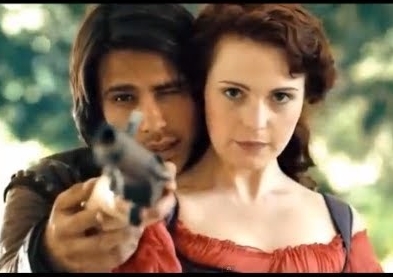
constance shoot

The four confront Treville, but he will not admit anything. He has several angry discussions with the Cardinal, one of which Aramis overhears. Treville does not out his man to Richelieu and wearily admits to Aramis that he did hand over the musketeers’ orders, but knew nothing about a massacre until afterwards. Aramis is furious, punching his commanding officer and threatening to go to the authorities. When Marsac finds out, he punches Aramis and leaves with the intention to kill Treville. Aramis catches up to him and tries to talk his old friend down, but when Marsac starts firing, Aramis has to fire back. He hits his friend. “Better to die a Musketeer than live like a god,” Marsac states with his last breath. Treville and Aramis bury their comrade at the end of the episode.

The Duke is trying to discover whether France has been hiding his old councilor for the past five years. He thinks he has evidence, but when he goes to visit the prison, the musketeers have arrived first and switched prisoners. Humiliated, the Duke is forced to sign the peace treaty. As Treville admitted to Aramis and Marsac, the massacre was ultimately on the king’s orders; protecting their most important spy in Savoy, his sister. The Duke’s councilor, a Spanish loyalist, began to suspect her, so the musketeers were used to make the Duke believe there was an assassination attempt while the councilor was abducted. Louis even hints to Anne that there may always be an accident that kills the older Duke, putting his son in charge (and more liable to be sympathetic to French influence).

We discover more of Porthos’s background in The Homecoming. In the aftermath of his birthday celebration, where he shoots a melon off Aramis’s head, while drunk, Porthos wakes in the street, next to a body, with no memory of what happened. Red Guards assume he is the culprit and arrest him. The judge shows no leniency, calling Porthos a mongrel and orders him executed. He’s rescued, but not by the musketeers. Masked men take him to the Court of Miracles (it was brought up in Disney’s Hunchback of Notre Dame). Turns out, Porthos grew up in the Court. His old friend, Charon is king now. And his old friend, Flea is still there and now hooked up with Charon. (That doesn’t stop her from sleeping with Porthos; those two had been an item, but she won’t leave the Court).

The other musketeers investigate the young man’s death, connecting it with a plot to destroy the Court. The boy’s father was intent on regaining the wealth of the family, bought the land and with the denizens gone, would be able to collect rent once new houses had been built. And, Charon was his inside man, arranging powder kegs and allowing outsiders, disguised, to enter and blow the place up. (The man signs a confession, then shoots himself rather than be arrested.) Porthos eventually recalls the evening’s events and Charon’s part and confronts his friend. Flea takes a bullet to the shoulder for protecting Porthos, and Porthos and Charon fight. Aramis, Athos, and D’Artagnan have come to their friend’s rescue and Aramis ends up stabbing Charon when he tries to stab Porthos in the back. While Porthos misses Flea, he is happier as a Musketeer and has a new family.

In The Exiles, we once again hit upon the idea of King Louis having a secret twin. As Father Duval [who is played by the real life father of Tom Burke, who plays Athos] tells Cardinal Richelieu, Marie de Medici (yes, from the House of de Medici) had gone into labor before being able to return to Paris. A secret son was born before the rest of the council arrived; the boy was deformed and so whisked away when it was apparent a sibling was arriving. Philippe went on to live a quiet life, cared for by Father Duval. A young nurse was hired and she eventually fell in love with Philippe. They married and had a child. When they went walking about as a family, the villagers beat Philippe to death for his deformity. All the musketeers know is that Aramis and D’Artagnan were ordered to retrieve the mother and child and deliver them to Richelieu. But another group of men kidnap the baby.

Marie de Medici presents herself to her son, despite having been ordered to stay away after a coup she had set up to overthrow him (not quite what happened historically, but French history is not my strong suit). Louis can’t decide how to handle affairs. “Decapitating one’s mother is rarely popular with the people, sire, it always looks a touch ungrateful,” Richelieu informs Louis. She is sent away with a musketeer escort and then ambushed. This brings her to the palace (she has an unusual fashion style, for the period. I’ve noticed the heroes tend to be more accurate while the villains have a bit of a modern flair).

Aramis and D’Artagnan manage to locate the infant and D’Artagnan has the brilliant idea to send Constance in as a nurse maid, and get them information. They’re surprised when Marie de Medici shows up and Agnes, Philippe’s wife, informs them that she is Philippe’s mother. Constance keeps her cool until Marie leaves. The musketeers then sweep in, though Constance holds her own with a sword against one of the guards, to Aramis’s surprise. Treville still orders that Agnes and her baby, Henri must be taken to the Cardinal, though he states he will conveniently be busy with paperwork for a time. Aramis whisks Agnes and Henri away, intent on getting them to Spain. His friends follow him, Athos snarking about keeping the plan suicidal. They throw barrels of fine brandy into a fire to provide a distraction from Marie’s guards. Aramis takes a bundle across the bridge, but drops it in the water.

Richelieu informs Marie that her plans have failed. She will not be able to overthrow Louis and put Henri on the throne, thus ensuring another regency for her. She walks away with tears, though I’m not sure if she’s more upset about her plans falling apart or the loss of her grandson. The Cardinal kills Father Duvall and destroys the documents so there can be no further questions of Louis’s legitimacy.

Never fear, the episode ends happy; the bundle had not really been Henri. The musketeers and Constance meet Agnes and reunite mother and son. Aramis insists they leave France (funny enough, there is a sign to Avalon in the background of the shot), there are too many threats to the small family.

Early feminism gets a voice in The Rebellious Woman. The name Comtess Ninon de la Roque is brought up when a young woman is killed by the royal carriage, attempting to deliver a petition to the queen. Ninon educates women of all stations, teaching them scholarly pursuits, in the face of men saying it was a danger to fragile female minds. The Cardinal orders Milady to find evidence against Ninon, suggesting that Ninon’s interests in girls is not entirely wholesome. “How like a man,” Milady retorts (okay, I’ll cheer for her for that bit). The Cardinal wants her money to fund the country.

The musketeers visit Ninon and she’s attracted to Athos; there’s a battle of wits and he persuades her to allow a search of her rooms. The missing girl is not found, but Athos agrees to dinner with the woman. Neither of them are interested in marriage; Ninon will not be bound to a man, and Athos is opposed to the idea after the disastrous results of Milady. Their pleasant evening is interrupted when Aramis declares trouble at Ninon’s; the Red Guard are ransacking her library and have found several missing girls in a hidden room.

At the same time, Father Luca Sustini [the actor was also in BBC’s Merlin, there is a joke filtering about the various fandoms that BBC reuses actors and sets] has arrived to visit Richelieu from Rome. He gifts the Cardinal with a saint bone and informs his colleague that there is talk of who the next Pope may be; there are those who would support Richelieu’s bid for the position. When the subject of Ninon arises, Sustini declares her a witch for her progressive ideas and poisoning the minds of other girls. He urges Richelieu to be decisive; Rome will be watching with great interest.

Milady speaks out against Ninon at her trial, lying. Athos is furious; loudly declaring that she cannot be trusted. The court finds Ninon guilty and orders to be executed. The queen arrives with word from the king that Ninon will not be killed; unless she confesses by her own hand. Yet when Richelieu falls ill during the proceedings right after Ninon declares she’s looking at the Devil when she looks at him, Sustini loudly proclaims her a witch. Aramis rushes to save the Cardinal’s life. Milady continues with the plan, blackmailing Ninon that her friends will suffer the same fate unless Ninon confesses.

Preparations are made for a pyre while the musketeers search for the true culprit of the Cardinal’s poisoning. They trace it back to Sustini and arrive back at the monastery in time to save the Cardinal from being stabbed. Richelieu suspected it was Sustini, it’s an old papal trick to poison relics. He much rather keep his position and influence in France than become Pope. His vision is clearer now; no person, no nation, no god, will stand in his way. With his brush with death, he’s less liable to send someone else to theirs. Athos frees Ninon, but the woman must leave Paris. Her wealth will be taken by the crown, but she will receive a small stipend to live on. The Comtess de la Roque is officially dead. Ninon will still promote female education, but far from the Cardinal’s ear. Athos and Ninon share a tender moment, Ninon urging Athos to be careful of the dark-haired woman; she has the Cardinal’s protection. She could have loved a man like Athos, pity they’re neither the marrying kind. And the episode ends with a tender moment between D’Artagnan and Constance, admitting their love and kissing…and leading to other activities.

I enjoy the ending of The Challenge; it goes back to the simple dichotomy of Red Guards vs. Musketeers. After the musketeers escort a dangerous criminal back to Paris for the Red Guards to claim, LaBarge (played by Vinnie Jones, whose credits include King Gareth in Galavant, the bad guy in the first episode of rebooted MacGyver, and the Juggernaut in X-Men) kills the captain of the Red Guards. Richelieu and Treville start arguing over which is the better regiment in front of the king; Louis takes their wager and sets up a challenge; the winner will definitively prove which group is superior.

Treville announces to his musketeers there is a 30 livre entry fee, to create a winner’s purse (and cover the wagered amount). Aramis and Porthos must find patronesses. D’Artagnan hasn’t been receiving funds from his farm and turns out, it was one of the ones destroyed when LaBarge was working as a cruel tax collector in Gascony. Constance tries to help, but D’Artagnan eventually receives the needed money from Milady. She’s trying to play an angle with the Cardinal, claiming that D’Artagnan is a key in destroying the musketeers.

Richelieu begins stacking the deck in his favor. He has Bonacieux spy on D’Artagnan. Bonacieux catches the young Gascon in an affair with his wife and threatens Constance with D’Artagnan’s death if she doesn’t break it off with the boy. Constance does as she’s commanded and utterly breaks D’Artagnan’s heart; and her own. She silently sobs after D’Artagnan leaves, her husband watching in the next room. Richelieu also commissions LaBarge as the new captain of his guards, guaranteeing the musketeer champion will lose. Treville finds out what Richelieu is up to and declares himself the champion for the musketeers. Athos is furious on D’Artagnan’s behalf; the lad has it in him to become the greatest musketeer and Treville just took his best chance of being noticed by the king and winning a commission.

The day of the contest, when LaBarge steps out, the musketeers realize what Treville had done. The fight between LaBarge and Treville is intense; Treville lands a hit. LaBarge retaliates by stepping on Treville’s shoulder. Treville’s musketeers loyally come to his defense and a short fight breaks out between them and the guards. The king calls a halt. He will allow Treville to choose another champion since LaBarge broke the rules. Treville names D’Artagnan. Heeding Athos’s lessons of keeping a level head, D’Artagnan faces LaBarge. D’Artagnan fights with a ferocity and ultimately defeats the large man. Louis orders him to kneel and commissions him into his musketeers; his friends give him his own pauldron (it’s what they use as uniforms instead of blue tunics, though blue capes are a part of the uniform). D’Artagnan doesn’t get the purse; the king declares that the wagered money will go to the treasury since the rules were in fact broken.

D’Artagnan’s first mission as a full musketeer is to guard the queen as she bathes in a lake known to increase fertility in Knight Takes Queen. While Anne is away, Louis flirts with visiting Charlotte Melandorff. She comes with a large dowry (which would help the treasury) and her sisters have bore sons to their own husbands. Louis whines to Richelieu that he wishes Anne was dead, so he could marry Charlotte; it would be better for France. Anne must be barren since there have never been any children. Thus, the musketeers’ quiet mission becomes a lot more interesting. One of Anne’s maids is killed while borrowing her robe. She is spirited away by the musketeers, a whole troop of men on their tail. Porthos and D’Artagnan are ordered by Athos to return to Paris for reinforcements; Athos and Aramis will take the queen to the safety of a nearby convent.

Adding intrigue, one of the sisters knows Aramis. She was his intended from years pervious; he had gotten her pregnant and he was due to marry her. But the babe was lost and she left him, entering the convent. When she reveals herself to Aramis, she claims that she did it as a favor for Aramis; they would have never been a good match, she felt. By entering the convent, she allowed him a life of adventure and freedom. Sadly, the young woman is killed when two of the mercenaries (who, for some reason are Irish. Not sure I quite understand why they had to be Irish) enter the convent. Anne, already attracted to Aramis, comforts him in his grief, in her bed. Mother Superior is awesome really; ready to help defend her convent, loading pistols for Athos while he and Aramis keep the mercenaries at bay. Aramis’s parents at one time wanted him to become a priest; he found he was better at dispatching people to hell.

Unfortunately, when Porthos and D’Artagnan arrive at the garrison, the rest of the musketeers are away on a hunt with the king and his guests. They are left with an injured Treville, the young stable boy, an old solider with one eye, and the cook. Richelieu is furious at Milady when he discovers that the man she hired to kill the queen did not succeed. He orders her to fix her mistake. She manages to pin the crime on Charlotte’s father, with sketchy evidence. Porthos, D’Artagnan, and Treville take their misfits and manage to mount a rescue attempt, arriving just when Athos and Aramis are out of bullets. When searching the mercenaries’ things afterwards, they discover the mark of a woman who is in lead with the Cardinal; Milady’s blue forget-me-nots. They begin to suspect that the Cardinal was truly behind the attempt on the queen’s life. Louis is quite pleased when his wife returns (he really is childlike; siding with whoever can hold his attention).

The first season ends with Musketeers Don’t Die Easily. All the plots are coming to a head. athos and miladyAthos drunkenly confronts his wife, threatening to kill her. His friends stop him, D’Artagnan coming forward when Milady pleads for the young man to save her, like he promised. Athos shoots D’Artagnan – in the side. Milady tries to persuade D’Artagnan to leave the musketeers and join the Cardinal. Richelieu has charged Milady with silencing Athos and his friends for good. Treville shows up to tell D’Artagnan that Athos will not serve with the boy; Treville has chosen his best swordsman, D’Artagnan must leave. D’Artagnan promises Milady he will does as she asks; he will kill Athos.

When D’Artagnan arrives at the garrison, he joins Athos, Porthos, and Aramis in Treville’s office. Turns out, this is all a ploy to catch Milady. They plan out their next step, to “kill” Athos. They make sure Milady is watching and do it in public. Aramis and Porthos shout insults at D’Artagnan after they spill blood on Athos. D’Artagnan goes to Richelieu, telling him that Treville is in possession of evidence against the Cardinal for the attempt on Queen Anne’s life. Aramis and Porthos will trade the letter for D’Artagnan. Richelieu arranges the exchange. Porthos confronts Cardinal about the attempted murder. Richelieu admits “I alone can make the decisions no one else can stomach.” One woman’s death is worth sacrificing to prevent civil war when the king dies without an heir. Richelieu snatches the letter. It is blank. Anne appears, alongside Treville; they heard everything. Richelieu begs mercy; everything he has done has been in the best interest of France. Only because she believes he is true in that sentiment, does Anne spare Richelieu (I believe him as well; the only reason he went after Anne was because his king wished it. It suited his own purposes as well, but Richelieu is ultimately loyal to France, putting its best interests first. This is what makes him a more complex villain that other adaptations give him credit for). Queen Anne’s influence now though with the king is higher than ever.

Richelieu gives up Milady to the musketeers; she is of no further use to the Cardinal. But Milady has her own insurance for her plans; she arranges for Constance to be abducted. When the musketeers confront her, she tells them where to be to retrieve the young woman. It is undoubtedly a trap. But they prepare. As the bonus feature states, it is their finest hour. Gun shots, explosions, and sword fights, the four of them take on dozens of bandits. D’Artagnan ferociously takes on the man holding Constance. Constance try to flee, but is caught by Milady. The four stride over to her, knowing she won’t kill Constance despite her threat. Athos steps towards his wife and Constance breaks free, flinging herself into D’Artagnan’s arms. Athos faces his wife. She begs for death; but he cannot. He orders her out of Paris. He departs, dropping the locket.

All seems right, but a servant comes running to Constance that Monsieur Bonacieux has tried to kill himself. Constance cannot leave her husband now, so D’Artagnan’s heart is broken again. The Cardinal is called before the king and queen and a small audience. Louis had “never expected this, after so long.” Anne is pregnant. Athos and Aramis exchange a look. The Cardinal later oversees a tender moment between Aramis and Anne; the musketeer promises to look over her son.

Fraternity, brotherhood; a huge theme of these Musketeers. Fans have deemed them the “Inseparables,” it’s always those four going on the most dangerous missions, those four appearing before Richelieu or the royal couple (yes, as some fans have pointed out, a bit like the Golden Trio in Harry Potter, “why is it always you three?”). And I am a huge fan of brotherly love, that friends can choose each other as family [I could go into a whole Supernatural spiel, but I shan’t at this moment. Maybe later in ‘Random Fandom.’] At the end of this season, while the Musketeers do not have glory, or money, or love; they do have honor.

My impressions of these characters after one season; Treville is honorable. Louis is whiny. I like Anne, even though she slept with Aramis; she is a kind woman. It is plain that her marriage with Louis is strained; I feel she only wanted a little bit of love for once in her life. Aramis could have stopped her, but was not in a place emotionally to be able to do that. Porthos is the most loyal friend someone could ask for. D’Artagnan is working on curbing his recklessness, but he’s young. Athos will make sure he doesn’t get himself killed. Athos is a tragic character who wants to see justice done. And I can respect Richelieu as a villain.

Next Time: Season Two

The Life of a Fangirl

This is the start of a new…series, I guess you could say; I’m calling them ‘Random Fandom Thoughts.’  These I’ll post when something comes up.

I am a proud, self-professed fangirl.  As you can tell, I like watching movies and TV shows.  I love the stories, the development.  As many fans end up doing, I fall in love with the characters and grow to admire many of the actors and actresses.  I read fanfiction on almost a daily basis.  And my brain will have several fandoms swirling around at the same time.  For instance, I am currently watching BBC’s The Musketeers, mainly for the next part in my review series, but I also adore the show.  Thus, I am going back to some of my favorite fanfictions.  And I’m watching Supernatural again from the beginning.  I just finished reading some awesome fanfictions for it.  And I’ve just seen How to Train Your Dragon 3: The Hidden World, so I’ve gone back to some fictions there and at this moment listening to the soundtrack (and the other two while I drive).  Makes for some interesting thoughts at times!

But this is what makes me happy.  It’s how I unwind and relax.  (Seriously, if I could get paid for watching shows and exploring the fanworld, I’d be happy).

Onto the news of the hour (aka, why I decided I needed to share)

The beloved trio behind Supernatural announced yesterday that next season, number 15, will be the last.

A stab of sorrow that first moment I heard.  I have come to love this show.  The fandom.  The family.  I came to the show late; between seasons ten and eleven.  (I managed to finish the first nine seasons in a little over a month, once I got hooked by the end of season one).  Then I found out about Jared’s Always Keep Fighting campaign.  That won my loyalty and devotion.  And finding out how supportive the fandom is, of the stars, and of each other.  I love all the brotherly moments.  How Sam and Dean will (and have) died for each other.  They rib each other, but will hug…when the world is ending.  I have grown to yell at the TV or computer screen when the boys do something stupid (they’ll fix it, eventually).  I have sobbed as they and other major characters have died (I have not forgiven them for killing Charlie).

But I have not shed tears yet over the announcement.  Honestly, I was a bit shocked that a fifteenth season was announced.  The actors have families; they have children.  And they’ve commented about having to spend time away from them.  And we, as loving and caring fans, feel bad.  We love Jared and Jensen, and Misha, and all the rest.  But we wouldn’t love them if they weren’t such nice family men.  Yes, if there was one show I wish could go on forever, it’s Supernatural.  But I know it can’t.

So, I wish the boys luck in their futures, but I also eagerly await the twists, turns, and surprises of another season.  And I am sure that I will at least take an interest in future projects of theirs.  And really, the fandom will never die.  We’ll re-watch the show over and over (example, me).  We’ll re-read and create new fanfictions.  (I mean, Harry Potter fans wrote new stories before Cursed Child or Fantastic Beasts came out.  Star Wars was going strong on fanfiction with new stories daily before the newest trilogy was in the works).  “Family don’t  end in blood,” and I’m sure the fans…the family will still connect with each other.

Though, I willingly admit, I guarantee I will be a sobbing mess come season fifteen.  I will have pillow and tissues at the ready.


Feel free to comments your thoughts.  Who is your favorite?  Sam?  Dean?  Cas?  Luci?  Favorite season?  Favorite case?

“But the Sun Rollin’ High, Through the Sapphire Sky”

The Lion King

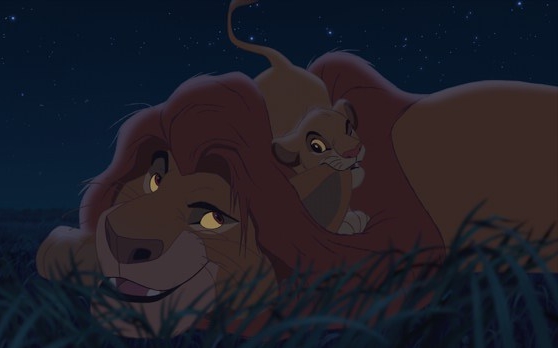
One of the top grossing animated films of all time, it won Best Original Score and Best Original Song for Can You Feel the Love Tonight at the Academy Awards; and was scored by legend Hans Zimmer (he’d later score Pirates of the Caribbean) and lyrics were by Tim Rice (who has worked with Andrew Lloyd Webber) and songs by Elton John [I most strongly connect Elton John to this movie, even though I’m sure I listened to his music growing up.] It ranks pretty high on my list of Disney favorites. The artistry is beautiful, the songs are fun, it’s a complex story (inspired by Shakespeare’s Hamlet [I am a bad English major and not terribly familiar with Hamlet; I saw one updated version performed by David Tenannt]) and a wonderful cast of voice actors. Highlights include James Earl Jones (most iconic as Darth Vader) as Mufasa, Jeremy Irons (a marvelous thespian who plays Henry IV in BBC’s Hollow Crown productions) appropriate for the Shakespearean role of Scar. Jonathan Taylor Thomas (from Home Improvement) is young Simba; adult Simba is voiced by Matthew Broderick. Whoopi Goldberg (I mainly know her from this film and Sister Act and didn’t realize she was a stand-up comedian until I was a teenager) is one of the hyenas, and Broadway star Nathan Lane (he would later team up with Matthew Broderick for The Producers film) is Timon.

the-lion-king-original
(Too many pictures to choose from!)

The opening of The Lion King is iconic; I think most people know the movie from that scene alone. Young Simba is presented to the animal kingdom (Emma Swan jokes about the scene in Season 3 of Once Upon a Time) as we learn “there’s more to see/than ever be seen/more to do/than ever be done” and are all connected to the great Circle of Life. All of the animals bow to the little prince, a sunbeam highlighting the scene. We next meet Scar, the king’s younger brother who was next in line for the throne, until Simba was born. He doesn’t hide his disdain and refusal to show for the presentation. Unfortunately, Mufasa doesn’t know what to do with his troublesome kinsman and Scar is free to plot. An image that come back a few times in the movie is Rafiki’s drawing of Simba in his tree.

A few years pass and Simba wakes his father early (with a typical argument between the parents on whose son he is at that time of morning) so Mufasa can show him the kingdom. “Everything the light touches,” Mufasa explains, is their kingdom. The Outlands are beyond their borders and young Simba must never go there. Mufasa further prepares his son that the time will come when Mufasa will no longer be king, it will be Simba’s turn, and cautions that there is more to being a king than doing whatever one wants. There is a balance to life that the king must watch over. Of course, this lesson is interrupted by a brief pouncing practice, much to Zazu’s chagrin (another song, The Morning Report, was added in the Special Edition and appears on the corresponding soundtrack).

Mufasa must attend to royal duties so Simba visits his “weird” uncle and the meddling Scar puts the idea purposefully in young Simba’s head to explore the forbidden Elephant Graveyard. Of course, who should accompany Simba on his adventure is his best friend, Nala. Zazu lets slip that the two are betrothed (a human custom) and will one day be married (they protest now…just wait). As children are wont to do, Simba focuses on the fun of being “free to do it all my way” and merrily describes his rule and why I Just Can’t Wait to Be King. “Everywhere you look/I’m standing spotlight!”

The Elephant Graveyard is not as fun as Simba planned; after his claim to “laugh in the face of danger!”they run into three hyenas, Shanzi, Banzai, and Ed. Luckily, Mufasa arrives and scares off the three hyenas before they really hurt Simba or Nala. Mufasa is understandably very disappointed in his son and reiterates his earlier lesson that one day he will die, though he’ll look on from the stars above. A king is brave when he has to be and despite Simba’s thought that his dad isn’t scared of anything, Mufasa admits he was scared of losing Simba. There is a lovely wrestling match, putting worries aside.
Pals

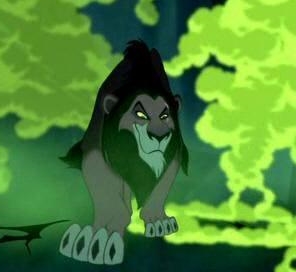
That evening, Scar visits the hyenas, and confesses that he sent Simba and Nala to thescar be prepared Graveyard for the hyenas to “take care of.” He’s “surrounded by idiots” who can’t even do their job. What needs to happen is that Mufasa needs to die; without daddy dearest around, Simba will be simple prey. And then “in justice deliciously squared,” without those two in the way, Scar can assume the throne “I’ll be king undisputed/respected, saluted/and seen for the wonder I am!” and promises the hyenas a new life. A lot of the imagery from Be Prepared is influenced by Nazi propaganda: most explicitly, their march. Be Prepared is a fantastic villain song as well and Jeremy Irons is deliciously hammy [Jim Cummings (voice of Ed) had to finish the song for Jeremy Irons when the latter threw out his voice].
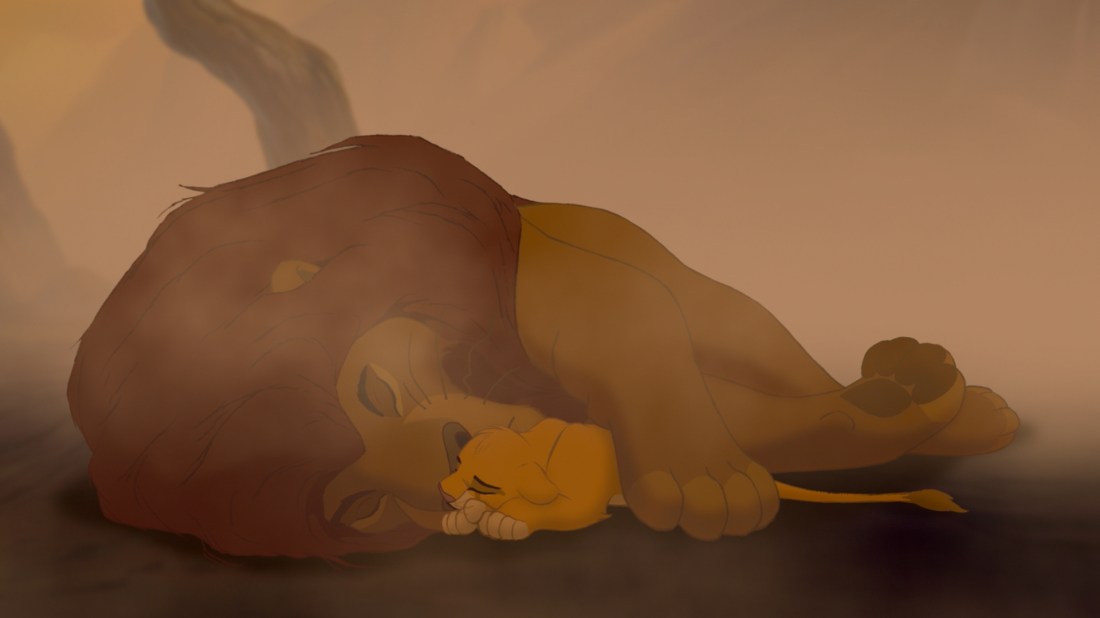

Scar promises Simba a surprise for he and his father the next day and leaves the cub in a gorge. The “surprise” is a wildebeest stampede (a scene equal to any action scene today and full of drama and tension). Scar acts suitably worried and runs alongside Mufasa as Zazu flies ahead to find Simba. But once Mufasa enters the gorge, Scar prowls around the top, knocking Zazu out to prevent the royal majordomo from getting further help. Mufasa finds his son and tosses him to safety, but is carried away by the pressing wildebeests. He jumps to the cliff a moment later and begs his brother for help. Scar sinks his claws into his brother’s legs and murmurs “Long live the king!” before flinging him into the mass. Simba witnesses his father’s fall and in the dusty aftermath, searches for him. He finds Mufasa’s still body (I cry every time, even as an adult) and pleads that “we’ve got to go.” The young cub realizes his dad is dead and tears streak his fur and he curls next to his protector one last time. Scar emerges and reinforces Simba’s thoughts that if it hadn’t been for him, his father would still be alive. He then directs his grief-shocked nephew to “run away and never return.” A moment later, he commands the hyena trio to “kill him.” Simba willingly falls into a bramble bush at the bottom of a cliff and gets away. After Banzai falls in, neither Shenzi nor Ed want to come out looking like “cactus butt,” and they determine if Simba was ever to return, they’d kill him then, shouting the warning to the departing cub. Scar, “with heavy heart” assumes the throne and “ushers in a new era” of living alongside hyenas. Rafiki wipes away the drawing of Simba in sorrow.

death_of_mufasa
(Sorry if it makes you tear up, but it’s such a poignant moment)

Buzzards float about a stretched out Simba; he’s providentially rescued by a warthog and meerkat, Pumba and Timon. At first, Timon suggests leaving him since he’s a lion, but Pumba ponders that he could grow up to be on their side. Timon’s advice to the depressed cub once he awakens is to put his past behind him; “when the world turns it back on you, you turn your back on da world.” They’re outcasts too and they teach him about Hakuna Matata, their “no worry” lifestyle, and how to eat bugs [that grossed me out as a kid. And yeah, Disney, we knew you meant “farted” even as kids. That was actually our favorite part of the song to sing-along to.]

There’s a fun montage showing the progression of time as the new trio crosses a bridge, repeating “Hakuna Matata.” All grown-up now, Timon, Pumba, and Simba discuss what “stars” truly are. Timon claims they’re “fireflies that got stuck up in that big bluish-black thing.” Pumba is scientifically correct stating they are balls of gas burning billions of miles away. And Simba shares what his father told him about the kings of the past looking down on them. He’s laughed at by Timon and Pumba and leaves to ponder the tragedy of his life. His scent drifts in the breeze to old Rafiki, who recognizes it and joyfully realizes Simba is alive. “It is time,” the monkey declares, now drawing a mane on Simba.

simba and nalaThe following morning, Timon and Pumba are out searching for grubs, singing The Lion Sleeps Tonight [this is how I know that song, despite it being older than the movie]. Pumba wanders off, to be chased by a grown lioness. Simba to the rescue! Until he’s pinned in a very familiar manner and recognizes a grown up Nala. Nala is understandably surprised to discover that Simba is alive and urges him to return with her to the Pride Lands and claim his throne. Simba decides that he and Nala need to have a talk, alone. Timon bemoans the two old friends’ romantic Can You Feel the Love Tonight [probably my second favorite Disney love song.  Elton John’s solo version is the only “pop” version of Disney songs that I liked growing up]. As an adult, some of their actions take on more meaning, like the looks between them while Nala is lying down. But I still think it’s sweet; they’re simple gestures between two beings that care about each other. And Simba looks a lot like his dad at times. Yet, at the end, the couple continues to argue over Simba’s return. He refuses; he can’t face his past. Nala wonders “why won’t he be the king I know he is/the king I see inside?” She tells him she’s disappointed that he’s not the same Simba she remembers. Simba in turns accuses her of sounding like his father. “Good, at least one of us does.” They fight further; Simba refuses to tell her the truth of why he ran away, deeming that to tell her now and return to the Pride Lands won’t change anything, and stalks off. He shouts his despair to the stars, reproving his father, “You said you’d always be there for me!” Quieter, “but you’re not. And it’s all my fault.”

A little chant echoes on the wind. Rafiki is dancing in a tree and comes down to impart wisdom on Simba. Simba can’t answer his question, “who are you?” Rafiki knows; he’s Mufasa’s boy. When Simba says that Mufasa has been dead for a while, Rafiki states “wrong again! He’s alive! And I’ll show him to you!” The crazy monkey leads Simba through vines and trees and roots [How to Train Your Dragon 2 has a scene that echoes this one] to a pool. Rafiki urges Simba to “look harder” at his reflection. The lion sees Mufasa, as Rafiki states, “he lives in you” (becomes a song title in the sequel). Mufasa’s bass voice rumbles and the clouds part, forming his silhouette. Mufasa chides his son that he has forgotten him; by forgetting who Simba truly is, he has forgotten Mufasa. Simba must take his place in the circle of life; he is Mufasa’s son and the one true king. He fades away, urging Simba to “remember.” Simba begs his father, “please, don’t leave me,” still the scared lion cub. Rafiki picks up the lesson and a whack from his stick knocks some sense into Simba, that while change is not easy, it is good. One can either run from their past, or learn from it. Hans Zimmer’s theme plays over a wonderful superimposed shot of Simba running back to the Pride Lands. Nala, Timon, and Pumba soon catch up and agree to help Simba reclaim his home. When he cautions that it will be dangerous, Nala echoes his childish claim “I laugh in the face of danger!” Timon and Pumba act as live bait, dressing in drag and doing the hula, a little bit of comedic relief before we delve into the drama.

We witness the devastation that Scar’s rule had wrought. The land is barren and we find out from Sarabi, Mufasa’s widow that the herds have moved on. She advises that they leave Pride Rock. Scar refuses. “Then you have sentenced us to death!” “I am the king,” he replies, “I can do whatever I want!” He swipes at the lioness, but Simba leaps to her defense. Both she and Scar first assume he’s Mufasa. Sarabi is pleased to see her grown son; Scar is annoyed to discover that the hyena trio failed at their mission. Simba growls at his uncle, “give me one good reason why I shouldn’t rip you apart.” Scar states that the hyenas think he’s king, but then sinisterly turns the conversation back on Simba, dragging up how Mufasa died, pressuring Simba to admit that he killed his father. “Murderer!” he instantly declares and further pushes, all the while circling his nephew, stating that it was Simba’s fault, even if it was an accident. A very confused Simba slips on the edge of Pride Rock, lightning from the gathering storm lighting a fire beneath. Scar recalls a similar scene, and digs his claws into Simba’s paws the same way he had Mufasa’s. He whispers his little secret: “I killed Mufasa!” Simba leaps onto Scar, now declaring him the murderer. A paw on Scar’s throat compels Scar to admit the truth out loud. The hyenas are on Simba and lionesses attack the hyenas.

War breaks out (with a brief comedic interlude with monkey kung-fu and a bit about “Mr. Pig.” I still don’t get that reference, but I thought it was hilarious as a kid). Scar attempts to slink away, but Simba is on him, growling that Scar doesn’t deserve to live. Scar pleads that the hyenas are the real enemy (Ed, Banazi, and Shenzi can hear this) and Simba decides he won’t be like Scar; he won’t kill him. Instead, he instructs him to “run away and never return.” Scar plays dirty and swipes ash into Simba’s eyes. There is a violent showdown between the two before Simba flips Scar over and down to a ledge below. Scar thinks he’s in the clear when the hyenas come to him, but they turn on him since he claimed they were the enemy. Shadows play on the rock behind, not giving us a direct view at what happens. It rains harder, putting out the fire and washing away the stain of Scar. To music that gives me goosebumps, Simba at first hesitates to approach the edge of Pride Rock; he had run and hidden from this responsibility, scared he was unsuited, but one last echo of “Remember” from Mufasa and Simba proudly takes his place at the edge of Pride Rock and releases a mighty roar. It’s echoed by the lionesses and greenry springs into the Pride Lands.

simba roar

The movie ends with a triumphant reprise of Circle of Life, which continues with the presentation of Simba and Nala’s cub.

There was a direct-to-video sequel, The Lion King II: Simba’s Pride (a play on both a lion belonging to a “pride,” and his daughter being his pride, and maybe even Simba’s own pride and how it affects his own decisions…though that’s a little deep for the movie and not as evident) that came out four years after the original. A tale about Simba and Nala’s daughter, Kiara. Her story mimics her father’s at time, having to go out and experience life on her own before she understands what her father taught her. There are elements of Romeo and Juliet in the plot; two warring families, their children falling in love. Except, the couple does not die at the end! Some of the songs are good and overall a good story; I consider it one of Disney’s better sequels (especially compared to most of their other animated sequels). In addition to a cartoon series in the 90s, Timon and Pumba’s story, Lion King 11/2 came out in 2004; there are funny parts, but it definitely doesn’t live up to the original. Now on Disney Junior, there is a new cartoon series about Simba’s son (I see plot hole regarding the sequel), called Lion Guard.

The original film was transformed into a Broadway production in 1997, and is still running (meaning it recently celebrated its twentieth anniversary…wow). It was nominated for Best Musical and Best Original Score at the Tony’s and did win in several other categories. Next summer, a live-action/CGI adaptation is due out, with an all-star cast; most notably, James Earl Jones will reprise his role as Mufasa (no teaser out yet, but I am excited to see it).

Overall, this is a great family film. It’s about family, responsibility; the characters are deliciously complex and I feel it has stood the test of time. Even though I have seen the movie several times, I still get apprehensive during the stampede and Scar and Simba’s showdown, and sad at Mufasa’s death. Timon and Pumba were my favorite characters as a kid, because they were funny. Now, I enjoy Scar as a villain, and I wish we could have seen more of Mufasa since he is a very wise king and very loving of his son. I can feel a connection to Simba as a young adult facing responsibilities. The artwork is phenomenal; the emotions they are able to put into the faces and still have them look like lion’s; just look at Simba’s face right before he roars at the end. Re-watching the movie has awakened my love of the film; it ranks towards the top of my list.

As always, I welcome questions or comments. Do you like any of the pop versions of Disney songs?

Next Time: Pocahontas

“You Ain’t Never Had a Friend Like Me!”

Aladdin

What I remember most of this movie is the great soundtrack and Robin Williams’ humor; Genie is probably my favorite character from the movie. The movie is based off of the compilation The Book of One Thousand and One Nights and set somewhere vaguely Middle-East (I kept thinking Persia while watching the film). Nevertheless, it is nice to see something other than a European fairytale. The overarching theme of the film is “it’s what is inside that counts,” looking for the “diamond in the ruff.”

We’re first introduced to the villain of the film, Jafar, as he uses a petty crook (who just killed someone, it sounds like), to enter “the Cave of Wonders,” in search of a mysterious lamp. The cave opening, a talking sand tiger, warns that the only one who can enter is “one whose worth lies far within.” Which is apparently not the crook, because he’s eaten. Jafar’s stooge is a talking parrot, Iago (voiced by Gilbert Godfrey) who alternates between calm and agitated.

Aladdin is not our typical Disney hero. He’s an orphaned “street rat” that steals on a daily basis to survive, staying One Jump ahead of the guards. We also get glimpses at a different culture; the sword eater, fire walker, and more. The characters are also dressed differently; Aladdin does not have a shirt, the women’s midriffs are showing. Once Aladdin has won his prize, he feasts with his monkey friend, Abu. Yet, when he sees two small children searching for scraps, he shares what little he has. They hear a parade and investigate, finding another suitor has arrived for the princess. The children get in the way and the snooty prince attempts to whip them, but Aladdin once again steps in. He’s insulted by the condescending man, though gets the dig in about a horse having two rear-ends (that bit goes over kids heads). When he and Abu reach their “home,” there’s a brief reprise of Aladdin wishing one day to live in the palace, where all of their problems will be solved.

[Fun fact: Aladdin’s voice actor, Scott Weinger played Steve, DJ Tanner’s boyfriend, in Full House; there’s even a joke in the episode where the cast goes to Disneyland.]

For one resident of the palace, it’s a cage. The princess Jasmine desires freedom outside the palace walls. She’s never had friends; everything has been taken care of for her. She hates the law that states she must marry a prince by her birthday (in three days’ time) and has sent away every suitor. Bluntly put, she does not want to be a princess. That evening, she runs away and come morning, wanders the marketplace, catching Aladdin’s eye. He jumps to her rescue while she stumbles over the notion of “paying.” They run into, and away from the guards and Jasmine keeps up with Aladdin; demonstrating she trusts him. Amongst their talk, the couple finds out that they both feel trapped by their lives and station. The pair is eventually caught and Aladdin is taken to the palace dungeon, despite Jasmine’s protests and revelation that she is the princess.

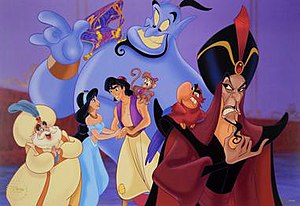
aladdin cast

The Sultan is a bit childish at times and is regularly hypnotized by Jafar so the royal vizier can get his way. Jafar covets the title of Sultan and will use his sorcery to gain it. He cons the Sultan into giving up his blue diamond [yes, diamonds come in almost every shade of the rainbow, including blue] so he can “divine” the proper suitor for Jasmine. Instead, Jafar uses it to conjure who the Cave meant could enter. He sees Aladdin and plots a way to get the boy. When confronted by Jasmine for his treatment of Aladdin, he tells her that the street rat was beheaded for kidnapping her. Jasmine is devastated.

That evening, Jafar disguises himself as an old, crippled prisoner and convinces Aladdin to help him retrieve the lamp from the Cave of Wonders, promising the boy the rest of the treasure. Aladdin is allowed to enter the Cave and he and Abu meet Carpet, a helpful magic carpet who leads them past the glittering heaps of gold to the lamp. Abu is tempted by a forbidden gem and just as Aladdin has the lamp in his grasp, Abu grabs the gem, causing the whole Cave to start collapsing. They manage to reach the opening (in an early CG sequence that reminds me a bit of a video game [not that I’ve played many], nevertheless, very thrilling), but Jafar insists on the lamp first and before turning back to help Aladdin, he pulls out a dagger (why are bad guy daggers always crooked? Do they not pay the extra for quality craftsmanship?). Abu saves Aladdin, but they are swallowed up by the Cave.

Abu was also a sneaky monkey and stole back the lamp. Aladdin takes a closer look at the lamp and rubs at some smudging. Out pops Genie! Aladdin is his new master and is allowed three wishes. Genie elucidates Aladdin to the possibilities, telling the lad that he’s never had a Friend Like Me (my favorite song of the movie) and highlighting Robin Williams’ comedic range. What kid didn’t wish they had a genie after that? Aladdin demonstrates that while poor, he is not stupid and tricks Genie into getting them out of the cave, without using any of his wishes. He even asks Genie what he would wish for and Genie reveals that while he has “phenomenal mystical powers,” he’s bound to the lamp and his master. He’d wish for freedom, but only his master can do so. Aladdin promises he’ll reserve his third wish for that and his first proper wish is to become a prince, so he can see Jasmine again, stating that she’s smart, fun, and beautiful (glad they added the “smart” and “fun” qualities). (Sebastian is briefly glimpsed as Genie ponders the wish)

Back in Agrabah (a fictional city), Jasmine has told her father of Jafar executing Aladdin and the Sultan reprimands his vizier. Jasmine also states that one benefit to being forced to marry; “when I am queen, I will have the power to get rid of you.” Jafar is even more desperate to become Sultan and Iago suggests that Jafar marries Jasmine to gain the throne and afterwards, they drop Jasmine and her father off a cliff. The pair manically laughs. Jafar returns to the throne room and attempts to hypnotize the Sultan to obey his plan. The Sultan breaks at one point, declaring Jafar too old, but Jafar continues to pressure. His spell is broken a second time by a loud commotion.

Prince Ali has arrived. Genie (disguised as…a whole bunch of people throughout the song, even mimicking parade announcers) extols his virtues, claiming he’s generous, strong as ten men, and his servants are all “lousy with loyalty.” People who never spared Aladdin a thought or viewed him as worthless, now view Ali as attractive and worthy of respect. The Sultan’s excited by Ali’s arrival and is eager to introduce his daughter to a fine, upstanding gentleman like Ali, claiming he is “an excellent judge of character” [and we all say “Not!]. Of course, Aladdin has to act like every other arrogant suitor Jasmine has seen when he asks permission to court her. She dismisses him, stating “I am not a prize to be won!” Genie urges Al to “tell the truth” on who he really is, but Al (Genie’s nickname for Aladdin) feels like Jasmine wouldn’t have time for him if he wasn’t a prince. Aladdin flies up to see Jasmine again and when he fumbles around, he reminds Jasmine of someone she met in the marketplace. Ali scoffs, but when Jasmine tells him off again, he agrees that she “should be free to make her own choice,” and offers to leave. Startling everyone when he steps off the balcony, we are relieved to find out Carpet caught him. He offers the princess a ride, holding out his hand and once again asking “do you trust me?”

a whole new world

The couple takes a romantic flight, Aladdin showing the princess A Whole New World [I know both parts to this song, not really caring to differentiate when learning as a child. Further fun note: Jasmine’s singing voice is the same as Mulan’s, Lea Salonga, who has played Kim in Miss Saigon, and both Éponine and Fantine in Les Misérables]. The pair is thrilled at the prospect that their new world holds, “no one to tell us no/or where to go/or say we’re only dreaming.” It’s a “thrilling place, for you and me.” They fly by the Sphinx in Egypt (and are the reason the nose is broken), through Greece, and end in China. Jasmine tricks Ali into admitting he was the one she met in the marketplace, but he still doesn’t reveal that he’s not a prince. When he drops Jasmine back off at her balcony, Carpet helps them share their first kiss.

But Jafar has gotten his way with the Sultan, and Jasmine is told she will marry the vizier. At the same time, Aladdin is captured, chained, and dropped off a cliff into the sea. His hand manages to rub the lamp, sending Genie out and Aladdin’s second wish is used to save his life. Genie was happy to do it; he’s getting fond of Al. Aladdin confronts Jafar and smashes his staff, releasing the Sultan from its spell. Jafar uses sorcery to disappear, but has realized that Prince Ali (or Abooboo, as he refers to him) is Aladdin and has the lamp. Iago gets the lamp the next day, after Genie and Al have had a fight. Jasmine has chosen Ali to marry and Aladdin wants to keep Genie around just in case, and won’t be able to free him. Without the Genie, he’s just Aladdin and the only reason anyone thinks he’s worth anything is because of Genie.

With the lamp in his possession, Jafar quickly uses his first wish to become Sultan. But Jasmine and her father refuse to bow to him. So be it, they will cower before a sorcerer, Jafar’s second wish is to become the most powerful sorcerer in the world. Jafar mocks Aladdin when he comes to rescue the former Sultan and princess and reveals who he really is to Jasmine, before sending him to a snowy mountaintop. Aladdin survives and once again flies back to Agrabah to put things to right.

Jafar has changed everything around; Jasmine’s pet tiger, Raja is now a kitten, the former Sultan is a puppet and Iago is shoving crackers in his mouth (the Sultan had previously fed Iago lots of crackers, but it was done in kindness), and Jasmine now wears red and is chained, feeding Jafar. Jafar still wants to marry her and at first she refuses. Jafar attempts to use his third wish to force her to love him, but that is against the rules (as is bringing back someone from the dead and killing someone). When she catches sight of Aladdin sneaking into the palace, she turns the charm on and seduces Jafar as a distraction. The lad is caught and calls Jafar a “cowardly snake” for not fighting him himself. Jafar’s answer is to turn into a giant snake (and you wonder why so many kids don’t like snakes) and traps Jasmine in a giant hourglass of sand. Aladdin tricks Jafar into using his third wish to become a genie. Meaning, that while Jafar will gain immense power, he will also be trapped in his own lamp. With Jafar gone, Aladdin can smash the glass and all of Jafar’s magic is undone.

The couple face the truth, that Aladdin is not a prince, but Jasmine still loves him. As the Sultan says, “am I Sultan, or am I Sultan;” he has the power to change the law and allows his daughter to choose whomever she’d like to marry. She of course chooses Aladdin. Al uses his last wish to set Genie free and he flies off to explore the world, donning a Goofy hat.

There was a cartoon series and two direct-to-video sequels. Neither sequel lives up to the original film; the quality more in line with the series, though the third movie does include Aladdin and Jasmine finally getting married and Aladdin meeting his long-thought-dead father (voiced by John Rhys-Davis, and Lumiere’s Jerry Orbach is back as the villain). There is a Broadway production currently running and a live-action adaptation due out next year. The teaser doesn’t reveal much, so I’m not sure how excited I am to see the movie yet.

Aladdin truly is a hero, protecting those weaker than him and never asking for anything in return. He’s impressed by Jasmine’s spunk, as well as her beauty. He bodily puts himself in harm’s way to save the world from Jafar. Jasmine is the first princess that has pointed out that being a princess is not always fun and is not entirely glamorous. I did go as Jasmine one year for Halloween; my mother made my costume and my older brother was Peter Pan.  The  couple are good role models, loving each other for what’s on the inside.

Questions? Comments? What’s your favorite Disney love song?

Next Time: The Lion King

Flameo

Book Three: Fire

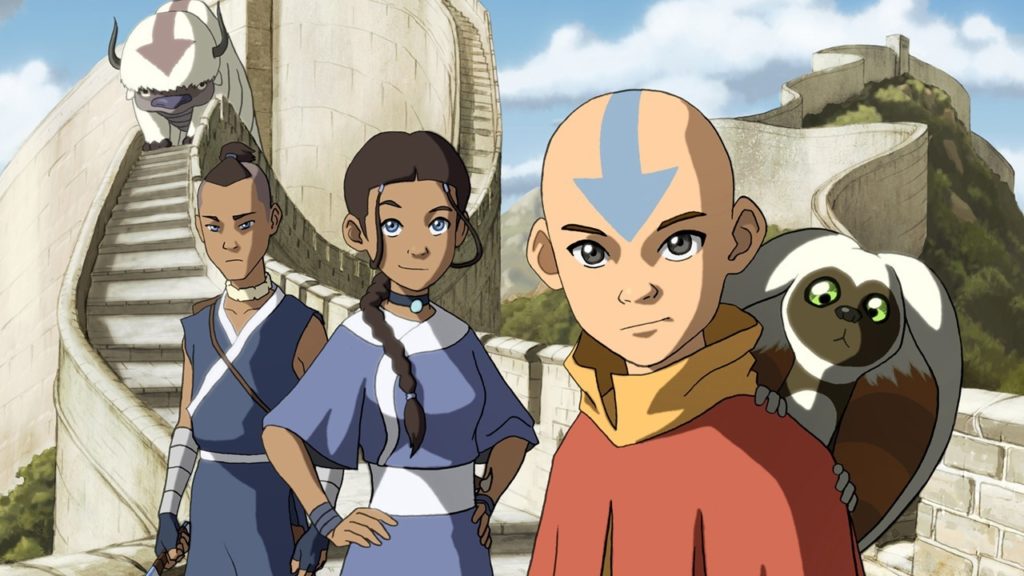
The first episode, Awakening, catches us up on the aftermath of Crossroads of Destiny. Katara did indeed save Aang. The young heroes were able to join with Hakoda and they took over a Fire Nation ship. Their invasion plans are modified slightly since the Earth King in is hiding, traveling the world as a peasant; they’ll gather together their ragtag team of friends and allies.

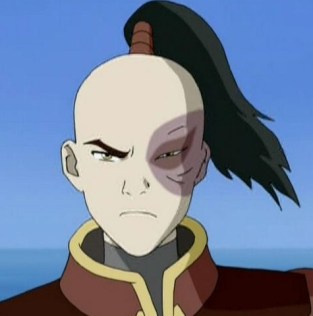
While the heroes hide out in the Fire Nation, Zuko’s princely title is restored. Lo and Lee announce to a crowd that their clever and beautiful princess Azula found her brother in Ba Sing Se and together, they took down the city and the Avatar fell. And the Earth Kingdom fell. After three years, the Fire Nation’s prince has returned. There are cheers from the crowd. But Zuko soon discovers that while he desired his father’s love and affection and believed that redemption of his honor lay with him, in conforming to what was expected of him, he lost himself. He visits Iroh in prison and begs advice, but his uncle is silent; this is still Zuko’s journey and one he must travel himself.

The Headband is silly for the most part, but does establish that not everyone in the Fire Nation is evil. Just like not everyone in the Earth Kingdom is good. A whole nation cannot be condemned. The heroes help out a Fire Nation village in The Painted Lady, Katara declaring sharply to her brother that she “will never, ever, turn my back on people who need me!”

Sokka’s Master brings to the forefront Sokka’s dejection that he is not as powerful as the benders. They urge him to find a master and Piando, the greatest swordsman in the Fire Nation agrees to teach him, even after secretly knowing that the young man is Water Tribe. Sokka gains confidence and an ally.

Bonding
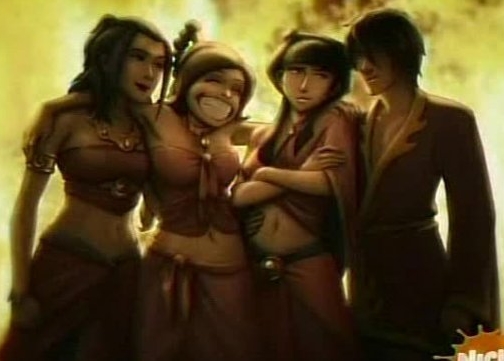
The Fire Nation teens bonding over causing destruction at a party; because that’s how they get their kicks.

The Beach exhibits that even the scary and villainous Fire Nation young people are still teenagers. We learn a lot more about their dynamics. Ty Lee ran off to the circus to prevent becoming part of a matched set with six identical sisters. Mai’s mother was demanding and she was forced to stay quiet and well-behaved as a child (following the old adage that children are to remain seen, not heard). Zuko reveals that he’s angry at himself, confused about right and wrong. Azula gives a tiny insight, claiming that she does not care that her own mother thought she was a monster. Azula’s military tactics are so ingrained in her that she exercises them at the volleyball-type game (after Zuko dramatically removes his robe and doves appear out of nowhere and there are screaming girls).

The Avatar and the Fire Lord explains more fully the connection between Aang and Zuko. Zuko’s paternal great-grandfather was of course Fire Lord Sozin, while his maternal great-grandfather was Avatar Roku and they incidentally were best friends. Until Sozin’s ambition drove them to separate paths. He wanted to share the Fire Nation’s prosperity with the world and expand his realm into an empire. Roku showed Sozin mercy due to their friendship and Sozin even helped Roku stop a volcano, yet he still left him to die. Iroh finally speaks to his nephew, explaining that Zuko needed to learn this history to understand the battle within himself between good and evil. He has it within him to cleanse the sins of previous generations and restore balance; just like Aang as the Avatar.

The Runaway broadens the relationship between Katara and Toph. Toph bucks at Katara’s motherly nature, since she ran away from parents who were constantly telling her what she could and couldn’t do and never listening in return. And Katara sees a child, someone to care about. We also get insight from Sokka as to a reason for this; she stepped up when their mother died at a young age and by this time, doesn’t know anything different. Both Sokka and Katara deserve a hug after Sokka’s statement that he doesn’t remember his mother’s face, because Katara has filled that spot for so long. The episode ends with Katara helping Toph write a letter to her parents.

Katara is again in the spotlight in The Puppetmaster, when the four young heroes cross paths with Hama, the last waterbender from the Southern Tribe, in a small Fire Nation village. Except she’s bitter and exacts revenge for her treatment by kidnapping villagers during the full moon, when she has the power to bloodbend (using waterbending to bend the water or blood within a body). Katara eagerly takes lessons from Hama at first, except she’s scared and questions the morality of bloodbending, but when Hama makes Aang and Sokka fight each other, she has no choice but to use bloodbending to stop Hama. She sobs to Sokka and Aang afterwards.

Nightmares and Daydreams gets odd at the end; when Aang hallusicantes from sleep deprivation, Momo and Appa can talk. To help, the other three make a soft bed for him, encouraging him that he’s ready for the showdown; he’s been training since the day he met Katara and Sokka. On the other side of the war; we get a glimpse of Zuko’s life as an accepted prince. Servants waiting for his every whim, adoring fans, an affectionate girlfriend; yet when he finds out that there is another war meeting that he did not know about, his old insecurities come back. However, his father halts the meeting and sends for him. He was at the Fire Lord’s right hand, the “perfect prince,” but Zuko wasn’t himself.

The Gaang
Their new looks

The Day of Black Sun arrives. The heroes change back into their old clothes and here we can see the changes months of traveling have wrought; they’re leaner, they’re older. Katara wears her hair different, looser. Sokka’s hair has grown in and he looks more like a warrior. Aang shaves his head and wears a partially revealing top. Toph dons armor. They’re reunited with old allies and during their last break before battle, the teens’ bid each other a farewell. Aang gives Katara a quick kiss and sets off for the palace. Yet, when he arrives, the palace is empty; no Fire Lord in sight.

The Fire Nation was prepared for the invasion, a callback to Azula’s infiltration into Ba Sing Se as a Kyoshi Warrior. Hakoda is injured during their invasion and Sokka takes over as the leader. It’s Sokka who figures out that the Fire Lord would be in a secret bunker near the capital, not hiding on a remote island. He takes Toph and Aang, while Katara remains with Hakoda to continue healing him. Azula is still a few steps ahead and is waiting for them with Dai Li agents, distracting them from the Fire Lord. Even without being able to firebend, she eludes their attacks. Just when they’re ready to ignore her and find the Fire Lord, she taunts Sokka with information about Suki. Sokka demands answers, not willing to let another woman he cares for die, draining the last of their time. When they rejoin the rest of the invasion force, the Fire Nation has resumed their attacks, forcing Hakoda to instruct Katara and Sokka to escape with Aang; they are their best chance in the long run; Aang has to be free in order to keep hope alive. Bato makes the decision that the young members flee on Appa; the older ones will accept capture.

Zuko’s path has him change back into traveling clothes, removing the image of a prince. He vows to set things right. The first step: finally confronting Ozai.

“I’m not taking orders from you anymore.”
“You will obey me, or this defiant breath will be your last.”
“Think again! I am going to speak my mind, and you are going to listen. For so long, all I wanted was for you to love me, to accept me. I thought it was my honor that I wanted. But really, I was just trying to please you. You, my father, who banished me just for talking out of turn. My father, who challenged me, a thirteen-year-old boy to an Agni Kai. How can you possibly justify a duel with a child?”
“It was to teach you respect.”
“It was cruel! And it was wrong.”
“Then you’ve learned nothing.”
“No, I’ve learned everything! And, I’ve had to learn it on my own.”

Zuko quietly informs the Fire Lord that if the world doesn’t want to destroy itself, it needs peace and kindness, and openly acknowledging Iroh’s influence. He’s going to free him, then join the Avatar to bring down Ozai. When Ozai questions why he doesn’t just kill him himself, Zuko replies that the task is the Avatar’s destiny; he will discover his own.

Zuko_confronting_Ozai

Ozai has one final taunt: information about Zuko’s mother. Ozai admits that he was willing to kill Zuko years ago, but Ursa proposed another plan in order to protect Zuko. A plan in which she committed vicious treason. She was banished as consequence. Ozai growls that Zuko will not be so lucky, the fading eclipse granting Ozai the ability to shoot lighting, which Zuko deflects and disappearing in the aftermath. When Zuko arrives at his uncle’s prison cell, he finds that Iroh has already escaped.

The final shot is Zuko following Appa in his war balloon.

They end up at the Western Air Temple, which is built upside down underneath a cliff. For Zuko, it’s come full circle; the Western Air Temple was where he started his search for the Avatar a week after he was scarred and banished. Now, he approaches the core four heroes, offering to teach Aang firebending. They do not trust him at first, for good reasons. Well, Toph, is willing to give him a chance, but she startles him and he accidentally burns her feet. When they go to confront him, Combustion Man (an assassin Zuko had hired to cover the fact that Aang survived Ba Sing Se) attacks and Zuko fights against him. This convinces Sokka. Zuko’s apology to Toph, speaking of the danger of firebending, convinces Aang. Katara goes along with the rest of the group, but threatens Zuko in private later. They both know he’s struggled with right and wrong in the past and she will not hesitate to permanently end Zuko’s destiny if he turns again. A glimpse that these characters are not children any longer. They’re involved in a war and hard calls will have to be made.

I love Firebending Masters; it shows more background into how bending was developed in different nations. We’ve already learned at the North Pole that the first waterbenders learned the push and pull motions from the moon. Toph tells of how the badger moles were the original Earthbenders, using it as she does, as an extension of themselves since they too are blind. Aang says that the original airbenders learned from the sky bisons.

Ran_and_Shaw
The original masters

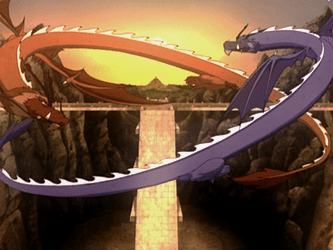
Zuko and Aang must learn from the original firebending masters because Zuko’s change in sides has affected his firebending. Dragons are the original firebenders but they were hunted to extinction in the past hundred years; Iroh reportedly killed the last dragon. However, an ancient civilization has ruins near to the temple, so the two young men hope to discover some sort of knowledge. The ancient civilization is actually still secretly alive and lead the Fire Nation Prince and Avatar to the spirits Ran and Cha to judge whether they are worthy. Ran and Cha are a pair of red and blue dragons. Iroh had not killed them; they had judged him and found him worthy of firebending knowledge; he lied to protect them. Aang and Zuko are shown visions of the true nature of firebending; fire is life, not just destruction. Aang gains the confidence to try firebending again (after burning Katara in season one) and Zuko has found a new source for his inner fire, a drive to bring peace rather than typical rage.

After their return, Sokka is desperate to rescue his father and other warriors. The invasion was his mistake and thus his job to fix. “I need to regain my honor,” Sokka tells Zuko. So the two sneak off to Boiling Rock prison. Once there, they find Suki, but no Hakoda. They gain a few minor tagalongs who utilize their first escape plan (and fail) while Zuko, Sokka, and Suki stay another day to discover if Hakoda is part of the new transfer of prisoners. He is. Sokka catches him up and they develop a new plan; take the warden captive and ride out on the gondola.

Wrenches are thrown in the work when first Mai, then Azula and Ty Lee show up. Mai wants answers as to why Zuko left. To her, he is a traitor while he sees it as part of his destiny to save his country. Azula and Ty Lee attempt to stop the heroes’ escape and the teens face each other on top of the gondola. Mai takes Zuko’s side on the ground, giving them the opportunity to get away. Azula is furious. But when she goes to eliminate Mai, Ty Lee sides with Mai, using her chi blocking to take out Azula. They do not have the chance to flee; Azula orders them locked up.

The two-part episode does a good job of showing Zuko and Sokka interact; they’re a similar age and it’s been pointed out by fans that they both have younger sisters that are naturally gifted benders, both are missing mothers, and desperate to prove themselves to their fathers. They even reminisce over girlfriends on the flight to Boiling Rock. During their escape, Sokka catches Zuko when the prince leaps from the platform for the departing gondola. And through the battle on top the gondola against Azula, they effortlessly cover each other.

Boling Rock ends with the Water Tribe family being reunited. Only to have to break apart at the beginning of The Southern Raiders when Azula attacks the temple, hoping to become an only child. Brother and sister face off again, allowing the core heroes to fly away on Appa (and another daring rescue for Zuko…please stop attempting to fall to your death). But when they’re all joking around the fire later, it’s clear that Katara still does not trust Zuko. Zuko approaches Sokka, inquiring about the day his mother died. It seems as if Katara has tied her anger about that event to her anger at Zuko, and he cares about what she thinks of him. We flash back to the raid on the Southern Water Tribe. Sokka went to help his father and the other warriors when the black snow began to fall. Katara had gone to their mother, only to find a strange man in their hut. Kya, their mother, soothed Katara and sent her after her father. When the rest of the family returned, the man was gone and their mother was dead. A few more questions reveal that the group responsible was the Southern Raiders. Zuko offers to take Katara to their headquarters where she can exercise justice. Aang counsels forgiveness. Katara’s not sure she can do that. Sokka even advises that Katara let go of her rage; Kya was his mother too. “Then you didn’t love her like I did!” is the biting response. Just, ouch.

Katara willingly uses bloodbending to get her answers, unsettling even Zuko. When she faces Yan Ra (a despicable man, offering his own, admittedly annoying, mother as recompense) she almost does it. They discover that Kya had died protecting the last waterbender of the South Pole. Katara is ready to unleash all her power as a master, shooting ice daggers at him, seconds away from ending him. But she won’t become the same as him, empty inside. Back at their camp, Aang is proud of her; but she didn’t forgive Yan Ra. She is however, ready to forgive Zuko.

The show does its own recap special; The Ember Island Players where the teens engage in a popular fanfic plotline, watching their own story play out as a stage performance. Their characters are exaggerated and annoy the heroes. Katara is overly dramatic, Toph is a man, Aang is a woman (oftentimes in traditional theatre, teenage boy parts are played by young woman, a popular example is “Peter Pan”), Sokka speaks only in quips. For Zuko, it’s his worse mistakes shoved in his face. The show-within-a-show plays up the fan pairing of Zuko and Katara, which upsets Aang. But it’s the end that really depresses our heroes; as a play put on in the Fire Nation, Azula and Ozai successfully kill Zuko and Aang, Ozai declaring “the world is mine!” and the crowd cheers. There is horror in the teenagers’ eyes.

Everything comes to a head in this season. It also really showcases that this war is being decided by children/teenagers. The main characters range between twelve and sixteen years old. Sokka is fifteen and takes charge of two major battles. Zuko is sixteen and crowned Fire Lord. Aang is twelve and confronts Ozai.

Ozai_versus_Avatar_Aang

The latter half of the season, Aang has been struggling with the dilemma of how to put an end to Ozai, claiming that violence is never the answer. He even greets the tyrant at their final battle saying they don’t have to fight. He was taught as an Air Nomad monk that all life is sacred and he cannot take another person’s life, no matter how horrible they are. The final duel starts with Aang fleeing from Ozai; he’s on the defense. Ozai shoots lightning at him and Aang redirects, like Zuko taught him; he has the perfect opportunity to end Ozai, but points it away. Ozai calls him weak, like his people, who are not worthy of existing in his world (megalomaniac much?). His last stand was to create a ball of rock surrounding him, but Ozai broke through. When that happened, a perfectly positioned nub of rock presses in on his scar, helping him unlock the Avatar State. He comes back powerful and effortlessly bends all four elements into an orbit around himself. Now it’s his turn to chase the self-proclaimed Phoenix King. This is the first time we’ve seen fear in Ozai’s eyes. Yet even then, when he is controlling all that power, Aang comes back and cannot deal a killing strike. Aang’s last mystical journey on the back of a lion turtle taught him to bend the energy within a body resulting in the Avatar taking away Ozai’s bending. (There’s a really cool visual where their bodies are overtaken by blue [Aang] and orange [Ozai] representing their wills. Ozai almost overtakes Aang, but he comes back stronger and brighter).

The final Agni Kai between Azula and Zuko, “the showdown that was always meant to be” is tragically beautiful. It is destructive and at least on Azula’s account, she has the intention of killing her brother. And it is quite possible that Zuko is willing to kill his sister, facing her so no one else will get hurt. But the imagery of blue and orange fire meeting, paired with the music, quiet and almost soothing in the background, is powerful. This isn’t some upbeat ride into danger or fanfare when the hero saves the day. We can hear the roar of the fire, balls of flame propelled at one another.

Azula_vs._Zuko

And Zuko has to taunt his sister (they’re still teenage siblings) about shooting lightning at him. He was not as successful the second time, primarily due to Azula shifting her aim to Katara. He’s unprepared and the angle is wrong and it’s not dissipated properly. It gets too close to his heart and he collapses. So Katara and Azula face off. Katara out tricks the princess, freezing her then chaining her to a grate. Finally, Katara is able to heal Zuko, exchanging thanks for saving each others’ lives.

We gain some sympathy for Azula in Book Three. All her life, she has been her father’s favorite and now that he’s bent on world domination and titles himself as the “Phoenix King” and Supreme Ruler of All, he passes on the now insignificant title of Fire Lord to Azula, explaining that he needs her at home. She fires back that “you can’t treat me like Zuko!” And with the betrayal of Ty Lee and Azula, her former staunchest supporters, Azula is paranoid. She’s learning that fear is not the best tactic to retain supporters. Mai told her “I love Zuko more than I fear you.” Azula banishes her servants, the Dai Li agents; everyone she was once close to, leaving her alone. She envisions her mother in the mirror, claiming that she is proud of her and loves her. Azula throws her hairbrush and cries. Zuko tells Katara that Azula is slipping; he can take her. When Katara defeats her, she’s left screaming and breathing fire before breaking into sobs. As the hallucinated Ursa says, Azula is confused. Like Zuko, she lost her drive. Her purpose for so long was to follow her father and now that Ozai has essentially cast her aside, she’s lost. Everyone she’s ever cared about, she’s pushed away.

Touching on the themes running throughout the show, the core troupe of heroes became their own family and that group was certainly more important than blood family. That is most clear in Zuko’s case, with both his sister and father the major threats, but he’s learned to rely on his uncle’s teaching. Katara fights to keep her family together, except she keeps getting ripped away from her father. Toph and Katara face off over the issue of family roles in the group. Zuko’s destiny is to restore the honor of the Fire Nation now that he has struggled and suffered and followed his own path. Ultimately, what all the young people learn through their adventures is that they can shape their own destinies and they decide on their own honor.

There are some paired-off couples at the end of the show, after Zuko has been crowned Fire Lord and promises to aid the Avatar in guiding the world into an era of peace. Sokka and Suki are together, exchanging a brief kiss before they’re separated during the air ship takedown. Mai returns for Zuko and there’s a kiss, though she warns him to “never break up with me again.” And the final shot of the show, before the ending title card is a silent scene between Katara and Aang, where they exchange a deep kiss.

I have to admit, I am in the camp in the fandom that prefers to pair Katara and Zuko. They’re a bit closer in age to one another and the show even demonstrates the awkwardness of younger Aang and older Katara. Aang takes the idea of stage-Katara together with stage-Zuko too seriously and pushes a kiss when she says she’s confused. Also, there’s the dynamic of opposites. They’re opposite elements and started off on opposite sides of the war; but they’re both passionate and they make a good team. Reminder, this is my opinion, others may have different views.

Recommendations:
Fanfiction:
SWCLC; has an awesome slightly AU (alternate universe) series called “Airbender’s Child” (I don’t want to give away too much, but it does involve Zuko in the gang a lot earlier). Also has an excellent story “Arranging Marriages” (again, AU) and a “Proposal” series.
YouTube:
ChannelAwesome: the Nostalgia Critic has an entire series of vlogs (video logs) on each episode of Last Airbender and a load of other content.
HelloFutureMe: also has a lot of content on Last Airbender and other categories that are near and dear to my heart.

Next Time: we continue down the path of memory lane to Disney, starting with Snow White and the Seven Dwarves

A Little Bit of Nostalgia

First up: Avatar: The Last Airbender

Water. Earth. Fire. Air. Long ago, the four nations lived together in harmony. Then, everything changed when the Fire Nation attacked. Only the Avatar, master of all four elements could stop them. But when the world needed him most, he vanished. A hundred years passed and my brother and I discovered the new Avatar, an airbender named Aang. And although his airbending skills are great, he has a lot to learn before he’s ready to save anyone. But I believe Aang can save the world.

Opening_Avatar_logo
Title Card for the show

I’ll specify, the Nick cartoon, not the movie (I was severely disappointed in the movie). This is first essentially because it is what I was interested in watching at the time and I couldn’t decide on another path (so many categories!)
The show ran from 2005 to 2008; I was in high school and I managed to stumble onto it midway through season one flipping through channels. The story was what got me hooked, and the animation was good.

I reiterate the Standard Disclaimer: Here, there be spoilers!

Book One: Water

For me, as someone who did not watch anime, it was intriguing to watch a show not based in America or Europe. My background being in British mythology, I am not as familiar with the Eastern spirits, but what I can grab a hold of is the rest of the fantasy setting. Avatar inhabits its own world with a major factor being the bending of elements. Sokka grouses about his getting soaked whenever Katara plays with “magic water.” It’s a whole cast of believable, human characters. Pre-teens and teens for the most part. And it’s written as an ensemble; while the show is titled Avatar and is sometimes referred to as the Legend of Aang, the others are not merely supporting characters. The main antagonist, Zuko has a complicated and developed backstory.

The plotline, in a sentence, is Aang, the Avatar, must master the other three elements in order to stop the Fire Nation by the end of the following summer. He’s accidentally discovered by two Southern Water Tribe teenagers, brother and sister, Sokka and Katara. “Accidentally” in that, he was frozen in an iceberg for a hundred years (after he ran away from the early pressures of becoming the Avatar, at twelve). Aang forms an early bond with Katara and since she is the last waterbender of the South Pole and has had no official training, the trio must venture to the North Pole. Giving chase to them is Zuko, the Crown Prince of the Fire Nation, who was banished by his father and given the seemingly impossible task of finding the Avatar and “reclaiming his honor.”

The deadline is due to a powerful comet reappearing at the end of the following summer; given the chance, the Fire Nation will use the comet to bring a devastating end to the war. The overall arc of the story has this one goal, but breaks it up with episodic adventures (sort of like Voyage of the Dawn Treader, the movie moreso than the book. Lord of the Rings does this a little as well; “here’s what happened on the way to Mordor, or the North Pole, or the Fire Nation”). And the show is an excellent mix of humor and drama and does not simplify topics for kids. Kids, teenagers, and adults can all relate to the show.

trio season 1
The main trio of heroes (and Appa and Momo)

Sokka, while hilarious a good portion of the time, is also a young man who has had the fate of his village put on his shoulders at a young age; his father and the rest of the men of the tribe had left two years prior to aid the Earth Kingdom. When we see the South Pole, it is one tiny village comprised of a few huts and igloos and a lonely watchtower, inhabited by a few women and a gaggle of small children. Sokka and his sister Katara are the eldest.

Looking back, after watching the rest of the series, I wonder at the intelligence of that decision. Why would you leave two teens in charge? What would happen if they got attacked? There were decades of raids prior to Hakoda’s (Katara and Sokka’s father and chief of the Tribe) departure; did he think the last one which killed his wife had ended the Fire Nation’s interest? Were they hoping that the South Pole was remote enough and unimportant? Or did they have a plan to stop anything from going too South? I would not say that this is a deterrent from the show, just a question my mind came up with after several viewings.

Sokka can also be a typical guy. He believes, until Suki of the Kyoshi Warriors teaches him differently, that men are superior warriors. Really, the whole show does a great job of showcasing strong female warriors alongside men. But periodically he gets to showcase his training. He was right to not trust Jet and it was his kindness to the old man that evacuated the village in time. In Bato of the Water Tribe, he can read a battlefield. His off-kilter ingenuity is sparked in The Northern Air Temple. In Siege of the North, he has the most current information about the Fire Nation. The chief chooses Sokka to protect his daughter.

I have mixed feelings about Aang. Whenever I get frustrated with him, I have to remind myself that he’s twelve. Twelve-year-olds are more concerned with having fun, something Gyatso championed. And as the Avatar, the fate of the world rests on him, overwhelming for anyone. It was cruel of the other Airbending children to shun him from playing (it’s like Rudolph). And he tried to protect his friends; in Winter Solstice Part Two: Avatar Roku, he tried to leave them behind so he can’t get hurt. And he feels guilty for leaving the world to war for a hundred years. He even shows mercy and kindness to known enemies. Twice, he won’t leave Zuko behind when he’s injured (Blue Spirit and Siege of the North Part Two). Overall, a fun character and he certainly develops as the show progresses, but I can sympathize with adults when they roll their eyes at his antics.

The show does a good job of showing multiple sides of Katara. Yes, she can be girly; obsessed over finding out who is her true love, crushing on Jet (typical bad boy who’s cool cause he lives on his own). Yes, she can be petty, stealing the waterbending scroll (again, she’s fourteen; this all made more sense when I was closer to their age): “What did you learn?” “Stealing is wrong; unless it’s from pirates”. But she’s also the one to keep the group in line. It’s awesome to watch her take on Master Pakku at the end of Book One; she holds out well against an experienced Master, and in the next episode, she’s shown to have quickly become his best pupil. She essentially learned waterbending on her own, through trial and error.
zuko season 1

Zuko is my favorite character, though during the first viewing, the fondness didn’t show up until season three. Re-watching the series has pointed out several early sympathetic moments: during The Southern Air Temple, we are introduced to Zhao (an excellent villain because I hate him, he’s a bully), a commander in the Fire Nation Navy who despises young Zuko, baiting him and telling the banished prince he has “no home. No allies. Your own father doesn’t want you…in his eyes you are a failure and a disgrace to the Fire Nation…you have the scar to prove it.” We get the full backstory in The Storm; Ozai is a cruel man, challenging his own thirteen-year-old son to a fire duel and purposefully burning his face. Telling his own son that his sister was born lucky while he was lucky to be born. Not winning any father-of-the-year awards.

[As many other fans will point out: Oh the irony! For those of you not in the know, Ozai is voiced by Mark Hamill, most famously Luke Skywalker in Star Wars. He has also lent his voice to the Joker from several Batman cartoons]

Iroh has always been a supporter of his nephew. After the loss of his own son, he has viewed Zuko as his own. He’s aware of Zuko’s faults, but he chooses to love and support and teach him. (And teenagers never make it easy). The Winter Solstice Part One: The Spirit World illustrates that it is reciprocated; Zuko begins the episode annoyed with his uncle, but when it becomes clear that he has been captured by Earthbenders, he hunts them down, even passing on chasing the Avatar. He arrives just in time to prevent the Earthbenders from crushing Iroh’s hands. Iroh compliments the prince on his excellent form and Zuko acknowledges “you taught me well,” and Iroh tells the Earthbenders that though the pair is outnumbered, it is the Earthbenders who are outmatched. Of course, Zuko points out at the end that Iroh really needs to put some clothes back on.

Devastation was clear on Iroh’s face when their ship exploded, with Zuko still on it. He tells a bruised Zuko “no nephew of mine is going to stow away on a ship without back-up,” and gives Zuko last minute advice before the young man hunts for the Avatar in the tundra. Iroh knows what his brother, Ozai is like; he tries to protect Zuko as best he can. And he understands the balance of the world; cautioning Zhao not to kill the Moon Spirit. The idiot is drunk on delusions of power and doesn’t listen and Iroh takes out the squad with little difficulty.

Avatar is a coming of age story, for all of the primary characters. Even the animation reflects it, showing them all a little more round-faced, voices pitched a little higher at the start of the season compared to the end. We witness children, and teenagers take on adult problems.
As a family show, it’s also about family; family that one is born with and how supportive, or not they are, and more importantly, the family that is chosen. When Katara, Sokka, and Aang visit the Southern Air Temple, where Aang grew up, they find evidence of the Fire Nation attack. Gyatso, Aang’s mentor and guardian, was surrounded by the remnants of a host of soldiers. Aang is grief stricken and furious and a mess of other emotions and enters the Avatar State, putting Sokka and Katara in danger. But Katara gets close enough to talk him down, saying that she and Sokka are Aang’s new family. It’s revealed in The Storm that Aang ran away because the council wanted to take away everything he knew and everyone he loved.

In Bato of the Water Tribe, we glimpse Sokka and Katara’s family. Seeing Bato is a reunion and a small piece of their father. Aang almost costs them their chance to be reunited, but they’ve grown as young people and know their place is with Aang; they’re extended family. As Hakoda told Sokka, “being a man is knowing where you’re needed most.”

Another clear theme is honor. From my albeit limited knowledge of Eastern culture, honor is highly valued. During the Agni Kai between Zhao and Zuko in The Southern Air Temple, Iroh blocks Zhao’s disgraceful attack after his defeat, asserting that “even in exile, my nephew is more honorable than you.” Even more poignant, considering Zuko is attempting to regain his honor by capturing the Avatar. In The Blue Spirit, when Zuko believes that Zhao will succeed in capturing the Avatar first, he despairs “My honor. My throne. My country. I’m about to lose them all.”

Hope and destiny are brought up through the series as well. It is Aang’s destiny to be the Avatar and to master all four elements. And it appears to be destiny as well that he returns when he has, before the comet. He gives people hope, even Zuko, for it is with the Avatar that Zuko aspires to return home and please his father. Zuko still feels that it is his destiny to rule the Fire Nation, he still views himself as the rightful heir to the throne and next in line.

The season ends on a mixed note; enemies were defeated, but friends were lost. Aang saved Zuko and Zuko tried to save Zhao. Iroh helped Katara and Yue. Alliances were getting muddled. Iroh and Zuko manage to escape and Katara, Sokka, and Aang now must travel back to the Earth Kingdom so Aang can master the next element. The Avatar has entered the war and change is coming.

What are your thoughts, feelings, favorite episode? Who are your favorite characters?

Next Time: Book Two: Earth

The Journey Begins

This is the product of “I have a writing degree, I should be using it!” and being a proud fangirl. You get me hooked on a show, I will watch it and then read fanfiction and read behind-the-scenes about it (i.e. Supernatural, thanks to you-know-who-you-are). Yes, I read fanfiction. I’ve learned a fair bit from fanfiction; there’s good and bad. If it’s badly written, I skip. But there are some amazing ones that will actually confuse me on whether it’s canon or not.
Given a day off, I prefer to sit and read, or write, or watch a movie or show (or re-watch for the twelfth time). And having the background of both a history and English major, I pick up on things. Recently while watching How to Train Your Dragon, I got to thinking that “Hiccup resembles a typical hero path from Hero with a Thousand Faces“, a book I am familiar with from reading for an assignment in college. So, since the student hasn’t completed faded from me and boiling down to “because I can” I started to write a paper analyzing that very thought. Which was followed by “I love this episode most” or “that’s really interesting from a story perspective.” I also get really excited talking about movies or shows or books that interest me, in a “hey, did you know this?” way. For instance, me figuring out at ten o’clock at night and loudly exclaiming that Il Duce from Boondock Saints (played by Billy Connolly) “Oh my god, that’s Dain!” (Thorin’s cousin, Lord of the Iron Hill Dwarves from Battle of the Five Armies). And he voices Merida’s father in Brave.
Also, I have an amazing friend who began her own blog recently [go check out closetwarrior and discover casual cosplay] and that urged my brain “hey, if she can do it, so can you!”
While my some favorites are How to Train Your Dragon and Lord of the Rings, those can get incredibly in depth; thus, it will be a while before I dive into those worlds. In the meantime, I’ll begin exploring the range of my other interests, from musicals to period pieces to action/adventure and even a few cartoons.


Standard Disclaimer: First, here, there be spoilers! Second, this is my opinion on a show or movie; people can have different opinions (my friend loves Nightmare Before Christmas, I have not seen it). I am welcome to discussion; not name-calling. Please be considerate and kind.


Next Time: Starting off with Avatar: The Last Airbender