Pride and Prejudice
Again, this is the 2005 rendition of Jane Austen’s most famous work and is full of familiar faces. Keira Knightley (Pirates of the Caribbean) leads as Miss Elizabeth Bennett. Rosamund Pike (the femme fatale of Die Another Day) is her elder sister, Jane. Jena Malone (one of the contestants in The Hunger Games series) is one of the younger sisters, Lydia. Donald Sutherland (who also appears in The Hunger Games and the original MASH movie amongst his illustrious career) is their father, Mr. Bennett. Opposite Keira is Matthew Macfadyen (Athos in 2011’s The Three Musketeers, star of BBC’s Ripper Street [which I have only caught commercials of during Sherlock and The Musketeers, don’t really have a desire to watch], The Sheriff of Nottingham in Robin Hood with Russell Crowe, and also starred opposite Keira Knightley in Anna Karenina in 2012 [my mother and I sat through that movie, neither of us ever having read the book and were thoroughly confused. That is the movie that led us to creating our twenty-minute rule with any movie; if we are not interested in the movie within the first twenty minutes, we shut if off; because that was three hours of our lives we will never get back]) as Mr. Darcy.
Kelly Reilly (Mary Morstan in Robert Downey Jr’s Sherlock Holmes movies) is Caroline Bingley. Darcy’s younger sister, Georgiana is played by Tamzin Merchant (she was the young Catherine Howard fated to be beheaded as Henry VIII’s fifth wife in The Tudors series, and even shows up in our next film, Jane Eyre). The Bennett’s cousin, Mr. Collins is played by Tom Hollander (he showed up in two of the Pirates of the Caribbean movies as Cutler Beckett). The formidable Lady Catherine de Bourgh is played by the as formidable Dame Judi Dench (M in several of the more recent James Bond films). And another relative of the Bennett’s, Mrs. Gardiner, is played by Penelope Wilton (Harriet Jones in Doctor Who and Isobel Crawley in Downton Abbey).
The story opens with Mrs. Bennett informing her husband, and her daughters overhearing, that Netherfield Park, a grand estate, has been let at last to a very wealthy young aristocrat. He must see that one of their daughters should marry this Mr. Bingley, but first, Mr. Bennett must visit Mr. Bingley so the women may then visit. Mr. Bennett has already visited Mr. Bingley. There is a ball, where the Bennetts are enjoying themselves when Mr. Bingley arrives, with his sister Caroline, and dear friend, Mr. Darcy. Mr. Bingley is immediately taken by Jane. Elizabeth seems a little interested in Mr. Darcy; her sister has just warned her “one of these days Lizzie, someone will catch your eye, and then you’ll have to watch your tongue,” but Elizabeth then overhears Mr. Bingley and Mr. Darcy speaking and Darcy comments that Jane is the only pretty girl in the assembly, Elizabeth is passing enough. She lets on she overheard him when they speak later. Elizabeth also has to put up with her mother speaking rather crassly.
The next day, a letter arrives for Jane, from Caroline, inviting her over. Mrs. Bennett, hoping it was from Mr. Bingley, insists Jane ride instead of taking the carriage to Netherfield. It begins to rain and Jane falls ill. Elizabeth walks over herself to check on her sister. Mr. Bingley already seems taken by Jane. Caroline attempts to make friends with Elizabeth and is quite comfortable around Mr. Darcy. They discuss women’s accomplishments and Darcy reveals that one of his faults is “my good opinion, once lost, is lost forever,” but Elizabeth cannot fault him for that. Then her mother and younger sisters traipse in for a visit and all return home. Mrs. Bennett is quick to point out the expensive furnishings and young Lydia insists the Bingley’s hold a ball. Mr. Bingley helps Jane into the carriage and Darcy helps Elizabeth, though he quickly walks away after.
Mr. Collins, the cousin who will inherit, visits. He is a preacher and his rectory lies near the estate of Lady Catherine de Bourgh, who acts as his patroness. He reveals to Mrs. Bennett he intends to marry one of her daughters. She informs him that Jane is expected to be engaged soon, so he settles for Elizabeth. Though it looks like Mary wouldn’t mind marrying Mr. Collins. Meanwhile, the young ladies meet the officers of the regiment that is lodging in town, a Mr. Wickham in particular. Elizabeth is charmed by the young officer, but it quickly becomes known that he and Mr. Darcy have a past. Wickham tells Elizabeth that Darcy’s father loved Wickham better and Darcy never got past that and threw him out.
The Bingleys do hold a ball at Netherfield. Elizabeth hopes to see Wickham, but gets stuck with Mr. Collins who stares at her and bluntly states he intends to remain close to her for the evening. Mr. Darcy surprises Elizabeth and asks her for a dance. She is trying to overcome the different accounts of Darcy she has heard in order to make out his character. He hopes he can provide more clarity in the future. There is an interesting part of the dance when the other dancers seem to disappear and it is just Darcy and Elizabeth together. Mr. Collins, who just interrupts Mr. Darcy, reveals that Darcy is Lady Catherine’s nephew (see the similarities with Becoming Jane? A nephew to a powerful patroness). We also witness the rest of Elizabeth’s family in a competition to make fools of themselves; Mary would rather play piano than socialize, Mrs. Bennett speaks loudly that she is sure Jane will be engaged shortly, Kitty and Lydia are rather too social, and Elizabeth’s friend, Charlotte Lucas remarks that Jane needs to pluck Mr. Bingley up; being too shy will not let him know she is interested.
Mr. Collins asks for an audience with Elizabeth the following morning. She mouths to her father to stay, but they all abandon her. Mr. Collins proposes. Elizabeth heartily declines and firmly tells the man that she will not make him happy and she is certain he will not make her happy. This puts Mrs. Bennett in a kerfuffle, she enlists her husband’s help in making Elizabeth change her mind and accept, in order to keep the house, or else she will never speak to her daughter again. Mr. Bennett tells Elizabeth that she will have to be a stranger to one of her parents then, for he will not see her if she does marry Mr. Collins. Turns out, Charlotte Lucas accepts Mr. Collins, figuring she will get no other proposal (after Collins has already insinuated to Elizabeth that she will receive no better offer). Sadly, the Bingleys have left as well.
It seems some time has passed; Jane visits their aunt and uncle and Elizabeth accepts a visit to Charlotte. There, she meets and dines with the great Lady Catherine. Darcy is there, as well as a Colonel Fitzwilliam. Elizabeth is seated next to Mr. Darcy, and then Lady Catherine quizzes her on her accomplishments. After dinner, she is ordered to play the piano (she does so poorly, as she told the lady.) Darcy visits Elizabeth briefly, and awkwardly the next day. But Fitzwilliam informs Elizabeth that it was Darcy who split Mr. Bingley from Jane, due to objections to the family. Darcy finds Elizabeth in the rain and proposes, well, not the best proposal. Not wise to start it with saying you love someone against your better judgment. Elizabeth questions him on Jane and Bingley and informs Darcy that Jane is shy; she doesn’t even always reveal her heart to her sister, let alone a man. Darcy throws back that the rest of Elizabeth and Jane’s family are fools, but the two eldest daughters are excluded. Elizabeth also questions him about Wickham. They part angry, but Darcy leaves a letter. He (somewhat) apologizes for separating Bingely and Jane and tells Elizabeth what really happened with Wickham; he essentially gambled his inheritance away and when Darcy refused to give him more money, seemed to fall in love with Darcy’s very eligible younger sister and planned to elope. Darcy informed him he wouldn’t receive a penny of the dowry and so Wickham left, and Darcy’s sister was broken hearted. Elizabeth returns home very confused.
Lydia is invited to go to Brighton with family friends and Elizabeth’s aunt and uncle invite her to accompany them to the Peak District (which seems absolutely stunning). Elizabeth attempts to persuade her father to not let Lydia go or else she will become the most determined flirt. Mr. Bennett simply wants peace and feels that Lydia is too poor and insignificant to get into too much trouble. Elizabeth and her relatives break down near Pemberly (where Mr. Darcy lives) and decide to visit. Elizabeth wanders and discovers Georgiana playing, and Mr. Darcy. She flees, but Darcy follows. He then calls at their lodgings and invites them over the following day. Georgiana is a cheerful young lady and is determined to be friends with Elizabeth; it is clear Darcy dearly loves his sister. Their lovely day ends in despair when news arrives that Lydia has run off with Mr. Wickham. Darcy feels it is his fault for not outing Wickham sooner; Elizabeth feels at fault for not sharing her knowledge with her family. The men of the family set out after Lydia. News returns home that Wickham will marry Lydia for a pittance.
She flounces in as a happy bride, showing off her ring to her family. Lydia inadvertently reveals to Elizabeth that it was Mr. Darcy who discovered her and Wickham and paid for everything; “he’s not half as high and mighty as you,” she remarks to her elder sister. Shortly after, Darcy and Bingley return to the Bennetts. After their brief visit, Elizabeth is on the verge of telling Jane she may like Darcy. We see Bingley rehearse, then he bursts back in and requests and audience with Jane: “first, I must tell you I have been the most unmitigated, incomprehensive ass…” Jane accepts his proposal: “yes, a thousand times yes” (which is what I imagine the most romantic proposals end with). Jane wants her sister to be as happy as her, but Elizabeth cannot bring herself to tell Jane of what almost was with Mr. Darcy. Their night is interrupted by a visit from Lady Catherine de Bourgh, who speaks to Elizabeth, demanding she does not accept any proposal from her nephew, Mr. Darcy. He is intended to marry her daughter, a match planned since infancy. Elizabeth then orders Lady Catherine out and runs from her family, refusing to speak on the matter.
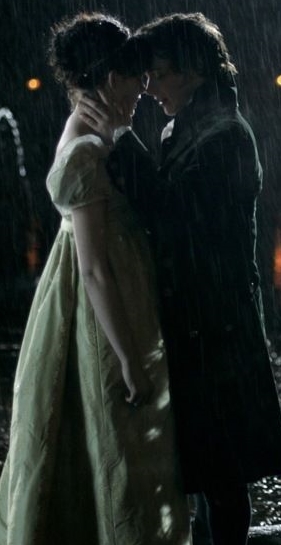
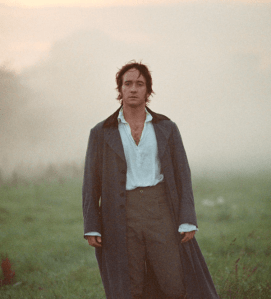 She takes another early morning walk and meets Mr. Darcy in the mist (an utterly breathtaking scene). She attempts to make amends, for judging him so harshly. Darcy tells her, she must know, it was all for her. His affections have not changed; she has bewitched him body and soul [another line I desire in my own proposal]…”I love, I love, I love you and never wished to be parted” (and this is why we love Jane Austen). Elizabeth gently kisses his hands and their foreheads meet as the sun rises. They return to the Bennett household to get permission from Mr. Bennett. He is confused; they all thought she didn’t like him. Elizabeth tells her father she was utterly wrong about him; they are so similar, and so stubborn. In short, she loves him. She also explains how Mr. Darcy has already helped their family, but he would not want Mr. Bennett to respond.
I adore the ending of this film, even though it is not how the book ended. Elizabeth and Mr. Darcy are enjoying an evening together and discuss what endearments Mr. Darcy may use. he inquires when he may call her Mrs. Darcy, when he is cross? No, “only when you are completely, perfectly, and incandescently happy.” He proceeds to kiss her, murmuring “Mrs. Darcy,” he time, until their mouths meet. …sigh, swoon!
In truth, I believe I fell asleep the first time I watched the movie; it is one that needs time and a few watching’s to grow fond of. Mr. Darcy improves with each viewing. I did manage to read the novel after watching the film in college. A quick skimming of the ending enforces why I prefer it in film format; it is much easier to digest, dispensing of some of the flowery language. But as Becoming Jane comments, both sisters ended up with good matches and lived happily. The visual artistry of the film is gorgeous. I do like the soundtrack to this film, much better than the last batch of movies; I actually own it. It is mainly piano pieces, which are played by various characters throughout the film. And the dance tracks are lively pieces.
Up Next: The Gothic romance Jane Eyre
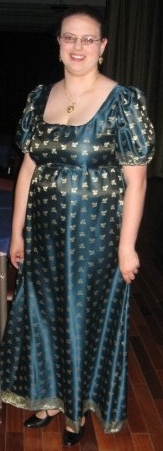 An added treat: this is me in a Jane Austen inspired gown that I wore for Halloween one year at college; made by my talented mother (I did not inherit that talent). I still have the dress.
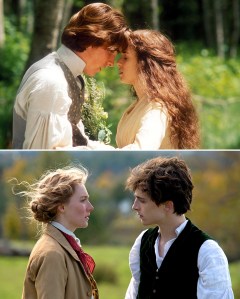 Personally, I have always liked the pairing of Laurie and Jo; they get along so well, it seems only natural. I can understand her hesitation, that being too similar will not work well as a marriage, but Laurie is such a charming lad. (This is why it makes a good Valentine’s film, well, Christian Bale’s portrayal a little more than Timothée Chalamet…oh, if a man would offer to take me to London and support my writing…[but alas, it hasn’t, so I make do with my books and my writing and my movies and shows]). But I utterly adore how Jo is portrayed as a writer in the 2019 film. I recognized so much of what I do in her. And her conversations with the publisher; I was set on seeing the film when Jo commented in one trailer that if she was to sell her characters and writer’s integrity, she would get some of the profits.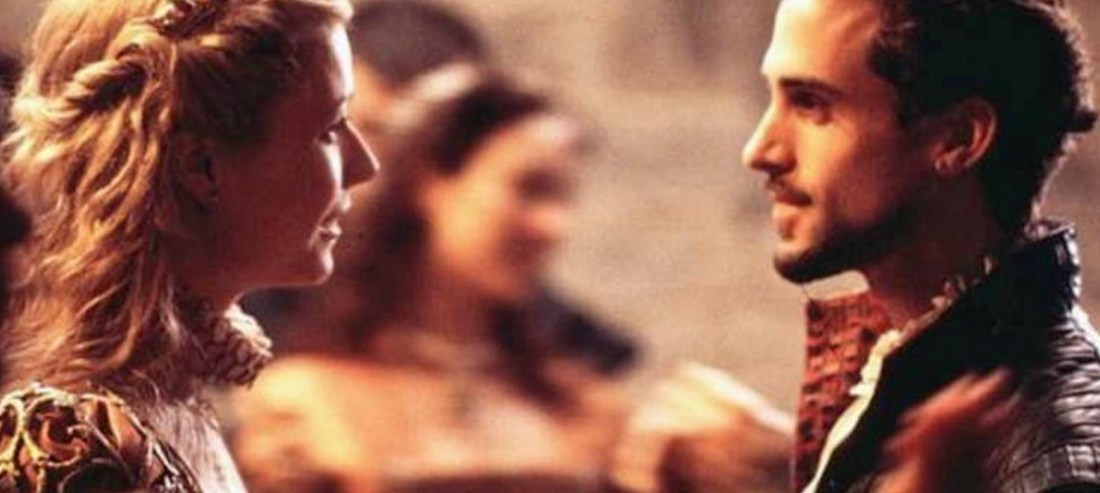
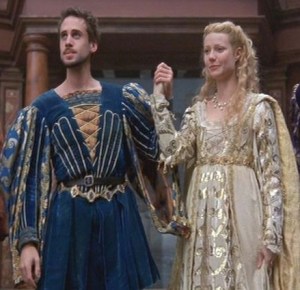 It is a wonderful performance. The whole audience is in tears by the end. The standing ovation at the end is interrupted by the Master of Revels, again stating that Juliet is a woman. (Most everyone can see that). “Have a care with my name, you’ll wear it out,” Queen Elizabeth states from the audience. She takes in Juliet and judges the mistake an honest one. “I know something of a woman in a man’s profession. Yes, by God, I do know about that.” She calls out Wessex on the wager; Romeo and Juliet accurately depicted true love. As Queen, none can contest her word. She tells Viola quietly to say her farewells, she is still bound in matrimony to Wessex and must accompany him. And she wants a new play, for Twelfth Night, from Shakespeare. Something happier. It is a sad parting between Shakespeare and Viola, but she remains his muse for his next play, involving a shipwreck and a woman masquerading as a man.
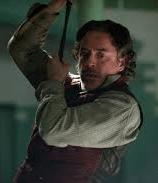 In Germany, Sherlock is captured and interrogated by Moriarty, which involves having a large fish hook stabbed into his shoulder, raised up, and Moriarty spins him about. The Napoleon of crime broadcasts Sherlock’s screams over a loud speaker. Watson faces off against Moran, ultimately using a bigger gun: “Come at once if convenient, if inconvenient, come all the same.” They meet back up with their gypsy friends and make a run for a train involving some excellent use of slow-motion. Once safe, Sherlock stops breathing. Watson thinks to use his wedding gift, a vial of adrenaline. They then meet up with Mycroft at the peace summit in Reichenbach, Switzerland. Morarity’s plan is to create a world war now that he has ties to everything from bullets to bandages. The final push will be an assassination of an ambassador at the peace meeting.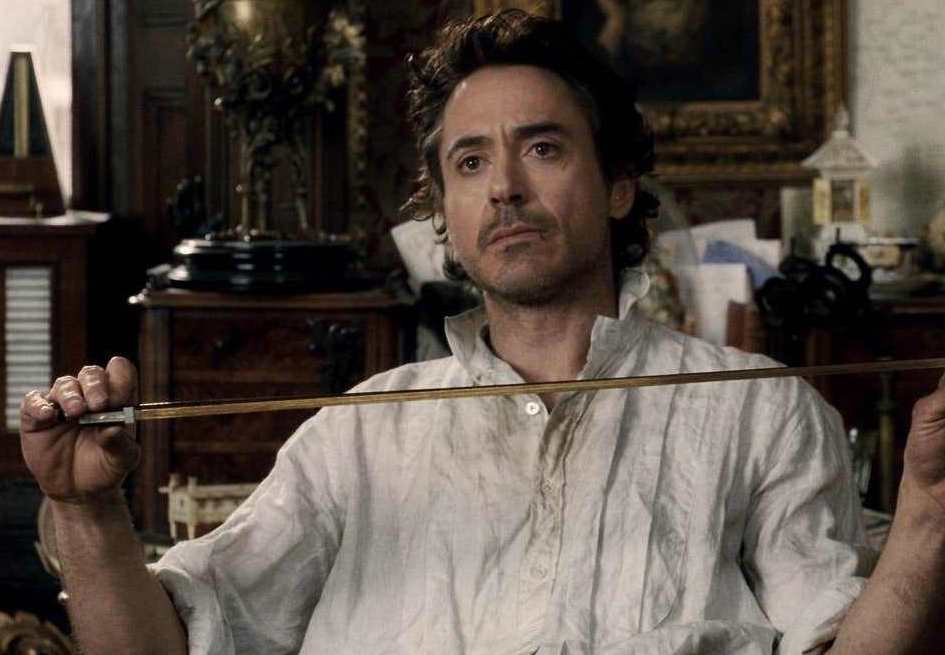
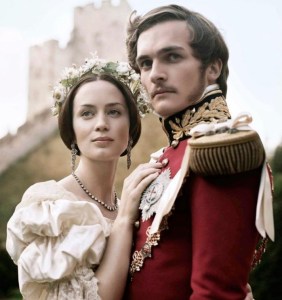 She also glows about Melbourne. Albert decides to return to England to spend time with Victoria (by now, he has fallen in love with her. She has admitted to Melbourne she has made no promise to Albert, but she still feels alone). Albert counsels Victoria to play the chess game better than the others, and that others will expect Victoria to fail and taken advantage of her inexperience. He believes in her. And truly cares about the working people. Melbourne doesn’t want to upset the status quo, though he does tell Conroy “you have played the game and lost.” We witness the coronation again, in the context of what we have just learned. Victoria wants to rule on her own for a while and thus, even though she danced with Albert at the coronation ball, he must return home again. They continue to write letters and Albert worries for Victoria.