The second Pierce Brosnan Bond film. Features Jonathan Pryce as Elliott Carver (yeah, a bit disconcerting to watch this after seeing him as Governor Swann in Pirates of the Caribbean). Julian Fellowes (yep, the creator of Downton Abbey) makes an appearance as well, and if the admiral later in the film looks familiar, that is Michael Byrne (he appears as Merlin in The Mists of Avalon and Treville in The Musketeer, as well as Indiana Jones and the Last Crusade).
The opening takes place at an arms bazaar on the Russian border, the British intelligence office looking in. Of course, the military wants to just bomb it and be done, but M urges caution; there is more intelligence to be gleaned. Well, the admiralty fires a missile anyway and orders MI6’s agent, Bond, to get out of there. Oh wait, there’s a very dangerous nuclear torpedo on site that you don’t want blown up. Bond does his job, disrupts the bazaar, blows things up, and flies the plane out of there in the nick of time.
The main plot starts with a British ship in the South China Sea. Two Chinese MiGs fly by and warn that the ship is in Chinese water. According to the ship’s navigation, they’re in international water. What neither side knows is that at Carver Media headquarters, the whole mess is being directed by Carver. In the water he has a stealth ship that drills into the British ship and then fires missiles at the Chinese, all to start an international incident. He also has an encoder that has managed to scramble the British signal and they were actually in the wrong area. Elliot Carver’s plan is simply to become the head of the largest media conglomeration and he’ll do that by writing tomorrow’s headlines today. And by instigating the disasters and then he’ll have exclusive coverage.
Bond is sent to investigate; M suggests pumping his old fling, Paris for information, because Paris is now married to Elliott Carver. He has forty-eight hours to discover the truth before the fleet moves in. Carver suspects Bond of something and his little stooge is listening in and discovers that Paris knows Bond. So he sends his wife after Bond. She of course succumbs to Bond’s charm again even though they both fight it. Bond doesn’t want to put her in danger, but Paris knows what kind of man her husband is and gives Bond the information he needs. Bond offers to protect her, but she declines. Carver sends a “doctor” to his wife anyway.
After Bond infiltrates Carver’s office, he steals back the encoder and meets Chinese intelligence agent, Wai Lin. When Bond returns to his room, he discovers Paris dead and the assassin waiting for him. The “doctor” [is it just me, or is he a little clichéd?] is a professional and sits his victim down to talk to him first. Bond still overpowers him and escapes, leading to an expert car chase in the parking garage. Bond gets to use the remote control that Q created (very cool). He then meets up with the Americans near the South China Sea to return their encoder and they discover that it sent the British ship off course. Bond elects to HALO jump into Vietnamese territory and dive down to the wreck for further investigation. There, he encounters Wai Lin again and they discover that one of the ship’s missiles is missing. Once the pair surfaces, they’re taken by Carver’s men and he goes into his villainous monologue. He intends for his associate to torture and kill them. Of course, Wai Lin and Bond work together and escape, leading to a rather hilarious motorbike chase while the pair is handcuffed and have to negotiate how they sit on and steer the bike.
After destroying a marketplace, Wai Lin is determined to finish the mission on her own, but Bond follows her. Good thing, because Carver has sent more local men. Now, Wai Lin takes them out on her on (super cool) and Bond just gets to knock out the last guy holding a gun. Wai Lin agrees to work with a “decadent, corrupt Western agent,” and they both agree to get their governments talking to each other to stop the debacle. They just have to figure out where Carver’s stealth boat is hidden. The two agents sneak on and start setting bombs, but they’re quickly discovered. Wai Lin is captured and Bond makes it look like he’s dead, so he can continue to sneak about. Carver’s plan to further the explosive situation is to fire the British missile into China and then China will retaliate and thus the British fleet with retaliate further.
And how do you expect it to end? Wai Lin gets free and stops the stealth ship; they’ve managed to get word to both militaries to be on the lookout for a stealth ship. Bond causes an explosion that makes the ship a target and the Brits start firing. Bond uses the drill on Carver, then rescues Wai Lin, after he takes on Carver’s last man and sets the missile to explode (complete with witty one liner: “I owe you an unpleasant death, Mr. Bond”). HUGE fireball! And Bond gets a little more time “undercover” with Wai Lin.
Carver is just an ego maniac. He admits he likes an audience to his plans. He quotes Hearst: “you provide the pictures, I will provide the war,” and takes that as his goal in life. I spend most of the film wanting Bond to punch him in the face. The film also shows its age a bit; the Internet is burgeoning, GPS is new, techno babble that most people don’t understand. Now, I find the storyline a little dull; but it is also still completely plausible. That kind of situation is still possible today. Pierce as Bond is charming and suave and I enjoy seeing the tender side of him; he cares about the women he encounters. I appreciate that Wai Lin holds her own, but her character seems sort of thrown in.
My parents have watched most all of the James Bond films, but Pierce Brosnan is my mom’s favorite Bond actor, so those were the movies that went on when I was growing up. So I’m starting with those; I’ve seen bits of the older movies, but I have not watched a Sean Connery Bond film all the way through (I’ll get to it, someday).
James Bond started as a novel series by Ian Fleming. His main character, James Bond, goes by the codename “007” (the double-O status means he has “license to kill”) and is a member of the British secret service (MI6; which is a real thing). Bond is also known for beating up bad guys and seducing women along the way; I believe I’ve heard “women want him and men want to be him.” He’s suave, charming, and deadly. Usually seen in a well-cut suit sipping a vodka martini, shaken, not stirred, and a different Bond girl on his arm in every movie.
GoldenEye is Pierce Brosnan’s first Bond movie; he was supposed to star in The Living Daylights, but the show Remington Steele (which has some Bond elements to it; I recommend you check it out) held on to Pierce. Sean Bean (Game of Thrones and Lord of the Rings are two of his later hits, but he’s also appeared in Patriot Games and National Treasure [which I’ll get to], as well as Troy, the show Medici [which also starred Thrones‘ Richard Madden and Merlin’s Bradley James], Sharpe, and Percy Jackson) is Alec Trevelyan. Famke Janssen (Jean Grey in the earlier 2000’s X-Men) is Xenia Onatopp, Robbie Coltrane (Hagrid in Harry Potter) is Valentin Zukovksy, Alan Cumming (“Rooster” Hannigan in Disney’s production of Annie, he was also in the 2000’s X-Men movies as Kurt Wagner/ Nightcrawler) is Boris Grishenko. Samantha Bond (Lady Rosamund, Robert’s sister in Downton Abbey, and is part of the Who-verse from her appearance in The Sarah Jane Adventures) appears as Moneypenny, Desmond Llewelyn continues as Q (Coggins in Chitty Chitty Bang Bang), and the iconic Judi Dench is the new M. [This is the only Bond movie where James Bond, M, and Miss Moneypenny were all re-cast with a different actor or actress. Desmond Llewelyn as Q is the only holdover]
The film starts with Bond bungee-jumping off a dam. We also meet 006, a friend and co-worker of Bond’s. They’re doing their job, to save the world, for England, on a joint mission to blow up a chemical plant in the USSR. 006, Alec Trevelyan, is caught by the bad guys and Bond re-sets the timers on the bomb. He witnesses Alec shot in the head and manages to make it out of the building while bullets fly. Then he runs after a plane taking off and when that doesn’t work, drives a motorcycle off the cliff and free dives into the falling plane, bringing the plane up in time to not run into the mountains and witness the explosion of the chemical plant. A rather thrilling opening [and one of my parents’ favorites]. The theme plays with the customary silhouetted women.
We next see Bond, presumably several years later, driving his car over the speed limit to impress the woman seated beside him. Then he gets more reckless when a pretty woman in a Ferrari drives by and they start racing each other, until the woman orders Bond to stop. Then, he charms the woman, who is his psychiatrist; classic Bond. And another Bond classic, a casino. Where he meets the mysterious woman, Onatopp (oh, isn’t that just laden with innuendo). They flirt, but she leaves with another man. Bond follows and spies on them. We see Onatopp kill the Admiral “in the act.” Come morning, Bond sneaks on, finds the dead Admiral, realizes something is up, and starts to make for the military demonstration of a new stealth helicopter. Onatopp is apparently also a pilot and takes the place of the actual pilots, then makes off with the helicopter. She flies it to a remote Space Weapons Control Center in Russia. There, we meet Natalya and Boris. Boris likes to hack in his spare time, and make lude jokes to his female coworkers. He goes out for a smoke and the helicopter lands. Natalya is making a coffee when Onatopp and the general from the start of the movie enter. The general goes through the procedure to retrieve the GoldenEye device, then lets Onatopp open fire on everyone. She oddly enjoys it. Natalya hides, until a space laser, activated by the GoldenEye, fires into the center, starting a fire. She eventually escapes in the aftermath of the damage.
Meanwhile, Bond is being briefed on the situation on the helicopter in England. Through satellites they witness the destruction of the control center, well, not all of it because the laser also emits an electromagnetic pulse, knocking out all electronics [that part, I get. The laser and such, not so much]. Bond is also introduced to the new M; there is a mutual dislike at the beginning; M believes Bond to be a relic of the past and she has no compunction about sending a men to his death. However, she will not do it on a whim and does urge Bond to not let this mission be all about revenge (since the general was the man who shot Alec) and asks that he comes back alive. Q has the obligatory gadgets including a pen grenade for Bond and reminds him “you have a license to kill, not to break traffic laws,” please return the equipment.
Bond gains a CIA contact in Russia and meets an old friend; well, former enemy who has at least decided to not kill Bond for the time being. Then he has another run in with Onatopp (in a pool because Pierce looks very good shirtless) and Onatopp of course tries to squeeze the life out of the British agent, but he breaks her hold. Natalya also meets up with Boris, which ends up being a trap (smart movie goers could guess that). Bond gets another blast from the past; turns out Alec isn’t dead! No, he wants revenge against the British government and Bond by extension due to his loyalty, for the betrayal his parents endured years ago. Onatopp works for him and they trap both Bond and Natalya in the helicopter, rigged to fire a missile at itself. Bond brilliantly ejects them. They’re picked up by the government and Bond attempts the typical spy banter, but Natalya gets down to business, which saves them. Until the traitorous general comes in and literally blows their burgeoning plan to pieces. Bond pulls Natalya behind him, though they get separated. Bond then decides that a tank is a suitable vehicle to drive in the streets of St. Petersburg to chase after the general and Natalya (causing mass destruction, and cue the Bond theme).
Everyone meets up on a train, after Bond positions the tank to derail the train and fires. He jumps out and boards the train. Alec quips, “why can’t you just be a good boy and die!” “You first,” Bond responds. Alec points out that the situation is hopeless for Bond, he has no back-up, no escape route, and Alec holds the bargaining chip in the form of Natalya. He knows Bond’s secrets and weaknesses and attempts to get in his old friend’s head. Alec and Onatopp escape, Bond shoots the general, and Natalya hacks into the train to find out where the villainous couple are headed. Bond cuts through the floor of the train before it blows. “Do you destroy every vehicle you get into?” Natalya asks later. Bond claims it to be standard operating procedure.
The CIA unofficially helps Bond and Natalya get to Cuba [there’s an unneeded scene on a random beach before between Natalya and Bond simply to give another excuse for them to kiss and demonstrate that Bond gets the girl] , but they can’t spot the giant satellite dish required to run the GoldenEye. Well, that’s because they hid it under a lake. Onatopp is sent out to take care of the heroic couple after they’re shot down. Bond gets the upper hand again and rigs the cords so Onatopp is strangled by her own helicopter. Bond and Natalya sneak in and Bond begins to place bombs, but he’s captured. Alec knows to disarm Bond and even take his watch [fun fact, this is the first Bond film that features an Omega watch, previous films showcased Rolex watches and occasional Seikos for technology features]. But Boris gets a hold of the pen when Natalya punches him.
Alec’s big plan? Is to hack into the British bank then set off the GoldenEye EMP directly after so his tracks are covered, and creating a worldwide financial meltdown. Bond points out he is simply a petty thief. Natalya was busy when she was near the computer and messed up the guidance system on the satellite that controls GoldenEye, then encrypts it. Boris is confident he can break it, but he struggles. Bond notes that Boris has the unconscious habit of clicking his pen; with the Q pen he’s constantly arming and disarming the grenade inside. Bond times it right to duck when Boris drops his pen, setting off an explosion (though random liquid nitrogen freezes Boris hilariously). Alec goes after Bond, resulting in hand-to-hand fighting. The explosion sets off more fires and Natalya demonstrates she’s an action girl too and rescues Bond. Alec falls into the satellite dish, but doesn’t die until the antenna spears into him. Bond and Natalya escape and Bond takes the time to start kissing Natalya. They’re alone, he promises. Until Marines pop up.
Since this is my mother’s favorite Bond film and the primary Bond film I’ve watched, I do have some fondness for it. Oh, the technology in it is laughable now, but Boris is kind of funny, though he needs a good kick somewhere for his attitude. Sean Bean makes an excellent villain. GoldenEye has all the trademarks of a good action-adventure movie. Some fights. Save the world storyline. Quips and banter. Hero gets the girl. Overall, it’s a fun movie to watch. And I agree with my mother, Pierce is my favorite Bond; he’s more suave than Daniel Craig (but more on that later)
A romantic bopic of children’s author, Beatrix Potter. It stars Renee Zellweger as Beatrix, Ewan McGregor as Norman Warne, her publisher (the two appeared opposite each other in Down With Love, which is coming up soon in my posting schedule). Emily Watson (she was in Testament of Youth [that WWI movie I watched with Kit Harrington] and War Horse) plays his sister, Millie. Beatrix’s father, Rupert, is played by Bill Paterson; we’ve seen him in Amazing Grace and Outlander.
This film beautifully showcases the Lake District of England and is a huge reason why I want to personally visit the scenery at some point in my life. It opens with Beatrix’s voice-over telling us when writing the first words of a story, one never knows where one will end up. We see her struggle to publish a children’s book and be taken seriously as a single, unmarried woman in 1902 London. Her publishers fob her off onto their younger brother who is making a nuisance of himself; if it gets mucked up, it’s no real loss. However, she is determined to look upon this as an adventure and encourages her illustrated animal friends to do the same. There is a flashback to her childhood, showing that she was a talented artist and making up stories even then.
Luckily, Norman loves Beatrix’s book and quite enthusiastic to work with her on it; everything can be done to her specification. Another flashback shows us that when Beatrix was young, her family started vacationing in the Lake District, where Beatrix got a lot of her inspiration. There was even a young man in the area who liked her stories, Willie Heelis. But Beatrix’s mother despairs of her ever marrying, or at least, marrying properly. She has introduced a string of suitable suitors to her daughter, but Beatrix wants none of them. Meanwhile, she and Norman make a good team publishing her book, and Norman encourages her to produce more stories. The first book, Peter Rabbit, is a success. Norman takes Beatrix to meet his mother and sister and Millie is determined to be fierce friends with Beatrix, bonding over their unmarried states.
In turn, Beatrix invites Millie and Norman to her family’s annual Christmas party. Her father comes to her rescue when her mother disapproves of their “tradesman” status. Beatrix’s present for Norman is a new Christmas story, which the party insists she share. She is a bit scandalous, showing Norman her bedroom, but they are chaperoned and Norman leads her in a sweet dance [I saw this movie before Down With Love or Moulin Rouge and was unaware that Ewan could sing]. Norman proposes, but Beatrix’s answer is interrupted. Then she confers with Millie if she minds. Millie encourages her friend to take a chance on love. Beatrix tells Norman yes. The next day, he visits her father. Unfortunately, Beatrix’s parents disapprove, her father mainly on the point that it is too sudden. They compromise; Beatrix can accept in secret. Their family will vacation in the Lake District for the summer again. If the couple still wants to marry at the end after some time, they will give their blessing. Norman bids farewell to Beatrix at the train station in the rain and they send letters back and forth.
Then, Norman’s letters stop coming. Millie writes, informing Beatrix that Norman is ill. She returns to London, sadly to discover that Norman has died. Millie was the only one who knew Norman and Beatrix were engaged. Oh, I cry every time during this part of the movie. Beatrix returns home, utterly depressed. She tries to draw, but her friends run from something. Millie comes to her rescue. Beatrix must get out of the house. She is quite wealthy now with the royalties from her books; she buys Hill Top Farm in the Lake District, from her old friend, William Heelis. Slowly, Beatrix comes back to life. She draws again and has new stories buzzing about. She reconnects with William, and they share the notion that the landscape of the Lake District needs preserved, farms should be kept farming, not bought out by developers.
The film ends back at the beginning, with Beatrix sitting down to write. We are told that eight years after moving to the Lake District, Beatrix married William Heelis and she donated 4,000 acres of farmland to the British people through a land preservation trust.
Miss Potter is not a terribly dramatic movie, which makes it a good movie to put on when I don’t want to have to think too hard on something. The scenery is gorgeous and I love Millie Warne’s views on unmarried ladies. I want a home someday like Beatrix’s cottage; it’s so cute. I have always loved bunnies (though I am quite content to let the bunnies that live in our backyard be as close as I get to having a pet), so I’ve always liked Beatrix’s illustrations.
Another classic novel that has had many film versions made of it; I’ve only ever watched the 2011 film, and that was due to the cast. Mia Wasikowska (opposite Johnny Depp in Disney’s live-action Alice in Wonderland movies) is the titular Jane Eyre. Michael Fassbender (young Erik Lensher/Magneto from the prequel X-Men films) is Mr. Rochester. Judi Dench is Mrs. Fairfax. Holliday Grainger (we saw her in Disney’s live-action Cinderella movie as one of the stepsisters) is Diana Rivers alongside Tamzin Merchant (Georgiana Darcy) as her sister Mary Rivers. And if Mr. Brocklehurst, the overseer of that horrid boarding school looks familiar, he is played by Simon McBurney. He wasn’t terribly nice as Father Tancred in Robin Hood and not exactly nice as Charles Fox in The Duchess. Harry Lloyd (Will Scarlet in BBC’s Robin Hood series, Viserys Targaryen in Game of Thrones, and he appeared in two episodes of Doctor Who as well during David Tennat’s tenure) is Richard Mason. This film did encourage me to read the novel and it wasn’t too bad. Charlotte Brontë is not an author I will rush to read more of, but I see why it is renowned.
The film jumps around the timeline; we begin with Jane running away, laying down and crying when she sinks to the depths of despair, and being taken in by the Rivers, headed by their brother John. Then Jane recalls her childhood, brought up in her aunt’s house after the death of her parents and uncle. Her aunt cannot stand to have her in the house, so makes it out that she is a wretched child and sends her to a boarding school that encourages beating the girls. Jane makes one friend, who comments that Jane is surrounded by an invisible kingdom of spirits. Sadly, the other girl dies. When we jump back to the present, Jane is looking for work. John Rivers finds her a small parish school and Jane recalls fondly her farewell from school and her beginning at Thornfield Hall.
The house is kept by Mrs. Fairfax and Jane is the new governess for Mr. Rochester’s ward, a young French girl, Adele. Jane settles into Thornfield rather well, but still wishes for some adventure. Mrs. Fairfax sends her on an errand, and Jane manages to startle a man and his horse on the road. When Jane returns to the house, she discovers the injured man is her master, Mr. Rochester. Rochester asks if she was looking for her people, the fairies. He is intrigued by Jane and they speak frankly with each other. He toils alongside his help, but is changeable. One night, Jane hears something outside her door. She goes to investigate and discovers smoke in Rochester’s room and saves him from being burned alive. He thanks her, but also cautions her to say nothing. The next morning, he has left again. Then abruptly returns with wealthy guests. Mrs. Fairfax surmises that he will propose to Miss Ingram soon.
After enduring the wealthy guests, Jane leaves the drawing room. Rochester follows, but their conversation is interrupted by a visitor from Jamaica, Mr. Richard Mason. Rochester oddly asks Jane if she would remain his friend even if he faced disgrace. She would. Richard greets Rochester warmly and the two men speak. Jane is woken that night by a scream, as are the other guests. Rochester sends them back to bed, but asks for Jane’s help. She is to keep an eye on Mr. Mason while Rochester fetches the doctor; Mason has been stabbed. But both are ordered to not speak to each other. Jane discovers a hidden door in Rochester’s room, but the man returns before she can investigate further.
Come daylight, Rochester opens up to Jane about a woman who revives him. Jane believes he speaks of Miss Ingram. In truth, “what would Jane Eyre do to secure my happiness?” He tucks a small flower in her hair. Later, news comes that Jane’s cousin has committed suicide and her aunt requests she return home. Jane acquiesces, only for her aunt to reveal that she lied to Jane’s other uncle when he inquired of her whereabouts, wishing to bequeath his estate. Jane returns to Thornfield Hall in good spirits, though she is greeted by the rumor of Rochester’s engagement to Miss Ingram. She informs him she will seek a job elsewhere. She and Rochester share a confusing conversation about their souls before Rochester asks her plainly to be his wife. The sun shines brightly and the couple are happy.
Unfortunately, their happy day is interrupted by Richard Mason again. Rochester pulls Jane back to Thornfield and reveals that behind the hidden door is a hidden room containing his wife, Bertha, Richard’s sister. He had married her fifteen years prior in Jamaica, but she turned wild. Jane returns to her room and removes her wedding gown. Rochester pleads with her that night, but she will not marry him while he is married to Bertha. She flees come morning, bringing us back to the beginning. Rochester’s shout of “Jane” echoes through the rest of the film.
Jane imagines in her little cottage that Rochester has been searching for her and finds her, planting a searing kiss on her. Sadly, no, ’tis only John Rivers with news of Jane’s uncle. He has since passed and left her a considerable inheritance. Jane desires to share the money with the Rivers who were kind enough to save her life. But John wants more than friendship and a sibling relationship. He wants her to marry him and become a missionary wife in India. She refuses to marry him and goes searching for Rochester. In her absence, Thornfield has burned. Mrs. Fairfax informs Jane that Bertha lit another fire and Rochester wouldn’t rest until everyone had been rescued. He even went back in for Bertha, but couldn’t prevent her from jumping from the roof. Jane searches for her dear Rochester. She finds him underneath a tree, now blind, but he recognizes her hands. Jane kisses him, the sun shines again, and the movie ends.
While the tale is relatively depressing most of the time, there are some rather tender moments between the two main characters. The film is well acted. We can see how Jane wants Rochester, even before she knows his feelings, without her having to say anything. Not the most romantic movie, but there are others that get me feeling all warm and fuzzy inside.
Again, this is the 2005 rendition of Jane Austen’s most famous work and is full of familiar faces. Keira Knightley (Pirates of the Caribbean) leads as Miss Elizabeth Bennett. Rosamund Pike (the femme fatale of Die Another Day) is her elder sister, Jane. Jena Malone (one of the contestants in The Hunger Games series) is one of the younger sisters, Lydia. Donald Sutherland (who also appears in The Hunger Games and the original MASH movie amongst his illustrious career) is their father, Mr. Bennett. Opposite Keira is Matthew Macfadyen (Athos in 2011’s The Three Musketeers, star of BBC’s Ripper Street [which I have only caught commercials of during Sherlock and The Musketeers, don’t really have a desire to watch], The Sheriff of Nottingham in Robin Hood with Russell Crowe, and also starred opposite Keira Knightley in Anna Karenina in 2012 [my mother and I sat through that movie, neither of us ever having read the book and were thoroughly confused. That is the movie that led us to creating our twenty-minute rule with any movie; if we are not interested in the movie within the first twenty minutes, we shut if off; because that was three hours of our lives we will never get back]) as Mr. Darcy.
Kelly Reilly (Mary Morstan in Robert Downey Jr’s Sherlock Holmes movies) is Caroline Bingley. Darcy’s younger sister, Georgiana is played by Tamzin Merchant (she was the young Catherine Howard fated to be beheaded as Henry VIII’s fifth wife in The Tudors series, and even shows up in our next film, Jane Eyre). The Bennett’s cousin, Mr. Collins is played by Tom Hollander (he showed up in two of the Pirates of the Caribbean movies as Cutler Beckett). The formidable Lady Catherine de Bourgh is played by the as formidable Dame Judi Dench (M in several of the more recent James Bond films). And another relative of the Bennett’s, Mrs. Gardiner, is played by Penelope Wilton (Harriet Jones in Doctor Who and Isobel Crawley in Downton Abbey).
The story opens with Mrs. Bennett informing her husband, and her daughters overhearing, that Netherfield Park, a grand estate, has been let at last to a very wealthy young aristocrat. He must see that one of their daughters should marry this Mr. Bingley, but first, Mr. Bennett must visit Mr. Bingley so the women may then visit. Mr. Bennett has already visited Mr. Bingley. There is a ball, where the Bennetts are enjoying themselves when Mr. Bingley arrives, with his sister Caroline, and dear friend, Mr. Darcy. Mr. Bingley is immediately taken by Jane. Elizabeth seems a little interested in Mr. Darcy; her sister has just warned her “one of these days Lizzie, someone will catch your eye, and then you’ll have to watch your tongue,” but Elizabeth then overhears Mr. Bingley and Mr. Darcy speaking and Darcy comments that Jane is the only pretty girl in the assembly, Elizabeth is passing enough. She lets on she overheard him when they speak later. Elizabeth also has to put up with her mother speaking rather crassly.
The next day, a letter arrives for Jane, from Caroline, inviting her over. Mrs. Bennett, hoping it was from Mr. Bingley, insists Jane ride instead of taking the carriage to Netherfield. It begins to rain and Jane falls ill. Elizabeth walks over herself to check on her sister. Mr. Bingley already seems taken by Jane. Caroline attempts to make friends with Elizabeth and is quite comfortable around Mr. Darcy. They discuss women’s accomplishments and Darcy reveals that one of his faults is “my good opinion, once lost, is lost forever,” but Elizabeth cannot fault him for that. Then her mother and younger sisters traipse in for a visit and all return home. Mrs. Bennett is quick to point out the expensive furnishings and young Lydia insists the Bingley’s hold a ball. Mr. Bingley helps Jane into the carriage and Darcy helps Elizabeth, though he quickly walks away after.
Mr. Collins, the cousin who will inherit, visits. He is a preacher and his rectory lies near the estate of Lady Catherine de Bourgh, who acts as his patroness. He reveals to Mrs. Bennett he intends to marry one of her daughters. She informs him that Jane is expected to be engaged soon, so he settles for Elizabeth. Though it looks like Mary wouldn’t mind marrying Mr. Collins. Meanwhile, the young ladies meet the officers of the regiment that is lodging in town, a Mr. Wickham in particular. Elizabeth is charmed by the young officer, but it quickly becomes known that he and Mr. Darcy have a past. Wickham tells Elizabeth that Darcy’s father loved Wickham better and Darcy never got past that and threw him out.
The Bingleys do hold a ball at Netherfield. Elizabeth hopes to see Wickham, but gets stuck with Mr. Collins who stares at her and bluntly states he intends to remain close to her for the evening. Mr. Darcy surprises Elizabeth and asks her for a dance. She is trying to overcome the different accounts of Darcy she has heard in order to make out his character. He hopes he can provide more clarity in the future. There is an interesting part of the dance when the other dancers seem to disappear and it is just Darcy and Elizabeth together. Mr. Collins, who just interrupts Mr. Darcy, reveals that Darcy is Lady Catherine’s nephew (see the similarities with Becoming Jane? A nephew to a powerful patroness). We also witness the rest of Elizabeth’s family in a competition to make fools of themselves; Mary would rather play piano than socialize, Mrs. Bennett speaks loudly that she is sure Jane will be engaged shortly, Kitty and Lydia are rather too social, and Elizabeth’s friend, Charlotte Lucas remarks that Jane needs to pluck Mr. Bingley up; being too shy will not let him know she is interested.
Mr. Collins asks for an audience with Elizabeth the following morning. She mouths to her father to stay, but they all abandon her. Mr. Collins proposes. Elizabeth heartily declines and firmly tells the man that she will not make him happy and she is certain he will not make her happy. This puts Mrs. Bennett in a kerfuffle, she enlists her husband’s help in making Elizabeth change her mind and accept, in order to keep the house, or else she will never speak to her daughter again. Mr. Bennett tells Elizabeth that she will have to be a stranger to one of her parents then, for he will not see her if she does marry Mr. Collins. Turns out, Charlotte Lucas accepts Mr. Collins, figuring she will get no other proposal (after Collins has already insinuated to Elizabeth that she will receive no better offer). Sadly, the Bingleys have left as well.
It seems some time has passed; Jane visits their aunt and uncle and Elizabeth accepts a visit to Charlotte. There, she meets and dines with the great Lady Catherine. Darcy is there, as well as a Colonel Fitzwilliam. Elizabeth is seated next to Mr. Darcy, and then Lady Catherine quizzes her on her accomplishments. After dinner, she is ordered to play the piano (she does so poorly, as she told the lady.) Darcy visits Elizabeth briefly, and awkwardly the next day. But Fitzwilliam informs Elizabeth that it was Darcy who split Mr. Bingley from Jane, due to objections to the family. Darcy finds Elizabeth in the rain and proposes, well, not the best proposal. Not wise to start it with saying you love someone against your better judgment. Elizabeth questions him on Jane and Bingley and informs Darcy that Jane is shy; she doesn’t even always reveal her heart to her sister, let alone a man. Darcy throws back that the rest of Elizabeth and Jane’s family are fools, but the two eldest daughters are excluded. Elizabeth also questions him about Wickham. They part angry, but Darcy leaves a letter. He (somewhat) apologizes for separating Bingely and Jane and tells Elizabeth what really happened with Wickham; he essentially gambled his inheritance away and when Darcy refused to give him more money, seemed to fall in love with Darcy’s very eligible younger sister and planned to elope. Darcy informed him he wouldn’t receive a penny of the dowry and so Wickham left, and Darcy’s sister was broken hearted. Elizabeth returns home very confused.
Lydia is invited to go to Brighton with family friends and Elizabeth’s aunt and uncle invite her to accompany them to the Peak District (which seems absolutely stunning). Elizabeth attempts to persuade her father to not let Lydia go or else she will become the most determined flirt. Mr. Bennett simply wants peace and feels that Lydia is too poor and insignificant to get into too much trouble. Elizabeth and her relatives break down near Pemberly (where Mr. Darcy lives) and decide to visit. Elizabeth wanders and discovers Georgiana playing, and Mr. Darcy. She flees, but Darcy follows. He then calls at their lodgings and invites them over the following day. Georgiana is a cheerful young lady and is determined to be friends with Elizabeth; it is clear Darcy dearly loves his sister. Their lovely day ends in despair when news arrives that Lydia has run off with Mr. Wickham. Darcy feels it is his fault for not outing Wickham sooner; Elizabeth feels at fault for not sharing her knowledge with her family. The men of the family set out after Lydia. News returns home that Wickham will marry Lydia for a pittance.
She flounces in as a happy bride, showing off her ring to her family. Lydia inadvertently reveals to Elizabeth that it was Mr. Darcy who discovered her and Wickham and paid for everything; “he’s not half as high and mighty as you,” she remarks to her elder sister. Shortly after, Darcy and Bingley return to the Bennetts. After their brief visit, Elizabeth is on the verge of telling Jane she may like Darcy. We see Bingley rehearse, then he bursts back in and requests and audience with Jane: “first, I must tell you I have been the most unmitigated, incomprehensive ass…” Jane accepts his proposal: “yes, a thousand times yes” (which is what I imagine the most romantic proposals end with). Jane wants her sister to be as happy as her, but Elizabeth cannot bring herself to tell Jane of what almost was with Mr. Darcy. Their night is interrupted by a visit from Lady Catherine de Bourgh, who speaks to Elizabeth, demanding she does not accept any proposal from her nephew, Mr. Darcy. He is intended to marry her daughter, a match planned since infancy. Elizabeth then orders Lady Catherine out and runs from her family, refusing to speak on the matter.
She takes another early morning walk and meets Mr. Darcy in the mist (an utterly breathtaking scene). She attempts to make amends, for judging him so harshly. Darcy tells her, she must know, it was all for her. His affections have not changed; she has bewitched him body and soul [another line I desire in my own proposal]…”I love, I love, I love you and never wished to be parted” (and this is why we love Jane Austen). Elizabeth gently kisses his hands and their foreheads meet as the sun rises. They return to the Bennett household to get permission from Mr. Bennett. He is confused; they all thought she didn’t like him. Elizabeth tells her father she was utterly wrong about him; they are so similar, and so stubborn. In short, she loves him. She also explains how Mr. Darcy has already helped their family, but he would not want Mr. Bennett to respond.
I adore the ending of this film, even though it is not how the book ended. Elizabeth and Mr. Darcy are enjoying an evening together and discuss what endearments Mr. Darcy may use. he inquires when he may call her Mrs. Darcy, when he is cross? No, “only when you are completely, perfectly, and incandescently happy.” He proceeds to kiss her, murmuring “Mrs. Darcy,” he time, until their mouths meet. …sigh, swoon!
In truth, I believe I fell asleep the first time I watched the movie; it is one that needs time and a few watching’s to grow fond of. Mr. Darcy improves with each viewing. I did manage to read the novel after watching the film in college. A quick skimming of the ending enforces why I prefer it in film format; it is much easier to digest, dispensing of some of the flowery language. But as Becoming Jane comments, both sisters ended up with good matches and lived happily. The visual artistry of the film is gorgeous. I do like the soundtrack to this film, much better than the last batch of movies; I actually own it. It is mainly piano pieces, which are played by various characters throughout the film. And the dance tracks are lively pieces.
Up Next: The Gothic romance Jane Eyre
An added treat: this is me in a Jane Austen inspired gown that I wore for Halloween one year at college; made by my talented mother (I did not inherit that talent). I still have the dress.
This movie would have been helpful in high school so I might actually be interested in Shakespeare, but since it’s rated R, that didn’t happen. It also has a cast and a half! A veritable “I’ve that person before.” Geoffrey Rush (Barbossa in Pirates of the Caribbean) owns the Rose theatre, and yes, one of the thugs trying to burn his feet in the beginning was in A Knight’s Tale. Dame Judi Dench (M in several Bond films is only a small part of her long filmography) won the Academy Award for Best Supporting Actress as Queen Elizabeth, although she’s only on camera for less than ten minutes. (Ironically, she went against Cate Blanchett that year in the same category; Cate was nominated for playing Elizabeth I in Elizabeth, which also featured Joseph Fiennes [his brother is Ralph, also known as Voldemort amongst other credits] as her lover Robert Dudley. Here, he is the titular William Shakespeare). The film as a whole won Best Picture, beating out Saving Private Ryan. Future Harry Potter faces are Mark Williams (Arthur Weasley) as the stutterer and Imelda Staunton (Dolores Umbridge) is Viola’s nurse; her real-life husband Jim Carter (Carson the butler in Downton Abbey) is the actor who plays the nurse. Gwyneth Paltrow (before she was Iron Man’s Pepper Potts) is Viola, and Colin Firth (far more romantic in Pride and Prejudice) is Lord Wessex. Ben Affleck is even in the movie, as an actor who plays Mercutio. Whew, you need a map to make sense of all this!
At the film’s opening, Shakespeare is suffering from writer’s block and searching for his muse. He is being asked to deliver his newest play, but honestly has not written anything. He claims it is all locked away; well, it’s so well-locked, it hasn’t even occurred to him. He happens to peek in on a performance of one of his plays for Queen Elizabeth. In the audience is a woman who loves his work. The woman later explains to her nurse “I will have poetry in my life. And adventure. And love. Love above all.” [Lots of women want that. I want that. Still searching.] The young woman goes so far as to wish to be in plays; not something that was done at that time, women’s roles were played by prepubescent men.
Shakespeare is finally forced to start his latest production (with a little nudging from contemporary, Christopher Marlowe). At the end of auditions “Thomas Kent” takes the stage and speaks with such passion that Shakespeare is impressed. Thomas runs and Shakespeare gives chase, all the way to a manor home. We discover that Viola is pretending to be Thomas Kent in order to perform. A wrench is thrown in the works when pompous Lord Wessex takes interest in Viola, well, more her money than anything else. He arranges it with her parents and spots Shakespeare at a dance held at the home making eyes with his new intended. Shakespeare gives him Marlowe’s name. But Shakespeare hangs around to speak to Viola at her balcony. (By now we can see where some of this is going; it centers around the creation of Romeo and Juliet.) Shakespeare has found his muse in Viola and begins writing feverishly.
Even more good news, the lead company of actors have returned, including the typical lead Ned (played by Ben Affleck) and the usual “woman.” “Thomas Kent” is given the role of Romeo; Ned is told his part of Mercutio is actually the lead. But Ned tends to be supportive of Shakespeare, though he’s aggravated by some of “Thomas’s” ineptitude. Away from the stage, Shakespeare speaks to Thomas to find out information on Viola, which leads to a rather awkward kiss between the two “men;” there are some scholars who theorize that Shakespeare was gay, or possibly bisexual. Luckily for Shakespeare, when he follows “Thomas,” he discovers that “he” is Viola. Who has just discovered from Lord Wessex that they are to be married in two weeks. Viola takes Shakespeare to her bed (the nurse has to sit in a chair in front of her door and stave off other servants) and discovers that there is something better than a play. Now when they are both at the theatre, the couple makes out backstage.
In order for Viola to marry Wessex, she must appear before Queen Elizabeth. The queen recognizes the young woman from attending plays put on for the queen, but cautions Viola that poets cannot write true love. A wager is called out, can a poet portray true love? As Wessex and Viola leaves, Elizabeth tells Wessex that she can tell that Viola has been “plucked,” since last she saw her. Wessex suspects “Marlowe.”
A fight breaks out between the two theatres and acting companies; Shakespeare told one man he could have the play, but has given it to this man, etc, etc. Shakespeare and his troupe triumph and celebrate at a pub. During the festivities, Viola finds out that Shakespeare is married (he was, though he was living away from his wife and they were not on best of terms). She leaves and Shakespeare goes to follow, but discovers that Marlowe had just been killed. He blames himself, figuring that Wessex had killed Marlowe, thinking it was Shakespeare. Wessex meets Viola the next morning to give her the good news that her poet is dead. She is despondent at church, until Wessex spies Shakespeare, who had spent the night pleading to God for his crime. Wessex runs out of church, alarmed. Viola is happy and she and Shakespeare speak. While they love each other, they cannot be together. Shakespeare is married and Viola is engaged to be married; she must marry someone and if she cannot have Shakespeare, why not Wessex? Even though they will move to his plantation in Virginia.
Now a bit heartbroken, Shakespeare finishes Romeo and Juliet, even having a full copy written and given to Viola. Unfortunately, a boy happens to see Shakespeare and Viola making out and reports it (remember, ladies were not allowed on stage). The production is put to a halt by the Master of Revels when Thomas is outed as Viola. This is after Wessex attacks Shakespeare. They duel and Shakespeare calls Wessex out for murdering Marlowe. In that case, it had been a tavern brawl and Marlowe accidently got his own knife in the eye. Wessex had been pleased with the news, again thinking it was Shakespeare. The competing theatre offers its stage as a way for them all to thumb their nose at the Master of Revels.
Romeo and Juliet premieres the same day as Wessex’s and Viola’s wedding. Viola sees the ad and leaves the carriage before Wessex enters. Ironically, the young man who is to play Juliet had his voice break that day. They now lack one of the stars of the play. And the first performer to go on stage has a stutter. He overcomes it and delivers a commanding introduction. The two theatre owners are discussing their dilemma where Viola overhears. She whispers she is Thomas Kent and knows every word of Juliet’s part. She is rushed backstage and comes out right on cue. Shakespeare is most surprised, but pleased; and most fortune for he is playing Romeo in “Thomas Kent’s” place.
It is a wonderful performance. The whole audience is in tears by the end. The standing ovation at the end is interrupted by the Master of Revels, again stating that Juliet is a woman. (Most everyone can see that). “Have a care with my name, you’ll wear it out,” Queen Elizabeth states from the audience. She takes in Juliet and judges the mistake an honest one. “I know something of a woman in a man’s profession. Yes, by God, I do know about that.” She calls out Wessex on the wager; Romeo and Juliet accurately depicted true love. As Queen, none can contest her word. She tells Viola quietly to say her farewells, she is still bound in matrimony to Wessex and must accompany him. And she wants a new play, for Twelfth Night, from Shakespeare. Something happier. It is a sad parting between Shakespeare and Viola, but she remains his muse for his next play, involving a shipwreck and a woman masquerading as a man.
The costumes are stunning in this film and well casted. Dame Judi Dench commands the scene when she speaks as Elizabeth. This shows a greater range for Gwyneth Paltrow than as Pepper; she shows such passion as Viola. Joseph is an artistic Shakespeare without being overbearing. They share great chemistry together. Not the best role for Colin Firth. Overall, it’s a nice romp for Valentine’s Day.
I have often mentioned that for an English major, I do not like Shakespeare; not written anyways. I enjoy his plays much better when performed, as they were intended. As many high schoolers, I read Romeo and Juliet in English class and found it dull and analyzed to death. Even MacBeth was slow. I think because everyone is trying to find some hidden meaning in Shakespeare’s words. Plays do not read the same way novels do. I also struggle with writing screenplays; it was one English course that I did not excel in in college. I am better suited for writing research papers or novels. Now, BBC’s Hollow Crown movie productions of some of Shakespeare’s plays are phenomenal. Tom Hiddleston is an excellent Henry V. I still need to watch the production with Benedict Cumberbatch.
The final season of Sherlock, so far. Not terribly sure we’ll get another season, since Martin Freeman and Benedict Cumberbatch are both busy with other projects. This is not my favorite season, but I guess the ending is somewhat satisfying. The Six Thatchers picks up where season three ended, Sherlock is back in England to solve the final Moriarty mystery. In the meantime, while he waits for clues, he continues to solve cases. And Mary and John’s baby arrives, a little girl they name Rosamund Mary, “Rosie.” I adore the scene where Sherlock is minding Rosie and speaks in eloquent sentences that boil down to: “If you’d like to keep the rattle, than don’t throw the rattle.” To which Rosie promptly responds by throwing the rattle back in Sherlock’s face!
Sherlock is put on the case of the mysterious death of a young man in a parked car in England when he was supposedly on vacation a week prior. Turns out, he wasn’t gone, he had hoped to surprise his father at his birthday the week prior, but had suffered some sort of stroke or something and died in the midst of the surprise and wasn’t discovered for a week. But what fascinates Sherlock is a smashed plaster bust of former Prime Minister Margaret Thatcher. A slew of alike busts end up smashed. He stakes out the final bust and confronts the criminal, thinking it’s connected to Moriarty. It’s not, it goes back to Mary and her past as an agent. Her team was betrayed on their last mission and the only other survivor thinks it was Mary’s fault. it wasn’t, but Mary doesn’t want to put John and Rosie in danger, so she sneaks away, using her old skill set. Sherlock and John track her down and the old teammate dies when the police interrupt their discussion.
Sherlock promises to keep Mary safe and they all return to England. Sherlock first suspects Lady Smallwood, then realizes it was her secretary. He confronts her, as does Mary. The woman essentially did it for money, pulls a gun on Sherlock and Mary and hopes they will let her go if she promises to stop. Sherlock annoys her, but Mary jumps in front of the bullet. Mycroft, Lestrade, and John are on the scene. Mary apologizes to Sherlock for shooting him last year; they’re even now. She dies in John’s arms. John’s anger and grief are a bit hard to watch (meaning wonderful acting).
At home, there is a disc that arrived for Sherlock, labeled “Miss Me?” We all think it’s from Moriarty. No, Mary, getting Sherlock’s attention. She has one last case for Sherlock, save John Watson. Except, John doesn’t want to see Sherlock.
This carries over to The Lying Detective. John has gone to another therapist and during his session, a fancy red car shows up. Then we jump to Culverton Smith (played by Toby Jones; we’ve seen him in Ever After, Amazing Grace, The Hunger Games and the Captain America movies as Dr. Arnim Zola. He was the Dream Lord in an episode of Doctor Who during Matt Smith’s stint as the Doctor; he has also voiced Dobby in Harry Potter) hosting a gathering of his friends; he wants to confess something. Honestly, he creeps me out from the start. From there we see that Sherlock is not doing well separated from John. Smith’s daughter approaches him; she wants Sherlock to stop her father, he wants to kill someone. But Sherlock is off his game, he’s not able to keep up with his brain. Though he comes around in time to stop the woman from killing herself with the gun in her purse; and gives an excellent message (still reeling himself from Mary’s death):
Taking your own life. Interesting expression, taking it from who? Once it’s over, it’s not you who’ll miss it. Your own death happens to everyone else. Your life is not your own, keep your hands off it.
And Sherlock, well, Benedict, is rather impressive quoting Henry V‘s “once more unto the breech” speech. At that point, Mrs. Hudson coerces Sherlock into the trunk of her red sports car and drives to John, bringing us back to the start of the episode. Then they meet Culverton Smith and follow his day to a hospital, where the man creeps everyone out asking about serial killers (Sherlock had accused him of such on Twitter earlier). Sherlock hopes that Smith’s daughter will help put the nail in the coffin of his accusation, then it turns out the woman he met was not Smith’s daughter. Sherlock is very high at the moment. Smith won’t press charges, but he’ll take care of Sherlock.
John (after he beats up Sherlock a bit, Sherlock is fine with he, he did kill Mary) meets up with Mycroft in Sherlock’s flat. Mrs. Hudson takes control of the situation; she understands Sherlock where the other two men do not. Sherlock is emotional; that’s why he shoots the wall and stabs a problem. There is another disc, waiting for John. She orders Mycroft’s team out, and even Mycroft Holmes himself: “Get out of my house, you reptile.” John watches her message to Sherlock (he’s been seeing her ever since her death. It’s rather funny when “Mary” points out what Sherlock is doing to John and that what she is saying is John’s own brain). For Sherlock to save John, he must go to Hell; John will save him and in saving Sherlock, will save himself.
Back at the hospital, Culverton Smith has snuck into Sherlock’s room. Sherlock reveals that he wants Culverton to help kill him; increase the dosage on the drugs. But that takes too long for Culverton; smothering will be quicker. John bursts in at that point. Sherlock has managed to capture Smith’s confession in a listening device in John’s cane. Once in Baker Street again, “Mary” urges John to remain with Sherlock. Emotions come out and are dealt with. John reveals that he was cheating on Mary; he was texting a woman from the bus. It never went farther, but he wanted it to. And John urges Sherlock to respond to Irene Adler because he knows there is no guarantee how long you have with someone. John breaks down and Sherlock hugs his friend.
Things are better. Sherlock and John solve cases, Sherlock wears the hat. There may be a “thing” between Smallwood and Mycroft, interesting. John visits his new therapist again. She brings up the secret Holmes sibling that has been hinted at for years. Turns out the therapist was the woman that Sherlock met and talked out of suicide and she was the woman from the bus that was texting John. She is Eurus (the East Wind), the Holmes’ sister. The episode ends with her holding a gun on John.
The Final Problem is Eurus. Sherlock gives his elder brother a fright in his own home in order to make deductions (part of that may have been influenced by John). Though we do discover that inside Mycroft’s famous umbrella is a sword! Then a pistol! (Though, why is there a clown?) Mycroft reports to Baker Street the next day and finally reveals that Eurus is indeed the youngest of the Holmes’ siblings. But Sherlock doesn’t remember her. Childhood trauma, Mycroft explains. Sherlock blocked it. Eurus is a quantifiable genius, but she didn’t process things the same way as most people. She locked up Redbeard and wouldn’t tell anyone. Then she set fire to the family home. She had to be locked away. Mycroft eventually told his parents that she started another fire and died. Instead, she’s in Sherrenford, a maximum security prison. A drone flies into the flat with a motion sensor grenade. The three men wait until Mrs. Hudson is out of danger, Sherlock even brings up the possibility of John calling his daughter but there is no chance, then they move. Sherlock and John leap out a window and Mycroft is to make for the stairs.
Sherlock gets to be a pirate for a moment and commandeer a boat to get to Sherrenford. John is taken into Sherreford with a sea captain, who turns out to be Mycroft. Sherlock is already disguised as a guard and makes his way down to meet his sister. Mycroft berates the governor of the prison for the compromise in security; obviously Eurus made it out of the prison against his orders. And there was a psychiatric exam against his orders as well. Eurus can reprogram people, never to good results. This unfortunately includes the governor of the prison. And there is no glass on Eurus’s cell. She attacks Sherlock.
Mycroft’s Christmas gift is revealed to have been an unsupervised five minute conversation with Moriarty. Moriarty recorded lots of things for Eurus. (Yeah, not a good idea to put the two most dangerous psychopaths in the same room, especially when they both have a vendetta against Sherlock.) Eurus is now in control of the facility and has a series of tests lined up for her brothers and John. She is testing Sherlock’s emotions and logic First, either Mycroft or John will have to shoot the governor in order to save his wife. Mycroft refuses. John accepts, but ultimately can’t do it. The governor does it for them, but that breaks the parameters and Eurus shoots his wife anyway. Next, Sherlock is to solve a case with little information and pass judgment on three brothers for a murder. Eurus in due course kills all three, not understanding the hesitancy to take someone else’s life. Next, Eurus has wired explosives in Molly Hooper’s flat. Sherlock has three minutes to get Molly to say “I love you.” Poor Molly. It’s true, she has always loved Sherlock. Molly asks Sherlock to say it and mean it first. And he does. Molly whispers it in return. Turns out, there were no explosives; she just put her brother and a dear friend through emotional turmoil for nothing. Sherlock smashes the coffin in the room. All three men need hugs. But they must solider on.
In the next room, Sherlock is to choose which man to kill; only he and one other can continue on. Interspersed is a phone call with a scared little girl in a plane about to crash. Sherlock can be remarkable with children. Mycroft first tells Sherlock to shoot John, which John agrees. But Sherlock realizes that Mycroft is trying to goad him into killing his older brother. He cannot choose; both men are important to him. They are tranquilized. Sherlock wakes up in the burnt out family home, Musgrave Hall. Now, he has to find where John is trapped; the same place as Redbeard. Though there was one detail that Mycroft never told Sherlock. Redbeard was never a dog. “Redbeard” was Sherlock’s childhood best friend. They played pirates together. And Eurus had wanted to join, but boys being boys, they didn’t let her, so she chained the boy to the bottom of a well and let him drown. The little song she sang comes into play, along with the mismatched dates on the gravestones. Sherlock finds Eurus and figures out there was no actual plane that was about to crash; it was Eurus being scared and confused all her life.
A change comes to Sherlock and his family (which includes John). Sherlock now supports Mycroft, especially when the elder has to explain all that has happened to their parents. Sherlock visits Eurus and they play violin duets; she can never rejoin society, not after all she’s done. There is a sweet scene of Sherlock playing with John and Rosie. The parting words are Mary’s; she has always known what her men are. In the end, it’s all about the legend, the stories, and the adventures of the detective and his doctor. Her Baker Street Boys.
One element that I do like about this season is it humanizes the characters, particularly Mycroft and Sherlock. Sherlock admits that he can get full of himself. He is willing to kill himself to save John, even though he really doesn’t want to die (oh my goodness, whoever has to listen to that recording and hear Sherlock almost in tears saying “I don’t want to die…”) He truly views John and Mary as family. He lets Mrs. Hudson handcuff him to take him to John. And Mycroft is revealed to have always cared for Sherlock, and not just in passing. He protected him from the truth of what their little sister did (I can’t scrounge up too much sympathy for a person who knowingly and willingly let another child die, then wished the same upon their brother). As Lestrade says at the end, Sherlock Holmes is a good man.
The Eurus spin doesn’t quite sit well with me. The reveal of Mary’s old team seemed rushed. And Culverton, while extremely creepy, also seems contrived.
Now, for my favorite part of Sherlock…the fandom!
The Hillywood Show has done a parody video. I’m personally not familiar with the song they parodied, but the video is quite excellent. And check out the behind the scenes videos and video diaries; they filmed on the same location as scenes in the show, to the confusion of some British fans (their make-up is spot on). And Percy Weasley from Harry Potter guests stars at their Mycroft and Osric Chau (Kevin Tran from Supernatural and he has worked with the Hillywood girls before) is their Moriarty. There is a whole slew of other parodies; I started with the two Supernatural videos.
The fans already thought that there was another Holmes sibling long before Season Four, though it was a younger brother. Notice the new, young “Q” in Skyfall? (This is the theory I abide with) Could “Q” stand for Quentin, keeping with the unusual names? Ktwontwo has a whole series written about this family. Another fanfiction author, A Wandering Minstrel, suggests Trevalyan.
This is an actual conversation that came up at a convention. Mark Sheppard is a staple to fantasy shows including Doctor Who and Supernatural; of course he knows about Superwholock.
And then there is the whole “Superwholock” crossover deal. It’s a combination of Supernatural with Doctor Who and Sherlock. It’s funny, though I don’t quite understand how all three get squashed together. Maybe it’s angels? Sherlock states he’s not one of them, Doctor Who has the Weeping Angels, and Castiel is an angel. Ultimately it may boil down to they were the three most popular shows at the same time for a while.
After the Holidays: We’ll get back to some other historically based movies, starting with Master and Commander
The special 2016 New Year’s Sherlock special we got, set immediately after season three. They do a quick recap, “so far on Sherlock” then pose “alternatively…” All of our favorite characters are back, but set in Victorian England like the original work. We start with a Victorian re-telling of how John and Sherlock met, complete with Sherlock whipping a corpse in the morgue. Some time has now passed and John has been publishing his Sherlock stories in the Strand magazine (which is how they were originally published). The Abominable Bride is a case, briefly prefaced by Mary disguising herself as a client in order to visit her husband. A few comments made about a woman’s place in Victorian England; they are right on the cusp of the right to vote. Lestrade enters with the tale of a woman dressed as a bride shooting into a crowd, then committing suicide. But the strange part is, the next day, she appears in physical form to kill her husband. Molly Hooper poses as a man and Anderson works beneath her (a bit funny). She/he stands up to Sherlock, which is also awesome and reflective of hr progression in characterization. Sherlock begins to wonder if this is connected to Moriarty’s resurrection.
Months have passed and Mycroft calls for Sherlock, though he is humorously obese. Five more murders have occurred and he knows that a woman will be waiting for Sherlock and Watson at Baker Street upon their return. Her husband has been sent orange pips and knows his death is imminent (played by Tim McInnerny, who has appeared in Game of Thrones, Outlander, the live-action 101 and 102 Dalmatians, and Black Adder). John wonders if it could be an actual ghost, Sherlock insists it isn’t. They fail to save the husband. A note is later attached to the body: “miss me?” Some newer phrases start popping into Sherlock’s dialogue, like “virus in data” (this is alongside popular phrases like “the game is afoot;” they changed it to “the game is on” in the new series since most people don’t say “afoot” anymore). Floating newspaper clippings are a stand in for the Mind Palace. And Sherlock’s famous seven-percent solution is openly mentioned. Sherlock confronts Moriarty but finds no answers.
We’re jarred to the present by the airplane (from the end of season three) landing. Sherlock has delved deep into himself, wondering how he would have solved the famous case if he had been around at that time. Mycroft interrupts his younger brother, demanding if Sherlock has made a list. Ever since he found Sherlock years ago overdosed, he has made his brother swear to make a list of everything he has taken. Sherlock was high when he got on the plane; turns out solitary confinement is the worst thing for Sherlock. Mycroft reminds his brother “I will always be there for you.” I adore the sentiment we are seeing; I am a sucker for brotherly relationships [ooo, that gives me an idea of an essay to write]. Moriarty was wrong about Mycroft and Magnuson was correct; the eldest Holmes is not the Ice Man, but Sherlock is his weakness.
Back in Victorian times, word gets to Sherlock and John that Mary is in danger. Sherlock will always protect Mary, of that John can be certain. I also adore that they show Mary kicking butt!. She’s working for Mycroft and has found the heart of the conspiracy. Sherlock proposes that it was a group of women who banded together to extract revenge on the cruel men of their lives. The bride did not actually shoot herself the first time. Which left her able to kill her husband, then had help killing herself so a positive identification could be made. The rest were copy cat killers. There are tricks that can be used to make a ghost appear and in conclusion, the wife killed her husband. But underneath it’s still Moriarty. Sherlock is stuck dreaming between the present-day world and Victorian world. Again, he confronts Moriarty, though at the famous Reichenbach Falls. John comes as back up and kicks Moriarty into the falls. This aids Sherlock in waking up (though he has to fall again).
And he’s back and ready for the case. Mycroft asks John to look after Sherlock and there’s a note in his book about “Redbeard;” that’s been popping up lately. Sherlock knows that Moriarty is dead and he knows what he’s going to do next. A tiny kicker with Victorian John and Sherlock discussing the future; Sherlock has always felt that he was a man out of time. And now we’re ready for Season Four!
A Scandal in Belgravia picks up right where The Great Game left off, in the pool, with Sherlock pointing a gun at a collection of bombs. Then Staying Alive echoes through the room from Moriarty’s phone. He asks to take the call and starts congenial, then becomes angry at what the mysterious caller is telling him; “and know that if you are lying, I will skin you,” he drags out. Turns out for Sherlock and John, “Sorry, wrong day to die,” but warns them he will be in touch. On his way out, still on the phone, he tells his friend, if they’re right, they will be rich, and if they’re wrong, they will become shoes. We see a woman end the call, then ask another mysterious person, “Have you been wicked, your highness?”
John’s blogs bring in clients, advancing the duo, particularly Sherlock, to the status of Internet phenomenon. The press start showing up at crime scenes and Sherlock has to don the infamous deerstalker hat to hide his face. Sherlock attempts to solve a case from home, wrapped in a sheet, while John does the legwork on location. Then they’re both taken to Buckingham Palace. And…Sherlock still can’t bother to put on pants. Mycroft comes in to tell Sherlock he has a new case, but the client must remain anonymous. Sherlock refuses at first, even threatening to walk away while Mycroft holds the sheet (there’s a hilarious blooper of Benedict falling over in one take). He does take the case; the royal family is being threatened with scandal due to a dominatrix, Irene Adler holding compromising photos on her phone. This is the woman from the start of the episode. Irene receives photos of Sherlock and prepares for his arrival while Sherlock prepares to meet her. He has John punch him in the face (which John always hears when Sherlock is speaking, “but it’s usually subtext”) so he’ll appear suitably distraught to gain entrance to Irene’s residence.
Irene shocks Sherlock by entering the room stark naked. He stumbles a bit and can’t read her like he normally does. She further turns the table and asks Sherlock about his latest case; “brainy is the new sexy” (I totally agree). She eventually dons Sherlock’s coat to make John more comfortable, but they’re ploy to find the phone is interrupted by American CIA agents. They threaten John to make Sherlock open the case (the combination is Irene’s measurements) and with a hint from Irene, Sherlock warns his sidekick “Vatican cameos!” so they all duck as a gun takes out their opponents. Sherlock almost gets away with the phone, but Irene drugs him and escapes. She does return the coat while Sherlock sleeps (and reveals the solution to the case, where a backfiring car covers up a boomerang accidentally killing its owner), and also has now programmed his phone to moan sensually whenever she texts. Which hilariously interrupts Sherlock telling Mycroft off for yelling at Mrs. Hudson to shut up.
This transitions into a Christmas party at Baker Street. Sherlock actually apologizes when he embarrasses Molly Hooper, then his mood turns when he discovers that Irene Adler has left her phone, her insurance policy, for him. He warns Mycroft that they will find the woman dead that evening. He and Mycroft identify the body later that evening. Mycroft even offers Sherlock a cigarette which signals that Sherlock is suffering emotional pain. Sherlock tries to unlock Irene’s phone, but only has four attempts and discovers that if the case is forced, measures are in place to destroy the information. John is picked up while he’s out; he assumes it’s Mycroft again, but really it’s Irene. She’s not dead and she needs her phone back. And…Sherlock is listening. he’s in a bit of a daze as he makes his way back to Baker Street, but then he’s frighteningly focused when he discovers that Mrs. Hudson is in danger. The CIA agents are back. The leader is taken away in an ambulance, after falling out the window, several times. Sherlock declares England would fall is Mrs. Hudson ever left Baker Street.
Then he discovers Irene in his bedroom. She has a case for Sherlock. She has an important e-mail she got a hold of that needs decoding. Sherlock manages to crack it in less than a minute. Irene is impressed: “I would have you right here on this desk until you begged for mercy, twice.” Sadly, if we recall, she’s in the league with Moriarty and sends damaging information out. Moriarty contacts Mycroft and Sherlock has just set back a joint operation that could lead to a dangerous group, just to impress a woman. Irene attempts to blackmail Mycroft into her demands, but Sherlock has finally figured out her code to unlock her phone: I AM SHERLOCKED.
This puts Irene in danger. Mycroft visits John later so the man can inform his flatmate that the woman is in witness protection when really she’s dead. However…when we see her send her final text, a phone moans nearby. Sherlock is on hand to save her.
Hounds of Baskerville brings a familiar BBC face to play, Russell Tovey has appeared in Doctor Who and plays George the werewolf in Being Human (I only watched that show because Aidan Turner [Poldark, Kili from the Hobbit, and ironically Luke the werewolf from The Mortal Instruments movie] played Mitchell the vampire). One of the bar owners was Little John in BBC’s Robin Hood series as well. In this episode Russell is the client Henry Knight who witnessed his father murdered as a boy on the moors outside the Baskerville Army installation. He believes he saw a gigantic hound with red eyes tear his father apart. Sherlock is desperate for a case (so desperate, he begs for drugs) and almost doesn’t take it, until Henry specifically says, “it was a gigantic hound.” Hound is a more archaic term, why does he use it?
We get some gorgeous shots of Dartmoor. The consulting detective and his blogger sneak onto the base using Mycroft’s keycard and find a connection to an e-mail a child sent; her mother works for Baskerville, which explains the glowing bunny that shortly afterwards disappeared. So there is something strange going on at Baskerville. Sherlock convinces Henry to take them to Dewer’s Hollow (where the devil supposedly pops up). It’s foggy, they hear rustling. Then Sherlock sees a hound. He denies it to Henry, but John finds him later freaking out. “Once you rule out the impossible, whatever remains, however improbable must be true.” John in turns call Sherlock “Spock” (There is Star Trek trivia that in the fourth movie [not the new ones], Spock quotes that line, claiming one of his ancestors said it, thus connecting Sherlock Holmes and Spock. NuSpock also quotes this line). Sherlock insults John, who goes for a walk.
Come morning, Sherlock apologizes in the way that he does. And another familiar face for him, Lestrade has come, on orders from Mycroft. John muses that it helps with Sherlock’s Asperger’s (I have no way of knowing one way or another if that is a true statement). Sherlock sends John to search the labs and freaks his friend out. Then discovers that the sugar he thought contained the drug does not. He must consult his Mind Palace. Henry had started to remember two words associated with the night his father was killed, “Liberty, In.” Sherlock also realizes that “hound” may actually be an acronym. It is. There was a CIA project years ago codenamed “H.O.U.N.D.” that took place in Liberty, Indiana. It was supposed to be part of chemical warfare and drive the enemy to terror and fear. But it adversely affected the subject and the project was scrapped. But a doctor from that time has started it up again.
Henry, with a gun because he’s starting to see the hound at his place, heads to the Hollow. Sherlock, Lestrade, and John race after him and run into his old family friend, Doctor Franklin, who has worked on the American project. Turns out, what young Henry had seen was Doctor Franklin wearing a gas mask and killing his father. The drug is aerosol form and is hidden in the fog of the hollow. Oh, and there is an actual dog; the pub owners had one that they hoped to capitalize on the tourist craze, but it grew too wild. They claimed to have had it put down; no, they just let it loose in the hollow to terrorize people. Franklin runs to escape prison…into a minefield.
At the very end, Mycroft lets Jim Moriarty leave interrogation, after having written “Sherlock” around his cell.
This leads right into The Reichenbach Fall. Sherlock’s popularity is on the rise, not that he really cares. He’s started solving high profile cases, even receiving the insufferable deerstalker hat as a gag gift from Scotland Yard. Then Moriarty simultaneously breaks into the three most secure places in London, including the Crown Jewels. He goes on trial and Sherlock is called in as a witness. In the loo beforehand, he’s cornered by a “fan,” actually a journalist who wants “the real story” on Sherlock Holmes. He dismisses her. Sherlock deduces afterwards, that Moriarty wanted caught. And he manages to be found not guilty. Jim visits Sherlock at Baker Street and informs his nemesis that the final problem is approaching. Every fairytale needs its villain. Sherlock needs Jim. Mycroft warns John briefly of an upcoming exposé on Sherlock, but more concerning is four assassins moving in nearby.
There is a kidnapping case. Sherlock solves it. But when he goes to visit the girl, she screams at the sight of him. Donovan, alongside Anderson, who have never liked Sherlock, start to believe that he staged the whole thing, just so he could solve it. John knows Sherlock is not a fraud, but Lestrade gets in trouble from his superior and has to come arrest Sherlock. John is offended by the superior and punches him, Sherlock uses it as an opportunity for the two of them to escape. Sherlock tracks down the journalist, who startlingly has a clear history of Sherlock’s childhood and a mysterious source, Jim Moriarty, who claims to be an actor named Richard Brook that Sherlock hired to play his nemesis. I hate this part; I dislike this woman. She got turned down by Sherlock but is so desperate to prove her career that she eagerly laps up a story to explain that he’s an ordinary man. As Sherlock tells John, it’s a lie wrapped up in a truth, so people will believe it.
Sherlock retreats to St. Bart’s and quietly enlists Molly Hooper’s help. She is a kind hearted person and has offered to Sherlock, even after he’s mean to her, that if he ever needs help, she’s there. He trusts her and tells her, she has always counted. “I think I’m going to die,” he tells her. “What do you need?” she simply asks. “You.”
John races off to Baker Street, thinking Mrs. Hudson is in trouble. But she’s fine (aside from an assassin is standing next to her). John then races back to St. Bart’s figuring that Sherlock is planning to face Moriarty alone. The opposing players meet on the roof. Staying Alive plays again and the final problem is that Moriarty has grown bored of Sherlock. Claims he’s ordinary; he’s beaten him. Sherlock retorts to the criminal, “Oh, I may be on the side of the angels, but don’t think for one second that I am one of them” [and he sounds so much like Kahn at that moment.] There was no magic key. He paid off guards, just like he blackmailed the jury. And now, to end his story, Sherlock must die. Sherlock must commit suicide; if he doesn’t, three gunmen are set up to kill John Watson, Greg Lestrade, and Mrs. Hudson. Sherlock thinks for a minute he would be able to get the information out of Moriarty, he figured out that in German, Richard Brook translates to Reichenbach, Sherlock’s fame-making case and he can prove that Jim created a false identity, but the insane man shoots himself in the head. Now Sherlock has no choice. John has arrived on scene; Sherlock makes him stay back. John calls his phone. Sherlock claims he has lied to John the whole time; John does not believe him. Sherlock jumps. John rushes to him, but is first hit by a bicyclist, and then the people won’t let him near Sherlock.
I still tear up at the end when John begs Sherlock for one more miracle, “just, don’t be dead.” John tells Sherlock’s tombstone that he was the best man, the most human person he had ever known and he will never believe that Sherlock was lying. He owes Sherlock so much. The camera follows John as he leaves the cemetery and pans to Sherlock watching.
I enjoy this season more than the first. I like the hour and a half long episodes because it allows the writers time to fully develop a story and delve into nuances. There’s humor and action mixed in with the mystery and drama. Sherlock still shows us that he is human and experiences human emotions, as much as he may deny them. He trusts Molly more than John at the end to help him pull off his suicide. He recognizes on his own that he hurt John’s feelings at Baskerville. I wish we had a more satisfying end to Moriarty, and more public, after what he put Sherlock through. And as Season Two ends, I desperately want to start watching Season Three.
One of BBC’s incredibly popular shows, despite the fact that there are only three episodes per season and we’ve only had four seasons and one movie in seven years. Made Benedict Cumberbatch and Martin Freeman household names (they would team up again as the dragon Smaug, and titular hobbit, Bilbo Baggins in Peter Jackson’s Hobbit trilogy, and as already stated, both appear in the MCU. We’ve seen Benedict briefly in The Other Boleyn Girl and Amazing Grace.) We have become “The Fandom that Waited.” Oh, there’s lots to discuss about the fandom and theories…we’ll cover that in the last post. Created by Mark Gatiss (who also plays Sherlock’s older brother, Mycroft and has appeared in Doctor Who and written a few episodes) and Steven Moffat (an integral writer to Doctor Who since 2005), both of whom are professed Sherlock Holmes fanboys. It’s BBC, so many actors pop up in the show who have been on others.
In A Study in Pink, we’re first introduced to John Watson, a war veteran attending a session with his psychologist, who suggests he keep a blog describing his day. John (they go by first names in this rendition since it’s modern times, compared to Victorian when it was more common to be referred to by surnames) comments, “nothing happens to me.” Going on at the same time, Scotland Yard is investigating a string of suicides that are connected, but they’re unsure how, since they’re suicides. Detective Inspector Lestrade heads the case and gets texts during a press conference, the last one saying “you know where to find me. SH.” John runs into an old friend, who remarks who knows someone else in need of a flatmate. Then we’re introduced to Molly Hooper, who plainly has a crush on Sherlock and does favors for him in the mortuary, like, letting him whip a corpse for a science experiment. Stamford brings about John to meet Sherlock, Sherlock easily deduces John’s purpose, and finally introduces himself on camera: “the name is Sherlock Holms and the address is 221B Backer Street.”
John follows Sherlock on his case, telling his potential flatmate that yes, he would like to see more trouble. “The game, Mrs. Hudson, is on!” Sherlock pronounces as they sweep out of the flat. We discover that most of the police force dislike Sherlock, some even calling him a freak to his face. One officer, Donovan, warns John that Sherlock is a psychopath and one day, the body they discover will have been put there by Sherlock. Sherlock has already raced off for more clues and John starts to make his way back to the center of town, though pay phones keep ringing as he goes by. He eventually answers and is picked up by a car and meets a mysterious man, well dressed in a suit and carrying an umbrella. The man claims to be Sherlock’s arch enemy, the closest thing a man like Sherlock has to friends. He worries about him and offers to pay John to pass along information. The man deduces that John is not traumatized by the war, like his psychologist suggests; he misses it. His hand does not shake when in stressful situations. John receives a text from Sherlock: “come at once if convenient, if inconvenient, come all the same. Could be dangerous.” John turns down the offer and gets dropped off at 221B.
Sherlock has found the missing pink suitcase so he can carry on with the case; there is also an absolutely hilarious conversation between the two men on dating. John asserts he is not gay and the subject doesn’t seem to interest Sherlock (oh boy, fans play around with this a lot). They do grab some dinner (well, not really. Sherlock doesn’t eat and they’re off chasing a cab before John can eat. He does leave his cane) and ultimately arrive back at Baker Street to find a drugs’ bust going on in their flat, conducted by Lestrade. Lestrade needs Sherlock to cooperate (and we, along with John, find out that Sherlock may have illicit drugs in his possession, though he seems to use cases as a way to get high instead). Sherlock corrects Anderson of forensics “I am not a psychopath, Anderson, I’m a high-functioning sociopath, do your research.” Then later yells at Anderson while he’s trying to unlock clues: “Anderson, don’t talk out loud, you lower the IQ of the whole street,” and tells everyone to shut up and has Anderson turn his back. He silently leaves with a waiting cabbie, who is apparently the serial killer. John tracks him but ends up in the building next to where Sherlock is engaged with the killer. The killer simply gives what he considers a 50-50 chance to his victims, two bottles, with identical pills, they just have to figure out if he’s placed the good or bad bottle in front of them. Sherlock is ready to play the game, particularly intrigued when the killer mentions he has a sponsor who is very interested in Sherlock. He pries a name out of the man after John shoots him: Moriarty.
The wrap-up is a bit funny, the police keep putting a shock blanket on Sherlock and he starts to rattle off his deductions on who shot the serial killer, until he realizes it was John. Then he tells Lestrade to ignore everything he’s just said, “I’m in shock, look, I’ve got a blanket.” Sherlock meets up with his new flatmate and thanks him. They giggle a bit, which they really shouldn’t do, but are stopped by the well dressed man John met earlier. Nope, not Moriarty like we might have first guessed, it’s his elder brother, Mycroft. He really does worry about his brother. He remarks to his P.A. that John Watson could be the making of his brother, or make him worse.
The second episode, Blind Banker manages to tie a Chinese crime syndicate to mysterious graffiti in an international bank and the murder of a stock tradesman. Turns out the tradesman, along with a journalist and I’m sure many others, acted as couriers to smuggle stolen artifacts out of China to sell at auction for huge profit. All involved with the Black Lotus syndicate are tattooed on the bottom of their foot and communicate with an ancient Chinese cipher involving a book, which turned out to be London A to Z. John and Sherlock get some help from a young woman who works at the museum. John starts to see a young woman when he gets a side job as a physician; Sherlock tags along on their date to the Chinese circus, which acts as a cover for the syndicate. John’s girlfriend, Sarah, is kidnapped alongside John because he was mistaken for Sherlock (he had been mocking his friend earlier and was overheard). Sherlock rescues them, though the leader gets away. Not for long; she’s tied into the organization with Moriarty.
In The Great Game, Sherlock is given a series of cases to solve, with an innocent life at stake with each one. It’s all kicked off with a bombing across the street from 221B. And Mycroft needs a case solved involving missile plans. When Lestrade calls Sherlock in, he remarks “I’d be lost without my blogger,” and encourages John to come. The first case calls upon the pink phone from their first case (John’s blog is more highly read than they realized) and has pictures from the other flat at 221 Baker and shoes from the first case Sherlock tried to solve. He ultimately solves the case so a innocent person won’t be blown up.
The second case involves a bloody car and ultimately a cover-up for someone to disappear. The third case is about a celebrity’s death. Sadly, the old woman who was the in-between for Sherlock and the mastermind is killed; she was blind and wouldn’t be able to read a text and so she started to describe the mystery man’s voice and was killed in an explosion. John works Mycroft’s case while Sherlock is busy. The fourth case involves a new painting that a gallery has procured which is actually a fake. It’s down to the wire and a kid’s life is on the line before Sherlock realizes the painting included an astrological event that hadn’t occurred at that time.
There’s still one case left: Mycroft’s. The brother to the fiancé of the man who was killed did it on accident and hoped to cover it up. Sherlock intends to meet the bomber at a local pool; then John steps out. He’s wired up and there’s a sniper to keep things on track. (Sherlock dear, please do not scratch your head while holding a loaded gun!) Then Molly’s boyfriend Jim, whom Sherlock commented was gay, steps out. His surname is Moriarty and he’s a specialist, just like Sherlock. While Sherlock is a consulting detective, Moriarty is a consulting criminal. And he doesn’t want to kill Sherlock yet, that wouldn’t be fun. He’s saving that for something special. No, if Sherlock doesn’t stop prying, Jim will “burn you. I will burn the heart out of you.” Jim strolls off. “Catch you later,” Sherlock says in farewell. “No you won’t!” Jim calls back. But Jim does come back, “I’m so changeable,” it’s his only weakness. He cannot let Sherlock and John live. Red sniper dots hover on Sherlock and John and Sherlock aims at the bomb vest as the music crescendos, Sherlock and Jim face off, building tension…and…black. Cliff hanger!
The acting is superb in this show. At the end, oh, we hate Moriarty, but we want to know what he does next…the cliffhanger only encourages us more. He’s all laid back and la-la-la, then shouts “that’s what people do!” when Sherlock mentions people have died as a result of the game Jim Moriarty has played with Sherlock.
While Sherlock flaps about showing off his intelligence and spouting that he is a sociopath and doesn’t have friends, he clearly has come to care quickly for John Watson. There’s a brief look of horror on his face when it’s John who steps out at the pool. For a moment, we and Sherlock wonder, was John only playing at being Sherlock’s friend? Was it all a set up? And then, Sherlock is anxious to get the bomb vest off his friend and save his life. He calls John an idiot only so much that everyone who is not Sherlock is an idiot. Yes, he doesn’t understand all the social niceties, but we still want to see him succeed. He comments to Jim at the pool, “I have been reliably informed that I don’t have one [a heart].” “Oh, we both know that’s not true,” Jim replies.
John is the audience, quite impressed by Sherlock and willing to take him under his wing and try to acclimatize him to proper society, because he finds the cases thrilling as well. He’s only just met the strange man, but refuses to take bribe money to spy on him. (Of course, Sherlock remarks that John should have accepted the offer and they could have split the money; because Sherlock knows it’s Mycroft.)
Personally, I highly recommend the show. I like the inclusion of modern technology to keep with the times. It makes me think, because I’m trying to solve the case and the twist, but I also know that Sherlock will solve it in the end.



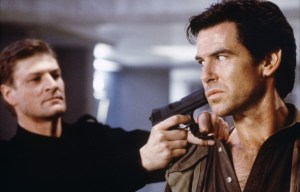
 quite wealthy now with the royalties from her books; she buys Hill Top Farm in the Lake District, from her old friend, William Heelis. Slowly, Beatrix comes back to life. She draws again and has new stories buzzing about. She reconnects with William, and they share the notion that the landscape of the Lake District needs preserved, farms should be kept farming, not bought out by developers.
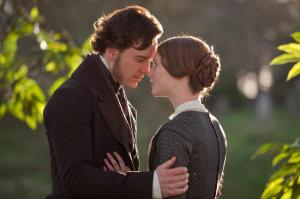 happiness?” He tucks a small flower in her hair. Later, news comes that Jane’s cousin has committed suicide and her aunt requests she return home. Jane acquiesces, only for her aunt to reveal that she lied to Jane’s other uncle when he inquired of her whereabouts, wishing to bequeath his estate. Jane returns to Thornfield Hall in good spirits, though she is greeted by the rumor of Rochester’s engagement to Miss Ingram. She informs him she will seek a job elsewhere. She and Rochester share a confusing conversation about their souls before Rochester asks her plainly to be his wife. The sun shines brightly and the couple are happy.
 invite her to accompany them to the Peak District (which seems absolutely stunning). Elizabeth attempts to persuade her father to not let Lydia go or else she will become the most determined flirt. Mr. Bennett simply wants peace and feels that Lydia is too poor and insignificant to get into too much trouble. Elizabeth and her relatives break down near Pemberly (where Mr. Darcy lives) and decide to visit. Elizabeth wanders and discovers Georgiana playing, and Mr. Darcy. She flees, but Darcy follows. He then calls at their lodgings and invites them over the following day. Georgiana is a cheerful young lady and is determined to be friends with Elizabeth; it is clear Darcy dearly loves his sister. Their lovely day ends in despair when news arrives that Lydia has run off with Mr. Wickham. Darcy feels it is his fault for not outing Wickham sooner; Elizabeth feels at fault for not sharing her knowledge with her family. The men of the family set out after Lydia. News returns home that Wickham will marry Lydia for a pittance.
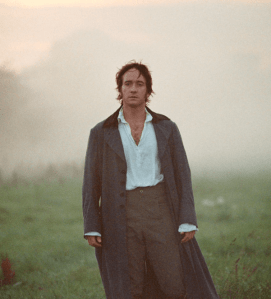 She takes another early morning walk and meets Mr. Darcy in the mist (an utterly breathtaking scene). She attempts to make amends, for judging him so harshly. Darcy tells her, she must know, it was all for her. His affections have not changed; she has bewitched him body and soul [another line I desire in my own proposal]…”I love, I love, I love you and never wished to be parted” (and this is why we love Jane Austen). Elizabeth gently kisses his hands and their foreheads meet as the sun rises. They return to the Bennett household to get permission from Mr. Bennett. He is confused; they all thought she didn’t like him. Elizabeth tells her father she was utterly wrong about him; they are so similar, and so stubborn. In short, she loves him. She also explains how Mr. Darcy has already helped their family, but he would not want Mr. Bennett to respond.
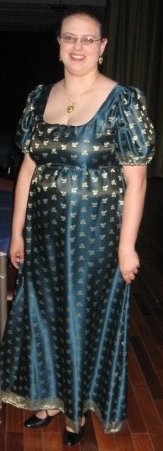 An added treat: this is me in a Jane Austen inspired gown that I wore for Halloween one year at college; made by my talented mother (I did not inherit that talent). I still have the dress.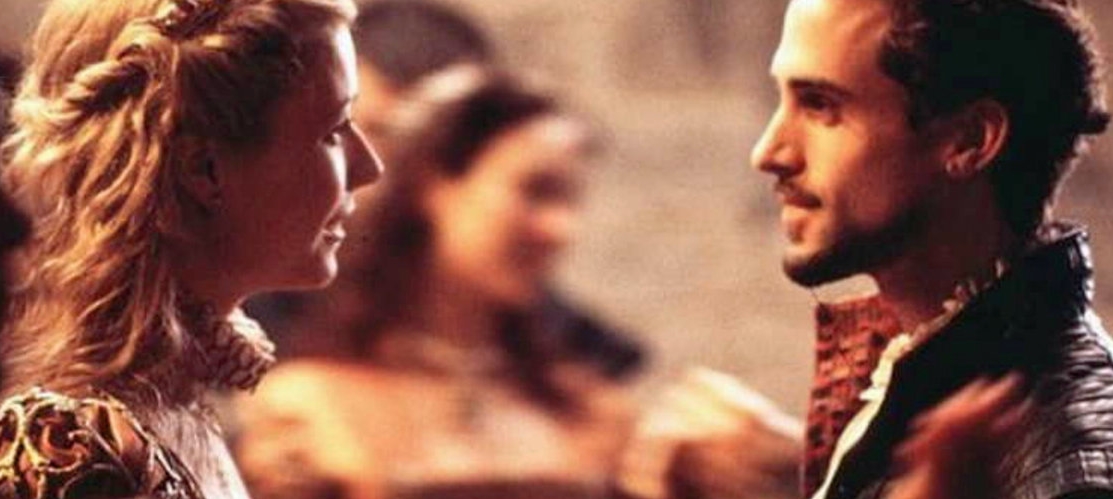
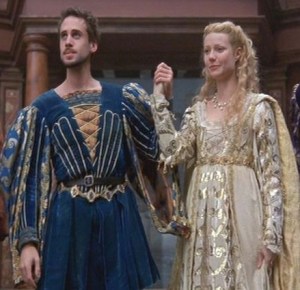 It is a wonderful performance. The whole audience is in tears by the end. The standing ovation at the end is interrupted by the Master of Revels, again stating that Juliet is a woman. (Most everyone can see that). “Have a care with my name, you’ll wear it out,” Queen Elizabeth states from the audience. She takes in Juliet and judges the mistake an honest one. “I know something of a woman in a man’s profession. Yes, by God, I do know about that.” She calls out Wessex on the wager; Romeo and Juliet accurately depicted true love. As Queen, none can contest her word. She tells Viola quietly to say her farewells, she is still bound in matrimony to Wessex and must accompany him. And she wants a new play, for Twelfth Night, from Shakespeare. Something happier. It is a sad parting between Shakespeare and Viola, but she remains his muse for his next play, involving a shipwreck and a woman masquerading as a man.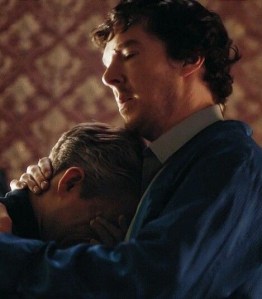



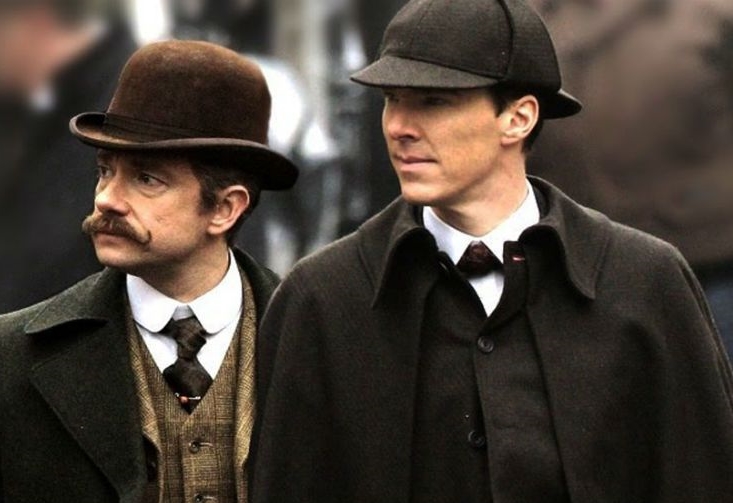
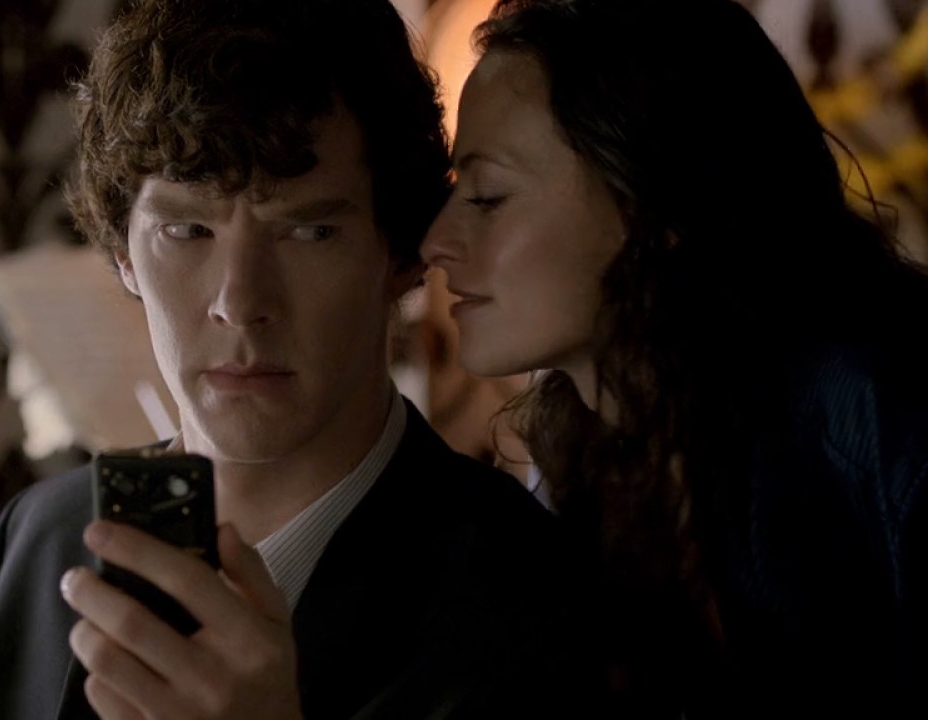
 identity, but the insane man shoots himself in the head. Now Sherlock has no choice. John has arrived on scene; Sherlock makes him stay back. John calls his phone. Sherlock claims he has lied to John the whole time; John does not believe him. Sherlock jumps. John rushes to him, but is first hit by a bicyclist, and then the people won’t let him near Sherlock.
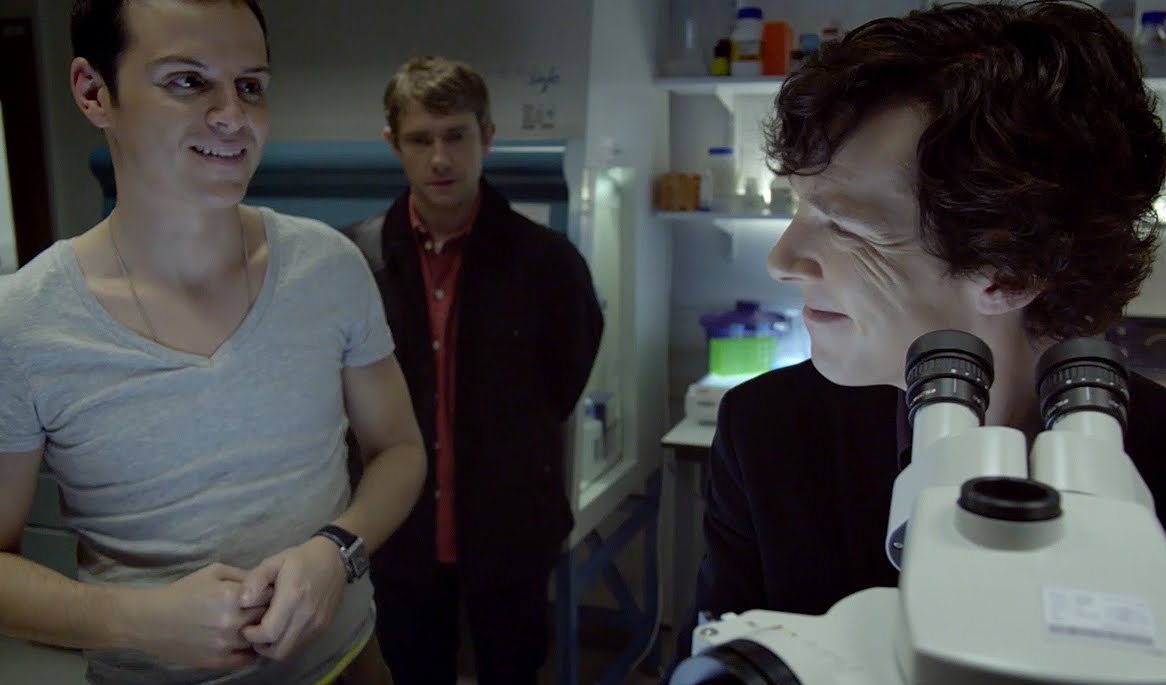
 Dreamer in the Mirror