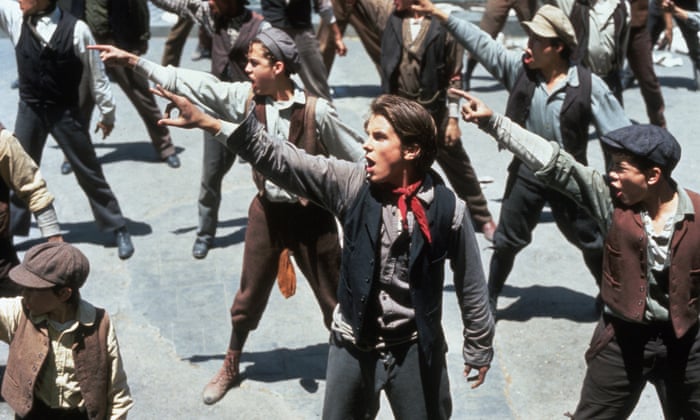
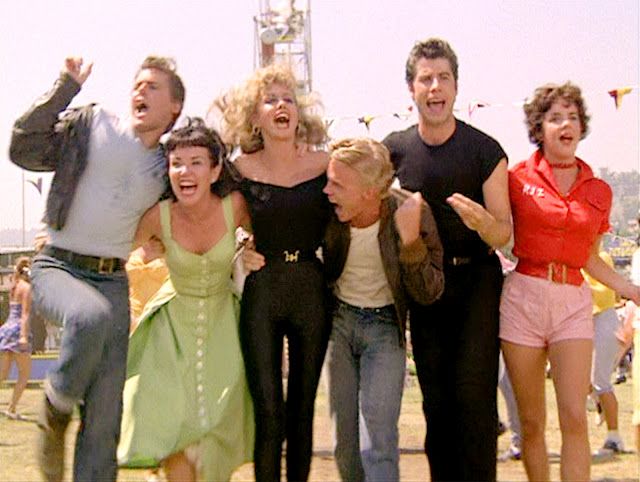
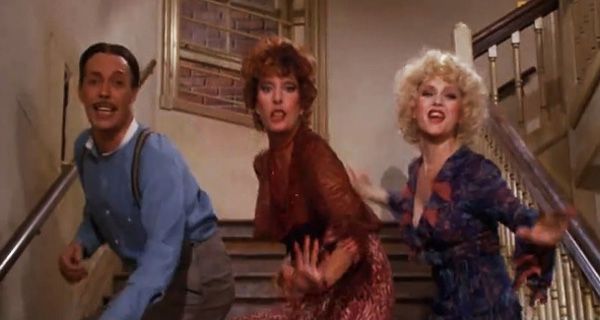
Try saying “babbling, bumbling band of baboons” five times fast

Goblet of Fire

This films brings further recognizable names to the cast; David Tennant (the Tenth Doctor, voices Scrooge McDuck in the updated DuckTales cartoon, and voices Spitelout [Snotlout’s father] in the How to Train Your Dragon series and currently stars opposite Michael Sheen in Good Omens [no, I have not watched it yet]) as Barty Crouch Jr, Robert Pattinson (before he starred as Edward Cullen in Twilight) as Cedric Diggory, Brenan Gleeson [he’s father to Domhnall Gleeson, who we will see in later films as Bill Weasley] as Alastor “Mad-Eye” Moody, Miranda Richardson (she’s appeared in Young Victoria, was the queen in the first Prince and Me movie, Madam Giry in Phantom of the Opera and Queen Mab/Lady of the Lake in Merlin [with Sam Neill and Helena Bonham Carter]) as Rita Skeeter, and Ralph Fiennes (the new M in James Bond, the Duke in The Duchess, and voiced Rameses in Prince of Egypt) as Lord Voldemort.

This is one of the first books that I awaited the midnight release of the novel; I believe my mother pre-ordered it.  We drove to the bookstore to get it and when we got home, I spent the next day and a half reading it.  And was good for nothing else.  When the movie came out, it also had a midnight release that I attended with one of my best friends.  The story opens on the Riddle House, which is very creepy, partly due to something strange and horrible that happened fifty years prior, when the maid found the three Riddles dead.  Now, they were unpopular and rude, and their son, Tom was the worst.  But there wasn’t a mark on their bodies, so the police couldn’t convict anyone, namely the gardener, Frank Bryce, of the crime.  Now, Frank ventures up to the house in the middle of the night, seeing lights on.  He comes across intruders, who speak of “Wormtail,” “Quidditch World Cup,” and “Muggles.”  Wormtail is arguing that something can be “done without Harry Potter.”  His Lord responds, “I have my reasons for using the boy…and I will use no other.  I have waited thirteen years.  A few more months will make no difference.  As for the protection surrounding the boy, I believe my plan will be effective (pg. 10).”  “One more death and our path to Harry Potter is clear (pg.10).”  A gigantic snake slithers into the room, which in the movie also contains Barty Crouch Jr, and Lord Voldemort is informed that Frank is outside the door.  He calls the old Muggle in and soon the man is dead.  “Two hundred miles away, the boy called Harry Potter woke with a start (pg. 15).” 

We know that this is Voldemort and Wormtail planning Harry’s death and when Harry wakes his scar is burning.  He’s understandably a bit upset and ponders who can speak to.  The Dursleys are out.  He debates if he should mention it to his friends, but dismisses the idea.  He needs someone like a parent; “an adult wizard whose advice he could ask without feeling stupid, someone who cared about him, who had experience with Dark Magic (pg. 22).”  The answer is simple and obvious: Sirius.  He can be forgiven for not instantly thinking of his godfather, since he didn’t even know he existed until two months prior and is still on the run.  Which made it “doubly hard to return to the Dursleys knowing that he had so nearly escaped them for ever (pg. 23).”

Don’t ask why, but I remembered that Harry hid snacks in his room in the book, after Dudley got placed on a diet, and all of Harry’s friends send food to ensure he didn’t starve.  Harry is then invited by the Weasleys to attend the Quidditch World Cup.  Molly sent a well-intention letter through the Muggle post, but the Dursleys did not appreciate the extra stamps or her familiar tone.  Ron sends a note with his owl, and Harry manages to convince the Dursleys to allow him to attend.  It was a battle for Vernon, between his two most fundamental instincts, to make Harry happy, which he has struggled against for thirteen years, and getting rid of Harry two weeks early and he hates having Harry in the house (pg. 31).  Mentioning Sirius helps sway them.  Arthur arrives, via the fireplace (which the Dursleys boarded up after the mass of acceptance letters arrived four years previously), with Ron and the twins.  The very brief visit does not end well when Dudley tries one of the magical treats that the twins dropped, on purpose.  This is all left out of the movie; Harry wakes at the Burrow

At the Burrow, Harry meets the eldest two Weasley boys; Bill and Charlie.  Bill works for Gringotts, but looks extremely cool, and Charlie works in Romania with dragons (they do not appear in the movie).  The twins are working on Weasleys Wizarding Wheezes, a joke shop, though Molly does not approve.  The Wizarding World receives some worldbuilding [which I take note of as an aspiring fantasy author] and we learn about Portkeys, Apparation, and other wizarding families, along with formally meeting Amos and Cedric Diggory.  The Weasleys, along with Harry and Hermione, sleep in a tent that is larger on the inside.  In the film, Harry remarks, “I love magic.”  They are guests of the minister in his box, along with the Malfoys, and meet Winky, Barty Crouch’s house-elf.  Percy works for Mr. Crouch at the Ministry.  And Harry watches his first professional Quidditch match; Ireland, vs Bulgaria, with their star Seeker, Viktor Krum.  Fred and George’s bet is correct, that Ireland wins the match, but Krum catches the Snitch.  The Ireland has superior Chasers and run the score up, so Krum catches the Snitch before they’re completely embarrassed.  Ron is impressed by Krum.  In the film, they are not in the box, but rather the top level of the stadium, nor do they meet Winky.  She’s cut completely from the film, as is Ludo Bagman (which honestly makes sense; he’s a side plot that doesn’t add much to the main plot).

The evening festivities are interrupted by screams and people fleeing with Death Eaters, followers of Voldemort, show up and Muggle bait, and cause mayhem.  Arthur goes to help the Ministry and sends the kids into the forest.  Harry, Ron, and Hermione get cut off from the rest and Harry loses his wand.  In the film, Harry stumbles and gets knocked out in the chaos of people fleeing.  Later, they hear a spell cast and a skull appears in the sky.  The Ministry arrives quickly and discovers the trio at the scene, but they can’t find who cast it.  Then, they come across Winky.  Hermione is appalled when Crouch dismisses the elf.  Arhtur fills Harry in on the meaning of what went on.  The sign in the sky was the Dark Mark, and it was cast wherever Voldemort and his followers killed and it spread terror throughout the wizarding community.

The younger kids are sent back to Hogwarts.  Hermione learns that the largest number of house elves in any dwelling in Britain work at Hogwarts, so she starts a campaign to get them wages and such, ignoring that the elves seem happy with their lot.  Dumbledore introduces a new Defense Against the Dark Arts professor, Alastor Moody, better known as “Mad-Eye” Moody, and announces that Hogwarts will host the Triwizard Tournament.  It is a friendly competition between the three largest European schools of wizardry; Hogwarts, Beauxbatons, and Durmstrang (which have already been mentioned in the story by other characters; further worldbuilding).  It is also a way to establish ties between young witches and wizards of different nations; each school will have a champion chosen to compete.  The delegations will arrive at Halloween.  The prize is the Triwizard Cup, glory for the school, and a thousand Galleons.  This year, they are putting in place an age restriction; one must be seventeen in order to compete.  The twins are upset; they’re only a few months away from their birthday.

Moody makes an impression on Hogwarts.  He turns Malfoy into a ferret for attacking Harry, to later be told off by Professor McGonagall that teachers are not supposed to use Transfiguration as punishment.  Then he shows the fourth-year students the three Unforgivable Curses, which the Ministry of Magic would disapprove of.  The first is the Imperius Curse, which allows a wizard or witch total control of their victim.  The second is the Cruciatous Curse, or pain curse.  Neville is shown to react badly to seeing this in the movie, Hermione calls out to Professor Moody to stop it.  And the third is the killing curse, “Avada Kedavara.”  Only one person is known to have survived the last curse, Harry. Moody promotes constant vigilance.  Ron remarks in the movie that Moody is brilliant; a bit demented and terrifying to be in the same room as him.  Their conversation trails off when they come across Neville.  Moody comes along and leads the other boy to his office.

Harry gets a response from Sirius; he’s flying north immediately.  This news is the latest in a series of strange rumors, and Dumbledore is reading signs.  Harry worries his godfather will be caught.  He tries to tell Sirius not to come, but Sirius persists.  Harry discovers in Defenses Against the Dark Arts class that he can throw off the Imperius Curse.

Durmstrang and their headmaster, Igor Karkaroff arrives in a ship on the Black Lake and Beauxbatons arrives in a flying carriage with their headmistress, Madame Olympe Maxime.  There is a welcoming feast and the tournament is explained further.  There will be three tasks that test the champions’ magical prowess, their daring, powers of deduction, and ability to cope with danger.  The Goblet of Fire is brought out; it will be the impartial selector.  Students are warned again that entering into the tournament is a binding magical contract.  Fred and George attempt to beat Dumbledore’s age line, and get beards for their troubles.

In the film, the schools are shown arriving at the start of the semester, not a couple months in.  Beauxbatons is shown as all-female and Durmstrang is shown as all-male (I do like the music that plays behind their entrance), and they show off a bit of magic with their entrances.

Ultimately, Viktor Krum is chosen as the Durmstrang champion, Fleur Delacour from Beauxbatons, and Cedric Diggory from Hogwarts.  However, the Goblet of Fire spits out another name: Harry Potter.  He tries to hide in the film when his name is called, but Hermione pushes him forward.  And everyone calls out the difference between the book and the movie with how Dumbledore asks Harry if he put his name in the Goblet of Fire.  In the book, it is stated he does so calmly.  In the movie, he’s more aggressive, but honestly, it’s not as crazy as we remember it.  It’s shown to be born of worry and he’s also trying to get to Harry before the other headmasters arrive.  Harry’s pushed back into some items; but the scene doesn’t jar us out of watching to story progress.  Harry did not put his name in the Goblet of Fire, he did not ask anyone else to put his name in and in both cases, Dumbledore readily believes him.  But Crouch persists that it is a binding contract; Harry will have to compete.  It is Moody in the film that points out whoever is behind it managed to hoodwink a very powerful magical artifact.  Harry and the other champions learn that they will not be told what the first task will entail.  It is to test their daring and courage in the face of the unknown.  They will be armed only with their wand and they are not permitted to ask or accept any help.

There is an added scene in the film with McGonagall, Snape, and Moody in Dumbledore’s office.  Minerva tells Dumbledore “don’t let Potter compete.”  First the Dark Mark, now this.  But Dumbledore abides by Crouch’s rules.  Minerva shoots back, when has that ever stopped Dumbledore before?  Snape agrees that this can be no mere coincidence, but they should let events unfold for the time being.  McGonagall disapproves of offering Harry as bait; he’s a boy, not a piece of meat.  Albus agrees with Severus, then asks Alastor to keep an eye on Harry.

The school turns on Harry, thinking he just wanted glory and to steal the spotlight from Cedric.  Worse, Ron doesn’t even believe Harry.  This is a major fight between the friends.  Harry doesn’t want enteral glory.  (And the movie audience is a bit shocked, at least the younger members of the audience, to hear Ron tell Harry to “Piss off.”)   Luckily, Hermione stands beside Harry and urges him to write Sirius.  Malfoy and Harry get into an argument and cast spells at each other, hitting Goyle and Hermione.  Hermione has to go to the hospital wing to have her teeth put to right (this bit does not appear in the film).

We’re introduced to Rita Skeeter as a reporter for the Daily Prophet at the Weighing of the Wands, and she dedicates most of her article to made-up stuff about Harry, courtesy of her Quick Quotes Quill, which does nothing to endear him to his schoolmates.  This must all stem from his traumatic past and may be a cry for attention, or a death wish.  In the film, when Harry remarks that they are sitting in a broom cupboard, Rita bites back that he should feel right at home [ok, low blow lady.]  Hagrid wants to meet up with Harry one evening, though in the film, this message passes through Ron to Hermione to Harry, amidst other people; it’s very confusing, and Hermione does not like being treated as an owl just because the boys refuse to speak to each other.  Hagrid brings Madame Maxime along, Harry hidden under his cloak…and shows them dragons that have been brought in for the first task, still insisting they are misunderstood creatures.  Harry races back to meet with Sirius in the fireplace of the Gryffindor Tower.  He’s interrupted by Ron and they have another argument.  Harry also decides to pull Cedric aside and tell him about the dragons. 
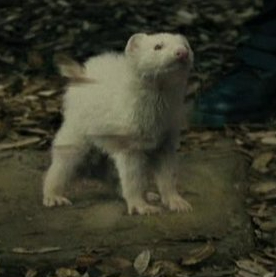
It’s here in the film that Draco approaches Harry, saying his father and he have a bet on Harry not lasting long in the tournament.  Harry retorts “I don’t give a damn what your father thinks.  He’s vile and cruel, and you’re just pathetic.”  When Draco pulls his wand, Moody turns him into a ferret, and yes, it’s hilarious.  McGonagall doesn’t approve; “What are you doing?”  “Teaching.”  “Is that a student?”  “Technically, it’s a ferret.”   She returns Draco to his usual self.  Draco pulls out the line “my father will hear about this!” but that doesn’t faze Moody.  McGonagall steps in again and reprimands Moody for using Transfiguration.  Harry and everyone else laughs, even Cedric and his buddies.  Moody pulls Harry aside and advises him to play to his strengths in the competition, and use a simple spell to get what he needs.  (In the film, he more directly pulls the answer from Harry to fly.)  Harry turns to Hermione to teach him the Summoning Charm.

Harry summons his Firebolt to fly against the Hungarian Horntail and capture a golden egg (Hermione shouts “your wand, Harry!  Your wand!” In the movie).  There’s more to the flight in the movie, with the Hungarian Horntail breaking free from its chain and taking the confrontation to the rooftops of the castle.  Harry takes a tumble near one of the bridges and the dragon falls, but he manages to make it back to the ring and get the egg.  Ron finally comes around that someone must have put Harry’s name in the Goblet.  The boys make up, and the rest of the school, after seeing what Harry had to face, finally side with Harry.  Our protagonist is happy with Ron be his side, having survived the first task and he’s got three whole months before the second.  When he goes to solve the clue in the egg, he finds out that it screeches.

On a fun side note, Hermione finds her way into the kitchen and shows Harry that Dobby is now working at Hogwarts.  He’s a free elf and has Dumbledore paying him one Galleon a week and he has a one day off a month, and he’s happy.  Unlike Winky, who misses Mr. Crouch.  Again, none of this appears in the film.

McGonagall next announces the Yule Ball, where everyone can socialize with their foreign guests.  Dress robes will be required and the champions and their partners are to open the ball with dancing.  She even instructs the Gryffindors in the movies, stating that the Yule Ball is an evening of “well-mannered frivolity.”  “The House of Godric Gryffindor has commanded the respect of the wizard world for nearly ten centuries.  I will not have you, in the course of a single evening, besmirching that name by behaving like a babbling, bumbling band of baboons.”  (Maggie Smith is great!)  She calls Ron up to demonstrate and he’s nervous about putting his hand on her waist.  Neville is the first lad to step forward to learn and we see him practicing later.
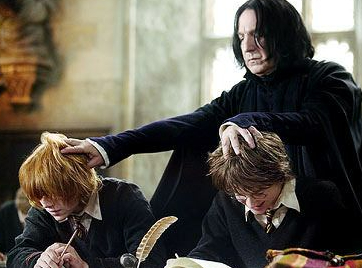
Harry and Ron struggle to ask a girl to the ball, bemoaning that they travel in packs.  Though Harry gets asked by a few and is shocked and nervously says no.  In the film, he remarks he’d rather face the dragon again.  There’s also an incredible scene with Alan Rickman in the movie, taking place in study hall, where the boys are remarking their lack of dates.  Snape picks on duo, ignoring the fact that others are talking, smacking Ron and Harry over the head with a notebook, then forcing their heads down.  Actually, he’d really like to ask out Cho Chang, but hasn’t plucked up the courage.  When he finally manages to talk to Cho, he finds out that she’s already doing with Cedric (which changes Harry’s opinion on his schoolmate a little).  She’s very kind in the film, admitting that she is truthfully sorry she can’t go with Harry since she’s already agreed to someone else; she doesn’t who at this point in the film.  Ron attempts to ask Fleur Delacour and finds out that Neville tried to ask out Hermione, but she’s already going with someone, though Ron does not believe it.  He even asks Hermione and is told the same thing.  “Just because it’s taken you three years to notice Ron, doesn’t mean no one else has spotted I’m a girl (pg. 400)!”  And Ron still doesn’t believe her.  Ginny ends up going with Neville, so Harry finds Parvati Patil, who arranges for her twin sister, Padma, to go with Ron.  Harry feels that the ball is more trouble than it’s worth.

The night of the Yule Ball, Roger Davis accompanies Fleur, Cedric takes Cho, and Krum takes Hermione.  Ron is not pleased.  Hermione looks lovely in her gown (yes, it’s pink compared to blue in the film, but still pretty.  I had my hair arranged like hers from prom.)  Harry and Ron are rude and ignore their dates, who gleefully hang out with Beauxbatons boys.  Neville impresses everyone with his waltzing.  Harry is not great (admittedly, Daniel only had a few days to rehearse that bit compared to everyone else, but Harry isn’t supposed to be good anyway).  And there is rock’n’roll in the wizarding world with Do the Hippogriff.  In the book, the two boys wander outside and notice Karkaroff speaking to Snape, and Hagrid speaking to Madame Maxime and overhear him mention he’s a half-giant.  The night ends with another argument between Ron and Hermione: “next time there’s a ball, ask me before someone else does and not as a last resort (pg.432)!”  Hermione had been enjoying a nice evening with Krum, and now Ron has spoiled everything.  She’s left crying on the stairs in the movie.  Harry’s night doesn’t end well either, with another dream about the graveyard.

When classes start back up, another Skeeter article runs, revealing Hagrid as a half-giant and calling him out for his dangerous classes.  Next time he sees Skeeter, he shouts at her, and Hermione manages to get riled up.  Hermione’s worried about Harry and the next task, remarking that the “tasks are designed to test you, in the most brutal way, they’re almost cruel.”

Cedric repays Harry’s tip on the dragon by suggesting he take a bath with his egg in the prefect’s bathroom.  Harry finally sets his pride aside and does so, only to be interrupted by Moaning Myrtle.  Who does suggest he put the egg in the water, and flirt with him. He finally hears the clue and figures out that the voices that cannot be heard above ground means merepeople: “Come seek us where our voices sound.  We cannot sing above the ground.  An hour long you’ll have to look.  To recover what we took.”  On his way back to his dorm, Harry stumbles across Moody and Snape.  Moody manages to help Harry, though discovers the map and asks to borrow it.  Harry then has to find a way to breathe underwater.  Dobby comes through at the last minute with gillyweed.  Again, since Dobby is cut out of the film, Neville is brought in to help Harry.  Each champion must retrieve someone from the bottom of the Black Lake within an hour.  Ron is Harry’s hostage, Hermione is Krum’s, Cho for Cedric, and Fleur’s little sister.  Harry actually is the first to get to the hostages and wants to make sure everyone is rescued.  Krum, who partially transfigured into a shark, and Cedric, who used a Bubblehead Charm, arrive and leave.  When Fleur does not, Harry grabs the young girl and kicks to the surface with both hostages.  The judges score him well for his actions.  Harry earns the respect of Fleur for saving her sister, and even Ron gets a kiss since he helped.  The third task will take place at the end of June.

Another Skeeter article runs; this time calling Hermione out for being associated with both Harry and Viktor Krum.  Sirius has arrived in Hogsmeade and is hiding out.  Harry, Ron, and Hermione go to visit him.  Sirius tells Harry he is fulfilling his duty as godfather and keeping an eye on him.  He passes himself off as a loveable stray, Snuffles.  He’s not fond of Crouch and says “if you want to know what a man’s like, take a good look at how he treats his inferiors, not his equals (pg. 525).”  Crouch was the one who sent Sirius to Azkaban without a trial.  He fought violence with violence and authorized the use of Unforgivable Curses against suspects.  “I would say he became as ruthless and cruel as many on the Dark Side (pg. 527).”  Crouch’s rise to fame was derailed when his son, Barty Crouch Jr, was found with Death Eaters.  He sent his son to Azkaban, where the boy died.  They already know Karkaroff was a Death Eater; as for Snape, he was part of a group of Slytherins who turned out to be Death Eaters, though Sirius never heard of Snape being accused.  Sadly, this face-to-face meeting was cut from the film.  The only time that Sirius actually appears is as a face in the fireplace.

It’s a good thing there won’t be a Quidditch Cup this year, because they’ve taken over the field to grow a maze for the third task, which will be filled with obstacles for the champions.  As the champions walk back to the castle, Krum pulls Harry aside to ask about Hermione.  Harry is quick to assure the Bulgarian that he and Hermione are only friends.  Then they’re set on by Crouch, who is very confused, managing to get across that he needs to see Dumbledore, something about Voldemort and Harry is his fault.  When Harry gets back, Krum has been attacked and Moody has to go searching for Crouch.  This happens a bit differently in the movie, but the same result.  Harry now dreams of Voldemort and Wormtail in Divination class.  He decides it’s time to go to Dumbledore, where he’s instructed to wait in Dumbledore’s office.  He spies a stone basin with silver light.  He prods the surface with his wand (magic has taught him that much at least), and falls into a memory, where the younger Dumbledore can’t hear him.  There’s a trial, where Karkaroff names other Death Eaters, including Snape, whom Dumbledore has already testified turn spy for the Light Side.  None of the other names do any good.  Four more Death Eaters are led in, charged with torturing Frank and Alice Longbottom (Neville’s parents).  One is Crouch’s son, whom shouts for his father, but he’s sent to Azkaban. 
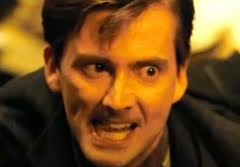
The trials are condensed into one in the film, with Karkaroff naming Barty Crouch Jr as a Death Eater.  The young man is in attendance and is taken into custody.  He’s already showing his madness here, yelling at his father, with a telltale flicker of his tongue.

Dumbledore pulls Harry out and they talk about the memories, warning “curiosity is not a crime, Harry.  But you should exercise caution.”  Harry explains that his scar has been hurting and Dumbledore theorizes that it hurts when Voldemort is near or feeling particularly hateful.  The two are connected by the curse that failed.  Leaving, Harry thinks that “it all came back to Voldemort…he was the one who had torn those families apart, who had ruined all these lives (pg. 607).”  In the film, Harry asks Dumbledore whether his dreams are really happening.  The old wizard’s response is to tell the teen, it is unwise to linger on them and best to cast them aside (not helpful).

In preparation for the third task, the trio practice hexes (even with McGonagall’s permission after she gets tired of walking in on them).  Sirius sends along guidance; his primary concern is keeping Harry safe.  Voldemort can’t touch him while under Dumbledore’s protection.

The champions are informed that professors will be patrolling the outside of the maze (with a fun little Hogwarts March tune), should any run into difficulty and wish to be recues, they are to send up red sparks.  Once in the maze, the lack of obstacles unnerves Harry.  He manages to save Cedric from Krum, then runs into a sphinx [which I was disappointed was not in the movie.  And the phrasing makes me wonder if it was influenced at all by Tolkien’s cave scene].  Harry saves Cedric from a spider [luckily not in the film; I am not fond of spiders.  Instead, the walls of the maze are more alive and will try to crush the champions], though Cedric is closer to the Cup.  Cedric argues that Harry should take the Cup; he’s saved him twice in the maze.  Harry compromises; they should both take it; it’ll still be a Hogwarts win.

The boys find out upon touching the Cup that it’s a Portkey and they’re brought to a graveyard.  Harry’s scar explodes with pain; “it was agony such as he had never felt in all his life (pg. 637).”  A voice calls out “kill the spare” and Cedric dies in a flash of green.  Harry is tied to Tom Riddle’s headstone by Wormtail.  There’s also a cauldron, in to which Wormtail dumps a diminutive form.  Then he incants, “bone of the father, unknowingly given, you will renew your son!  Flesh of the servant, willingly given, you will revive your master.  Blood of the enemy, forcibly taken, you will resurrect your foe.”  The flesh of the servant in Wormtail’s hand, and the blood of the enemy is taken from Harry. 

A man emerges with a “face that had haunted his [Harry’s] nightmares for three years.  Whiter than a skull, with wide, livid scarlet eyes and a nose that was flat as a snake’s with slits for nostrils…Lord Voldemort had risen again (pg. 643).”  [Ralph’s blue eyes are used in the film so his performance would not be impeded, and it was felt that the blue eyes actually made Voldemort creepier.]  Voldemort touches Wormtail’s tattoo of the Dark Mark and Harry’s scar erupts in pain again.  Death Eaters arrive.  Voldemort ponders aloud how many will be brave enough to return.  How many will be foolish enough to stay away.  To his followers, he asks why none of them tried to seek their Lord out.  Perhaps they believed that Dumbledore’s power was greater.  He wants thirteen years’ worth of repayment from them.  He rewards Wormtail with a silver hand.  He points to an empty spot, where three Death Eaters are missing; one who is too cowardly to return; he will pay.  One has left forever and will thus be killed, and one is his most faithful servant and has already reentered service to his lord.

With Harry’s blood in his body, it now negates the protection Lily’s sacrifice had on Harry.  Voldemort can touch him now.  Again, Harry’s scar feels like it will split in pain.  Voldemort mocks those who believed this boy ever truly defeated him.  “I, who have gone further than anybody along the path that leads to immortality.  You know my goal – to conquer death.  And now, I was tested, and it appeared that one or more of my experiments had worked…for I had not been killed (pg. 653).”  In his resurrection ritual, he wanted Harry’s blood, the “blood of the one who had stripped me of power thirteen years ago…for the lingering protection his mother once gave him would then reside in my veins too (pg. 657).”  Harry was better protected than even he knows.  But Voldemort’s faithful servant entered Harry into the Triwizard Tournament.

Now he uses Crucio on Harry.  Further pain than Harry’s ever felt.  Voldemort continues speaking; Harry escaped the first time by luck and now the Dark Lord will prove his power by killing Harry.  He will be allowed to fight, so no doubt will be left on who is stronger.  “Bow to death, Harry,” he commands.  “Harry did not bow.  He was not going to let Voldemort play with him before killing him…he was not going to give him that satisfaction (pg.660).”

The speech is changed a little in movie, but it’s just as good: “I’m going to kill you, Harry Potter.  I’m going to destroy you.  After tonight, noe one will ever again question my powers.  After tonight, if they speak of you, they’ll speak only of how you begged for death.  And I, being a merciful Lord, obliged.”  “I want you to look at me when I kill you!  I want to see the light leave your eyes!”

“And now you face me, like a man…straight-backed and proud, the way your father died (pg. 660),” Voldemort taunts Harry.  He shoots Crucio and Imperio at Harry, but the teen doges the next spell, with reflexes born of Quidditch training.  Harry finally shoots Expelliarmus against Voldemort’s Avada Kedavara.  Their red and green beams meet and connects.  Harry instinctively knows he mustn’t break the connection.  A bead of light floats between the two wands and Harry manages to force to Voldemort’s.  Cedric’s form emerges from the wand, then an old man, finally Lily and James Potter.  They can give Harry some time in order to get to the Portkey, and Cedric asks Harry to take his body back.  At their command, Harry breaks away and runs, summoning the Cup to him, and grabs Cedric.

[I almost hate to admit it, but I like the…it’s not quite banter, because there’s no humor, but Voldemort is well written in this spot.  Yes, he’s mocking Harry and he’s treating Harry like a teenager; he refers to him as a boy occasionally, but the dialogue would also work against an adult.]

When he lands in front of the maze at Hogwarts, he manages to inform Dumbledore that Voldemort is back, though he won’t let go of Cedric.  Dumbledore manages to pick Harry up, there is screaming erupting in the stands, and sobs.  People talk over each other and Harry is rather out of it.  In the movie, it’s more heart-rending.  Harry’s sobbing while he tells Dumbledore “he’s back, Voldemort’s back,” and he couldn’t leave Cedric, not there.  Dumbledore calms Harry, “you’re both home.”  Fleur screams when she sees Cedric’s dead and Fudge tells McGonagall and Snape to keep the crowd back.  Snape even steps to Dumbledore’s side.  Amos makes his way to the front and sobs when he sees it’s his son, his boy.  Arthur Weasley is behind him and Ron and Hermione start to make their way forward to see Harry.  And Harry hasn’t stopped crying.

Moody takes Harry back to the castle and Harry starts explaining.  Moody knows there’s a Death Eater at Hogwarts and they put Harry’s name in the Goblet, though it wasn’t Karkaroff.  He fled.  Then, in his office, Moody admits that he was the one who did it and asks Harry if Voldemort forgave the Death Eaters who didn’t try to find the Dark Lord.  It was Moody who cast the Dark Mark at the Quidditch World Cup and he hates the Death Eaters who walked free; he wants them punished and tortured.  During the Tournament, Moody frightened off every person who might hurt or prevent Harry from winning, though he had to be careful not to tip his hand.  He grouses he had to contend with Harry’s stupidity, such as planting the book on underwater plants with Longbottom early in the year.  Harry has a “steak of pride and independence that might have ruined it all (pg. 677).”  In the maze, Moody stunned Fleur and put the Imperius Curse on Krum to finish off Cedric.

None of this is making sense to Harry.  Moody continues; the Dark Lord will reward him when he kills Harry.  He will be honored beyond all other Death Eaters, Voldemort’s closest supporter, closer than a son.  He and the Dark Lord have much in common; disappointing fathers that they were named for, and they both had to kill their fathers to ensure the rise of the Dark Order.  At this point, Moody is stunned by Dumbledore, alongside Snape and McGonagall.  Harry now understands why Dumbledore is the only wizard Voldemort fears.  He looks more terrible than ever, with cold fury in every line of his ancient face.  “A sense of power radiated from Dumbledore as though he were giving off burning heat (pg. 679).”

Dumbledore has Harry stay, so he will understand, which is the first step to acceptance, “and only with acceptance can there be recovery (pg.680).”  Harry “needs to know who has put him through the ordeal he has suffered tonight, and why (pg. 680).”  [This is when we still like and trust Dumbledore.]  This man before Harry is not Alastor Moody; Harry has never known the real Moody.  The real Moody “would not have removed you from my sight after what happened tonight (pg. 680).”  [It’s good to know that there are good adults who would have looked after Harry in a traumatic situation.]  With that action, Dumbledore knew something was wrong and followed ‘Moody.’  The headmaster has Snape use his truth potion (Veritaserum) on the man; he also sends McGonagall to fetch a black dock from Hagrid’s and take it to the headmaster’s office.  In the film, the cut on Harry’s arm almost echoes the Dark Mark, though opposite arms, best seen when Dumbledore compares it to Crouch Jr’s tattoo.

Dumbledore continues his investigation; in the seventh compartment of the trunk is the real Alastor Moody.  The flask that the man has been carrying is filled with Polyjuice Potion; it’s a well-known fact that the real Alastor only drinks from his flask.  The imposter is really Barty Crouch Jr.  His mother saved him from Azkaban and died in his place, but his father kept him hidden away at home, concealed and controlled, with only Winky to care for him.  The secret got out to Bertha Jorkins, a Ministry employee, whom Crouch Sr put under a Memory Charm.  When she wandered across Voldemort’s path, he broke that Charm, got his information, then killed her [this whole bit was left out of the movie; again, it would have dragged the story to put in all the side plots].  Crouch Jr was actually at the Quidditch World Cup, in the box with Harry and the Weasleys, under an Invisibility Cloak alongside Winky.  He’d been growing stronger, fighting his father’s magical control, and saw the opportunity to steal a wizard’s wand – Harry’s.  When Crouch Jr heard the Death Eaters, the ones who had escaped Azkaban, he used the stolen wand to cast the Dark Mark.  When the Ministry sent stunners into the woods, he was caught and finding Winky at the scene, his father knew what happened.  Voldemort comes to the Crouch home, frees Jr and puts Sr under the Imperius Curse.  That is why Percy Weasley took on many of Crouch Sr’s responsibilities [also not seen in the movie].  Voldemort tasks Barty Crouch Jr as his servant at Hogwarts, impersonating Alastor Moody.  When Harry met Crouch Sr acting oddly, it was after the old man had escaped; Crouch Jr had been hiding out, and killed his father while Harry went for help, then circled back around as Moody and pretended to look for Crouch Sr.  It was also Crouch Jr who turned the Triwizard Cup into a Portkey.

Testimony over, Dumbledore takes Harry to his office, where Sirius is waiting.  Harry would rather not think about the memories he has of this night.  Dumbledore understands Harry’s feelings and if it would help to put them off in an enchanted sleep, he would do it.  But “numbing the pain for a while will make it worse when you finally feel it (pg. 695).”  Harry has already been brave beyond Dumbledore’s expectation; the old man is asking for a little more courage from the teen.  Harry recounts the events in the graveyard.  For a moment, when he mentions that his mother’s blood protection is over, Harry thinks he sees “a gleam of something like triumph in Dumbledore’s eyes (pg. 696).”  Dumbledore explains that when Harry’s and Voldemort’s wands connected, it was Priori Incantatem, along with the fact that their wands share a core, a tailfeather from Fawkes.  When a wand meets its brother, it will not work properly against each other when forced to battle.  One will force the other wand to regurgitate spells in reverse order.

Now, Dumbledore will take Harry to the hospital wing to get some peaceful sleep; Sirius may stay with him as Padfoot.  “You have shown bravery equal to those who died fighting Voldemort at the height of his powers.  You have shouldered a grown wizard’s burden and found yourself equal to it (pg. 699).”  Waiting for him in the hospital wing are the Weasleys and Hermione.  Dumbledore informs them not to ask Harry any questions that night.  Later, Harry is woken to angry voices.  Fudge refuses to believe that Voldemort is back and took care of Crouch Jr before he could testify again.  Fudge no longer believes Harry’s word, listening to Skeeter’s gossip that he’s mentally disturbed.  He fears the news will start a panic that will destabilize everything.  Dumbledore argues for the Minister to see sense; “you are blinded…by the love of the office you hold, Cornelius!  You place too much importance, and you always have done, on the so-called purity of blood!  You fail to recognize that it matters not what someone is born, but what they grow to be (pg. 708)!”  [And this is why we liked Rowling, until recently.]  If Fudge will take steps now, he will be remembered as brave and the greatest Minister of Magic.  “Fail to act – and history will remember you as the man who stepped aside and allowed Voldemort a second chance to destroy the world we have tried to rebuild (pg. 708)!”

In response, Fudge calls Dumbledore man and insane.  This is a parting of ways.  Snape even shows his Dark Mark, that it’s grown darker all year, but Fudge refuses to see reason.  He leaves.  Dumbledore asks Molly and Arthur for help.  Then he has Sirius resume his normal form and face Snape.  He will ask for a lack of open hostility between the two rivals; they are on the same side.  He tasks Sirius to gather Lupin and the old crowd.  Harry already misses his godfather’s presence by his side.  Snape in turn, is ready for what Dumbledore will asks.  He leaves.  Left alone with the Weasleys, Molly offers Harry a hug.  And the poor boy has no memory of being hugged like by a mother.

This is all left out of the film, sadly.

When Harry awakes again, he meets with Cedric’s parents, who do not blame Harry.  Harry tries offering them the winnings, but they won’t take it.  Harry doesn’t want it.  There is a memorial service for Cedric.  “Cedric Diggory was…exceptionally hard-working, infinitely fair-minded, and most importantly, a fierce, fierce friend.”  Dumbledore announces that Cedric was murdered by Voldemort; the Ministry of Magic does not want him to tell, but that would be an insult to Cedric’s memory.  He advocates, “in light of Lord Voldemort’s return, we are only as strong as we are united, as weak as we are divided.  Lord Voldemort’s gift for spreading discord and enmity is very great.  We can fight it only by showing an equally strong bond of friendship and trust (ph. 723).” 

The movie puts it: “while we may come from different places and speak in different tongues, our hearts beat as one” [which the world would do well to remember].  “In light of recent events, the bonds of friendship we made this year will be more important than ever.”  Remember that, and Cedric Diggory will not have died in vain.  And remember the young man that was brave, kind, honest, and true to the very end.  After the service, Dumbledore visits Harry in his dorm.  “O put you in terrible danger this year, Harry.  I’m sorry” [it’s nice he apologized.]  Harry does ask about seeing his parents, but Dumbledore doesn’t bring up the shared wand cores.  Instead, Dumbledore says “dark and difficult times lay ahead.  Soon we must all face the choice between what is right and what is easy.  But remember this.  You have friends here.  You are not alone.”

Krum asks Hermione to write to him.  Fleur and her sister kiss Ron farewell.  Ron asks “do you ever think we’ll just have a quiet year at Hogwarts?”  Both Hermione and Harry answer no.  “Oh well, what’s life without a few dragons?”

There’s some good news on the train ride home.  Rita Skeeter won’t be writing any more terrible articles for a while; Hermione figured out how she had been able to get private information.  She’s an unregistered Animagus; a beetle.  Hermione managed to catch her the night in the hospital wing and is keeping her in a jar.  Malfoy and his cronies try to start a fight, but the twins join the trio in hexing the Slytherins, then tossing them in another compartment.  Harry gives the twins his winnings as they exit the train, telling them to use it for their joke shop.  Oh, and maybe get Ron some new dress robes.  This is also left out of the film.

I have to admit, this book and movie were better than I remember them being.  There are some excellently written passages, and the movie dialogue is just as good.  Yes, the book drags on and the movie rightly cut side plots that didn’t really aid the main plot.  I mean, I don’t like the teen drama, but I also didn’t like teen drama when I was a teenager.  The plot has matured, alongside the characters.  Events and happenings are getting darker.

I will say, there is a fanfiction story that I highly recommend that is an alternate universe following the end of Prisoner of Azkaban and follows the plotline of Goblet of Fire.  It’s A Marauder’s Plan by CatsAreCool.  It is one of the best written Harry Potter fanfictions I’ve read, and my favorite thing is Sirius is in it way more.  So, I definitely recommend you read it (it’s one of those that you wish was actual canon).

Up Next: Order of the Phoenix
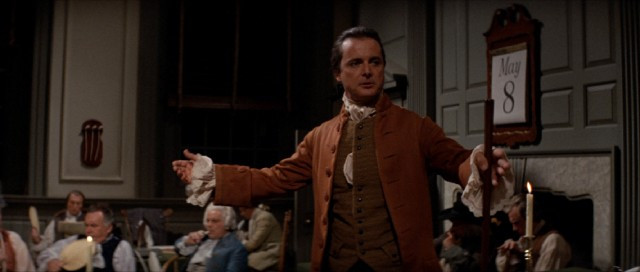
“Waiting for the chirp, chirp, chirp/ on this humid Monday morning/ in this Congressional incubator”

1776

An entire musical about creating the Declaration of Independence and most famously stars William Daniels (K.I.T.T. from the original Knightrider, and Mr. Feeney in Boy Meets World) as John Adams (yes, that is why the school is named John Adams and the schools in Girl Meets World are Quincy Adams and Abigail Adams).  He created the role on Broadway.  This musical did feature into a section of curriculum in my sophomore English class; but I was well familiar with the show before then; I was watching this in kindergarten.  I even found and read a published copy of the screenplay.  And Lin-Manuel Miranda does credit 1776 as a bit of inspiration for his smash hit of Hamilton.  I like to watch this film around the Fourth of July, for obvious reasons and I tend to listen to The Lees of Old Virginia when I visit Virginia.  And I am descended from some Lees; not related to Robert E. or Richard Henry; mine were miners from Wales in the early twentieth century (though my mother did find it funny when they attended a performance of the show and the actor pointed to them, not knowing they were Lees).

The film begins with John Adams musing near the Liberty Bell, then fetched to help vote on the very important issue of whether all the Rhode Island militia must wear matching uniforms.  Good God, indeed.  Adams thunders down several flights of stairs to enter the hall, rebuking “I have come to the conclusion that one useless man is called a disgrace.  That two, are a law firm.  And that three or more become a Congress!  And by God I have had this Congress!”  For ten years, King George has imposed more and more taxes on the colonies and when they begin to stand up for themselves, the British have blockaded their ports and started a fight.  But Congress still refuses to hear any of Adams proposals on independence; even so much as the courtesy of open debate.  “Good God, what in hell are you waiting for!”  Sit Down, John the members of Congress cry.  Adams implores them to “vote yes!”  “Good God, consider yourselves fortunate that you have John Adams to abuse, for no sane man would tolerate it!” he cries, then storms out to discuss the matter with God.  For one year, the Congress has been sitting there, Piddle, Twiddle, and Resolve, and done nothing.  Adams would rather have a catastrophe than Congress; “good God, sir, was that fair?”  Then his wife, Abigail [one of two female roles in the entire show] chimes in.  Adams asks about the salt peter he asked the women to make; they have not done as he asks, because he neglected to tell them how to make it.  Besides, they require pins.  But they finish affectionately “till then/ till then/ I am/ as I ever was/ and ever shall be/ yours.”  (A lot of this is taken from letters they wrote to each other as well as diaries and documents the men kept during the time) [Fun Fact: the historical cobblestone street exterior shots are from Colonial Williamsburg]

william-daniels-as-john-adams-in-1776

Adams seeks out Benjamin Franklin the next day to discuss their next step.  Both are dispirited by their fellow Congressmen’s actions: “with one hand they can raise an army, dispatch of their own to lead it, and cheer the news from Bunker’s Hill.  And with the other, they wave the olive branch, begging the king for a happy and permanent reconciliation.  Fat King George has declared us in rebellion, why in bloody hell can’t they?” Adams moans.  “Reconciliation, my ass.  The people want independence.”  Franklin points out that what America is doing has never been done before; no colony has broken from the parent nation.  Then thinks of a humorous saying that treason is an excuse for the winners to hang the losers.  Besides, “the people have read Mr. Paine’s Common Sense, I doubt very much that Congress has.”

Congress doesn’t like to listen to Adams, Franklin continues, because the man is obnoxious and disliked.  Thus, if Adams wants the topic of independence to be discussed, it would be best if someone else proposes it.  “Never!” Adams declares.  Well, did Franklin have anyone in mind?  Perhaps…and in rides flamboyant Richard Henry Lee, of Virginia.  Adams is not keen on the notion, but Richard is happy to help.  Virginia is a known supporter of independence, but its government in Williamsburg has not formally committed to the cause.  Richard eagerly muses that once Virginia is official, the middle colonies and then the south will follow.  “Gentlemen, to Virginia, the mother of American Independence!”  “Incredible, we’re free and he hasn’t even left yet,” Adams grouses.  Richard knows he will succeed because “my name is Richard Henry Lee/ Virginia is my home…for I am FFV/ the first family/ in the sovereign colony of Virginia/ yes, the FFV/ the oldest family/ in the oldest colony in America!”  “You see it’s here a Lee/ there a Lee/ everywhere a Lee, a Lee!”  Franklin joins in on The Lees of Old Virginia starting words that end with “l-y,” so Richard can announce “Lee!”  Adams mutters “spoken modest-Lee/ God help us.”  Richard is so confident, he feels that “God leans a little on the side/ of the Lees, the Lees of Old Virginia!”  He names several Lees, including his nephew, General “Light-horse” Harry Lee [father of Robert E. Lee from the Civil War].

Quick historical note: there were families known as the FFV, the First Families of Virginia and the Lees were one of them.  They were not necessarily the first settlers of the colony, but were the most socially prominent and wealthiest.  Most had strong ties back in England and friends with King Charles II.  Hence why Virginia was sometimes referred to as “Old Dominion” and “Cavalier Country.”  The first Lee in Virginia was Richard Henry’s grandfather, who emigrated to Jamestown in 1642.  At one point, I wanted to move to Virginia to utilize my history degree, since colonial history has many ties to British history and the Stuarts (Charles II was a Stuart; George III was a Hanoverian, the subsequent dynasty in England) were a topic of interest.

Carrying on, Dr. Lyman Hall of Georgia arrives to Congress and both sides are eager for him to join, though Rutledge of South Carolina mandates that the deep South speak with one voice; it’s traditional.  We witness the dynamics of Congress; Pennsylvania is divided between Franklin and Dickinson, Judge Wilson bows to Dickinson’s requests.  Delaware is also divided.  New Jersey hasn’t shown, New York continually abstains, courteously (because they have no instructions; everyone in New York government speaks very loud and very fast; no one hears anyone else and thus, nothing gets done).  North Carolina respectively yields to South Carolina.  And just when Dickinson, leader of the opposition to independence, starts to believe that the upstart idea has blown itself out, Lee returns with the proposition from Williamsburg: “Resolved, that these united colonies are and have a right to be, free and independent states.  That they are absolved of allegiance to the British Crown and that all political alliance between them and the stage of great Britain is and ought to be totally dissolved!” [Historically known as the Lee Resolution]

Now comes the debate.  Dickinson asks Adams ‘why.’  Why do the New England colonies want to break with the greatest empire the world has ever known?  Why forsake Hastings and Magna Carta , Tudor and Plantagenet?  Is not England the noblest and most civilized nation known to man?  Adams is simply an agitator.  If he has disagreements, he must provide a gentler mean of breaking with England, short of revolution.  Well, Adams first point is that the colonists are no longer Englishmen, they are Americans.  Franklin wakes from his nap when Dickinson starts banging his stick, “Englishmen!”  After a joke about bulls, the elder statesmen points out that Americans are being denied the rights of Englishmen.  The colonists are a rougher breed; they are a new nationality and require a new nation.  Rutledge of South Carolina chimes in, wanting to know who will govern South Carolina in the new nation.  The people of South Carolina, or the people of Massachusetts?  Adams insists it will be one nation.  Well, South Carolina desires independency, for South Carolina.  They envision sovereign states united for mutual protection; meaning that South Carolina does not have to do what Massachusetts or Pennsylvania does.  Another Congressman argues that they should wait until they somehow win the war (for the are fighting against the largest army of that time period); once they win, they can declare anything they please.  Adams urges that the men fighting need a purpose or goal that they are fighting for.  They more than make up for Britain’s army with spirit.  Adams and Dickinson start name calling, ending with “landlord!” and “lawyer!” beating each other’s sticks.

The fight breaks up with Cesar Rodney of Delaware collapses.  But New Jersey has arrived, finally, led by Reverend John Witherspoon [an actual ancestor of mine on my father’s side].  And they have been instructed to vote for independence.  But Dickinson moves that any vote for independence must be unanimous.  And Hancock agrees; so no brother is fighting his brother [oh boy, bit of foreshadowing].  Adams must stall for time and moves for a postponement, so they can craft a document listing their reasons for separating from England, keeping with European tradition.  In essence, declaring their illegal rebellion in fact legal.  Thus, a committee is created, including Adams, Franklin, Sherman (CT), and Livingston (NY).  They ask Lee, but he has been invited to join the Virginian government, so they derail Jefferson’s plans to leave for home and have him join; they need a Virginian.

Franklin figures he can get Adams to write the declaration, “to your legal mind/ and brilliance, we defer.”   But Adams reminds Franklin “well, if I’m the one to do it/ they’ll run their quill pens through it/ I’m obnoxious and disliked/ you know that, sir;” it would be better if Franklin wrote it.  But, Mr. Adams, Franklin “won’t put politics on paper/ it’s a mania/ so I refuse/ to use the pen/ in Pennsylvania.”  Sherman is not controversial, but he doesn’t “know a participle from a predicate.”  Livingston is a diplomat, but has a new son at home, so he’s “going home to celebrate/ and pop a cork.”  That leaves Jefferson.  Adams flatters him, saying “you write ten times better than any man in Congress, including me.  For a man of only thirty-three years, you have a happy talent of composition and a remarkable felicity of expression.”  Jefferson insists on going home.  Adams refuses to let him; he will make Jefferson write it, by physical force if necessary (note: there’s about a foot difference in height between the two men).  Adams knows how Jefferson feels, startling everyone; he continues to yearn for his own wife.  But it’s Jefferson’s duty, damn it.  Adams shoves the quill pen into Jefferson’s hands and declares, “do as you like with it!”  Jefferson struggles to start and it’s not until Adams sends for his wife that he shows any inspiration.  Well, after he attends to his wife first.

Adams reminisces on his wife; they both live solitary, celibate lives at the moment and hate it.  But Abigail ensures her husband “what was there, John/ still is there, John.”  Yours, Yours, Yours.  When Franklin returns in the morning, Adams remarks that he won’t be remembered in the history books, only Franklin.  “Franklin did this, and Franklin did that, and Franklin did some other damn thing.  Franklin smote the ground and out sprang George Washington, fully grown and on his horse.  Franklin then electrified him with his miraculous lightning rod, and the three of them, Franklin, Washington, and the horse, conducted the entire Revolution all by themselves.”  (Adams has a point; we hear far more about Franklin, especially as young students, and when we do hear about Adams, he’s usually regulated to a background character.  Washington and Jefferson are both better known.)

1776 (1972) Directed by Peter H. Hunt Shown from left: Howard DaMartha finally emerges to see Franklin and Adams and they ask how Jefferson wooed such a lovely young woman, for he is not a verbose man.  Instead, He Plays the Violin; “he tucks it/ right under his chin/ and he bows/ oh he bows/ for he knows/ yes, he knows/ That it’s high, high, high/ diddle diddle/ twixt my heart/ Tom, and his fiddle/ my strings are unstrung/ high, high, high, high/ I am undone.”  (As a young child and even into my teenage years, the innuendo of this went over my head; I learned it innocently and that is how I viewed it, despite my friends attempts to change my mind.)  When Tom is not playing the violin, they dance.  So Martha dances with both Franklin and even Adams (such a pretty gown, with a poufy skirt).
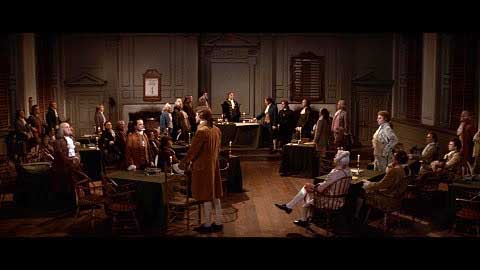
While Jefferson writes, Franklin and Adams must see to persuading the other colonies.  When news of whoring and drinking amongst the army in New Brunswick is reported to Congress (most of Washington’s dispatches were filled with doom and despair), Adams and Franklin take Samuel Chase to win Maryland’s vote.  Dickinson cheers that Adams is gone.  So it is time for the Cool, Cool, Considerate Men to reign (supposedly President Nixon ordered this song removed and it was from the video release, but the film was not destroyed and thus restored when released on DVD).  These conservative men [meaning they are not the fiery men like John and Samuel Adams; it has nothing to do with present political standings and viewpoints] “have land/ cash in hand/ self command/ future planned/ fortune thrives/ society survives/ in neatly ordered lives.”  “What we do/ we do rationally/ we never ever/ go off/ half-cocked, not we/  why begin/ till we know we can win/ and if we cannot win/ why bother to begin?”  Why risk losing?  (Hmm, Adams was right a bit, calling Dickinson a coward.)  Dickinson asks Hancock to join them as a man of property, but Hancock would rather join Adams.  Dickinson warns that Adams and his friends will be branded traitors.  “Traitors to what, Mr. Dickinson?  The British Crown, or the British half-crown (piece of money)?  Fortunately, there are not enough men of property in America to dictate policy.”  Dickinson argues that “most men with nothing would rather protect the possibility of becoming rich than face the reality of being poor.  And that is why, they will follow us.”

The film takes a sad tone after this, when the Congressional custodians ask the dispatch rider about himself.  He begins to eagerly recount he’s seen fighting and two of his best friends got shot in the same day, not far from their homes.  Then their mothers look for them on the battlefields, Momma Look Sharp.

Everyone reconvenes for the reading of the Declaration of Independence.  Franklin, Adams, and Jefferson wait outside the room.  Adams vows it’s a masterpiece.  What’s left to decide is the symbol of America.  Should it be a dove, an eagle, or a turkey?  Franklin pushes the turkey, but Adams swoops in and declares it will be an eagle.  “Though the shell/ may belong to Great Britain/ the eagle inside/ belongs to us!”  Then comes nearly a week of revisions.  Adams tries to shut down some of the extensive ones; “it’s a revolution, dammit; we’re going to have to offend somebody!”  Jefferson insists that the king remains a tyrant; up till now, he’s been going along with Congress, but he insists that passage be scratched back in.  Franklin counsels Dickinson that “those that give up some of their liberties in order to obtain a little temporary safety, deserve neither liberty, nor safety.”

But a larger battle comes to head; the issue of slavery.  South Carolina wants the passage removed from the Declaration, for they wish to retain their peculiar institution.  Rutledge points out that Jefferson himself owns slave, for all that he comments the Good Book abhors it.  Adams insist they are Americans; they are people and they are here.  But Rutledge brings up that New England profits from the slave trade as well, despite their propriety; they provide the ships and trade on the African coast.  Molasses to Rum to slaves is the trade triangle, and Rutledge illustrates an auction until he is warned.  “Hail Boston/ Hail Charleston/ who stinkest/ the most?” he finishes.  Then the whole South walks out.  Franklin and Adams argue.  Adams storms up to the bell tower and ponders the position he is in with Abigail.  She urges him to remember commitment.  And there is a surprise waiting for him.  She sent the salt peter.  Adams orders one of the aids to go out and buy every damn pin in Philadelphia for the ladies.

Reinvigorated, Adams urges Franklin and Jefferson to continue working; the vote is in the morning.  Hancock offers to do what Adams wants; he’s still a Massachusetts man, but Adams implores him to remain a fair man.  Then Adams has the hall to himself in the dark for a moment, looking over Washington’s last dispatch, quoting Is Anybody There?  Does anybody care?  Passionately shouting “Does anybody see/ what I see…I see fireworks/ I see the pageant/ and pomp and parade/ I hear the bells ringing out/ I hear the canons roar/ I see Americans/ all Americans free/ forevermore.”  Dr. Hall startles him by entering and moves his vote to ‘yay,’ openly recalling something he read from Edmund Burke, a member of Britain’s Parliament, that a representative owes his people his judgment and he fails if he does not do so.

The vote is called in the morning.  Delaware brings Cesar Rodney back to have a majority vote.  Pennsylvania passes so they can continue to debate amongst themselves.  When they come to South Caroline, Rutledge faces down Adams and Jefferson and Jefferson himself scratches the passage out.  Adams and Franklin argue amongst themselves that they will be guilty of the same thing they are rebelling against; how will posterity forever them?  Franklin states that the issue right now is independence.  Yes, posterity will frown on them, but they will be dead.  And they’re men, not demi-gods.  With the South on their side, the vote for independence comes down to Pennsylvania.  Franklin votes yes.  Dickinson votes no.  Now, it all rests on Judge Wilson.  There is no precedence here to go by.  And he’s not like Dickinson, he doesn’t want to be remembered.  If he sides with the majority, he’s one of many.  If he sides with Dickinson, he’ll be the man who prevented American independence.  He votes ‘yay.’  Dickinson will not sign the Declaration and thus cannot remain in Congress, but he is still loyal to America and will join the fight in her defense, even if he hopes to one day reconcile with England.  Adams leads the cheer for Dickinson as he leaves.  The official copy is brought out for signing, John Hancock’s signature being the first and largest, so King George can read it without his glasses.  The bell chimes as each man signs, the date reading July 4th, and the camera pulls back to show a mirror image of John Trumbull’s famous painting.

1776 end scene

Yes, there are a few historical inaccuracies in the show.  The Declaration of Independence was ratified on July fourth, but it wasn’t signed until August second.  Some of the debates  were re-worked for a bit for dramatic effect.  Still, it is a lot more accurate than many other shows and movies (cough-Braveheart-cough).  There have since been further retellings of these men, such as an HBO miniseries in 2008 on John Adams based on David McCullough’s Pulitzer Prize-winning biography, starring Paul Giamatti (I believe my mother has read the book and I’m not sure if she has watched the series).  There is of course, the recent smash Broadway hit of Hamilton (which premieres on Disney+ on July 3rd).  But this show owns a piece of my heart.  It was probably one of my first history lessons.  When we covered it in sophomore English, my classmates would come to me for answers because I sat there, reciting the whole film.  A friend and I wanted to do a gender-swapped production; she’d be Franklin and I’d be Adams.  Though I love The Lees of Old Virginia, it would be fun to sing Cool, Cool, Considerate Men.  While Molasses to Rum is not a pleasant song, John Cullum performs it well.  William Daniels is wonderful as John Adams, though he is of equal status as Mr. Feenie.


If you have any questions, feel free to message me.

Up Next: Delving more into my childhood, Bedknobs and Broomsticks

“Jellicle cats come out tonight/ Jellicle cats come one, come all/ the Jellicle moon is shining bright/ Jellicles come to the Jellicle ball”

Cats

This was the first musical I ever saw on stage; my mother was a chaperone on my brother’s class field trip and I went with them.  Heck, I even remember what I wore that day because I was so excited.  And I distinctly remember listening to this soundtrack from a young age; we had the record [before vinyl came back ‘in’].  We named one of our cats “Tugger” after this show.  I know these recordings so well, that I can pick out the difference in sound between the London Cast and the Broadway Cast, and I am enough of a nerd that I have a preference [Broadway]; and it is another soundtrack that I know almost every word.  The show is based on T.S. Eliot’s poetry book, Old Possum’s Book of Practical Cats; which I have a copy of (somewhere) and did dramatic readings from for speech club in high school.  It is the second-longest running musical in Broadway history, behind only Webber’s other famous musical Phantom of the Opera.  Note; I am basing this off of the 1998 staged production, which stars Elaine Page as Grizabella [she replaced Judi Dench when she was injured to star on the West End], filmed in London; NOT the recent film version.  I have heard too many poor reviews and the bits I have caught do not make me want to watch it.  My mother and I were very excited when it was first announced, but by the time we saw the trailer, we knew it was not what we wanted.  Quick note to those who created the recent movie: we are theatre people, we don’t mind seeing people dressed up like cats; no need for that CGI business.

Onwards!

The prologue are cat eyes falling into the background; and the center of the eyes are dancers posed.  Jellicle Songs for Jellicle Cats explains what Jellicle cats are, such as “are you mean like a minx/ are you lean like a linx?”  There is a beautiful chorale section in the middle, until they break apart again to dance.  But “there’s a man over there/ with a look of surprise…a man who’s not heard/ of a Jellicle cat.”  And they explain the Naming of Cats.  There are three names that a cat has; the “sensible, everyday” name that the family uses, then “a cat needs a name that’s particular/ a name that’s peculiar/ and more dignified,” one that has never belonged to more than one cat.  And finally a secret name that “no human research can discover,” and cats ponder it often “his ineffable, effable, effanineffable/ deep and inscrutable/singular name.”  [I remember having to look up was ‘ineffable’ meant when I was younger: too sacred to be spoken.]  Munkustrap explains that Jellicle cats congregate once a year for the Jellicle ball, when the Jellicle leader will make a choice on which cat ascends to the Heaviside Layer and be reborn.

rum tum tuggerDifferent cats get their own solo pieces, like Jennyanydots, The Old Gumbie Cat.  She’s known to “sits and sits and sits and sits/ and that’s what makes her a gumbie cat.”  “But, when the day’s hustle and bustle is done/ than the gumbie cat’s work is but hardly begun.”  She teaches mice skills and orders beetles about, and there’s a fun tap dance routine.  Then Rum Tum Tugger bursts onto stage [a favorite].  He’s a “curious cat,” quite contrary.  If you give him one thing, he wants another.  “For he will do as he do do/ and there’s no doing anything a-bow-wow-it,” and struts about like Mick Jagger.  Grizabella, The Glamour Cat skirts by and the rest of the cats shun her, pulling younger cats away.  She’s a fallen cat, a pale shadow to who she once was.  Things cheer up when the cats remark about Bustopher Jones, “who is not skin and bones/ in fact, he’s remarkably fat.”  Police sirens go and the cats worry about Macavity.
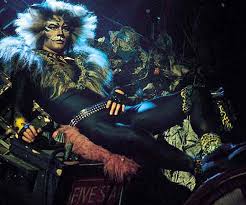
Mungojerrie and Rumpleteazer sneak out; a pair of thieves that the family can’t always tell the difference between, “or could you have sworn/ that it might’n be both?”  “And there’s nothing at all/ to be done about that!”  The Jellicle leader, Old Deuteronomy comes out next.  “Well of all things/ can it be really/ yes oh a high a my eyes;” he “lived a long time/ he’s a cat that has lived/ many lives, in succession.”  All the cats, even Rum Tum Tugger respect him and Mr. Mistoffelees very fond of him.  Munkustrap entertains the gathered cats with the tale of the Peakes and Pollicles; actually various dogs that get into a fight, until the Great Rumpus Cat comes out and scares them away.  It’s rather humorous to see “cats” dress up as “dogs.”  The cats hide when they think Macavity is about, but emerge again to joyfully dance at the Jellicle Ball, reiterating that Jellicle cats are black and white, and rather small.  When they’re lazy, they “are reserving our terpsichorean [dancing] powers!’ and “resting and saving/ ourselves to be ripe/ for the Jellicle Moon/ and the Jellicle Ball!”  The dance is wonderfully choreographed.

Grizabella reappears and Old Deuteronomy notices how she is treated and how she tries to remember her old moves.  He remarks on the Moments of HappinessGus, the Theatre Cat is brought out; he’s old and frail and can just remember when he used to be a star.  Some stage productions will include Growltiger’s Last Stand here as one of his old roles; the recording did not.  Skimbleshanks, the Railway Cat pounces in next; he is in charge “of the sleeping car express,” keeping everything in order.  But Macavity strikes again, stealing away Old Deuteronomy.  Two female cats remark on what they know of Macavity, the Napoleon of Crime (typically refers to Professor Moriarty from Sherlock Holmes; note the similarity in names).  Whenever the police get to one of his crime scenes, he’s not there.  It looks like he returns Old Deuteronomy, but it’s really Macavity in disguise and he fights Munkustrap before he escapes, shutting down the lights.  Rum Tum Tugger cheers everyone up with Mr. Mistoffelees, “the original conjuring cat.”  “Oh well, a never was there/ ever a cat so clever as/ magical Mr. Mistoffelees!” (another of my favorite songs)  [It has been noted that his name is similar to Mephistopheles, another name for the devil, but note the different spelling, and Mistoffelees is a sweet cat]  His coat lights up and he brings back the lights on stage; and even Old Deuteronomy.

When Grizabella appears again, she finally sings all of Memory, recalling her days in the sun.  She waits for each new day, letting night pass away, and hoping that each day will get better.  “Touch me/ it’s so easy to leave me/ all alone with the memory/ of my days in the sun/ If you touch me/ you’ll understand what happiness is.”   Some of the younger cats finally get close to her and touch her, and the rest of the Jellicles accept her.  Munkustrap leads her to Old Deuteronomy and the leader takes her to a tire that rises to a descended stair.  She Journeys to the Heaviside Layer, “up, up, up past the Russell Hotel/ up, up, up, to the Heaviside layer/ Up, up, up, past the Jellicle Moon/  up, up, up, to the Heaviside layer.”  Old Deuteronomy sums up the evening on The Ad’dressing of Cats; remember, they are not a dog.  Treat them with respect.

This is another musical that I would dance around our living room too.  Rum Tum Tugger, Macavity, and Mr. Mistoffelees were my favorite.  As a singer, I’d love to perform Memory (which does not have a corresponding poem; Webber composed it for Sunset Blvd then repurposed it for Cats).

Next Time: 1776

“When the beating of your heart/ echoes the beating of the drum”

Les Misérables

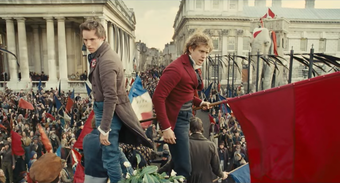
Based on the lengthy novel by Victor Hugo (reminder, the same man who wrote The Hunchback of Notre Dame), and typically referred to by the shorthand Les Mis.  The musical show premiered in 1985 starring Colm Wilkinson as Jean Valjean and celebrated its’ 25th anniversary in 2010.  It is one of the longest running musicals on Broadway.  Lea Salonga, who provided the singing voices for Disney’s Jasmine and Mulan, played Éponine and Fantine on Broadway.  A movie version of the show was produced in 2012 directed by Tom Hooper, with an all-star cast.  Hugh Jackman (Australia, X-Men, Greatest Showman) is Jean Valjean, Russell Crowe (Robin Hood) is Javert, Anne Hathaway (Princess Diaries, Becoming Jane) is Fantine, Amanda Seyfried (Mamma Mia) is adult Cosette, Eddie Redmayne (Fantastic Beasts) is Marius, Sacha Baron Cohen is Thénardier, Helena Bonham Carter (Bellatrix Lestrange), his wife.  Daniel Huttlestone (Jack in Into the Woods) is Gavroche.  Samantha Barks plays Éponine, which she played on the West End, and several of the extras have previously been on stage for this show.

The show begins in 1815, twenty-six years after the start of the French Revolution, we are informed at the beginning.  Look Down builds as we get closer to see prisoners hauling a ship into dry dock; Jean Valjean is one of the truly depressed men.  Javert is overseeing the work and calls for Prisoner 24601 and instructs him to life the heavy mast holding the flag..  Valjean’s parole has begun, but it does not mean he is free.  The two men confront each other; Valejan’s main crime was stealing bread to save a dying child, then years were added on to his sentence for attempting to escape.  Javert follows the letter of the law and believes that Valjean will never change.  Valjean eventually ends up at a church, after being turned way for work due to being a convicted criminal and even beaten.  The kindly priest (played by Colm Wilkinson; it’s wonderful to see him a part of the production) shows Valjean mercy, even after Valjean attempts to make off with the silver.  The priest vouches for Valjean and gives him the remaining candlesticks; but know he has saved Valjean’s soul for God and the man should attempt to make a better life.  Valjean looks to God and ponders what to do, finally declaring that Valjean is no more.  (There are many soliloquies in the show; it is also a show that is primarily sung with few spoken lines.)

We jump eight years to 1823 and the poor are oppressed and struggling to survive.  At the End of the Day, every day is the same as the before and they’re almost ready to give up.  We see a factory full of female workers and the foreman is attempting to sweet-talk Fantine.  But Fantine refuses him, which means he takes his bad mood out on the rest of the women.  The others tease Fantine and discover a letter, begging her for more money for her dying child.  They use it as an excuse to throw Fantine out, claiming her to be a slut.  (They’re petty women who are horrible to a woman for no good reason).  Valjean has become a successful man; the owner of the factory and the mayor.  Javert has dropped by for a visit and that puts Valjean on edge and thus does nothing to prevent Fantine’s dismissal.  There is something about Valjean that stirs a memory in Javert’s mind and it’s stirred more when he witnesses Valjean lift a heavy wagon off a man to save him.

Fantine is desperate for money and goes to the wharf to sell trinkets.  But she ends up selling her hair (Anne Hathaway did cut her hair for this role) and a tooth.  Once those are gone, she ends up turning to prostitution and becoming one of the Lovely Ladies.  She’s so disheartened, she remarks to her first customer, “don’t it make a change/ to have a girl who won’t refuse?”  After the man finishes and leaves, Fantine brokenly recalls I Dreamed a Dream (wow, can Anne sing; it’s also hard to sing while crying.  This song was also made famous recently by Susan Boyle’s performance on “Britain’s Got Talent”).  Fantine had fallen in love with Cosette’s father and thought it was forever, but it seems he left her once she was pregnant.  And thus her dream was turned to shame.  Later, Fantine attacks a rich man who tries to force her.  Valjean is nearby, giving money to the poor and steps in on Fantine’s behalf when Javert investigates [this is apparently based on something that Victor Hugo did himself].  Valjean takes Fantine to a hospital and vows to bring her daughter.

Javert confesses to Valjean that he thought Valjean was the prisoner who broke parole years ago.  And he filed a report.  Turns out to be a false report; the true culprit was caught and Javert does not expect the honorable mayor to forgive him.  Valjean tells Javert he was only doing his duty.  But he wonders on his own, should he let this man take his place?  Or should he confess who he is?  Who Am I?  He remembers the priest’s instructions; “If I speak, I am condemned/ if I stay silent, I am damned.”  Valjean decides to go to the court and declare himself to be prisoner 2-4-6-0-1!  Then he rushes to the hospital and comforts Fantine as she dies, hallucinating of Cosette.  Javert confronts Valjean and Valjean begs the inspector to have mercy; let him see to the orphaned child and he will willingly return to prison.  But Javert does not trust Valjean; in the dueling melodies his prejudice stems from being born inside a jail; “I was born with scum like you/ I am from the gutter two.”  The men duel and Valjean jumps out a window to escape.

Meanwhile, at the inn where Fantine left her daughter, Cosette innocently dreams of a Castle on a Cloud and her mother loving her.  Instead, she has the Thénardiers, who are crooks.  They send her to the well in the woods alone, shower their own daughter in pretty things and love and work Cosette like a servant.  They steal from their customers and lie to them, jokingly referring to the husband as Master of the House.  Valjean discovers Cosette in the woods and negotiates with the Thénardiers what they want in exchange for him taking Cosette.  They pretend to be sweet, but Valjean can see through their lies.  Cosette is happy to leave with Valjean and falls asleep in the carriage.  Valjean wonders how Suddenly his life changed [a new song for the movie].  They are still pursued by Javert and receive help at an abbey from the man that Valjean saved by lifting the wagon.  Javert vows by the Stars [I adore Welsh opera singer Bryn Terfel singing this, check it out!] to catch Valjean, “and if you fall as Lucifer fell/ you fall in flame!/ And so it has been/ and so it is written/ on the doorway to Paradise/ that those who falter/ and those who fall/ must pay the price.”

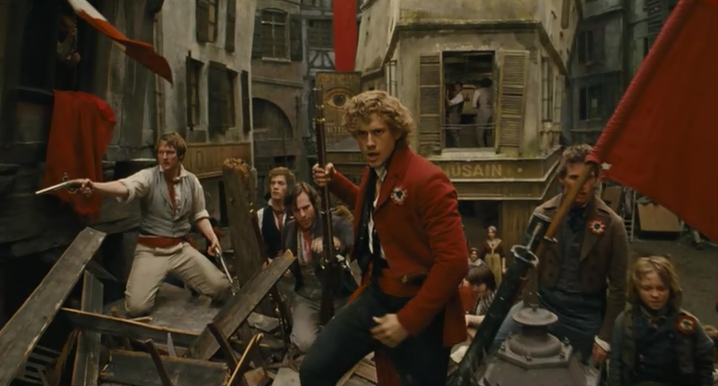
We jump another nine years to 1832.  The poor are still oppressed; a monarch is back in power.  Led by young university students, they entreat the upper class to Look Down.  We’re introduced to Gavroche, who leads a bunch of beggars (he’s the baby that was in the basket that the Thénardiers switched with a customer, proving they are horrible people!)  The police run them off.  One of the students Marius, spots a grown up Cosette and Valjean giving money to the poor and instantly falls in love with her [we see this so much].  The Thénardiers, accompanied by Éponine, their daughter, accost Valjean and Javert shows up again.  Valjean keeps his face turned from Javert and quickly takes Cosette away at the first chance.  Marius asks Éponine for help with Cosette and Éponine realizes who the young woman is.  But she loves Marius and agrees to take him to Cosette.

The students (if one looks a little familiar, he plays young Harry in Mamma Mia: Here We Go Again) rally each other and the citizens of Paris to rise.  “Red, the blood of angry men/ black, the dark of ages past”  Meanwhile, Marius is lovesick and his view on Red and Black is a little different, “red, the color of desire/ black, the color of despair!”  The leader of the student, Enjorlas urges Marius that the rebellion is a higher call and he is needed with the people.  Éponine then takes Marius to Cosette.  Several characters sing over each other, In My Life and A Heart Full of Love, proclaiming their love and their views.  Valjean wants to protect Cosette and refuses to tell her about his past; Cosette loves Marius and Marius loves Cosette; Éponine unrequitedly loves Marius.  The young lovers must part and Thénardier wants to rob Valjean, but Éponine screams to scare her father and gang away.  Valjean fears Javert has found him, so takes Cosette away.  She leaves a note for Marius, which Éponine takes.  The young woman wanders the streets back to the students’ headquarters, in the rain, musing she is On My Own.  “A world’s that full of happiness/ that I have never known!”  Plots are converging, One Day More until the climax.  Éponine disguises herself as a boy; Marius and Cosette pine for each other, but Marius decides to stand with the students; “one day to a new beginning/ raise the flag of freedom high!” Javert plans to put an end to the revolution.  All sing “tomorrow we’ll discover/ what out God in heaven has in store/ one more dawn/ one more day/ one day more!”

DoYouHearThePeopleSing

The show breaks for intermission here.  The rallying cry Do You Hear the People Sing?(and the most famous song from the musical; and probably of all musical history) brings us back as the revolutionaries take over the funeral procession of their hero, General LeMarc.  “The blood of the martyrs/ will water the meadows of France!”  Soldiers face off with them, and one nervously fires into the crowd, killing an old woman (sadly, this is how many confrontations have started throughout history, like the Boston Massacre in 1770).  The students and their compatriots gather and build a barricade with whatever furniture they can find (two fun facts: that set is reused from Harry Potter and the Sorcerer’s Stone‘s Diagon Alley, and the director of the film had four words of direction here: Build a Barricade.  Action!).  Javert has gone undercover with the revolutionaries, then volunteers to find out what the soldiers are planning. When he returns, he claims there will be no attack that night, but Gavroche recognizes him, so they tie him up.  We get little pieces of Gavroche’s solo number Little People; beware of them because they’ve got some bite.  The soldiers advance and shooting starts.  Marius recklessly threatens to blow a keg of gunpowder, killing himself too, to keep the soldiers away.  Éponine takes a bullet for Marius.  Once the soldiers have retreated, Marius holds Éponine, promising her anything if she’ll live.  She gives him Cosette’s note and peacefully dies in Marius’s arms; a Little Fall of Rain will hardly harm her now.

Marius sends a note to Cosette through Gavroche.  Valjean takes it, warning the young boy to be careful, and finds out his daughter is in love.  Valjean goes to the barricade to protect Marius; Gavroche vouching for him when the students don’t believe him.  He then spies Javert and asks to deal with him.  His wish is granted after he spots a sniper on the roof and protects the students.  Valjean shows Javert mercy; the same mercy that was shown him by the priest.  The students know that this may be their last night and pass around a bottle; Drink With Me.  Marius dozes off and Valjean looks down on the young man, pleading with God, Bring Him Home.  “He’s like the son I might have know/ if God had granted me a son…if I die/ let me die/ let him live.”

barricade

Come morning, this group are the only ones left; Paris did not rise.  But they still face the soldiers.  Gavroche starts the chorus of Do You Hear the People Sing and some more of Little People when he goes in front of the barricade to fetch more gunpowder.  He is shot twice and the young men have to hold one of their own back from darting to get the boy.  (In the show and book, Gavroche is Éponine’s younger brother, and even here, he was supposed to be aside from his parents passing him off to a random customer.)  The soldiers have brought canons and the barricade is soon overrun; when the bullets run out, a few of the students, Enjorlas and Marius included, turn to sabers.  Marius is hit and Valjean drags him off.  The last few students are caught on the second floor of their former headquarters and are finally shot.  Enjorlas hangs out the window, mimicking how he typically lies over the barricade in the stage show.  We briefly see Javert walking by the dead lined up and pins his medal on Gavroche’s chest  Valjean takes Marius through the sewer, running into Thénardier again and Javert is waiting at the end.  But he lets Valjean through when the man pleads mercy for the young wounded man in his arms.  And this mercy does not sit well with Javert; he cannot live in a thief’s debt.  He has one last soliloquy and falls off a bridge into a turbulent river, committing suicide.

The women mourn the radicals and we briefly see Marius’s grandfather care for him.  When he has more strength, Marius returns to the headquarters and struggles with the Empty Chairs at Empty Tables.  “Oh my friends, my friends/ forgive me/ that I may live/ and you are gone/ there’s a grief/ that can’t be spoken/ there’s a pain/ that goes on and on…oh my friends, my friends/ don’t ask me/ what your sacrifice was for!”  Cosette is waiting for him and echoes A Heart Full of Love.  Valjean gives them his blessing to marry and tells Marius his history as a prisoner, but instructs him not to tell Cosette.  He will move away.  The couple happily marry.  Until the Thénardiers show up as Beggars at the Feast.  Monsieur Thénardier has one more card to play; he saw Valjean with a dead man on his back in the sewer and wants to cash in on the scandal.  But he’s wearing a ring he pilfered from a body, Marius’s.  Marius recognizes it, reclaims it and realizes that Valjean was the one who saved him.  He demands Thénardier tell him where Valjean is, then drags Cosette from their reception to the church.

Valjean sees and hears Fantine as he sits his last hour.  Marius reveals to Cosette that her father saved him and Valjean gives a letter, his last confession, to his daughter.  Cosette begs Valjean to live and he promises to try, but peacefully passes to be in Fantine’s arms.  He briefly sees the priest again as he passes to heaven, “remember, the truth that once was spoken/ to love another person/ is to see the face of God” where all those died join in the final Do You Hear the People Sing.

I knew the music to this show before I knew the story.  I didn’t see a production of it until I was in high school and went with a group to Pittsburgh.  I sobbed.  A couple years later, my French class saw a performance put on by a performing arts high school in Pittsburgh, a former schoolmate had transferred to the school; and my French teacher also taught us the history of the French Revolution.  There were some changes made to make it more appropriate for high school students.  After I graduated college, the local theatre group performed the show and my parents and I went to see it; a friend was Jean Valjean.  And about that time, my church choir did a cabaret performance and featured selections from Les Mis, I did On My Own.  Then our pastor wanted us to “speak” the final chorus of Do You Hear the People Sing to go along with a sermon…we sang it, because that’s what we do.  We all knew it; there was no way we were simply going to “say” it.  And a helpful hint; not the best idea to watch this movie directly after logging off Facebook when it’s been depressing; at least have something lighthearted and fun standing by for afterwards.

As for my personal preferences and this show; since it’s so depressing, it’s not per say a favorite; I recognize that it is a wonderful show and those who perform it require stamina.  I Dreamed a Dream is a powerful song, but I think I heard it so often after Susan Boyle that I get tired of it pretty easily.  Though I commend Anne Hathaway for her performance in the movie.   Castle on a Cloud was my favorite when I first heard the soundtrack with the London cast and I remember a friend of mine and I having fun miming Master of the House during free time.  Stars is wonderful when performed by Bryn Terfel.  I know there have been people who did not like Russell Crowe’s performance at all; I disagree.  I’ve never like the role of Javert, mainly because he’s pompous.  Russell brought some humanity to the role and brings a pensive quality to his performance of Stars.  I like Eddie Redmayne in the role of Marius for the same reason; he brings humanity to the role.

When I first listened to the music for the show, I wanted to play Cosette.  Now, I’d rather play Éponine.  You also need a soprano who can hit the high notes at the end of A Heart Full of Love, so, kudos to Amanda Seyfried.  While I am a soprano, not that high.  On My Own is in a more comfortable range.  One Day More is a showstopper, which is most likely why they chose it to perform at the 2013 Academy Awards.  It was nominated for Best Picture, but did not win.  It did win Best Musical at the Golden Globes.  And who can ever forget Do You Hear the People Sing?  I get goosebumps every time I hear a performance of it.

Red and Black is another song I like.  Bring Him Home is known for being high in a man’s range; Hugh has commented he blames Colm Wilkinson.  There is a beautiful rendition by the Piano Guys and it is one that brings tears to everyone’s eyes.  Drink With Me, Fall of Rain, and certainly Empty Chairs at Empty Tables drowns everyone in tears.

Next Time: Another incredibly popular musical, Phantom of the Opera


“Pulitzer may own the world/ but he don’t own us/ Pulitzer may crack the whip/ but he won’t whip us.”

Newsies

This was the movie that spawned the idea of doing a blog. Though released in 1992, I didn’t see Newsies until I was in junior high, about ten years later. My music teacher, Mrs. Ellenberger put it on in class for a few days. I remember my friends liking it; I believe the rest of the student populace didn’t really care. We thought the actors were cute; I know Spot Conlon was a favorite, the newsie from Brooklyn. We learned a choral arrangement of one of the main songs Seize the Day as part of junior high choir. Later, in college as part of my Historical Development of the English Language course, I did a paper on the accents in Newsies (because yes, I am that big of a dork and always tried to incorporate films and stories I loved into class projects. I referenced Star Wars and Pirates of the Caribbean in separate papers in my Intro to Writing course).

I didn’t realize at the time that it had several well-known stars among its cast, not the least of which is Christian Bale (Batman in Christopher Nolan’s ‘verse; as well as voicing Thomas in Pocahontas and a list of other movies) in the starring role of Jack Kelly. Kenny Ortega directed and was one of the choreographers of the movie. Yes, the same man who directed High School Musical, which took over my same group of friends when we were in high school. The music is composed by the great Alan Menken. Ann Margaret (Carol’s mother in Santa Clause 3) appears as vaudeville star Medda Larkson; Bill Pullman (Lonestar in Spaceballs, famous for the Independence Day movies, he’s also the commander in Disney’s Tiger Cruise original movie) is Bryan Denton, a reporter; and Robert Duvall (General Robert E. Lee in Gods and Generals and over a hundred other films) is the evil Mr. Joseph Pulitzer. One of the other newsboys, Mush, is played by Aaron Lohr who was Portman in The Mighty Ducks franchise, part of the “Bash Brothers,” and also in RENT as Steve and voiced Max in A Goofy Movie (I recognize him more from Mighty Ducks, a favorite movie of mine when growing up)

The premise of the story is based on the 1899 newsboy strike in New York City, claiming to be “based on actual events.” “Based,” yes. Historically accurate? Not so much. Carrying the Banner explains the life of the newsboys. They’re out in the elements every day, hawking newspapers for bigwigs like William Randolph Hearst and Joseph Pulitzer for a few pennies. “We need a good assassination/we need an earthquake or a war. How ’bout a crooked politician? Hey stupid that ain’t news no more!” Jack Kelly is the leader of this group of newsies; he protects the smaller and weaker newsies and is well respected by the rest. At the distribution center for the World newspaper, owned by Pulitzer, brothers David and Les Jacobs join the newsies for the first time. Les is in awe of Jack, nicknamed Cowboy. David (who looks like the kid from Growing Pains, but is not) agrees to a partnership with Jack to learn to sell “papes,” though he is disgusted by the spit handshake. Jack’s first piece of advice is “headlines don’t sell papes, newsies sell papes.”

On their whirlwind first day, David and Les follow Jack running from the warden of the local refuge, Snyder. Jack escaped from the refuge previously and Snyder is out to put him behind bars again. They also learn that Jack wants to get out of New York and once he’s saved enough, he’ll take a train out west to Santa Fe “to be a real cowboy,” as Les eagerly puts it. We meet Medda, the vaudeville star and friend of Jack, and the boys eagerly listen to her serenade the crowd with Lovey Dovey Baby. David invites Jack over for dinner where the rough and tumble newsie puts on his best manners for David’s parents and sister. Turns out, David and Les are only working as newsboys while their father is off work due to injury; once he gets his job back, the boys will be back in school. (Cue the looks exchanged between Jack and Sarah.) Jack declines staying overnight and croons Santa Fe, wistfully thinking about the freedom out West; “I want space/ not just air/ let ’em laugh in my face/ I don’t care.”

When the newsies return to work the next day, they’ve found out that overnight, Joseph Pulitzer and William Randolph Hearst, owners of the newspapers have decided to up the price the newsies pay for papers by ten cents a hundred, so they, the owners will make more money. When one of Pulitzer’s advisors argues that it would be rough on the boys, Pultizer fires back that “they will view it as a challenge,” and be grateful for it. No, as Racetrack comments, Pulitzer is just a tightwad and the man even admits he wants to know how to get more of the money off the streets.

The boys argue amongst themselves that it’s unfair and they have no rights. Then they get the idea to strike from a local trolley strike that had been dragging on for weeks. As Jack pumps up his friends; are they going to take what they’re given, or are they going to strike? First, they have to organize. If only a handful decide they aren’t selling, other newsies could simply come in and take their work. “Even though we ain’t got hats or badges/we’re a union just by sayin’ so,” Jack (taking the more educated David’s words) tells the boys. There’s a lovely play on words during The World Will Know; world in the traditional sense versus the New York World newspaper owned by Pulitzer; they occasionally throw in references to the New York Journal owned by Hearst. “We’ve been hawkin’ headlines/ but we’re making ’em today…now they’re gonna see/what ‘stop the presses’ really means.” “And the world will know/ and the world will learn/ and the world will wonder/ how we made the tables turn/ and the world will see/ that we had to choose/ that the things we do today/ will be tomorrow’s news.”  The dancing has an element of fight to it, which is fun and interesting to watch. So, hurrah, the Manhattan newsies are going on strike; they still have to spread their plan to the rest of the newsboys in New York.

Enter Spot Conlon, leader of the Brooklyn newsies, and makes other newsies “nervous.” Jack, David, and another newsie, Boots, trek out to Brooklyn where there’s Irish music in the background and boys diving off the piers…just because (or maybe it’s to show off their toned physiques…teenage girls did appreciate it). Spot’s voice holds power amongst the newsies of New York and he wants proof before he throws his lot in with Manhattan. And the rest of the boroughs are waiting for Brooklyn’s backing before they join.

newsies

They get their opportunity to prove themselves the next morning, David urges them to Seize the Day (probably the most famous song from the film) before facing off at the distribution center again. “Wrongs will be righted/ if we’re united/ let us seize the day…proud and defiant/ we’ll slay the giant.” The police arrive and most escape, except for Crutchy. One adult has been paying attention to the newsies efforts; Bryan Denton, reporter and previous chief war correspondent [the Spanish-American War that ended the previous year, since they never tell us specifically] for the New York Sun. We’re shown the refuge that evening when Jack attempts to break Crutchy out. The boy was beat pretty badly and refuses to be carried. Jack explains to David that the more orphans Warden Snyder has in his refuge, the more money the city sends him, the more he puts in his pocket (hmm, we know corruption when we hear it).

Another day, another fight at distribution led by a reprise of Seize the Day. This time, the World is aided with thugs. Racetrack calls out to Jack, “it’s the Crib!” The gates have been locked and the police are keeping people away. The “bad guys” are almost winning, until back up arrives. Pretty much everyone’s favorite line in the movie: “Never fear, Brooklyn is here!” The newsies beat back the thugs and topple the newspapers. Denton writes a front page article for the Sun which features a photograph of Jack, David, Les, Spot, and several other leaders. Denton treats the boys to a celebratory lunch and the boys eagerly share what being on the front page means. It means they’re famous. Racetrack spouts that being famous means you get whatever you want, “that’s what’s so great about New York!” These boys are King of New York, “fortune found me/fate just crowned me” and they give credit to Denton and feature a bit of tap dancing.

But bad news; Snyder sees the article and picture of Jack (slightly aided by Cructhy giving him Jack’s name) and goes in search of the boy. The other newsies and the owner of the lodge house help keep Jack out of sight, but he chooses to safely sleep on the roof of David’s apartment. Sarah wakes up early and gives him breakfast and we get the only bit of romantic development in the whole movie. Jack isn’t used to having people care whether he stays or goes.

While the newsies plan a big rally to keep their strike going, Pulitzer wants an example made of the boys, especially Jack. Hearing that Jack is a wanted criminal, he pressures the Mayor to send police to break up the rally and further sweetens the deal with the promise of a poker game with the other newspaper owners. The newsies hold their rally at Medda’s hall and David urges the boys to stop hitting the other boys who continue to sell the newspapers; it’s playing into the adults’ hands. Jack simplifies by saying “we’ve got no brains,” and no respect. Spot agrees and Medda cheers everyone up with High Times, Hard Times. Snyder and the police arrive and it’s chaos. Everyone is trying to protect Jack, they’re leader; David even urging him to go once they’ve gotten Sarah and Les to safety. Denton even tries to help, but a well-placed punch sends Jack into the arms of officers and he’s carried out.

The boys appear in court in the morning, Spot jokingly objects “on the grounds of Brooklyn,” and they’re saved from a fine or jail time by Denton. But Jack is tried separately and Snyder convinces the judge (again, more corruption) to incarcerate Jack until he’s twenty-one (he’s now seventeen). Furthermore, Jack Kelly is an alias. His real name is Frances Sullivan; his mother is dead and his father is imprisoned in a state penitentiary. The judge rules in favor of Snyder. Denton meets with the rest of the newsies and informs them that he has been reassigned; his old war correspondent job. The Sun didn’t print the story on the riot, meaning in essence, the riot didn’t happen (what really happened what Pulitzer pressured the owner of the Sun during their poker game). David is mad. New plan; they break Jack out tonight and no longer trust anyone.

But Jack has been taken to Pulitzer, who offers him a deal. Jack works for him until the strike dies, which is will, particularly without him. And then Jack can leave, with money in his pocket; more than he’ll ever make as a newsie. And a lesson on power of the press; Pulitzer holds the power and newspapers being the main way anyone found out about anything in that day, he tells them what to think. Jack realizes Pulitzer is scared; Jack threatens Pulitzer’s power. And he won’t take the deal. Until Pulitzer threatens David’s family. The man sends the teenager to think about it and Jack runs off with David for a minute, but sends his friend away. He won’t say why, only refrains Santa Fe to himself as his mulls over his choices.

Come morning, we all discover he has taken Pulitzer’s deal. The newsies are furious, especially David. He calls his friend out and declares he has found the guts to attach his name to his words (instead of using Jack as a mouthpiece). Sarah finds Denton’s article and tries to give David hope, but her brother storms away. Les thinks Jack is spying and the older boys don’t have the heart to tell him the truth. Then the Delancy brothers, who have always picked a fight with Jack, go after Sarah and Les on the street. David jumps in, as does Jack when he hears Sarah’s yells. The brothers are about to completely knock David out when Jack breaks it up. He can’t be something he ain’t; smart. The teenagers go to Denton. His article tells how the city thrives on child labor; lots of people make money that way. And they’re worried that the newsboy strike will spread. Well now they have a plan. They use Pulitzer’s old press, which Jack knows about, and print their own newspaper, Once and for All. They get the newsies to deliver it to all the kids in the city; “can you read? Read this.”

“Joe, if you’re still countin’ sheep/ wake up and read ’em and weep/ you’ve got your thugs/ with their sticks and their slugs/ but we’ve got a promise to keep…This is for kids shining shoes on the street/ with no shoes on their feet everyday/ This is for guys sweatin’ blood in the shops/ while bosses and cops look away/ This is to even the score/ this ain’t just newsies no more/ This ain’t just kids with some pie in the sky/ this is do it or die/ this is war!”

Denton recruits the governor. The boys wait. So far no one has shown up and without everyone, they’ll lose. All the boys have forgone their put-together looks, all down to their undershirts even David. They reprise The World Will Know, and they are joined by a million voices. All the child laborers are marching. Spot leads Brooklyn. Jack is shown to Pulizter, with David. David points out to the man that he’s losing money every day with the strike; it’s costing him more than the tenth of a cent he’s trying to squeeze out of the newsies. Jack opens the window so Pulitzer can hear all the kids. The man shouts for them to “go home!” A lot of them don’t have homes. And they’re not going away. This is real power of the press. Jack cheekily answers Pulitzer when asked that they used his machines to print their paper. The previous leaders of the distribution center are led out in shame and Jack yells, with Les on his shoulders, “we beat ’em!”

The warden is driven into the crowd and Jack starts to make a run for it, but Denton cautions him he never has to run from the likes of Snyder again. The boys from the Refuge are released and Snyder is locked into the police wagon. Crutchy reunites with Jack and cheerfully tells him that the Governor came storming into the Refuge [previously, the Governor had toured the Refuge and the truth had been hidden; that is how Jack had escaped, underneath his carriage]. The Governor being none other than Theodore Roosevelt, whom Denton had befriended covering the war. And now Roosevelt is thankful to Jack and is offering to take him anywhere he’d like. Such as the train station. Jack rides off cheerfully and David and his family are sad to see him go. But David is now head of the newsies and takes his hundred papes as the reprise of Carrying the Banner starts. But a commotion: the carriage is back. As is Jack (and the score of Santa Fe). The boy thanks Roosevelt for his advice; he still has things to do and a family in New York. He greets David, who responds with a spit handshake and echoes “headlines don’t sell papes, newsies sell papes.” And Sarah gets a big kiss from Jack. Everyone is happy now and dances their way out (Spot hitches a ride back to Brooklyn with Roosevelt).

The film did not do well at the box office when it was released and Christian Bale has remarked he’s been embarrassed to admit he was in the movie musical. But it gained a cult following when it hit video (like my friends and I) and Disney decided in 2012 to transform it into a stage show. It did so well that way, they took it on Broadway and ran for two years and won two Tony awards. I did watch the performance when it was on Netflix. Several changes were made; such as switching Denton to a female reporter, Katherine Plumber [SPOILER: she’s Pulitzer’s daughter], cutting the role of Sarah and making Katherine Jack’s love interest. That story line is better developed than in the film, but I still don’t see the need for a romance. It’s also slightly awkward when there is a lot of “bromantic” undertones in the film and the stage show. Yeah, Jack reacts badly to Crutchy being in the Refuge in the show. And there are hints between Jack and David in the film (supposedly intentionally put there). I was not fond of the changes in lyrics in the stage show; I know the film soundtrack nearly word-for-word and I got attached. I will admit, it’s a good show and does follow the history of the actual strike better. But the film kicks up my nostalgia.

Overall, the film is fun, especially the music. I don’t know why Disney doesn’t show it more; it’s got Batman in it! Though they don’t show a lot of their older films, unless it’s part of the animated collection. It think it’s fun that it’s almost an entirely male cast, which brings a different element to the dances. As I pointed out, there’s a bit of a fight element; I don’t mind the rough and tumble bits. And yes, as a teenage girl, most of the boys were cute in this movie.

I have read a couple fanfictions on Newsies; there’s a trio of stories For Brooklyn by AmbrLupin that spotlights Spot Colin. Another is The Brooklyn Version, also about Spot by WinterhartZahneelCalina. His little “birdie” is actually a girl.

Next Time: Another New Yorker, The Greatest Showman

“A Wop Bom a Looma, a Wop Bam Boo!”

Grease

A very iconic musical; showcases the fifties with the diner and milkshakes, the occasional poodle skirt, gangs and rumbles, and how the men styled their hair. The film was made in the seventies and stars Olivia Newton-John (renowned singer) as Sandy and John Travolta (who would also star in a movie about the seventies a year prior to Grease’s release: Saturday Night Fever) as Danny. While the story is about high school seniors, all of the actors and actresses were significantly older. Sandy and Danny meet at a beach during the summer and have a summer fling at the beginning of the film. They have to separate and we have an animated intro with Grease (and for some reason, Sandy appears like Cinderella with helpful woodland creatures). The T-Birds, of which Danny is a leader, and their opposites, the Pink Ladies return to Rydell High School for their final year. Frenchy brings a new girl; Sandy. When the Pink Ladies ask Sandy and the T-Birds ask Danny separately what they did for their summer, the two tell them about their Summer Nights (the guys are more focused on getting into a woman’s drawers…and there are some questionable lyrics; and as a kid, I even questioned Sandy about making a big deal that they “stayed out, ’till ten o’clock”…maybe it’s a fifties’ thing). Sandy reveals to the ladies that she met Danny Zuko over the summer. The Pink Ladies are familiar with Danny; it seems like Rizzo had gone out with him before in addition to being a classmate.

The ladies decide to surprise the couple and reunite them; Sandy is initially pleased to see Danny again and he starts out as the caring guy she met, but then puts on a tough guy act for his buddies. Sandy storms off and Rizzo is not surprised. Frenchy invites Sandy to a sleepover and the ladies try to get her to smoke and drink and Frenchy tries to pierce Sandy’s ears; she’s an aspiring beautician and has dropped out of high school to attend beauty school. Sandy does not react well to any of those and while she’s in the bathroom Rizzo mocks her with “look at me, I’m Sandra Dee/ lousy with virginity.” Sandy walks out and they have to stop. Outside, the T-Birds crash the party. Rizzo climbs out the window and hooks up with Kenickie. Sandy is still hurt from Danny; Hopelessly Devoted.

Tensions rise between the T-Birds and the Scorpions. Kenickie wants to soup up his car so he can challenge the Scorpions’ leader. Danny says they’ll make it “systematic, hydromatic, ultramatic; [different names for transmissions; I asked my mechanic father because I do not know cars]” they’ll make it Greased Lightning! (more suggestive lyrics).  They drive it to a diner where Danny encounters Sandy on a date with a nice, but dull boy. She challenges him to prove that he can be the guy she remembers. So Danny tries out for several sports, settling on track. Sandy gives him another chance, but their date is crashed by their friends, ending with Rizzo throwing her milkshake on Kenickie. Frenchy stays behind, revealing to the waitress that she made a mistake on her hair and it’s not bubble-gum pink. She dreams Beauty School Dropout and is told “go back to high school.”

The big event of the school year is the filming of National Bandstand in their gym. Their principal instructs them to be on their best behavior; but of course they’re teenagers so the likelihood of that happening is…slim. Several are ousted from the dance competition for inappropriate moves. Rizzo goes with the Scorpions’ leader and Kenickie goes with Cha Cha, who recognizes Danny (seriously, has this guy dated all the girls?). Sandy is having a nice time with Danny during Born to Hand Jive, until one of the guys pulls her away and Cha Cha leaps in to finish with Danny, winning the competition. Sandy leaves the dance before the slow dance and several of the T-Birds demonstrate their immaturity by mooning the camera during Blue Moon.

Danny attempts to make it up to Sandy with a drive-thru movie and gives her a ring, asking her to “go steady.” She happily accepts, but storms away when Danny goes to make a move [hmm, he might have been exaggerating about his summer with Sandy]. Rizzo reveals to Marty that she skipped a period and fears she may be pregnant and begs for Marty’s silence. That doesn’t last long. It makes it to Kenickie and he tries to talk to Rizzo, who insists the kid isn’t Kenickie’s. Danny mourns for Sandy. After talking to Sandy at school, Rizzo admits There are Worse Things I Could Do. She’ll take care of herself and anyone else that happens to come along.

It’s time for the car race between the T-Birds and the Scorpions. Kenickie asks Danny to be his second…proving that “tough” guys can actually stop being “cool” for a minute if they want. One of the other idiots hits Kenickie in the head with the car door, so Danny drives. Sandy is sitting far on the sidelines, watching. As can be expected, the Scorpions drive dirty, but Danny evades for the most part. For some reason he thinks jumping the car over a concrete ramp is a good idea…I doubt that car would actually survive [Dukes of Hazzard wrecked between 250 and 300 cars during its run]. It sends the Scorpion’s car into the water and stalls it. Anyhow, Danny wins! And Sandy has come to a decision, though she needs Frenchy’s help.

grease group

The last day of the school has arrived and there is a carnival outside for the students. Rizzo is not pregnant and makes up with Kenickie. Danny is sporting a letter sweater and admits to the T-Birds he is trying to impress Sandy. Then they turn and find a new Sandy, in tight leather pants, hoop earrings and smoking a cigarette. Danny is very surprised and eagerly whips off his sweater. Sandy informs him “you better shape up/ ’cause I need a man/ and my heart is set on you.” You’re the One that I Want. Danny follows her into a fun house and they dance together. One of the Pink Ladies announces the whole gang is back together. We Go Together is full of fun words and the two groups pair off. Danny drives Sandy away in the fantasy car from Greased Lightning and they fly away to the Chipmunks’ Witch Doctor.

I prefer the ending of the film; very happy and upbeat; my favorite songs are the last two. Yes, Sandy changed for Danny, but Danny did at least try. I think they will find they’re happiest when they meet in the middle; Danny doesn’t have to be cool all the time (and once you get him away from his buddies, particularly some of the dumb ones) and Sandy could stand to loosen up. [Do I recommend taking up smoking and drinking? No.] Most of the innuendos went over my head as a kid, which is probably how they got away with them. I dislike the theory out there on the Internet that this is all just a near-death hallucination of Sandy’s before she goes to heaven at the end. The sequel is also really bad. There was a live action performance on television a few years ago (a new trend) featuring Julianne Hough as Sandy. And while my younger cousin was in high school (different school than me), they performed Grease.

Next Time: Sister Act

“‘Stead of treated, we get tricked, ‘stead of kisses, we get kicked!”

Annie

Another musical that most everyone has heard of; the little curly red-headed orphan girl. I think my high school put on a production years before I was in high school; I vaguely remember a classmate when I was in elementary school being one of the orphans. It’s gone through a few iterations, but the most famous is the 1982 movie starring Albert Finney (Kincade in Skyfall [the Bond film], John Newton in Amazing Grace) as Oliver Warbucks, Carol Burnett (classic comedian with her own show from 1967 to 1978; she even made a few guest appearances in the rebooted Hawaii Five-0 ) as Miss Hannigan, Tim Curry (Clue [which happened to have been my senior class play; I was the dead cook], Rocky Horror Picture Show [that was just about the weirdest movie I ever tried to watch], Cardinal Richelieu in Disney’s Three Musketeers) as Rooster Hannigan, Bernadette Peters (would later be a part of Disney’s production of Rodger’s and Hammerstein’s Cinderella) as Lily St. Regis, and Aileen Quinn as Annie. Edward Herrmann (Gilmore Girls) also appears as FDR.

The story is set in 1933 New York City, at the Hudson St. Home for Girls. Annie is singing Maybe to herself, wondering about the family she has waiting out there and when they’ll come get her. One of the younger girls in the room, Molly, wakes up from a nightmare and calls for Annie. The other girls wake up and fight for a bit. But before they can all fall back asleep Miss Hannigan enters and orders them awake and to start their chores. She has trained them to say “We love you Miss Hannigan,” instead of any backtalk. The girls start It’s a Hard Knock Life for Us (some are skilled gymnasts). Annie hides in the laundry basket as another escape attempt. Outside, she meets a scruffy dog being tormented by a bunch of boys. She punches two boys in the face (she is a tough little girl) and adopts the Dumb Dog. She’s caught by a police officer and taken back to the orphanage where the girls name the dog Sandy. Miss Hannigan locks Annie in her closet, but before she can punish her, Miss Grace Farrell shows up, looking for an orphan to live at Oliver Warbucks’s mansion for a week. Annie comes out of hiding to persuade Grace to take her.

The staff take a liking to Annie right away and outline her new life for a week, after they correct Annie’s misinterpretation that she is there to work . Annie gleefully says I Think I’m Gonna Like it Here. Oliver Warbucks arrives and breaks up the song and dance. Grace namedrops Vanderbilt, Carnegie, and Rockefeller, along with the President. He’s surprised by Annie and wants to exchange her for a boy; hosting an orphan is only done to help his image, but she charms him to keep her.

Back at the orphanage, Miss Hannigan is despairing over Little Girls (she spends a lot of her day drinking). Her brother, Rooster stops by with Lily St. Regis, asking for money. She sends him away; he steals from her anyhow.

Annie starts to endear herself to Warbucks, Sandy even helps stop an assassin, along with his two bodyguards. Grace explains to Annie that the man was a Bolsehvik. Another evening, Warbucks is persuaded by Annie and Grace, Let’s Go to the Movies. (Yes, those were the Rockettes dancing before the film). Annie falls asleep at the movie, so Warbucks carries her home and to bed, with some help from Grace. The next morning, Grace approaches Warbucks, well, he’s asked her to call him Oliver, and wants to adopt Annie. Oliver insists he is a businessman; he loves money and power, not children. But Grace is very pretty when she argues and he gives in. Grace cheerfully tells the others, We’ve Got Annie. Oliver takes the paperwork to the orphanage and argues with Miss Hannigan to get her to Sign the papers (Miss Hannigan also has a habit of attempting to flirt with any man that comes near the orphanage). But when Oliver presents a new locket (from Tiffany’s) and tells Annie the good news, she quietly informs him that she’s waiting for her birth parents to claim her. So Oliver issues a reward ($50,000).

Warbucks pitches the idea on the radio, after the catchy You’re Never Fully Dressed Without a Smile ditty (reprised by the girls at the orphanage). As expected, a crowd appears at the mansion, so Oliver takes Annie to Washington D.C., to meet President Franklin Delano Roosevelt. Oliver and the President argue over the New Deal and Annie cheers them up with her signature Tomorrow tune.

easy street

Rooster and Lily come up with the idea to pose as Annie’s parents and go to Miss Hannigan for specific details on Annie so they can easily claim and split the reward. Molly overhears the plan, as well as Miss Hannigan revealing that Annie’s parents died years ago and the front piece to her broken locket has been sitting in a box since the fire. It’ll be Easy Street for the trio. (Yes, they’re the bad guys, but it’s such a fun song; they let the actors have some fun). Once they have the money, Rooster intends to drop Annie in the river. Molly rallies some of the other girls to tell Annie, but they’re caught and locked in the closet while the adults head to the mansion. Oliver does not trust them, but they have the locket and Annie agrees to go with them. She’ll send her new clothes to the orphanage. Rooster and Lily pick up Hannigan once they’re outside the mansion and Rooster keeps a hold of Annie.

The girls manage to escape and run the length of Fifth Avenue to warn Warbucks; but they’re too late. He’s immediately on the phone with the police and his bodyguard, Punjab takes the copter. Annie talks Lily into stopping the truck so she “can go to the bathroom.” Instead, she grabs the check and runs. When she rips it up, Rooster swears he’ll kill her. Hannigan realizes her brother means it; she chases after him. Annie comes to a raised railroad bridge and begins climbing. Rooster knocks his sister down when she tries to talk him out of killing a little girl. Rooster climbs after Annie. At the top, he tries to drop her, but Punjab flies in and rescues Annie. With a kick, Rooster slides down the bridge to the waiting police.

Oliver throws a party for Annie, themed for the Fourth of July (the show typically ends at Christmas, but it would have cost too much to get that much fake snow during the summer filming schedule). He presents her with the new locket and when she takes it, she proclaims, “I love you, Daddy Warbucks.” Now, I Don’t Need Anything But You, the pair duets and Annie shows off her tap skills. The other girls are in attendance, nicely dressed, as is the president, and even Miss Hannigan. A reprise of Tomorrow closes the show.

Some of the songs are so much fun from this show, like Easy Street (probably my favorite song due to Curry, Peters, and Burnnett selling it), Hard Knock Life, and Fully Dressed Without a Smile. And every musical student knows how to belt out Tomorrow. It’s a family friendly show, certain to put a smile on your face.  The grouchy businessman develops a heart, there may or may not be a budding romance between him and his secretary who is a fully fledged character in her own right, and I believe that Annie’s rough edges are softened by having people who honestly care about her.  Miss Harrington isn’t completely bad, but she’s certainly not nice.

In 1999, Disney produced a version with Victor Garber as Oliver Warbucks, Kathy Bates as Miss Hannigan, Alan Cumming (Boris in GoldenEye, Spy Kids, X-2) as Rooster, Kristin Chenoweth as Lily, and Audra McDonald (Broadway star and Madame Garderobe in the live-action Beauty and the Beast movie) as Grace Farrell. This version cut several songs and included NYC (which featured an appearance by Andrea McArdle, who originated the role of Annie on Broadway in 1977) and Something Missing. It keeps the Christmas timeline and the imposters never make it out the door with Annie. I am aware that there was another update made in 2014, but I haven’t seen the film and not keen, especially if it doesn’t keep the songs. In terms of the Disney productions of some musicals; I would personally rank them Cinderella, Annie, Music Man. Music Man is not a favorite show anyways, and Cinderella is happier.

Up Next: A more modern classic, Grease

(Anyone else think Queenie Goldstein looks like Lily St. Regis?)

“We know that when good fortune favors two such men, it stands to reason we deserve it too!”

Fiddler on the Roof

One of those iconic musicals that most everyone has probably heard of. The soundtrack is fun (yes, that is the John Williams listed as the orchestrator; no, he did not compose the music). My high school did this musical the year before I entered. And the community theatre performed it fairly recently; my family went to see the performance because we knew the leading man. The story is set in the early twentieth century in Russia. We begin with a silhouetted fiddler playing on a roof. The story is narrated by Tevye, a Jewish peasant. He remarks that we are all like fiddlers on a roof, trying to scratch out a tune, without breaking our necks (when the high school did its production, they brought in a younger violinist; very good and easier to put on a set). The Jewish community in Anatevka is full of Traditions; each person in the family has a role to play; they know who they are and what God expects of them. The fathers are head of the house, mothers keep the house, sons learn a trade, and daughters learn from their mothers and will marry whomever their fathers decide. We also get a glimpse of their larger world; the Rabbi asks that God bless and keeps the Tsar far from them and the Jews don’t bother the Christians that live next to them and so far, the Christians don’t bother them.

tevyeAt Tevye’s home, Yente the matchmaker visits with a match for the eldest daughter, Tzeitel. Tzeitel’s next younger sisters Hodel and Chava are eager for Tzeitel to marry so they may marry next. But Tzeitel points out the consequences of Matchmaker. They are poor girls with no dowry, they’ll be lucky for any man, not necessarily the perfect match. Tevye arrives home, tired from working and ponders If I Were a Rich Man (and everyone knows the dance for that!)
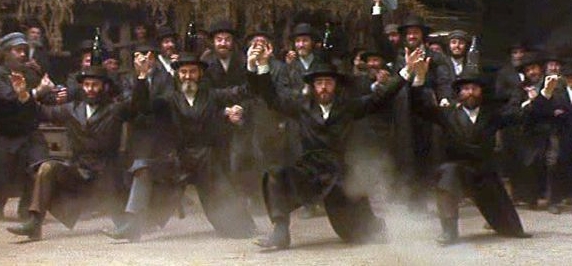
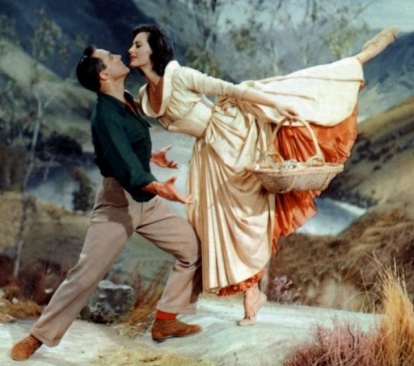
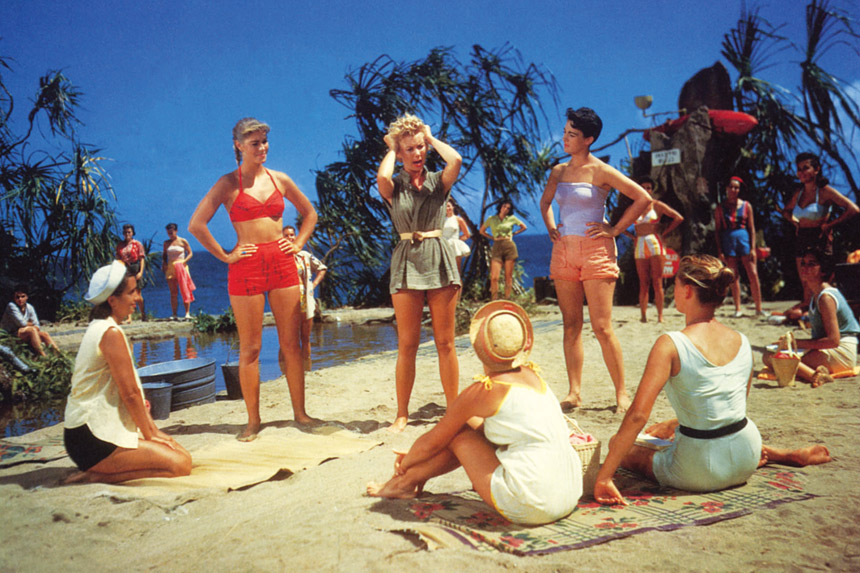
Changes are coming to Anatevka; a student from Kiev has arrived, Perchik, on top of news of Jews being evicted from their village. Perchik arranges to teach Tevye’s children, in exchange for room and food and accompanies Tevye home for the Sabbath. The tailor, Motel, a childhood friend of Tzeitel’s, also joins in the Sabbath. As the family prepares, Tevye’s wife, Golde, urges her husband to speak to the butcher, Lazar Wolf, who is interested in marrying Tzeitel. Meanwhile, Tzeitel argues with Motel; he needs to ask her father for her hand now, before an arrangement is made with Lazar Wolf; the young couple are in love. Motel is frightened by Tevye and remains silent during the Sabbath prayer.

Tevye visits Lazar Wolf and there is brief confusion on the nature of their conversation; soon cleared up and Tevye eventually agrees to the match. The men celebrate, drinking To Life, “l’chaim!” (This is a fun song!) At the bar, the Jewish men encounter the Russians and there is a back-and-forth between them, melding the dances at the end. [I love this dancing. When I was young, I was part of a Ukrainian dance troupe, friends of my mother’s. At one point, my brother could do some of those moves. The leader from the dance troupe taught the dances to the high school performers and members of the troupe danced during the community’s production.]

On his way out, Tevye is stopped by his friend, the Russian Constable. He warns Tevye that there will be an “unofficial demonstration” made. Come morning, Tevye tells Tzeitel of the arrangement. She cries and begs her father; is his agreement more important than her? Tevye won’t make Tzeitel marry Lazar Wolf. Motel comes by and Tzeitel nudges him to talk to Tevye. The nervous man grows a backbone and stands up to Tevye; the young couple had made each other a pledge; they love each other. Tevye debates (“on the one hand…on the other hand”) and agrees. They are thrilled and rush off. Motel believes that this was a Miracle of Miracles, equal to Daniel walking through the lion’s den. Now, Tevye has to tell Golde. He concocts a dream (this is a weird scene) that Golde’s grandmother visits to congratulate the family on Tzeitel’s (her namesake) marriage to Motel. Golde insists it’s Lazar Wolf. But Lazar Wolf’s first wife appears and vows to kill Tzeitel shortly after the wedding if she marries Lazar Wolf. Golde accepts the dream as a sign.

Tzietel’s sisters are finding men as well. The radical student Perchik charms Hodel and opens her eyes to changes in the world. In cities, men and women dance together. A Russian Christian, Fyetka comes to the aid of Chava when other men bother her. He has noticed she likes to read and offers a book to her; they can discuss it later.

bottle dance

Motel and Tzeitel marry; her parents reminisce to Sunrise, Sunset (a musical theme that appears throughout the film). There is a dance (again, love the music) and the men even perform a bottle dance. An argument erupts from the gifts between Lazar Wolf and Tevye; Perchik breaks it up by dancing with Hodel. Tevye supports his actions and dances with Golde, as well as Motel with Tzeitel. The Rabbi even joins, though he puts a kerchief between his hand and the lady’s. The evening ends on a sour note when Russian soldiers appear and break things. The Constable puts a quick stop to things; sadly, they only turn their attention to the town and smash and burn.

The second act opens with a reprise of Tradition. Some time has passed; it is now autumn and Tevye remarks to God that Motel and Tzeitel have been married for a while. Perchik tells Hodel he must leave, to support the students in Kiev. He, in a roundabout way, asks Hodel to marry him. She agrees. They then ask Tevye for his blessing, not his permission, contrary to tradition. Tevye debates and ultimately blesses their engagement and gives his permission. Perchik gives Tevye the idea to tell Golde he is visiting a rich uncle. The couple have given Tevye a thought; they love each other, so he asks Golde, Do You Love Me? After twenty-five years, they have come to love each other.

In winter, Perchik is arrested at the rally in Kiev and writes to Hodel. She decides to join him in Siberia and bids farewell to her father; her family will always be with her, even if she is Far From the Home I Love. Some happy news comes; Motel and Tzeitel have a new arrival; a sewing machine. Oh yes, and a baby boy as well. Fyetka tries to speak to Tevye, but is dismissed. Tevye warns Chava not to speak to him anymore; some things do not change. She should be interested in marrying a young man of her faith. She resists and tells her father that she wants to marry Fyetka. Tevye refuses. We next see Golde enter the Christian church and ask for the priest. She finds Tevye afterwards and informs him Chava and Fyetka have been married. Tevye tells his wife to go home to their other children (two more daughters); Chava is dead to them. He reminisces on his Little Bird (superimposed with a ballet). Chava finds him and begs her father’s acceptance. “There is no other hand!” Tevye cannot turn his back on his people, on his faith. Chava cries “Papa!”

More bad news comes. The rumors are true; verified by the arrival of the Constable; Anatevka is to empty of Jews in three days. The same thing is happening all over Russia. Tevye argues; they have always lived in this corner of the world, why should they leave? The Constable shouts, there is trouble in the world. Orders are orders! Tevye orders him off his land. One of the villagers asks the Rabbi, would now be a good time for the Messiah? The Rabbi responds, they will have to wait for him somewhere else. The villagers sing of their Anatevka; it wasn’t great, but it was home. Tevye and his family will go to America to family in New York. They hope that Tzeitel, Motel, and their son will be able to join them. Hodel and Perchik are still in Siberia. Chava stops by with Fyetka; they will not remain while the Jews cannot. Tzeitel speaks to her sister and passes on Tevye’s wish, “God be with you.” Chava promises to write. The last scene we see is the fiddler following Tevye’s family.

The first half of the show is far happier than the second half.  When I watch the film, I focus on the first half; it holds more of the fun music.  As I already mentioned, I enjoy the dancing in the show, having a bit of experience in it.  And when you focus on the happy parts; Tevye being frustrated by his daughters choosing their own husbands, which to us is completely normal, it distracts from the historical significance of the story.  Because those bad things happened and they happened a lot (and yeah…in a few decades, get worse).  But hey, they have bottle dancing!  And Tevye makes funny sounds talking to his animals!  And three women daydream about their perfect husband!  (They kind of get what they want, learned and interesting men, but not in the way they imagined and they all have to give something up, like financial security and family).

[Historical note: the term “pogrom” appears early in the show and refers to the persecution or massacre of an ethnic or religious group, mainly Jewish. A bit of foreshadowing in the show. I learned the term during my Honors’ Holocaust class in college.]

Next Time: Another iconic musical; Annie

“I Used to Be a Rovin’ Lad”

Brigadoon

My senior musical, once again in the ensemble, though I had a four-word solo in a big chorus number. My mother made my costume, so I would actually look Scottish and not American colonial (seriously, the costumes came with mop caps). Overall, I was just happy we were doing a musical about Scotland, but part of me was also disappointed I didn’t actually have a part. I already knew this show going in. The film stars Gene Kelly (most famous for An American in Paris and Singin’ in the Rain, but a staple of musicals in the fifties and sixties) as Tommy Albright, a New Yorker, hunting in Scotland with his friend. They get lost and discover the mysterious village of Brigadoon. Gene Kelly was also the choreographer of the film and thus it features a lot of incredible dancing. The musical was written by Lerner and Loewe, just as prolific as Rodgers and Hammerstein.

As the mists clear around Brigadoon at the start of the show, a quiet chorus sings Brigadoon. The show really starts with MacConnachy Square as the town rises for the day, selling their wares. And today is a special day; the wedding of Charlie Dalrymple to Jeanie Campbell. At the Campbell home, the young women are preparing. They talk about Jeanie Packing Up (which was not included in the film) and Jeanie’s older sister, Fiona remarks that she is Waitin’ for My Dearie.

The hunters, Tommy and Jeff, enter the village square truly perplexed not only at people’s dress, but Fiona was the only friendly person. Charlie however is thrilled and invites the strangers to his wedding, for he will Go Home with Bonnie Jean (this is a fun song). Fiona stops by the square for items for the wedding and takes Tommy out to find Heather on the Hill. While she is gone, Charlie stops by the house to sign the family Bible and sings to his intended, Come to Me, Bend to Me (very romantic, and sadly not included in the film). Local flirt, Meg Brockie takes Jeff for a nap, then makes a fuss when he doesn’t want to sleep with her, for she was trying to find The Love of My Life (also cut from the film, apparently too risqué).

brigadoon dancing

Tommy is quite taken by Fiona and remarks to Jeff when they meet up, It’s Almost Like Being in Love. However, he begins to take note of people mentioning a miracle and a blessing and finds the dates in Fiona’s family Bible. She takes them to the schoolmaster, Mr. Lundie, who tells them about Mr. Forsythe, the minister, praying to God for a miracle to protect the village from witches in the eighteenth century. [Historical note: not sure the person who wrote this musical quite figured out their timelines; the Battle of Culloden (those who watch Outlander will understand the significance) happened in Scotland in April of 1746 and this miracle supposedly happened in May of 1746 and witches were not as prevalent…maybe the English trying to take over their land. Witches might be a more reasonable cause a hundred years prior]. Carrying on, God granted a miracle, that Brigadoon would disappear into the mists and appear once every hundred years; when the villagers go to bed, it’s one year, when they rise the next morning, it’s a hundred years later [don’t think about the math too much or you realize bad things]. If someone from the outside wants to stay, they must love someone enough to leave their old life. But a villager can’t leave, or the whole village will disappear forever.

And this is where Harry Beaton causes a problem. He’s in love with Jeanie Campbell, who is happily marrying Charlie Dalrymple. The clans gather for the wedding, all clad in tartan (though if you want to see true Highland garb, watch Outlander; yes, tartan breeches were a thing, a weird thing, but nonetheless, real. Oh yes, and further historical note: it was after the Battle of Culloden that wearing tartan was outlawed, thanks to the English). And it is true Scottish custom that there need not be a minister present at a wedding, as long as the two being married share mutual consent [this has popped up in Scottish romances; women cannot be married against their will]. There is a dance, including a lovely one by Jeanie. Then a sword dance (real thing, and also cut from the film, boo). Harry participates and runs off after seeing Jeanie happy, shouting he will leave Brigadoon and doom them all. Tommy joins the men in The Chase, hunting Harry Beaton down before he can ruin things. Jeff has wandered off to hunt and thinks he’s shooting at a bird. Harry is the one who falls down dead.

Meg Brockie entertains the wedding guests with the tale of My Mother’s Wedding Day, until the men return with Harry (this is all cut from the film; Fiona and Jeanie’s father tells everyone to keep quiet and not disturb the joyous occasion. Another cut song by Tommy is There But For You Go I). Tommy is ready to stay in Brigadoon, until Jeff tells him what happened. Tommy begins to doubt enough that he won’t stay. But once he returns to New York and his fiancée, he cannot concentrate. Little words will remind him of something and he ignores what is going on. Tommy breaks it off with his fiancée and drags Jeff back to Scotland. He gets a miracle of his own; the town was just starting to disappear and he can enter. As Mr. Lundie remarked, “if you love something enough, anything is possible.”

The music in this show is fun, especially the songs that were cut; upon re-watching of the film, I had never noticed that they weren’t in the film. It features, as many other musicals do, a couple falling in love at first sight; which I always argue is never a good way to start a lasting relationship, or least, not a believable one. Gene Kelly is of course, a remarkable dancer and his partner is skilled as well.

Up Next: Seven Brides for Seven Brothers

“Rub Him Outta the Role Call, and Drum Him Outta Your Dreams”

South Pacific

My high school performed this Rodgers and Hammerstein show my junior year. My friend from church, Chelsea was the lead. I was once again simply in the ensemble as a nurse. The show is set on a South Pacific island during World War II (there was a remake in 2001 starring Glenn Close and Harry Connick Jr, and a special concert at Carnegie Hall starring Reba McEntire in 2005 [which was, ironically, the year my high school performed]). Marine lieutenant Joe Cable comes to go on a secret mission to spy on the nearby Japanese and wants local French planter Emile de Becque to help. Emile has also fallen in love with a Navy nurse on the island, Nellie Forbush. Local woman, known as Bloody Mary likes how handsome Cable is and decides he is right to marry her daughter, Liat.

The naval personnel stationed on the island, the “Seabees” start off singing about Bloody Mary, then remark There is Nothin’ Like a Dame (gotta say, love the deep, full tone the men’s chorus achieves.  Ironically, we sang this at a county choir performance the same year). Nellie and the other nurses run by and we find out that sailor Luther Billis runs several side jobs to help people out. This is when Bloody Mary spots Lt. Cable and tells him about Bali Ha’i. From there, we check on Emile and Nellie at Emile’s plantation. Nellie turns out to be a Cock-Eyed Optimist. Both worry that they are not right for the other, but in just a few weeks they have fallen in love. Emile is certain and remarks in Some Enchanted Evening (the most well known song from the show) “once you have found her, never let her go.” Nellie returns to base and Emile’s children come out to see their papa and sing a little French song, Dites Moi.

Lt. Cable has spoken to command and they call in Nellie to ask her questions about Emile, determining whether he is reliable to take Joe to the other island. It is on record that Emile killed a man back in France. This concerns Nellie and she remarks to her friends, I’m Gonna Wash That Man Right Outta My Hair. Unbeknownst to her, Emile has come by; she’s startled out of her dance and rinses her hair to speak to him. He has come to invite her back to his plantation for a party and to tell her more about himself. The man he killed in France was a bully, during a bar fight. Then he asks Nellie to marry him. Relieved and ecstatic, Nellie has changed her tune, I’m in Love with a Wonderful Guy. But when Emile meets with command, he declines the mission, not wanting to risk his future with Nellie.

gonna wash that man right outta my hair

Frustrated, Cable lets Billis take him to Bali Ha’i. Billis observes the famous boar’s tooth ceremony and Bloody Mary introduces Joe to Liat and he instantly falls in love with the girl who is Younger Than Springtime. He sadly has to leave (after they spend some time together). And after Emile’s party, Nellie finds out about his children and runs off when she realizes he had Polynesian wife before her (I don’t quite get that thinking, but I also wasn’t around during the forties and fifties).

The second half of the show returns to Bali Ha’i and Bloody Mary explains Happy Talk and how fine of a husband Joe Cable will make for Liat. But he won’t abandon his fiancée in Philadelphia. Now Liat will have to marry an older French plantation owner. We’re cheered up a bit by the Thanksgiving show that Nellie puts on. Honey Bun is a fun number, with Luther Billis. Emile has come to see the show and sent Nellie flowers, but when he talks to her, she can’t explain why she is so upset about his previous wife and she runs off. Joe remarks to the Frenchman You’ve Got to be Carefully Taught, about racism, which he is struggling with in regards to Liat. But he’s come to the decision that he won’t leave Liat, except it’s time to go on the mission and Emile has agreed, now that Nellie has broken his heart; This Nearly Was Mine.

They land safely and get word back to base about the Japanese’s movements. Nellie finds out that Emile went and her heart decides that she does love him. Sadly, Joe dies on the island (enemy fire) and Emile gets the last news out; the Japanese are pulling out and will be the perfect target. So all the Marines and seamen and nurses gather up to leave. Nellie is with Emile’s children and listen to their reprise of Dites-Moi when Emile walks in. At least one story ended happy.

I have fairly fond memories of performing; one of my classmates asked my brother (on break from a military college) for help. I was still put in horrible costumes, but I enjoyed the group performances. Watching the movie again, the filters are horrible. Some of the music is still good, but I’m not fond of the storyline between Joe and Liat; it’s too sudden. And they know nothing about each other. So, not a favorite.

Next Time: Brigadoon (which is a favorite)