A Random Fandom Update

Thought I’d take a step away from my musical blogs (don’t worry, already got the next one planned) and mention the elephant in the room: staying at home because of coronavirus. I work retail, so I have not been to work in several weeks. For the most part, I’m handling it fine; I’ve managed to work on other writing projects, I’ve crocheted several afghans, I’ve gotten back to my books (huzzah!), and I’ve caught up on some movies and shows.

So let me go ahead and state: SPOILERS ALERT!

Finally watched Frozen II; I liked the story. I don’t think the music was quite as memorable as the first and I still can’t stand Olaf, but the sisterly bond was great and very interesting to delve into their family history. (Puts to rest the fan connection between Frozen and several other Disney movies, including Tangled).

Also finally watched Crimes of Grindlewald. Excellent. Though while watching, I had to remind myself that Leta Lestrange was not a direct relation of Bellatrix (same family, but distant cousins). And the Dumbledore angle was better than I feared it to be; I thought they would focus entirely on Dumbledore’s infatuation with Grindlewald, but SPOILER a blood pact is a more solid excuse. And I totally do not believe Grindlewald about Creedence’s real name; the only plausible way he is a Dumbledore is as a cousin.

Supernatural has put filming their final season on hold, but it’s ramping up to be a doozy. News was just released that the final seven episodes will air in the fall. Jack is back, yay I guess. I have loved seeing some old favorites again; Benny was seen briefly. Loved that Eileen was back (then dead, then back!) and I really wish that she could get together permanently with Sam. (Then we find Dean someone, unless they make Destiel canon, which would be cool). And it was hilarious to have both Daneel Ackles and Genevive Padalecki back and in the same episode! The alternative universe Sam and Dean were hilarious as well (though can’t beat their father coming back; love that episode and cried along [unless you watch the blooper where Jared hits Jeffrey somewhere with the pearl; everyone is on the floor in laughter]). I really want to punch Chuck in the face and I hope Amara may come back to help. The boys are shaping up to fight God; I believe they will win and save the world because that is what they and the show are all about; but it’ll cost them. I still figure there is a decent chance the show will end with both boys dead; unless they are serious about producing a film later. If not, the only way for the fans to accept that it is over, is for our beloved boys to die. Even then, we’ll still write fanfiction.

Speaking of fanfiction; I was reading something on Facebook the other night about how fanfiction started. I mean, I had an idea, but it was interesting and a little unnerving. I realized why disclaimers are always posted at the top because you don’t want some bigwig suing you, but to find out that fan writers were punished… Some of the more recent successes give me hope; but I still am not likely to post what I have written. I share with a few friends, but I use it for my own practice. And some of this may end up as an essay or article. In case you’re interested, Supernatural accepts its fan writers and the fandom that has sprung up around it, which makes me love the fandom and the stars even more.

MacGyver just finished its fourth season, which went in a different direction than I originally imagined, and has been renewed for a fifth season. Yay! Their season got cut short due to the virus, but they must have filmed enough ahead to finish things up. I personally miss Jack and wish they would at least mention him in the story. Mac’s spiraling a bit and the fans know that Jack would help him. Still not a hundred percent sure of Russ’s motivations, but he at least tries to keep Mac alive; and Matty is still there, yay! I adored the episode with the plane and Mac in Tesla’s house; the writing has been excellent this season. Personally, I have never been fond of pairing Mac with a woman because I feel it detracts from the story and female characters should exist in shows outside their connection to a man. I’ve warmed up to Desi, but still not wholly sure. I like Riley, and I’m liking the Riley – Mac dynamic, but this triangle is only going to end badly. I shed tears when SPOILER James died. And I’m even sad that Auntie Gwen died; because she had just decided to protect Mac and it would have been great for Mac to have a familial connection, particularly to his mother. Though, baby Angus MacGyver is the cutest baby in the world! (And I refuse to believe that he’s named Angus because of a sign for beef; that’s demeaning to the character). Fanfiction should keep me occupied until it’s back.

Also been re-watching Hallmark’s Good Witch, going through the most recent episodes and the movies and now starting at the beginning of the show. Some days I can handle Hallmark and some days I just get annoyed; real life does not give us the right guy and the right job to keep us happy. But I love the magical elements of Cassie and the story. She and Sam are adorable. I’d love to live in Middleton. And when things get rough, there is a comfort in knowing that things will turn out alright; it’s Hallmark.

My mother and I have also managed to catch up on Outlander; we got behind. I miss them in Scotland; that was a reason I loved the show. Not fond of the time they were in the Caribbean, but now that they’ve settled in the colonies, my interest is peaking again. I’m glad Brianna has joined her mother and is bonding with her father. And proud that Roger has followed (though at times he was a bit of an idiot). I’m glad Stephen Bonnet finally was stopped; though I wished it had happened sooner. Whenever I would see Billy Boyd, I kept commenting “bad Pippin!” though I had to explain to my mother what I meant. I like the family that is growing at Fraser’s Ridge, and Ian has returned. Brianna, Roger, and Jemmy have also ended up staying, yay. The final episode; they actually found Claire sooner in the episode I thought they might, but we did get to see Claire’s struggles with the aftermath. I’m sure the time-traveling Native American will return; we’ll have to see what sort of time jump there may be before the next season.

Also enjoying watching the original MacGyver series with my parents and catching episodes of Race to the Edge (still love the show!). We’ve put on a few other movies, like some older James Bond (which was a bit weird), and re-watching the Librarian films (I’ll be covering all of those and the show upcoming. And it also gave me a writing idea). We are also going back and re-watching the newest Star Wars movies in preparation for finally getting to Rise of Skywalker (never fear, they are on the list to cover…down the road; MCU stands between us and them).

As for books; since I am first and foremost a reader; I have made a tiny dent in my “to-read” pile (and bought a few to add). Finally finished Raging Heat, a Richard Castle book (based on the show Castle that I don’t think I’m going to be covering, due to length) and Ireland’s Pirate Queen about Grace O’Malley, which have been on the back burner for a while. Enjoyed Castle and Lost Symbol by Dan Brown. Read Jeffersonian Key by Steve Berry. Few other books in there that weren’t great, but a relatively quick read; got around to Sense and Sensibility and that was a bit boring; the movie helped make sense. Just finished a Philippa Gregory book, The Lady of the Rivers which is a prequel in a way to White Queen (my mother and I have watched the first episode of the series). Parts are interesting and it is relatively well-written, but parts are now appearing a bit implausible (which happens with her books). Now I can move on to other books on my list. My Richard Castle, Nikki Heat series is up to date, but I want to get to some others first. I’ve got half a shelf of romances that I need to catch up on, so I can go looking for those newest books. Picked up another Librarians novel (based on the show) and some Peter Jackson/ Lord of the Rings books (like I need more of those). Some history series and the first book to a couple fantasy series I’d like to try. Some fun books I am holding off on as a reward, like behind the scenes of MacGyver, the last How to Train Your Dragon art book (I am that much of a nerd).

What are you guys doing to keep your minds occupied? Any good movies or books? Creative projects?
“‘Stead of treated, we get tricked, ‘stead of kisses, we get kicked!”

Annie

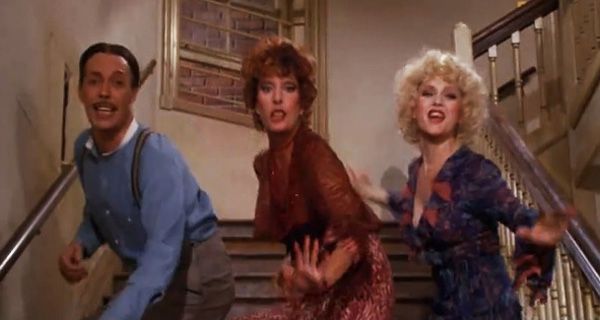
Another musical that most everyone has heard of; the little curly red-headed orphan girl. I think my high school put on a production years before I was in high school; I vaguely remember a classmate when I was in elementary school being one of the orphans. It’s gone through a few iterations, but the most famous is the 1982 movie starring Albert Finney (Kincade in Skyfall [the Bond film], John Newton in Amazing Grace) as Oliver Warbucks, Carol Burnett (classic comedian with her own show from 1967 to 1978; she even made a few guest appearances in the rebooted Hawaii Five-0 ) as Miss Hannigan, Tim Curry (Clue [which happened to have been my senior class play; I was the dead cook], Rocky Horror Picture Show [that was just about the weirdest movie I ever tried to watch], Cardinal Richelieu in Disney’s Three Musketeers) as Rooster Hannigan, Bernadette Peters (would later be a part of Disney’s production of Rodger’s and Hammerstein’s Cinderella) as Lily St. Regis, and Aileen Quinn as Annie. Edward Herrmann (Gilmore Girls) also appears as FDR.

The story is set in 1933 New York City, at the Hudson St. Home for Girls. Annie is singing Maybe to herself, wondering about the family she has waiting out there and when they’ll come get her. One of the younger girls in the room, Molly, wakes up from a nightmare and calls for Annie. The other girls wake up and fight for a bit. But before they can all fall back asleep Miss Hannigan enters and orders them awake and to start their chores. She has trained them to say “We love you Miss Hannigan,” instead of any backtalk. The girls start It’s a Hard Knock Life for Us (some are skilled gymnasts). Annie hides in the laundry basket as another escape attempt. Outside, she meets a scruffy dog being tormented by a bunch of boys. She punches two boys in the face (she is a tough little girl) and adopts the Dumb Dog. She’s caught by a police officer and taken back to the orphanage where the girls name the dog Sandy. Miss Hannigan locks Annie in her closet, but before she can punish her, Miss Grace Farrell shows up, looking for an orphan to live at Oliver Warbucks’s mansion for a week. Annie comes out of hiding to persuade Grace to take her.

The staff take a liking to Annie right away and outline her new life for a week, after they correct Annie’s misinterpretation that she is there to work . Annie gleefully says I Think I’m Gonna Like it Here. Oliver Warbucks arrives and breaks up the song and dance. Grace namedrops Vanderbilt, Carnegie, and Rockefeller, along with the President. He’s surprised by Annie and wants to exchange her for a boy; hosting an orphan is only done to help his image, but she charms him to keep her.

Back at the orphanage, Miss Hannigan is despairing over Little Girls (she spends a lot of her day drinking). Her brother, Rooster stops by with Lily St. Regis, asking for money. She sends him away; he steals from her anyhow.

Annie starts to endear herself to Warbucks, Sandy even helps stop an assassin, along with his two bodyguards. Grace explains to Annie that the man was a Bolsehvik. Another evening, Warbucks is persuaded by Annie and Grace, Let’s Go to the Movies. (Yes, those were the Rockettes dancing before the film). Annie falls asleep at the movie, so Warbucks carries her home and to bed, with some help from Grace. The next morning, Grace approaches Warbucks, well, he’s asked her to call him Oliver, and wants to adopt Annie. Oliver insists he is a businessman; he loves money and power, not children. But Grace is very pretty when she argues and he gives in. Grace cheerfully tells the others, We’ve Got Annie. Oliver takes the paperwork to the orphanage and argues with Miss Hannigan to get her to Sign the papers (Miss Hannigan also has a habit of attempting to flirt with any man that comes near the orphanage). But when Oliver presents a new locket (from Tiffany’s) and tells Annie the good news, she quietly informs him that she’s waiting for her birth parents to claim her. So Oliver issues a reward ($50,000).

Warbucks pitches the idea on the radio, after the catchy You’re Never Fully Dressed Without a Smile ditty (reprised by the girls at the orphanage). As expected, a crowd appears at the mansion, so Oliver takes Annie to Washington D.C., to meet President Franklin Delano Roosevelt. Oliver and the President argue over the New Deal and Annie cheers them up with her signature Tomorrow tune.

easy street

Rooster and Lily come up with the idea to pose as Annie’s parents and go to Miss Hannigan for specific details on Annie so they can easily claim and split the reward. Molly overhears the plan, as well as Miss Hannigan revealing that Annie’s parents died years ago and the front piece to her broken locket has been sitting in a box since the fire. It’ll be Easy Street for the trio. (Yes, they’re the bad guys, but it’s such a fun song; they let the actors have some fun). Once they have the money, Rooster intends to drop Annie in the river. Molly rallies some of the other girls to tell Annie, but they’re caught and locked in the closet while the adults head to the mansion. Oliver does not trust them, but they have the locket and Annie agrees to go with them. She’ll send her new clothes to the orphanage. Rooster and Lily pick up Hannigan once they’re outside the mansion and Rooster keeps a hold of Annie.

The girls manage to escape and run the length of Fifth Avenue to warn Warbucks; but they’re too late. He’s immediately on the phone with the police and his bodyguard, Punjab takes the copter. Annie talks Lily into stopping the truck so she “can go to the bathroom.” Instead, she grabs the check and runs. When she rips it up, Rooster swears he’ll kill her. Hannigan realizes her brother means it; she chases after him. Annie comes to a raised railroad bridge and begins climbing. Rooster knocks his sister down when she tries to talk him out of killing a little girl. Rooster climbs after Annie. At the top, he tries to drop her, but Punjab flies in and rescues Annie. With a kick, Rooster slides down the bridge to the waiting police.

Oliver throws a party for Annie, themed for the Fourth of July (the show typically ends at Christmas, but it would have cost too much to get that much fake snow during the summer filming schedule). He presents her with the new locket and when she takes it, she proclaims, “I love you, Daddy Warbucks.” Now, I Don’t Need Anything But You, the pair duets and Annie shows off her tap skills. The other girls are in attendance, nicely dressed, as is the president, and even Miss Hannigan. A reprise of Tomorrow closes the show.

Some of the songs are so much fun from this show, like Easy Street (probably my favorite song due to Curry, Peters, and Burnnett selling it), Hard Knock Life, and Fully Dressed Without a Smile. And every musical student knows how to belt out Tomorrow. It’s a family friendly show, certain to put a smile on your face.  The grouchy businessman develops a heart, there may or may not be a budding romance between him and his secretary who is a fully fledged character in her own right, and I believe that Annie’s rough edges are softened by having people who honestly care about her.  Miss Harrington isn’t completely bad, but she’s certainly not nice.

In 1999, Disney produced a version with Victor Garber as Oliver Warbucks, Kathy Bates as Miss Hannigan, Alan Cumming (Boris in GoldenEye, Spy Kids, X-2) as Rooster, Kristin Chenoweth as Lily, and Audra McDonald (Broadway star and Madame Garderobe in the live-action Beauty and the Beast movie) as Grace Farrell. This version cut several songs and included NYC (which featured an appearance by Andrea McArdle, who originated the role of Annie on Broadway in 1977) and Something Missing. It keeps the Christmas timeline and the imposters never make it out the door with Annie. I am aware that there was another update made in 2014, but I haven’t seen the film and not keen, especially if it doesn’t keep the songs. In terms of the Disney productions of some musicals; I would personally rank them Cinderella, Annie, Music Man. Music Man is not a favorite show anyways, and Cinderella is happier.

Up Next: A more modern classic, Grease

(Anyone else think Queenie Goldstein looks like Lily St. Regis?)

“We know that when good fortune favors two such men, it stands to reason we deserve it too!”

Fiddler on the Roof

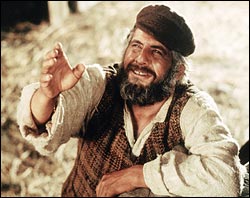
One of those iconic musicals that most everyone has probably heard of. The soundtrack is fun (yes, that is the John Williams listed as the orchestrator; no, he did not compose the music). My high school did this musical the year before I entered. And the community theatre performed it fairly recently; my family went to see the performance because we knew the leading man. The story is set in the early twentieth century in Russia. We begin with a silhouetted fiddler playing on a roof. The story is narrated by Tevye, a Jewish peasant. He remarks that we are all like fiddlers on a roof, trying to scratch out a tune, without breaking our necks (when the high school did its production, they brought in a younger violinist; very good and easier to put on a set). The Jewish community in Anatevka is full of Traditions; each person in the family has a role to play; they know who they are and what God expects of them. The fathers are head of the house, mothers keep the house, sons learn a trade, and daughters learn from their mothers and will marry whomever their fathers decide. We also get a glimpse of their larger world; the Rabbi asks that God bless and keeps the Tsar far from them and the Jews don’t bother the Christians that live next to them and so far, the Christians don’t bother them.

tevyeAt Tevye’s home, Yente the matchmaker visits with a match for the eldest daughter, Tzeitel. Tzeitel’s next younger sisters Hodel and Chava are eager for Tzeitel to marry so they may marry next. But Tzeitel points out the consequences of Matchmaker. They are poor girls with no dowry, they’ll be lucky for any man, not necessarily the perfect match. Tevye arrives home, tired from working and ponders If I Were a Rich Man (and everyone knows the dance for that!)
Changes are coming to Anatevka; a student from Kiev has arrived, Perchik, on top of news of Jews being evicted from their village. Perchik arranges to teach Tevye’s children, in exchange for room and food and accompanies Tevye home for the Sabbath. The tailor, Motel, a childhood friend of Tzeitel’s, also joins in the Sabbath. As the family prepares, Tevye’s wife, Golde, urges her husband to speak to the butcher, Lazar Wolf, who is interested in marrying Tzeitel. Meanwhile, Tzeitel argues with Motel; he needs to ask her father for her hand now, before an arrangement is made with Lazar Wolf; the young couple are in love. Motel is frightened by Tevye and remains silent during the Sabbath prayer.

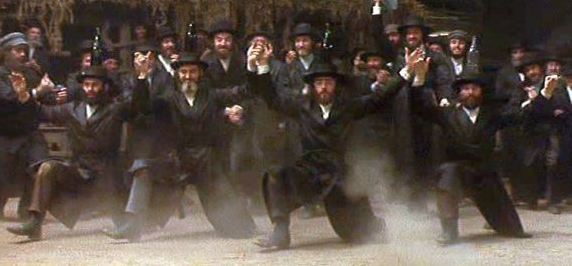
Tevye visits Lazar Wolf and there is brief confusion on the nature of their conversation; soon cleared up and Tevye eventually agrees to the match. The men celebrate, drinking To Life, “l’chaim!” (This is a fun song!) At the bar, the Jewish men encounter the Russians and there is a back-and-forth between them, melding the dances at the end. [I love this dancing. When I was young, I was part of a Ukrainian dance troupe, friends of my mother’s. At one point, my brother could do some of those moves. The leader from the dance troupe taught the dances to the high school performers and members of the troupe danced during the community’s production.]

On his way out, Tevye is stopped by his friend, the Russian Constable. He warns Tevye that there will be an “unofficial demonstration” made. Come morning, Tevye tells Tzeitel of the arrangement. She cries and begs her father; is his agreement more important than her? Tevye won’t make Tzeitel marry Lazar Wolf. Motel comes by and Tzeitel nudges him to talk to Tevye. The nervous man grows a backbone and stands up to Tevye; the young couple had made each other a pledge; they love each other. Tevye debates (“on the one hand…on the other hand”) and agrees. They are thrilled and rush off. Motel believes that this was a Miracle of Miracles, equal to Daniel walking through the lion’s den. Now, Tevye has to tell Golde. He concocts a dream (this is a weird scene) that Golde’s grandmother visits to congratulate the family on Tzeitel’s (her namesake) marriage to Motel. Golde insists it’s Lazar Wolf. But Lazar Wolf’s first wife appears and vows to kill Tzeitel shortly after the wedding if she marries Lazar Wolf. Golde accepts the dream as a sign.

Tzietel’s sisters are finding men as well. The radical student Perchik charms Hodel and opens her eyes to changes in the world. In cities, men and women dance together. A Russian Christian, Fyetka comes to the aid of Chava when other men bother her. He has noticed she likes to read and offers a book to her; they can discuss it later.

bottle dance

Motel and Tzeitel marry; her parents reminisce to Sunrise, Sunset (a musical theme that appears throughout the film). There is a dance (again, love the music) and the men even perform a bottle dance. An argument erupts from the gifts between Lazar Wolf and Tevye; Perchik breaks it up by dancing with Hodel. Tevye supports his actions and dances with Golde, as well as Motel with Tzeitel. The Rabbi even joins, though he puts a kerchief between his hand and the lady’s. The evening ends on a sour note when Russian soldiers appear and break things. The Constable puts a quick stop to things; sadly, they only turn their attention to the town and smash and burn.

The second act opens with a reprise of Tradition. Some time has passed; it is now autumn and Tevye remarks to God that Motel and Tzeitel have been married for a while. Perchik tells Hodel he must leave, to support the students in Kiev. He, in a roundabout way, asks Hodel to marry him. She agrees. They then ask Tevye for his blessing, not his permission, contrary to tradition. Tevye debates and ultimately blesses their engagement and gives his permission. Perchik gives Tevye the idea to tell Golde he is visiting a rich uncle. The couple have given Tevye a thought; they love each other, so he asks Golde, Do You Love Me? After twenty-five years, they have come to love each other.

In winter, Perchik is arrested at the rally in Kiev and writes to Hodel. She decides to join him in Siberia and bids farewell to her father; her family will always be with her, even if she is Far From the Home I Love. Some happy news comes; Motel and Tzeitel have a new arrival; a sewing machine. Oh yes, and a baby boy as well. Fyetka tries to speak to Tevye, but is dismissed. Tevye warns Chava not to speak to him anymore; some things do not change. She should be interested in marrying a young man of her faith. She resists and tells her father that she wants to marry Fyetka. Tevye refuses. We next see Golde enter the Christian church and ask for the priest. She finds Tevye afterwards and informs him Chava and Fyetka have been married. Tevye tells his wife to go home to their other children (two more daughters); Chava is dead to them. He reminisces on his Little Bird (superimposed with a ballet). Chava finds him and begs her father’s acceptance. “There is no other hand!” Tevye cannot turn his back on his people, on his faith. Chava cries “Papa!”

More bad news comes. The rumors are true; verified by the arrival of the Constable; Anatevka is to empty of Jews in three days. The same thing is happening all over Russia. Tevye argues; they have always lived in this corner of the world, why should they leave? The Constable shouts, there is trouble in the world. Orders are orders! Tevye orders him off his land. One of the villagers asks the Rabbi, would now be a good time for the Messiah? The Rabbi responds, they will have to wait for him somewhere else. The villagers sing of their Anatevka; it wasn’t great, but it was home. Tevye and his family will go to America to family in New York. They hope that Tzeitel, Motel, and their son will be able to join them. Hodel and Perchik are still in Siberia. Chava stops by with Fyetka; they will not remain while the Jews cannot. Tzeitel speaks to her sister and passes on Tevye’s wish, “God be with you.” Chava promises to write. The last scene we see is the fiddler following Tevye’s family.

The first half of the show is far happier than the second half.  When I watch the film, I focus on the first half; it holds more of the fun music.  As I already mentioned, I enjoy the dancing in the show, having a bit of experience in it.  And when you focus on the happy parts; Tevye being frustrated by his daughters choosing their own husbands, which to us is completely normal, it distracts from the historical significance of the story.  Because those bad things happened and they happened a lot (and yeah…in a few decades, get worse).  But hey, they have bottle dancing!  And Tevye makes funny sounds talking to his animals!  And three women daydream about their perfect husband!  (They kind of get what they want, learned and interesting men, but not in the way they imagined and they all have to give something up, like financial security and family).

[Historical note: the term “pogrom” appears early in the show and refers to the persecution or massacre of an ethnic or religious group, mainly Jewish. A bit of foreshadowing in the show. I learned the term during my Honors’ Holocaust class in college.]

Next Time: Another iconic musical; Annie

“Even guys with two left feet, come out alright if the girl is sweet.”

White Christmas

Normally, I am the last person to encourage early Christmas movies; I have worked retail for seven years, the holiday falls decidedly after Thanksgiving and Halloween. But, I’m reviewing my favorite musicals and this certainly is one. We watch it every year, usually when we decorate the tree (one week prior to Christmas). I had a friend in college who was in a community production of the show, so it was interesting to see how the stage production differs from the film.

The film stars crooner Bing Crosby (famous for singing Irving Berlin’s White Christmas) as entertainer Bob Wallace, Danny Kaye as funnyman Phillip Davis (he reminds me of Donald O’Connor from Singin’ in the Rain…and Donald was actually cast in the role, until he got sick; and he had taken over from Fred Astaire), professional dancer Vera-Ellen as Judy Haynes, and Rosemary Clooney (aunt to George Clooney as well as a popular singer) as older sister Betty Haynes. As I’ve commented before, Mary Wickes (Sister Act, The Trouble with Angels, and Music Man) appears as Emma Allen, the housekeeper.

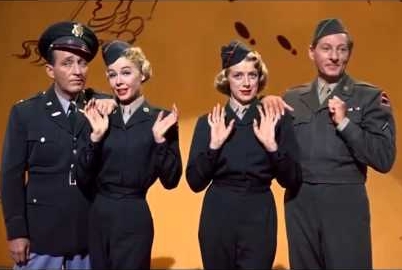
It opens on Christmas Eve, 1944, on the German war front. Wallace and Davis are putting on a little Christmas show for the troops and their commander, General Waverly stops by before he takes a new position. Bob finishes White Christmas (this is actually not the first film to feature the song or Bing singing it; first was Holiday Inn, which features songs [by Irving Berlin] and routines for all seasons) and has a slam-bang finish he wants to perform for Waverly. The general stands up and encourages his troops. To get off the stage, Bob starts We’ll Follow the Old Man (love the song). There is an attack and Phil saves Bob’s life, getting hurt in the process. Bob is grateful and Phil talks him into starting a two-man show with him once the war is over. They are incredibly popular and there’s a cute medley of tunes from that era, including Blue Skies and the duo eventually produce a musical.

But Phil would like some time away from work and tries to hook Bob up with a variety of women, but he’s not interested (someone please explain what “mutual, I’m sure,” means, because I’ve never gotten it). Those girls don’t want to settle down. Before they spend their holiday in New York City, they have promised an old pal in the Army that they’d check out his sisters’ act. Betty and Judy Haynes are surprised at the appearance of the famous duo, well, Betty more than Judy, for Judy actually wrote the performers, trying to get an edge in the industry. The men are pleasantly surprised by the Sisters (another favorite of mine) and immediately attracted. Phil arranges them “boy, girl, boy, girl,” at the table to discuss matters, then Judy sweeps him away, for The Best Things, Happen While You’re Dancing. Vera is an excellent dancer. Betty comes clean on the matter to Bob and they disagree a bit, but figure they won’t see each other again, so let it lie. Excepet the girls got into trouble with the last place they were staying, running a rug, and the gentlemen help them out. Phil gives the ladies his tickets for the train and talks Bob into a distraction to buy time. Thus, Bob Wallace and Phil Davis perform Sisters with the feathered fans (they enjoy themselves and turns out, it was Bing and Danny messing around, but the director liked it so much, he worked it into the film).

The men catch their train in the nick of time, but Phil doesn’t have the tickets, so they must purchase new ones and sit up all night. They bump into their drawing room, revealing the Haynes sisters. Bob is persuaded to stay on the train for Vermont, instead of getting off at New York. “Must be beautiful this time of year, all that snow.” The quartet extols the virtues of Snow (Vera’s vocals were dubbed). However, when they reach Vermont, it is sunny and the state hasn’t had snow since Thanksgiving (due to my family’s travels and my brother attending college in Vermont, there is sadly no Pine Tree, Vermont). A further surprise, Bob and Phil discover that the Columbia Inn (the set is reused from Holiday Inn), where the Haynes sisters are booked, is owned and operated by General Waverly. The inn is struggling with the unseasonable weather and the boys decide to help by bringing their show up to the inn. They’ll fill in with the Haynes sisters.

Minstrel Show segues into Mandy, all with glittering costumes and showcasing Judy’s dancing. Betty and Bob begin to get along and Judy attempts to set her sister up. Bob and Betty share a cozy time in the main lodge, discussing sandwiches (thrown in by Bing) and Count Your Blessings. Bob discovers that Waverly has been hoping to get back into the Army; he wants a command position, but has to read him the news that it won’t work out. He has another idea while Danny runs Choreography (how does Vera do that with her tap shoes?); he’ll get on the Ed Harrison show and get the men back together for the general. Emma listens in on the other line, but doesn’t hear the whole conversation, so she mistakenly believes that Bob is doing it as a plug for his show, which she tells Betty. Betty is now cool to Bob. Judy and Phil decide to stage an engagement between themselves, hoping Betty will stop mother-henning Judy and thus pursue her own relationship with Bob. At a cast party, Phil announces “I don’t know if the Best Things Happen While You’re Dancing, or if they just happen in Vermont;” he and Judy are engaged. Instead of bringing Bob and Betty together, Betty leaves for a solo act.

After the fast-paced Abraham dance, Judy discovers Betty’s letter and she and Phil tell Bob the truth, so he stops to see Betty on his way to the Ed Harrison show. Love, You Didn’t Do Right By Me expresses Betty’s feelings; she had fallen for someone she thought was a knight on a white horse and was disappointed. Bob doesn’t have time to fully explain the situation and find out why Betty is mad at him. But she sees his spot on the show, What Can You Do with a General? and is pleased. Meanwhile in Vermont, Phil pretends to hurt his leg to keep the general away from the television.

gee army

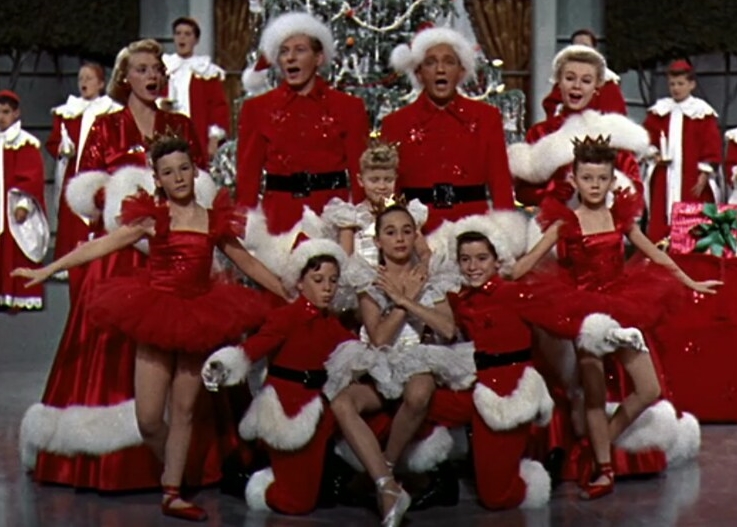
The big night has arrived and there is a huge turnout of soldiers for General Waverly. He is forced to come down in his uniform and is stunned by the sight. The men repeat We’ll Follow the Old Man. Waverly is visibly touched. Bob and Phil start Gee, I Wish I Was Back in the Army and are pleasantly surprised by the appearance of Betty. They finish with White Christmas, topped with the news that is has begun to snow (I love the red gowns in the scene; and note, that girls that young now are not on pointe). Betty and Bob are back together and Judy and Phil are officially together. Just happy ending all around.

white christmas finale

I love basically all the songs in this show.  The Christmas season in my house is not complete without this film.  It’s a favorite of my father’s, and is a family feel-good film.  The characters do not instantly fall in love; there’s a bit of drama (but not too much), miscommunication and when you think everything is falling apart, it comes back together.

Up Next: Fiddler on the Roof

“Simple and sweet…and sassy as can be!”

Seven Brides for Seven Brothers

This is a favorite of my mother’s (she was starting to wear the color out on the tape before we got the DVD) and has become one of my favorite musicals as well. My mother took me to Pittsburgh to see it on stage as a treat in high school. A few interesting facts: was produced by the same studio as Brigadoon and outperformed it. And there was a brief 80’s show based on the story and starred Richard Dean Anderson (original MacGyver). The film stars Howard Keel (a staple of musicals in the 1950s) and Jane Powell. Russ Tamblyn (Riff from West Side Story) is the youngest Pontipee brother, Gideon. The story is set in 1850 in the Oregon Territory.

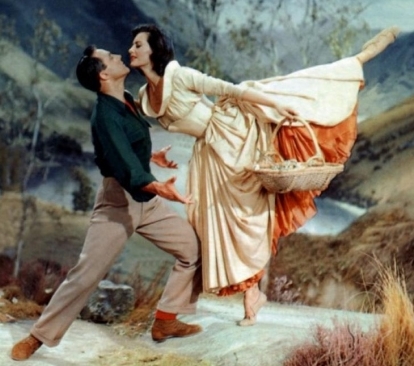
Adam Ponitpee is the eldest of seven brothers and comes to town to trade and find himself a wife. As he looks over the ladies of the town, his deep voice belts out Bless Your Beautiful Hide and finally settles on Millie when he spies her chopping wood and serving food to half a dozen men. She agrees to the hasty wedding, happy to get away from the inn. On their way through Echo Pass to the back country, she sweetly sings Wonderful, Wonderful Day. Then she gets an unwelcome shock at the house in the form of her new husband’s six brothers. They’re all filthy and the house is a mess. The Pontipees’ parents named their children in alphabetical order with Bible names: Adam, Benjamin, Caleb, Daniel, Ephraim, Frank (short for Frankincense, since there really wasn’t an “F” name in the Old Testament), and Gideon. Adam leaves Millie to get to work. At dinner she finds out they have deporable manners and shoves the table over: “if you’re going to act like hogs, then you can eat like hogs!” She refuses to let Adam sleep with her on their wedding night, angry that he let her carry on about her dreaming of caring for only one man and not correcting her. He decides to sleep in the tree and she takes pity on him; When You’re in Love, but Adam crashes into the bed. (Don’t worry, this isn’t the typical ‘love at first sight’ story).

The next morning, Millie starts her chores; she’s already washed the brothers’ outer clothes and demands their underwear they sleep in before they can have breakfast. They must also wash and shave. A pleasant surprise; she’s married into a handsome family of red-heads. And being without clothes means the brothers have to behave nicely in order to get food. They’re so taken with their new sister they all accompany her to town and are determined to get girls for themselves. But being backwoodsmen, they don’t know who to talk to girls, so they get into a fight with local townsmen. Millie takes them home and teaches them Goin’ Courtin’. The girls in town all have several men chasing after them, so the Pontipee brothers need to have proper manners.

barn dance

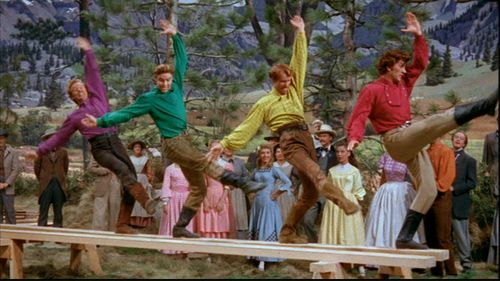
A few months have passed and the family heads back to town for a barn raising. Millie makes the brothers promise not to fight and they start pairing off with the local girls. I love the Barn Dance, with its swirling skirts, bright shirts, and acrobatic tricks [this is how real men dance]. It becomes a competition between the Pontipees and the townsmen for the girls. Frank is a superb dancer. The girls choose the Ponitpees at the end. Then it’s another competition between all the men to raise the barn. The townsmen get back at the brothers by hitting them with hammers and wood, resulting in a big fight, once Adam scolds his brothers for being too weak. However, at the end, the women tend to their townsmen.

Gideon asks his eldest brother for advice and Adam reprises When You’re in Love, but ruins the moment by telling his brother that one woman is just like all the rest. Winter descends on the farm and the brothers are pining for their girls; they’re like a Lonesome Polecat. (The scene was shot all in one shot and features Ephraim [Jacques d’Amoise, on loan from the New York City Ballet]). Adam comes to their aid with the tale of Plutarch’s Sabine Women, or Sobbin’ Women. They decide they’ll be “just like them there Merry Men,” and steal their brides, because the Sabine women were ultimately happy and if it worked for the Romans, it’ll work for the Pontipees. And that’s what they do, capture the girls from their homes and ride back to the farm. The townsmen pursue, but the girls’ screams cause an avalanche in Echo Pass and they won’t be able to get through until spring.

Millie is furious when they arrive back home. The girls are crying, missing their families. Millie orders that the girls will stay in the house and the men will stay in the barn. Even Adam. Adam won’t stay in the barn when he has a rightful wife; he’ll pass the winter at the hunting cabin. Gideon tries to get Millie to stop him, but she tells her brother-in-law, Adam has to lean that he can’t treat people like he’s done. At first, the ladies are angry with the men and play tricks on them. But they start softening as winter carries on and eye the men when they come into the house for supplies. Yet, being stuck in the house together for so long, they eventually get in a cat fight. Millie breaks it up, announcing she’s pregnant. Then the girls begin to fantasize about their own weddings and babies and you know, “oh they say when you marry in June, you’re a bride all your life.” There’s a little dance, acting out the ceremony.

All at once, it’s Spring, Spring, Spring and the women pair with the men, marveling at the baby animals that have come out. And Millie’s baby comes, a little girl. Gideon goes to Adam again, to persuade him home. Doesn’t he want to see his own daughter? He even hits his older brother. Adam sends Gideon back; he’ll be home once the pass is open. When he does come home to name his daughter Hannah, picking up where his mother left off, it means the townsmen are on their way. Adam persuades his brothers to take their girls back; they won’t marry the brothers if it comes to a fight and one of their kinfolk are hurt. But the girls don’t want to go back and hide from the brothers. That’s how they’re all found and the townsfolk are ready to hang the brothers, until they hear a baby’s cry. All of the girls claim the child is theirs, so their new sweethearts won’t be killed. The film ends happily; Adam and Millie have reconciled and the parson performs a six-way shotgun wedding. The fathers are actually standing there with their shotguns.

Millie sure is a spitfire, whipping all the Pontipee brothers into shape. She corrects Adam’s and his brothers’ misleading thoughts on women. She does the work, but she also wants to be treated properly. June Bride gave me the idea originally that I’d like to marry in June (I have since changed my daydream). The dancing is phenomenal; I especially like Frank during the Barn Dance. Overall, it’s a happy show.

Next: Another favorite in our house; White Christmas (Yes, I know it’s out of season and I usually hate that, but it fits now)

“I Used to Be a Rovin’ Lad”

Brigadoon

My senior musical, once again in the ensemble, though I had a four-word solo in a big chorus number. My mother made my costume, so I would actually look Scottish and not American colonial (seriously, the costumes came with mop caps). Overall, I was just happy we were doing a musical about Scotland, but part of me was also disappointed I didn’t actually have a part. I already knew this show going in. The film stars Gene Kelly (most famous for An American in Paris and Singin’ in the Rain, but a staple of musicals in the fifties and sixties) as Tommy Albright, a New Yorker, hunting in Scotland with his friend. They get lost and discover the mysterious village of Brigadoon. Gene Kelly was also the choreographer of the film and thus it features a lot of incredible dancing. The musical was written by Lerner and Loewe, just as prolific as Rodgers and Hammerstein.

As the mists clear around Brigadoon at the start of the show, a quiet chorus sings Brigadoon. The show really starts with MacConnachy Square as the town rises for the day, selling their wares. And today is a special day; the wedding of Charlie Dalrymple to Jeanie Campbell. At the Campbell home, the young women are preparing. They talk about Jeanie Packing Up (which was not included in the film) and Jeanie’s older sister, Fiona remarks that she is Waitin’ for My Dearie.

The hunters, Tommy and Jeff, enter the village square truly perplexed not only at people’s dress, but Fiona was the only friendly person. Charlie however is thrilled and invites the strangers to his wedding, for he will Go Home with Bonnie Jean (this is a fun song). Fiona stops by the square for items for the wedding and takes Tommy out to find Heather on the Hill. While she is gone, Charlie stops by the house to sign the family Bible and sings to his intended, Come to Me, Bend to Me (very romantic, and sadly not included in the film). Local flirt, Meg Brockie takes Jeff for a nap, then makes a fuss when he doesn’t want to sleep with her, for she was trying to find The Love of My Life (also cut from the film, apparently too risqué).

brigadoon dancing

Tommy is quite taken by Fiona and remarks to Jeff when they meet up, It’s Almost Like Being in Love. However, he begins to take note of people mentioning a miracle and a blessing and finds the dates in Fiona’s family Bible. She takes them to the schoolmaster, Mr. Lundie, who tells them about Mr. Forsythe, the minister, praying to God for a miracle to protect the village from witches in the eighteenth century. [Historical note: not sure the person who wrote this musical quite figured out their timelines; the Battle of Culloden (those who watch Outlander will understand the significance) happened in Scotland in April of 1746 and this miracle supposedly happened in May of 1746 and witches were not as prevalent…maybe the English trying to take over their land. Witches might be a more reasonable cause a hundred years prior]. Carrying on, God granted a miracle, that Brigadoon would disappear into the mists and appear once every hundred years; when the villagers go to bed, it’s one year, when they rise the next morning, it’s a hundred years later [don’t think about the math too much or you realize bad things]. If someone from the outside wants to stay, they must love someone enough to leave their old life. But a villager can’t leave, or the whole village will disappear forever.

And this is where Harry Beaton causes a problem. He’s in love with Jeanie Campbell, who is happily marrying Charlie Dalrymple. The clans gather for the wedding, all clad in tartan (though if you want to see true Highland garb, watch Outlander; yes, tartan breeches were a thing, a weird thing, but nonetheless, real. Oh yes, and further historical note: it was after the Battle of Culloden that wearing tartan was outlawed, thanks to the English). And it is true Scottish custom that there need not be a minister present at a wedding, as long as the two being married share mutual consent [this has popped up in Scottish romances; women cannot be married against their will]. There is a dance, including a lovely one by Jeanie. Then a sword dance (real thing, and also cut from the film, boo). Harry participates and runs off after seeing Jeanie happy, shouting he will leave Brigadoon and doom them all. Tommy joins the men in The Chase, hunting Harry Beaton down before he can ruin things. Jeff has wandered off to hunt and thinks he’s shooting at a bird. Harry is the one who falls down dead.

Meg Brockie entertains the wedding guests with the tale of My Mother’s Wedding Day, until the men return with Harry (this is all cut from the film; Fiona and Jeanie’s father tells everyone to keep quiet and not disturb the joyous occasion. Another cut song by Tommy is There But For You Go I). Tommy is ready to stay in Brigadoon, until Jeff tells him what happened. Tommy begins to doubt enough that he won’t stay. But once he returns to New York and his fiancée, he cannot concentrate. Little words will remind him of something and he ignores what is going on. Tommy breaks it off with his fiancée and drags Jeff back to Scotland. He gets a miracle of his own; the town was just starting to disappear and he can enter. As Mr. Lundie remarked, “if you love something enough, anything is possible.”

The music in this show is fun, especially the songs that were cut; upon re-watching of the film, I had never noticed that they weren’t in the film. It features, as many other musicals do, a couple falling in love at first sight; which I always argue is never a good way to start a lasting relationship, or least, not a believable one. Gene Kelly is of course, a remarkable dancer and his partner is skilled as well.

Up Next: Seven Brides for Seven Brothers

“Rub Him Outta the Role Call, and Drum Him Outta Your Dreams”

South Pacific

My high school performed this Rodgers and Hammerstein show my junior year. My friend from church, Chelsea was the lead. I was once again simply in the ensemble as a nurse. The show is set on a South Pacific island during World War II (there was a remake in 2001 starring Glenn Close and Harry Connick Jr, and a special concert at Carnegie Hall starring Reba McEntire in 2005 [which was, ironically, the year my high school performed]). Marine lieutenant Joe Cable comes to go on a secret mission to spy on the nearby Japanese and wants local French planter Emile de Becque to help. Emile has also fallen in love with a Navy nurse on the island, Nellie Forbush. Local woman, known as Bloody Mary likes how handsome Cable is and decides he is right to marry her daughter, Liat.

The naval personnel stationed on the island, the “Seabees” start off singing about Bloody Mary, then remark There is Nothin’ Like a Dame (gotta say, love the deep, full tone the men’s chorus achieves.  Ironically, we sang this at a county choir performance the same year). Nellie and the other nurses run by and we find out that sailor Luther Billis runs several side jobs to help people out. This is when Bloody Mary spots Lt. Cable and tells him about Bali Ha’i. From there, we check on Emile and Nellie at Emile’s plantation. Nellie turns out to be a Cock-Eyed Optimist. Both worry that they are not right for the other, but in just a few weeks they have fallen in love. Emile is certain and remarks in Some Enchanted Evening (the most well known song from the show) “once you have found her, never let her go.” Nellie returns to base and Emile’s children come out to see their papa and sing a little French song, Dites Moi.

Lt. Cable has spoken to command and they call in Nellie to ask her questions about Emile, determining whether he is reliable to take Joe to the other island. It is on record that Emile killed a man back in France. This concerns Nellie and she remarks to her friends, I’m Gonna Wash That Man Right Outta My Hair. Unbeknownst to her, Emile has come by; she’s startled out of her dance and rinses her hair to speak to him. He has come to invite her back to his plantation for a party and to tell her more about himself. The man he killed in France was a bully, during a bar fight. Then he asks Nellie to marry him. Relieved and ecstatic, Nellie has changed her tune, I’m in Love with a Wonderful Guy. But when Emile meets with command, he declines the mission, not wanting to risk his future with Nellie.

gonna wash that man right outta my hair

Frustrated, Cable lets Billis take him to Bali Ha’i. Billis observes the famous boar’s tooth ceremony and Bloody Mary introduces Joe to Liat and he instantly falls in love with the girl who is Younger Than Springtime. He sadly has to leave (after they spend some time together). And after Emile’s party, Nellie finds out about his children and runs off when she realizes he had Polynesian wife before her (I don’t quite get that thinking, but I also wasn’t around during the forties and fifties).

The second half of the show returns to Bali Ha’i and Bloody Mary explains Happy Talk and how fine of a husband Joe Cable will make for Liat. But he won’t abandon his fiancée in Philadelphia. Now Liat will have to marry an older French plantation owner. We’re cheered up a bit by the Thanksgiving show that Nellie puts on. Honey Bun is a fun number, with Luther Billis. Emile has come to see the show and sent Nellie flowers, but when he talks to her, she can’t explain why she is so upset about his previous wife and she runs off. Joe remarks to the Frenchman You’ve Got to be Carefully Taught, about racism, which he is struggling with in regards to Liat. But he’s come to the decision that he won’t leave Liat, except it’s time to go on the mission and Emile has agreed, now that Nellie has broken his heart; This Nearly Was Mine.

They land safely and get word back to base about the Japanese’s movements. Nellie finds out that Emile went and her heart decides that she does love him. Sadly, Joe dies on the island (enemy fire) and Emile gets the last news out; the Japanese are pulling out and will be the perfect target. So all the Marines and seamen and nurses gather up to leave. Nellie is with Emile’s children and listen to their reprise of Dites-Moi when Emile walks in. At least one story ended happy.

I have fairly fond memories of performing; one of my classmates asked my brother (on break from a military college) for help. I was still put in horrible costumes, but I enjoyed the group performances. Watching the movie again, the filters are horrible. Some of the music is still good, but I’m not fond of the storyline between Joe and Liat; it’s too sudden. And they know nothing about each other. So, not a favorite.

Next Time: Brigadoon (which is a favorite)

“Thundering, Thundering Louder Than Before”

Music Man

My high school performed this musical my sophomore year; freshman year was 42nd Street, but I did not make cast, so I worked as stage crew…which was an interesting experience. My brother was the train conductor and the sheriff, our neighbor was Tommy. Brandon from church was Mayor Shinn, Chelsea, also from church, was Mrs. Paroo. If I recall correctly, the guy who played Professor Hill has never been in a show or even choir before he got the role. I was simply in the ensemble [and also wore costumes that did not go with my complexion…we rented costumes and backdrops from New York so those people at the warehouse were only paying attention to size]; some of the girls who could pull off looking younger played children and they borrowed band uniforms.

The 1962 film stars Robert Preston as Professor Harold Hill and Shirley Jones (the mother of The Partridge Family) as Marian Paroo. I recognize Mary Wickes (White Christmas, Aunt March in 1994’s Little Women, she voiced the gargoyle Laverne in Hunchback of Notre Dame and appears in The Trouble with Angels and Sister Act) as Mrs. Squires. A young Ron Howard (after he began on The Andy Griffith Show and long before Happy Days and then the days he started directing and producing movies) is Winthrop Paroo.

Rock Island opens the show with the salesmen keeping time with the train as it speeds up (oh, and check out a video of Hugh Jackman doing it; he auditioned with the song once and is due to star in the show on Broadway). The salesmen discuss their trade and then Professor Harold Hill is brought up as the worst kind of salesmen with empty promises. The train stops in River City, Iowa. Hill happens to have been on the train and gets off to try to sell a boys’ band to the unsuspecting town. Iowa Stubborn explains the people’s viewpoints: “a special chip on the shoulder attitude;” the American Gothic couple even shows up. Hill discovers one of his old friend is in town and enlists his help. What’s new that he can paint as bad so that parents will pay for their sons to enter a boys’ band. There is a new pool table; Hill uses it. “Ya Got Trouble, right here in River City, with a capital ‘T’ that rhymes with ‘P’ that stands for ‘pool’.”

Hill’s next step is to cozy up to Marian Paroo, the local piano teacher and librarian, but she does not fall for any of his lines. Her mother on the other hand is worried that Marian will end up alone (they get in an argument in tune with student Amaryllis’s piano exercise). Amaryllis also has a crush on Marian’s younger brother, Winthrop, but laughs at his lisp. Marian encourages Amaryllis to sing Good Night, My Someone until the right man comes along.

The town gathers for a patriotic day and we meet Mayor Shinn, and his wife, Eulalie Mackechnie. Mayor Shinn is a little bumbling, but tries to keep order. [My brother, as the sheriff had to practically tackle Tommy because he ran a little too fast and was almost off stage; it was funny.] Hill stops by and riles the crowd up about the pool table and breaks into 76 Trombones, painting an exciting picture of a shiny marching band in town. Mayor Shinn instructs the school board to get the man’s credentials. But Hill manages to distract everyone whenever the subject is brought up. He turns the bickering school board into a barbershop quartet. He takes in Tommy, a local troublemaker and hooks him up with Shinn’s eldest daughter (they were already seeing each other). Hill claims to be a graduate of “Gary Indiana Conservatory, class of aught-five,” and the way the boys will learn their music is a revolutionary idea called the “think system.”

Hill even charms Eulalie Mackechnie Shinn and her gossip ladies to form a dance group so they won’t bug him about his credentials. They also Pick-a-little, Talk-a-little about Marian Paroo and how “she made brazen overtures” to old miser Madison (whom half the buildings in town are named after). “He left River City the library building, but he left all the books to her.” The ladies feel that Marian’s suggestions are dirty books (like Chaucer, and they emphasize Balzac). Hill is intrigued by the idea and remarks to his friend later that he prefers the Sadder, but Wiser Girl. [The lyric “I want Hester to win one more “A” was a bit funny for the sophomore class, since we read The Scarlett Letter that year in English class (and analyzed it to death)]. So Hill heads over to the library to flirt with Marian. He claims “I love you madly, madly, madam librarian, Marian!” Marian keeps shushing him.

music man castAt home, she discusses the incident with her mother; it’s not that she wants to be single all her life, but the right man has not come along. Most stage productions, including ours, include the song My White Knight, which I find rather romantic, for she doesn’t want a true white knight, but rather a more common man, but with shared interests. But the 1962 film switched it to Being in Love. The town is excited when the Wells Fargo Wagon rolls into town, each wishing for something special. It carries the instruments and Winthrop excitedly shows it to Marian, speaking for the first time in years, not worried about all the “s’s.” The look in Marian’s eye changes. In fact, she rips a page out of a book before handing it over to the mayor.

Life continues peacefully for a few days, until one of the salesmen from the beginning train stops back into town and runs into Marian. He has proof to put Hill away, but she distracts him. She has begun to care for Harold and eventually agrees to meet him at the footbridge during the town’s evening social. The young people enjoy the Shipoopi dance. On the bridge, Marian reveals her feelings to Harold, Till There Was You. She knew that Harold was lying shortly after he arrived; Gary, Indiana didn’t have a Conservatory class in 1905, because the town wasn’t built until 1906. Harold’s friend has noticed that the salesman is in town and advises Harold to leave, but Harold doesn’t want to know, because he has fallen for Marian. He attempts to hide at her house while the town searches for him and answers Winthrop’s questions about his lies. He’s caught and brought before the town. Marian defends him; River City has been a better place since Harold’s arrival; the children have been excited for weeks. Tommy brings the kids’ out in uniform and Harold directs as they play (badly) Beethoven’s Minuet in G. The parents are so proud. Then he gets to lead a parade, complete with 76 trombones.

76 trombones

In my production, I remember the ladies come up to Marian at the end; they’ve finally tried her book suggestions and love them.

In 2003, Disney produced a version starring Matthew Broderick (the voice of Simba, the titular Ferris Bueller, and paired up with Nathan Lane for The Producers two years later) as Professor Harold Hill, Kristin Chenoweth (Glinda in Wicked and Lily St. Regis in Disney’s Annie) as Marian Paroo, and Victor Garber (he keeps popping up; Disney’s Roger and Hammerstein’s Cinderella, Disney’s Annie, and Titanic) as Mayor Shinn. While a good rendition, I feel that Matthew Broderick is missing some of the pizzazz that Robert Preston showed in the role.

Up Next: South Pacific

“My Heart’s Keeping Time to the Speed of Sound”

I love musicals. Some of my earliest memories are listening to Cats [we named one of our cats “Tugger” after Rum Tum Tugger] or Phantom of the Opera with my mother. (Dad was classic rock on the radio or The Beach Boys). I took dance lessons for eight years and I started singing in church choir in kindergarten; I played the piano, flute, and viola. I would create my own dances in living room to songs as a kid. At one point I wanted to be on Broadway, but I hate practicing and I realized early on that I would have to be very lucky, no matter how good I was. I was fortunate to have good music instructors; the Ellenbergers as a child in church, Dr. Barr once I got to college. I fully support singing in the shower and my favorite part about driving is singing in the car. I’ve learned most songs without ever seeing sheet music or lyrics; just repeatedly listening. I remember music (well, more singing than actually playing) better than some school subjects.  I always sing along to those “try not to sing” videos with musicals and love it when I know a song.

I was excited for high school since it meant I could be in musicals. Freshman year, I did not make it into 42nd Street, so I went on stage crew, which was fun in its own right. Sophomore year was Music Man, junior year South Pacific, and senior year was Brigadoon. I was always in the ensemble; which I was happy enough to at least be in the shows, but still stung a little, especially senior year. I joined choirs in college and wanted to get involved with the theatre, but I already had a double major (Creative Writing and History…like y’all couldn’t tell), and part of the Honors Program and after joining choir, I figured I wouldn’t have enough time to do everything.

I believe I have mentioned before that I was on cast at a local-ish (it’s an hour from my house) medieval faire one summer; and it was a blast. But I can’t always make that time commitment. I still appreciate the work the cast goes through every year. My community is lucky enough to have a volunteer chorale and theatre group, but working retail means I rarely have time to get involved. I managed to participate in the chorale for two years and then left, for reasons.  Still love musicals, always will. I will probably still dance around my room. And now I share that love with all of you.

Some classic or well known musicals that are not entirely my favorites, but I figure deserve at least a mention.

West Side Story: This is an iconic show and Steven Spielberg is actually working on a new version, possibly due out this year. Features gangs in New York City in the 1950s, music by Leonard Bernstein, lyrics by Stephen Sondheim, and screenplay by Ernest Lehman (he’s also done the screenplay for Hello, Dolly and Sound of Music). The film won 10 Oscars, including Best Picture and is a modern re-telling of Romeo and Juliet. I do not like Romeo and Juliet, so I’m not terribly fond of this story (it also ends really sad). But, I love the music and dancing. A lot of what the men do is a crossover between ballet and modern. America is my favorite number. As part of a choir, I have sung a medley of several numbers. Tonight is pretty, but schmaltzy, as is Somewhere (I vaguely remember singing that for high school graduation). Gee, Officer Krupke is a bit funny.

Fun note: the teacher at the dance played Gomez Addams in the 60s television series. Riff, leader of the Jets, is played by Russ Tamblyn, who we will see in Seven Brides for Seven Brothers (for some reason, his character reminds me of Captain Kirk from the original series; I think it’s the hair and the fact he wears yellow). The film also famously stars Natalie Wood, and Rita Moreno (I was surprised to learn she voiced the titular Carmen Sandiego in the 90s educational cartoon Where on Earth is Carmen Sandiego? along with appearing in The King and I).

My Fair Lady: Julie Andrews starred in the original Broadway run of this show, but the part went to Audrey Hepburn for the film; Julie was cast in Mary Poppins instead (for which she went on to win an Academy Award). I don’t mind a couple of the songs, like With a Little Bit of Luck, but the show drags. I do imagine that it is hard for someone who has spoken proper English to spend half the show with a rough accent (maybe we should have studied this in my Historical Development of the English Language Class).

The King and I: A classic Rodgers and Hammerstein that tells the story of British (actually Welsh) Anna Leonowens traveling to Siam (present-day Thailand) as governess to the king’s many children in his effort to join the modernizing Western world. Of course, the two disagree at first, but eventually fall in love. It actually is a bittersweet ending, just when they both realize they care for each other (after avoiding each other for weeks due to an argument), the king dies. The story takes place in 1862, so mentions are made of Queen Victoria and the American Civil War and Abraham Lincoln (the king wants to send elephants to aid the war effort). Slavery is brought up and the play based upon Uncle Tom’s Cabin that the one wife creates is…interesting.

shall we dance

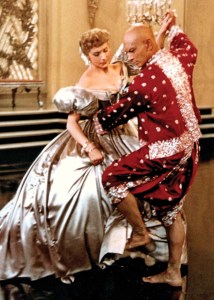
The children are adorable. This time period also means that Anna wears large hoop skirts the entire time (a bit humorous when the Siamese ladies try to wear them). There are two songs in this production that I really like, Getting to Know You and Shall We Dance. The film stars Deborah Kerr as Anna, Yul Brynner (who created the role of the King on Broadway, along with playing Rameses in 1956’s The Ten Commandments) as King Mongkut, and Rita Moreno is back as Tuptim.

Singin’ in the Rain: As with many other musicals on this list, I don’t mind a few songs. The titular song that Gene Kelly famously dances is a great piece, but I like Moses Supposes or Make ’em Laugh better. Carrie Fisher’s mother, Debbie Reynolds also stars in the film.

Oklahoma: A classic that, like West Side Story, I am not fond of the story; it gets creepy at the end. The only reason we own a version on DVD is because it stars Hugh Jackman.

Yankee Doodle Dandy: An old musical, from the forties, in black and white, starring James Cagney as George M. Cohen, who wrote Over There, Give My Regards to Broadway, Yankee Doodle Dandy, and You’re a Grand Old Flag; all of which appear in the musical. I’ll sometimes watch it around Independence Day.

RENT: I have never seen the show, but I do like Seasons of Love and enjoy parts of La Vie Bohem. My friend Nikki likes the show (oh, and Idina Menzel appears in the movie version).

Sweeney Todd: Saw it once, against my will on a bus trip. Nope, nope, nope. Doesn’t help that it was directed by Tim Burton (I am not a Burton fan), and stars Johnny Depp, Helena Bonham Carter, Alan Rickman, and Timothy Spall (Peter Pettigrew). Stephen Sondheim wrote the music and everyone in the most recent movie did their own singing. Angela Landsbury was the first Mrs. Lovatt, and ain’t that a way to mess with your mind. In case you are unaware, a major part of the musical, which is subtitled The Demon Barber of Fleet Street, is two of the main characters bake people into pies. Hence why I didn’t want to watch it in the first place, but I was outvoted (so I hid), and why I will never watch it again.

Into the Woods: One of Stephen Sondheim’s most well-known shows. I have only seen the film version from 2014. It is a star-studded production with Anna Kendrick, Daniel Huttlestone (we’ll see him in Les Mis), James Corden, Emily Blunt, Christine Baranski, Meryl Streep, Johnny Depp, and Chris Pine. I admit that Agony with Chris Pine was hilarious. I liked his character, until he turned out to be a jerk. All the performances were great, but it is a darker look on our favorite fairy tales – that’s the point, taking them back to their roots.

Wicked: I have not read the book it is based on, which tells the story of the Wicked Witch of the West in Wizard of Oz (I believe I have already mentioned, not a fan of the movie). But, I saw the show in Chicago while on a college choir trip. Idina Menzel really made her name for her role as Elphaba (the Wicked Witch) and played opposite Kristin Chenoweth as Glinda. The show explains the backstory of many of the supporting roles from Wizard of Oz and really makes Elphaba sympathetic. Stephen Schwartz composed the music and I have sung a medley of the tunes in choir in high school, such as One Short Day, For Good, and of course, Defying Gravity (I do like this song and is an awesome solo to belt out). What is This Feeling and Popular are hilarious. There are rumors of making a movie out of the show.

Chicago: I like All That Jazz and Cell Block Tango; I do not like the story. The 2002 film stars Renee Zellweger, Catherine Zeta-Jones, and Richard Gere.

Footloose: I actually prefer the newer one. The original starred Kevin Bacon (andnew footloose included music, like the title track by Kenny Loggins, who also did Danger Zone from Top Gun). Big city kid moves to small town to discover they have outlawed dancing due to an accident several years ago. He hooks up with the preacher’s daughter, Ariel, who’s acting out against her father. Everything is eventually resolved and they do hold a dance at the end. The newer version came out in 2011 and starred Julianne Hough (Dancing with the Stars pro) as Ariel and Kenny Wormald (a professional dancer as well) as Ren. Dennis Quaid plays the town’s preacher. It was updated from 1984 and I like the newer dance moves, though it is a very close remake. There’s a fun country song by Big and Rich, Fake ID (I can stand country music, I will not claim it as a favorite). Ok, the demeaning way his friend talks about women sometimes makes me want to slap him.


Hairspray: The 2007 film was an all-star cast with John Travolta, Michelle Pfeiffer, Christopher Walken, Amanda Bynes, James Marsden, Queen Latifah, Allison Janney, Brittany Snow, and Zac Efron. I enjoyed it for the most part, and I still remember all the words to You Can’t Stop the Beat (the ending of the movie is a lot of fun), which I sang as a freshman in high school choir [translating to over ten years ago].

High School Musical: I was in high school when these came out. It made stars out of Vanessa Hudgens, Ashley Tisdale, and Zac Efron, and was directed by Kenny Ortega. The original was better than either sequel. It was a bit funny when they featured it in an episode of Suite Life of Zach and Cody with the running gag that Maddie didn’t look like Ashley Tisdale (Ashley played Maddie). When I was in Disney senior year, my friends and I joined that Pep Rally they had going on and learned the dance to We’re All in This Together (so when ABC just did their Disney Sing-Along Night; which I loved period, it was fun to see the cast reunited and doing the dance). The soundtrack is a bit nostalgic.

org hsm

Now, my experience in high school musicals was different than depicted here; a lot of my classmates were involved in the arts (our school supported students being well rounded with academics, arts, and athletics). Our marching band was over 200 strong, the lead guy senior year musical was on the football team (actually, football players had a habit of being in our musicals), track practices didn’t start until musical was done, a bunch of the kids were also in Advanced Placement courses…we were all just a bunch of overachievers. Yeah, we don’t Stick to the Status Quo. I do think this movie helped get more kids interested in musicals, making it more relevant to them.

Next: We will carry on with musicals, starting with Music Man.  Let me know what some of your favorite musicals are.

“I Sent the Swarm, I Sent the Hoard, Thus Said the Lord”

Prince of Egypt

I probably should have included this around my Disney section since it’s an animated film; but I had forgotten. Besides, the soundtrack is phenomenal. One of the first full length films produced by DreamWorks (same company who would later create one of my favorites: How to Train Your Dragon, and did you know that Steven Spielberg is one of the founders?). Includes a stellar cast: Val Kilmer voices Moses, Ralph Fiennes (Voldemort) voices Rameses, Michelle Pfeiffer is Moses’ wife, Tzipporah, Sandra Bullock is Hebrew Miriam and her brother Aaron is voiced by Jeff Goldblum. Danny Glover is Tzipporah’s father, Jethro and Patrick Stewart is Rameses’ father, Seti, with his queen voiced by Helen Mirren. Steve Martin and Martin Short are the priests, Hotep and Huy. Hans Zimmer composed the score and Stephen Schwartz ( he also wrote for Disney’s Pocahontas, Hunchback of Notre Dame, Ella Enchanted, and Wicked) wrote the lyrics.

It tells the story of Moses and the exodus of the Hebrews from Egypt. The film opens with Deliver Us, illustrating the plight of Hebrews as slaves in Egypt. Seti, the pharaoh, has just issued the order to slaughter newborn Hebrew boys. Moses’ mother and her older children sneak to the river, put baby Moses in a basket and set him adrift, praying her son will have a better life. Her young daughter follows the basket, making sure he arrives safely, to the pharaoh’s wife (biblically, his daughter instead).

The film jumps to two young men, Moses, and his older brother, Rameses, racing cartsprinces of egypt through their father’s buildings. They cause mayhem and are chastised by Seti afterwards. He expects a lot from Rameses, who will succeed him as Pharaoh. Moses pleads for his father to not blame Rameses and suggests that his older brother only needs an opportunity to prove himself. Rameses is granted that opportunity at a banquet that night; Rameses in turn elevates Moses’ position. Priests Hotep and Huy are told to give the princes a gift; they have captured a foreign young woman. Moses is not the kindest to her upon meeting, but that night, he distracts guards to let her escape. He follows her to the slave quarters where he encounters Miriam and Aaron. Miriam thinks her brother has knowingly come, but he is unaware of his true heritage. Aaron pleads for mercy, but it’s not until Miriam repeats their mother’s lullaby that Moses realizes the woman speaks truth when she declares “I know who you are, and you are not a prince of Egypt.” She suggests he asks the man he calls father.

Moses runs back to the palace, trying to take comfort in All I Ever Wanted. He knows his history, it’s etched on every wall. So he investigates. And finds proof of what Miriam said, playing out as animated drawings on the walls. Seti attempts to comfort his son; Moses begging his father, “tell me you didn’t do this.” Seti considers it a sacrifice for the greater good, his parting words “they were only slaves.” (That just sounds so wrong coming from Patrick Stewart).  The Queen does a bit better, but she counsels that Moses should simply ignore the truth; “when the gods send you a blessing, you don’t ask why it was sent.” It does show that his family have never looked down on him for being adopted; Rameses may have been young enough he doesn’t even remembering his mother finding his baby brother.

Yet Moses wanders confused the next day. He accidentally kills an overseer who was beating an elderly Hebrew. He flees; Rameses attempts to stop him, telling his brother he can absolve him of his crime; “you will be what I say you are.” If Rameses wants the truth, Moses instructs him to “ask the man I once called father.” Moses still leaves. Eventually, he removes all pieces of his old life, aside from the ring his brother gifted him. A camel comes across him and he is dragged to a watering hole. He saves three young girls, then promptly passes out into a well. Their older sister, the same woman Moses freed comes to help, though she remembers the prince and lets him drop back into the well. Their tribe takes Moses in; the priest happy to thank a strange young man for saving his daughters. Moses quietly tells the boisterous man he has done nothing worth honoring; which the woman, Tzipporah finds odd, but her father explains a better mindset to Moses. People on earth cannot see their true worth; they should look at their lives Through Heaven’s Eyes (I love this song).

Moses becomes a part of the tribe, becoming a shepherd and eventually marrying Tzipporah. One morning, while tending his flock, one sheep wanders off. He goes after it and comes across the Burning Bush. God speaks to him and tells Moses to go before Pharaoh and free the Hebrews. Moses is unsure, but God promises to be with him and instructs Moses to take his staff, with it, he will do God’s wonders. Tzipporah is initially unsure, but Moses wants the same freedom that her family has for his people. She tells her husband she will go with him back to Egypt.

Rameses is now Pharaoh, so the brothers share a joyful reunion, until Moses tells his brother why he has come. As much as Moses wishes in his heart, things cannot be as they were. Pharaoh must release the Hebrew slaves. To demonstrate God’s power, Moses has his staff turn into a snake. To prove that their gods are just as great, Hotep and Huy mock that Moses is Playing with the Big Boys and they too turn staves into snakes (with smoke, and in the background Moses’ snake devours theirs). After the demonstration, Rameses and Moses speak privately. They’re brothers for a brief moment, recalling that while Moses got Rameses into trouble, he also got him out. (Ralph Fiennes commented behind the scenes “when brothers are enemies, they don’t stop being brothers.”) But life has made them different people and Moses return’s his brother’s ring. Rameses doubles the Hebrew’s workload in retaliation. The Hebrews disparage Moses, but he continues with his mission, with some kind words from Miriam; God saved Moses, he should not give up on the Hebrews. Moses approaches the river and turns it to blood for Pharaoh. The priests imitate the phenomenon, but Moses warns Rameses that matters will only get worse.

The Plagues descend upon Egypt. Frogs, then bugs and flies infest Egypt. The livestock die. Locusts blot out the sun. Egyptians are covered in boils. Fire rains down, then darkness. While a choir chants in the background, Moses cries that it pains him to see what has happened to his home. But he blames Rameses for “all the innocent who suffer for your stubbornness and pride.” Rameses (this is Ralph Fiennes singing; several of the other characters’ singing voices were dubbed) will let his heart be hardened, “I will never let your people go.” The last plague is the death of the first born; Moses instructs the Hebrews to mark their doors with lamb’s blood, and the angel of death will pass over their house. Rameses young son is killed. Moses meets with Rameses; Pharaoh will let the Hebrews leave. But Moses mourns for his brother’s loss and his own.

when you believe

Miriam cheers the people, “there can be miracles, When You Believe.” The song becomes more joyful by the time the children beginning singing in Hebrew (I sang this song as a child in church choir, probably the first time I ever sang in another language…actually, I think the same director taught it to my junior high choir as well). Then they come to the Red Sea. And Pharaoh has decided he will not let the Hebrews go and chases after them. Moses parts the sea with his staff; God has sent down a pillar of fire to bar the Egyptians. Once they’re almost through, the fire dissipates and the Egyptians charge. But the parted sea returns to its home, destroying the army. Moses has succeeded in his mission. The ending of the film shows him descending from Mount Sinai with the Ten Commandments.

This film, which has since been adapted into a stage show,  came out when I was five or so and I still enjoy it to this day. Once again, the music is phenomenal (ooh, an adult church choir should really do The Plagues; that’d be cool) and the characters were well casted; though it wasn’t until I was older that I began recognizing the voices. The studio managed a good retelling of the Bible story (they consulted with many religious experts and even went to Egypt for research purposes) and made the royal Egyptian family sympathetic at times (it was banned in Egypt, however). I will say that the animation quality of DreamWorks has come a long way since this film (they have done a spectacular job with Dragons; their characters are so lifelike), but it is a different style than the classic Disney look. I highly recommend this film.

Up Next: A proper introduction to more traditional musicals